


There’s something magical about sliding a VHS tape into a player. The mechanical whir, the slight static on screen, the anticipation as the tracking adjusts. But that magic is dying. Literally.
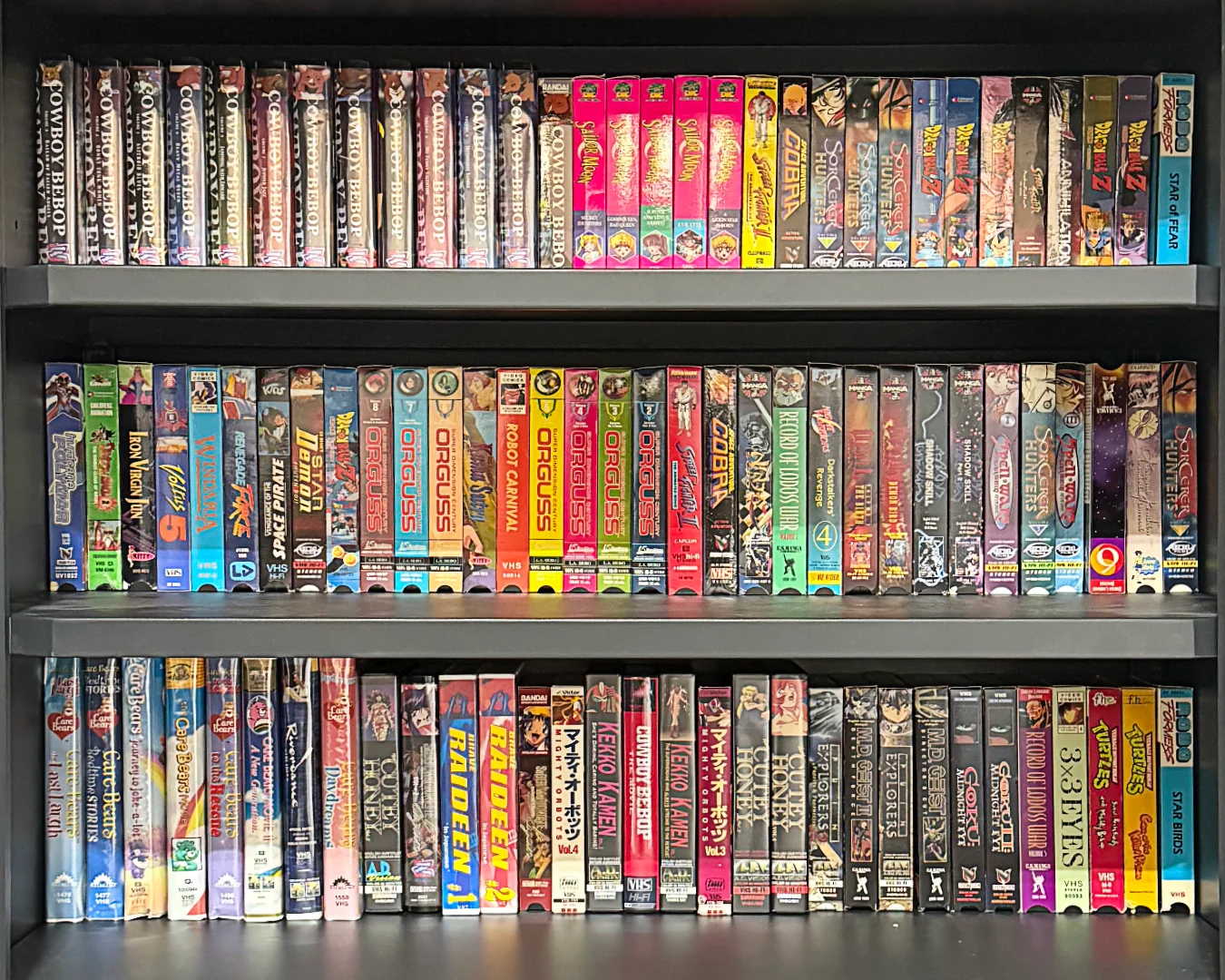
At Hyperlific, we’re not just nostalgic collectors. We’re preservationists fighting a battle against physics itself. Our international collection of animation and anime VHS tapes represents more than childhood memories; it’s a cultural archive racing against the clock of magnetic decay. Every day we wait, another piece of animation history fades a little more, colors shift imperceptibly, details blur into static.
The question isn’t whether these tapes will degrade. They already are. The question is: what can we do about it?
The Science of Disappearance
Let’s talk about what’s actually happening inside those plastic shells gathering dust in attics and basements across the world.
VHS tapes consist of three critical layers working in harmony: a binder layer containing magnetic particles that store your precious content, a substrate providing structural stability, and a backing that reduces friction during playback. When any of these layers fails, your memories begin to vanish.
The numbers are sobering. Even well-stored tapes watched only once will experience up to 20 percent signal loss over a 10 to 25-year period. Think about that. If you recorded something in 1998, it’s already compromised. That rare anime fansub from 2003? The colors aren’t quite what they used to be. Your complete collection of obscure OVAs from the early 2000s? Time is literally erasing them.
Magnetic tapes begin deteriorating in as little as 5 years after recording. Heat and humidity accelerate this process exponentially. Remanence decay causes magnetic particles to lose their charge, resulting in discoloration, strip demagnetization, and the gradual disappearance of detail that made these animations special in the first place.
The Perfect Storm of Obsolescence
Here’s where the situation becomes truly critical: in 2016, the last VHS recorder rolled off the assembly line. The machines we need to even play these tapes are no longer being manufactured. Equipment is becoming scarce, repair parts harder to find, and expertise more valuable by the day.
Online communities of collectors have been sounding the alarm for years. Enthusiast groups share stories of reading social media posts from people casually mentioning they’re throwing away boxes of old tapes. Each discarded collection potentially contains animation that exists nowhere else, content that never made the jump to DVD or streaming platforms.
This is especially true for anime. Fan forums frequently discuss the treasure trove of fansubs, TV-edited versions, and regional releases that were VHS-exclusive. Titles like certain Ranma 1/2 releases became incredibly rare precisely because VHS was being phased out during their release window. Some series were abandoned mid-run, leaving their conclusions trapped on deteriorating magnetic tape.
What Makes Animation VHS Collections Worth Saving?
You might wonder: if something was popular, wouldn’t it have been re-released digitally? The answer is complicated and often heartbreaking.
Licensing issues, bankruptcy of distribution companies, lost master tapes, and simple corporate indifference mean countless animated works remain VHS-exclusive. Collectors circles have documented numerous examples of anime that commanded impressive prices in their day but were never preserved digitally. Some titles exist only in specific regional releases with unique dubs or subtitles unavailable anywhere else.
Beyond the content itself, VHS-era packaging told its own story. The creative box art from publishers like ADV Films, Manga Entertainment, and Streamline Pictures. The quirky English formatting choices. The trailers and promotional content at the end of tapes. Even the credit rolls were designed specifically for the VHS experience. This context disappears with the medium.
A common sentiment in enthusiast groups captures this perfectly: VHS has a distinct, tactile charm and nostalgia severely lacking in today’s rapid shift toward digital services. It’s not just about the content; it’s about the entire cultural experience of how we consumed animation during a specific era.
The Elements We’re Fighting
Preservation isn’t just about keeping tapes on a shelf. It’s an active battle against multiple forms of decay:
Environmental Threats
Temperature fluctuations wreak havoc on magnetic tape. The ideal storage range sits between 55 and 70 degrees Fahrenheit, with humidity below 45 percent. Higher humidity invites mold growth, which can destroy a tape in months. Lower temperatures might seem safer, but storing tapes below 46 degrees causes lubricant separation, potentially ruining recordings.
Basements flood. Attics bake in summer heat. Garages swing between temperature extremes. These common storage locations are slowly destroying irreplaceable content.
Magnetic Degradation
Every electronic device with a magnetic field poses a threat. Speakers, old CRT televisions, even certain types of lighting can gradually demagnetize tapes stored nearby. The effect is cumulative and irreversible.
Physical Deterioration
Sticky-shed syndrome occurs when the binder layer breaks down, causing tape to stick to itself or playback heads. Warping happens when tapes aren’t stored vertically. Stretching occurs from repeated playback or, ironically, from super-speed rewinders that collectors once thought were convenient time-savers.
The Playback Paradox
Here’s a cruel irony: every time you play a VHS tape, you damage it slightly. The physical contact between tape and playback heads causes microscopic wear. Yet we need to play tapes to digitize them. We must harm them to save them.
What We’re Doing at Hyperlific
Our approach combines immediate action with long-term strategy. We’ve assembled an international collection of animation and anime VHS tapes specifically because geographic diversity often means content diversity. A tape released in Japan differs from its American counterpart, which differs from European versions. Each variant tells part of the story.
We prioritize tapes showing signs of degradation, focusing on content unavailable in digital formats. Our private members-only VHS club isn’t just about access to rare content (though that’s certainly a benefit). It’s about building a community of preservationists who understand the urgency of this mission.
Members share knowledge about proper storage techniques, alert each other to rare finds being discarded, and collectively document what exists in the wild before it’s too late. Some members specialize in fansub preservation, others in commercial releases, still others in international variants. Together, we’re creating a distributed archive of animation history.
Practical Steps for Preservation
Whether you’re sitting on a small personal collection or managing a significant archive, certain principles apply universally:
Immediate Assessment
Examine your tapes for visible mold (fuzzy growth on tape edges), warping (cases that don’t close properly), or sticky residue. Don’t attempt to clean or repair damaged tapes yourself. Professional transfer specialists have the tools and expertise to handle compromised media.
Storage Optimization
- Store tapes vertically in their cases to prevent warping
- Maintain stable temperature between 60-70°F
- Keep humidity between 30-40%
- Avoid proximity to magnetic sources
- Choose interior spaces with minimal temperature fluctuation
- Never store tapes on floors or near water pipes
Digitization Priority System
You can’t save everything at once. Prioritize based on:
- Tapes showing visible deterioration
- Content unavailable digitally
- Tapes recorded in the 1980s-1990s (already past the 20-year degradation threshold)
- Rare or unique variants (fansubs, regional releases, special editions)
- Personal recordings with irreplaceable content
The Digitization Debate
Fan forums actively discuss the technical aspects of proper digitization. Some enthusiasts advocate for lossless codecs like Huffyuv, despite massive file sizes. Others debate the merits of various capture cards and time base correctors. The consensus is clear: digitization won’t save your VHS tapes from physical decay, but it preserves the content before degradation makes recovery impossible.
Professional services offer convenience and often superior results, especially for compromised tapes. DIY approaches work for those with technical expertise and proper equipment. The key is action. Waiting for the “perfect” solution means more content lost forever.
The Cultural Imperative
This isn’t just about preserving old cartoons. Animation reflects the culture, values, and artistic sensibilities of its era. Anime particularly serves as a window into Japanese culture during specific historical periods. Fansubs document the early days of international anime fandom, showing how communities formed around shared passion despite language barriers and limited access.
Streaming services are wonderful, but they’re curated by algorithms and licensing agreements. They show what’s profitable or legally available, not necessarily what’s culturally significant. Entire studios’ catalogs remain inaccessible because rights holders can’t be located or don’t see commercial value in re-release.
VHS collections preserve the gaps in official archives. They document what ordinary fans watched, how content was marketed, what was considered important enough to release physically. This context matters for future researchers, historians, and fans trying to understand animation’s evolution.
Join the Mission
The window for preservation is closing. Every year that passes, more tapes cross the threshold from “degraded” to “unrecoverable.” More VCRs break down beyond repair. More knowledge about proper handling and digitization disappears with the generation that grew up with the format.
At Hyperlific, our private VHS club represents more than collectors sharing rare finds. We’re guardians of cultural history, racing against entropy itself. Members gain access to digitized content unavailable elsewhere, but more importantly, they join a community committed to preservation as a mission rather than mere nostalgia.
If you have animation or anime VHS tapes gathering dust, don’t throw them away. Assess their condition. Research whether the content exists digitally. If you’re unsure, reach out to preservation communities. What seems like clutter to you might be a missing piece of animation history.
For those serious about preservation, consider contacting us.
The fight against earthly decay is one we’ll ultimately lose. Magnetic tape will eventually deteriorate beyond recovery. But we can win individual battles. We can save specific titles, preserve particular moments, document unique variants. We can ensure that future generations have access to the full breadth of animation history, not just what streaming services deem commercially viable.
Every tape saved is a victory. Every title digitized is cultural heritage preserved. Every collector who learns proper storage techniques is another guardian in the fight against time.
The question isn’t whether VHS as a medium will survive. It won’t. The question is whether the content, the history, and the cultural context will survive. That answer depends on what we do right now, today, before another percentage of signal fades into static.
At Hyperlific, we’ve chosen to fight. We invite you to join us in preserving animation history before the elements claim it forever. Because once it’s gone, it’s gone. And that’s a loss we can’t afford.
'%3e%3cg id='Final-Copy-2_2_' transform='translate(1275.000000, 200.000000)'%3e%3cpath class='st0' d='M7.4,12.8h6.8l3.1-11.6H7.4C4.2,1.2,1.6,3.8,1.6,7S4.2,12.8,7.4,12.8z'/%3e%3c/g%3e%3c/g%3e%3c/g%3e%3cg id='final---dec.11-2020'%3e%3cg id='_x30_208-our-toggle' transform='translate(-1275.000000, -200.000000)'%3e%3cg id='Final-Copy-2' transform='translate(1275.000000, 200.000000)'%3e%3cpath class='st1' d='M22.6,0H7.4c-3.9,0-7,3.1-7,7s3.1,7,7,7h15.2c3.9,0,7-3.1,7-7S26.4,0,22.6,0z M1.6,7c0-3.2,2.6-5.8,5.8-5.8 h9.9l-3.1,11.6H7.4C4.2,12.8,1.6,10.2,1.6,7z'/%3e%3cpath id='x' class='st2' d='M24.6,4c0.2,0.2,0.2,0.6,0,0.8l0,0L22.5,7l2.2,2.2c0.2,0.2,0.2,0.6,0,0.8c-0.2,0.2-0.6,0.2-0.8,0 l0,0l-2.2-2.2L19.5,10c-0.2,0.2-0.6,0.2-0.8,0c-0.2-0.2-0.2-0.6,0-0.8l0,0L20.8,7l-2.2-2.2c-0.2-0.2-0.2-0.6,0-0.8 c0.2-0.2,0.6-0.2,0.8,0l0,0l2.2,2.2L23.8,4C24,3.8,24.4,3.8,24.6,4z'/%3e%3cpath id='y' class='st3' d='M12.7,4.1c0.2,0.2,0.3,0.6,0.1,0.8l0,0L8.6,9.8C8.5,9.9,8.4,10,8.3,10c-0.2,0.1-0.5,0.1-0.7-0.1l0,0 L5.4,7.7c-0.2-0.2-0.2-0.6,0-0.8c0.2-0.2,0.6-0.2,0.8,0l0,0L8,8.6l3.8-4.5C12,3.9,12.4,3.9,12.7,4.1z'/%3e%3c/g%3e%3c/g%3e%3c/g%3e%3c/g%3e%3c/svg%3e) Your Privacy Choices
Your Privacy Choices