


What is Jin-Roh: The Wolf Brigade? Jin-Roh: The Wolf Brigade is a 1999 Japanese anime political thriller directed by Hiroyuki Okiura and written by Mamoru Oshii, set in an alternate-history authoritarian Japan. The film follows Kerberos member Kazuki Fuse as he navigates a dangerous relationship amid violent interservice rivalry and political intrigue.
In the late 1990s, anime was undergoing a seismic shift. Films like Akira (1988) and Ghost in the Shell (1995) had proven that animation could tackle adult themes with sophistication and artistry. Then came Jin-Roh, a film so committed to traditional animation that it required 80,000 hand-drawn cels when director Hiroyuki Okiura could have used computer animation to complete it with just 30,000.
This wasn’t just artistic stubbornness. It was a statement about what animation could achieve when creators prioritized craft over efficiency.
The Alternate History Setting of Jin-Roh
Jin-Roh unfolds in a Japan that never was. In this timeline, Nazi Germany won World War II and occupied Japan (which had sided with the Allies). After Germany denazified back into the Weimar Republic, its attempts to modernize Japan sparked civil unrest and the rise of the Sect, an anti-government terrorist organization.
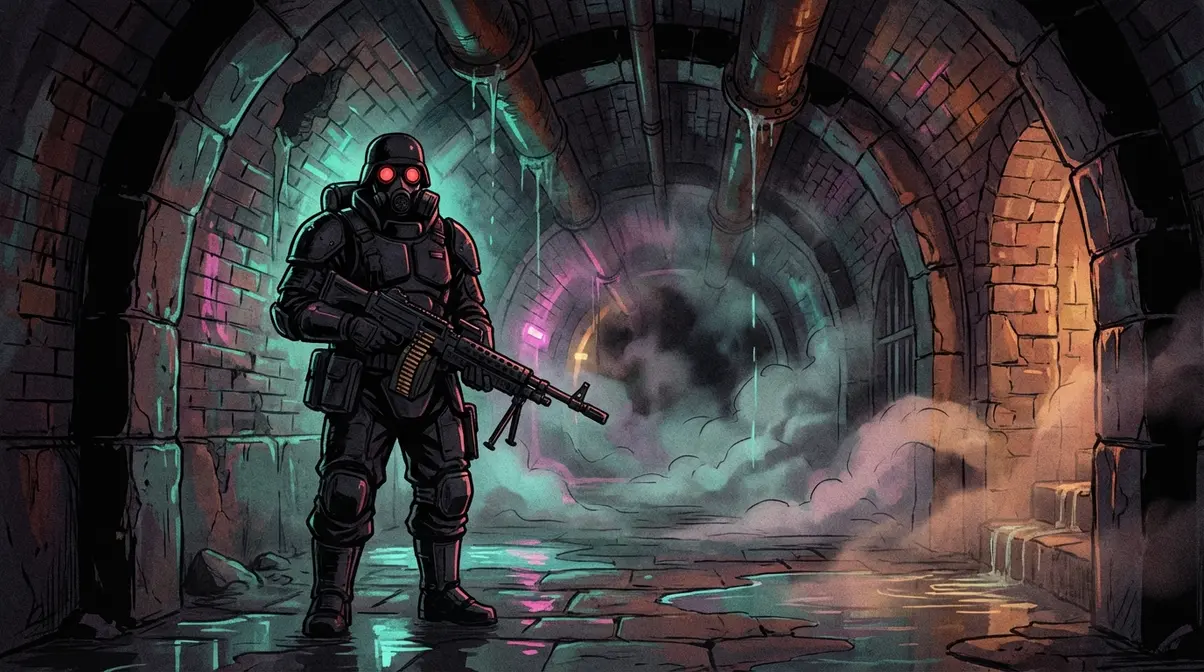
This dystopian backdrop isn’t just window dressing. The film uses its alternate history to explore themes of authoritarianism, duty, and the dehumanizing effects of militarized society. Protagonist Kazuki Fuse serves in the Kerberos unit, an elite counter-terrorism force whose members wear intimidating armored suits that have become iconic in anime and gaming culture.
Why Jin-Roh’s Animation Style Still Matters
Production I.G animated Jin-Roh almost entirely by hand at a time when digital techniques were becoming standard. Blue Sky animator André Mazzone praised the film for “the beauty of its animation and character designs” and noted how this production approach gave director Hiroyuki Okiura creative control that Hollywood animated features rarely allow.
The result is a visual experience that feels tactile and weighty. Every frame carries the deliberate artistry of traditional cel animation, creating a mood that perfectly matches the film’s themes of human beings becoming alienated by the very systems they create.
The Little Red Riding Hood Connection in Jin-Roh
Throughout Jin-Roh, the fairy tale of Little Red Riding Hood weaves through the narrative as both metaphor and warning. After Fuse witnesses a young terrorist kill herself rather than be captured, he meets Kei Amemiya, who claims to be the girl’s sister. Their relationship develops against a backdrop of deception, with the question always lingering: who is the wolf, and who is the prey?
Mamoru Oshii’s layered use of this childhood story adds psychological depth to what could have been a straightforward action thriller. Instead, Jin-Roh operates as a slow-burn political drama with plenty of dialogue and a criss-cross game of cat and mouse.
The Cultural Legacy of Jin-Roh: The Wolf Brigade
Jin-Roh premiered at the 49th Berlin International Film Festival in February 1999, then opened in France on November 17, 1999, before its Japanese release on June 3, 2000. It remains the most popular work in the Kerberos Saga outside Japan, even spawning a 2018 Korean live-action remake titled Illang: The Wolf Brigade.
The film’s influence extends beyond cinema. The Protect Gear armor worn by Kerberos members has inspired countless designs in video games (possibly including the Helghast faction in Killzone) and other media. In November 2024, WRWTFWW Records released the first vinyl edition of Hajime Mizoguchi’s haunting soundtrack, proving the film’s enduring appeal.
Frequently Asked Questions
Is Jin-Roh part of a series?
Yes, Jin-Roh is the third film in the Kerberos Saga, following The Red Spectacles (1987) and StrayDog: Kerberos Panzer Cops (1991). However, it’s the first chronologically and the only fully animated entry in the series.
Who directed Jin-Roh: The Wolf Brigade?
Hiroyuki Okiura directed Jin-Roh, with the screenplay written by Mamoru Oshii (director of Ghost in the Shell). Production I.G handled the animation.
Where can I watch Jin-Roh today?
Discotek Media released Jin-Roh on DVD in 2014 and Blu-ray in 2015 for North American audiences. Availability varies by region and streaming platform.
What makes Jin-Roh different from other anime films?
Jin-Roh stands out for its commitment to traditional hand-drawn animation (80,000 cels), slow-burn political thriller pacing, and mature exploration of themes like PTSD, authoritarianism, and moral ambiguity rather than typical action-focused storytelling.
Is Jin-Roh connected to Ghost in the Shell?
While both films share writer/director Mamoru Oshii and explore similar themes about technology and alienation, they are separate properties with no narrative connection. Jin-Roh is based on Oshii’s manga Kerberos Panzer Cop.
What does Jin-Roh mean in English?
Jin-Roh translates to “Wolf Brigade” in English, referring to the Kerberos special forces unit at the center of the film’s story.
Jin-Roh arrived at a pivotal moment in anime history, proving that animation could deliver the psychological complexity and visual artistry of prestige cinema. Its themes of fascism, groupthink, and the cost of duty remain as relevant today as they were in 1999. For anyone exploring the depths of what anime can achieve beyond mainstream entertainment, Jin-Roh stands as essential viewing and a testament to the power of hand-drawn storytelling.

'%3e%3cg id='Final-Copy-2_2_' transform='translate(1275.000000, 200.000000)'%3e%3cpath class='st0' d='M7.4,12.8h6.8l3.1-11.6H7.4C4.2,1.2,1.6,3.8,1.6,7S4.2,12.8,7.4,12.8z'/%3e%3c/g%3e%3c/g%3e%3c/g%3e%3cg id='final---dec.11-2020'%3e%3cg id='_x30_208-our-toggle' transform='translate(-1275.000000, -200.000000)'%3e%3cg id='Final-Copy-2' transform='translate(1275.000000, 200.000000)'%3e%3cpath class='st1' d='M22.6,0H7.4c-3.9,0-7,3.1-7,7s3.1,7,7,7h15.2c3.9,0,7-3.1,7-7S26.4,0,22.6,0z M1.6,7c0-3.2,2.6-5.8,5.8-5.8 h9.9l-3.1,11.6H7.4C4.2,12.8,1.6,10.2,1.6,7z'/%3e%3cpath id='x' class='st2' d='M24.6,4c0.2,0.2,0.2,0.6,0,0.8l0,0L22.5,7l2.2,2.2c0.2,0.2,0.2,0.6,0,0.8c-0.2,0.2-0.6,0.2-0.8,0 l0,0l-2.2-2.2L19.5,10c-0.2,0.2-0.6,0.2-0.8,0c-0.2-0.2-0.2-0.6,0-0.8l0,0L20.8,7l-2.2-2.2c-0.2-0.2-0.2-0.6,0-0.8 c0.2-0.2,0.6-0.2,0.8,0l0,0l2.2,2.2L23.8,4C24,3.8,24.4,3.8,24.6,4z'/%3e%3cpath id='y' class='st3' d='M12.7,4.1c0.2,0.2,0.3,0.6,0.1,0.8l0,0L8.6,9.8C8.5,9.9,8.4,10,8.3,10c-0.2,0.1-0.5,0.1-0.7-0.1l0,0 L5.4,7.7c-0.2-0.2-0.2-0.6,0-0.8c0.2-0.2,0.6-0.2,0.8,0l0,0L8,8.6l3.8-4.5C12,3.9,12.4,3.9,12.7,4.1z'/%3e%3c/g%3e%3c/g%3e%3c/g%3e%3c/g%3e%3c/svg%3e) Your Privacy Choices
Your Privacy Choices