


There’s a particular kind of care that goes into restoring a film nobody asked you to restore. Not a blockbuster. Not a canonical masterpiece. A 1965 British anthology horror picture shot in six weeks at Shepperton Studios on a budget of £105,000, starring two men famous for playing monsters and a twenty-eight-year-old Canadian in only his second big-screen role. Vinegar Syndrome‘s 4K UHD edition of Dr. Terror’s House of Horrors is not a commercial calculation. It’s a craft object, built by people who believe that Alan Hume’s Techniscope photography and Freddie Francis‘s patient, eerie direction deserve to be seen the way they were shot.
The Negative
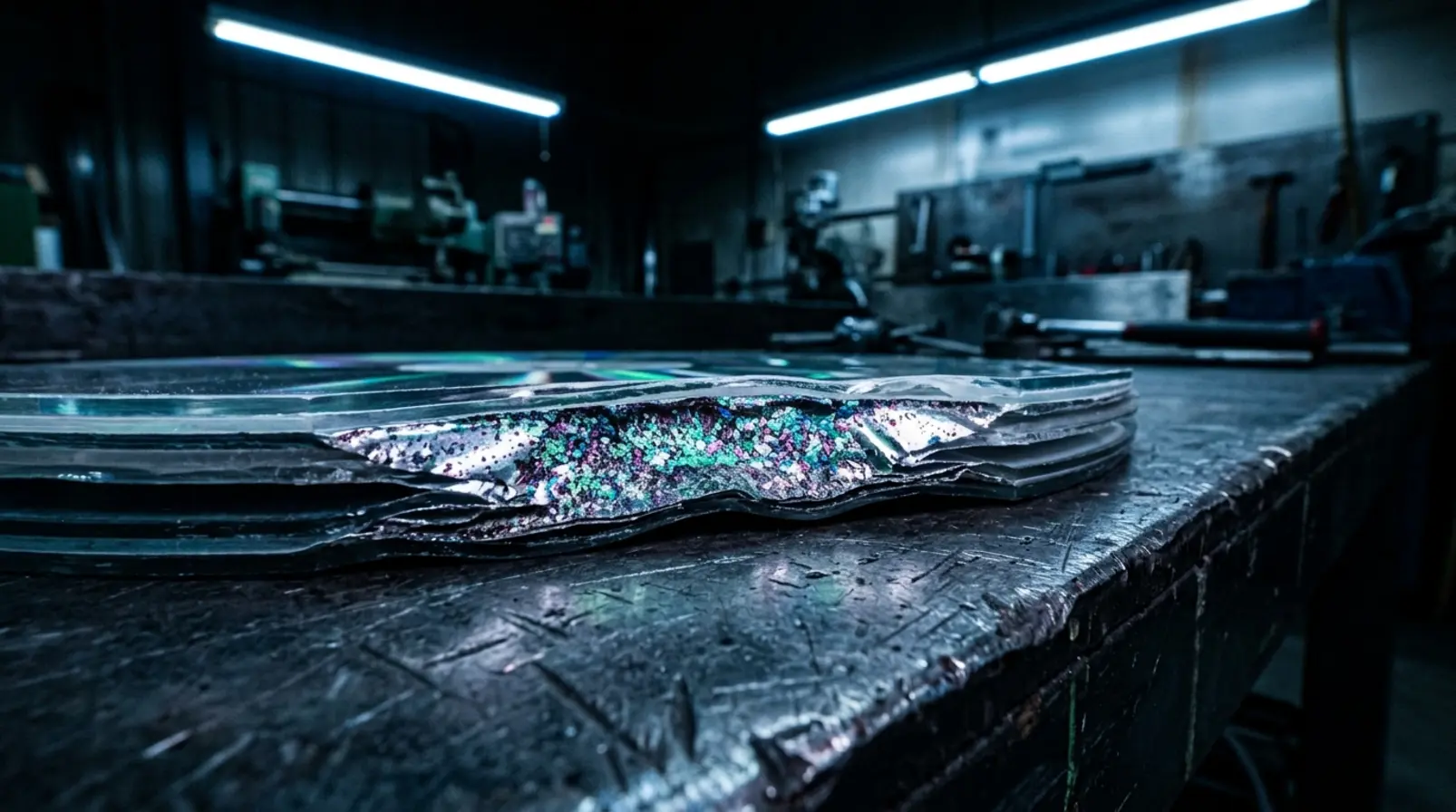
Everything begins with the camera negative. Vinegar Syndrome scanned the original 35mm OCN at 4K resolution using an ARRISCAN XT at their facility in Bridgeport, Connecticut. The same scanner, the same lab that has now processed over 500 feature restorations. For a company founded in 2012 to rescue lost X-rated films from chemical decay, this is a long way from home. But the ethos hasn’t changed. Joe Rubin, VS co-founder, has said that the films he takes the greatest pride in are the ones he knows going in will be poor sellers. Dr. Terror’s may not be a poor seller, but it’s certainly not a safe bet. It’s a movie most people under forty have never heard of.
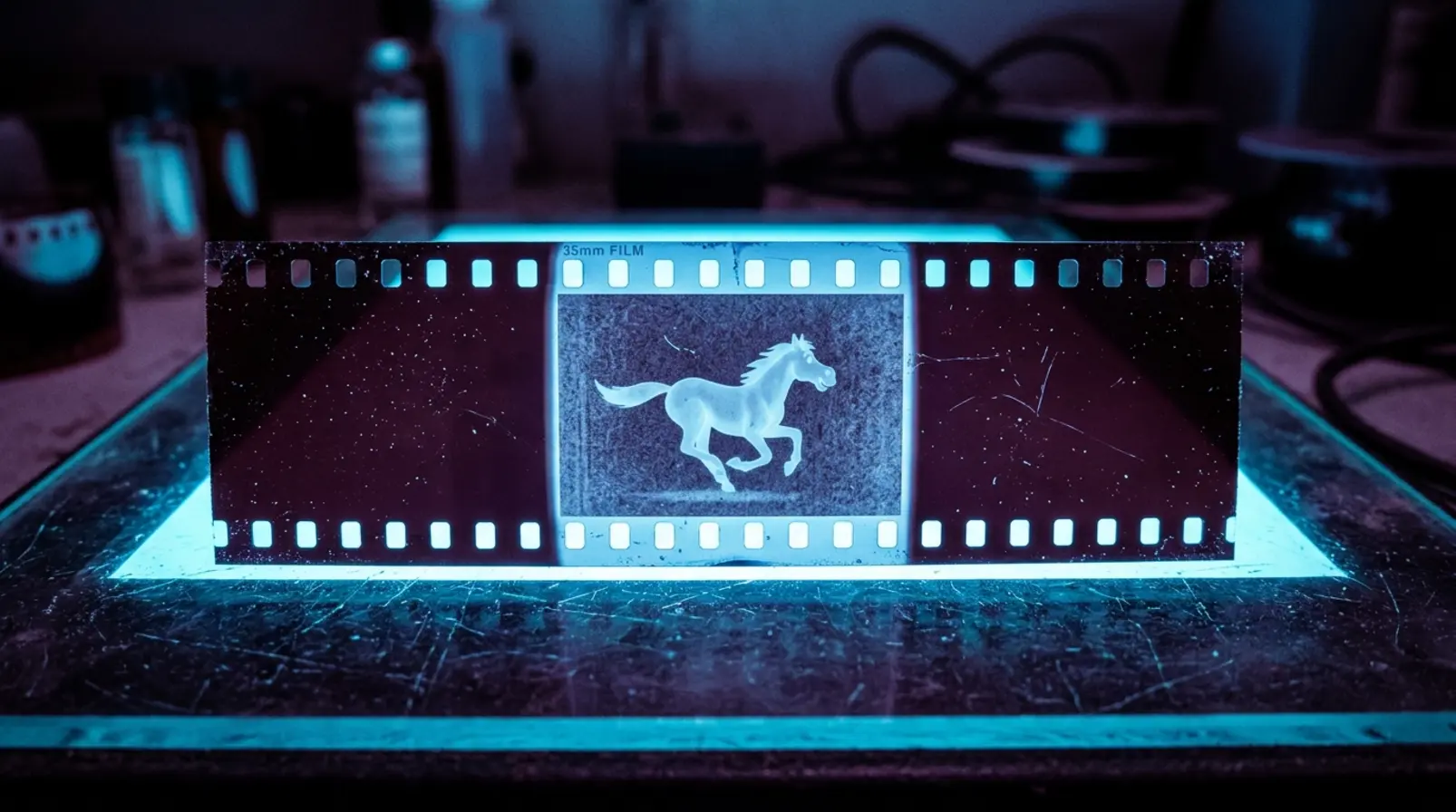
The Techniscope format matters here. Like A Fistful of Dollars and The Ipcress File, Dr. Terror’s was shot in a budget widescreen process that used half the normal amount of 35mm film stock per frame. The result was a 2.35:1 image with inherently more grain and less resolution than standard anamorphic. Scanning this kind of negative at 4K is not a vanity exercise. It’s the only way to extract everything the format can give. The HDR grade on the UHD disc brings out shadow detail that previous home video editions crushed into black, and it restores the damp, institutional gloom of Francis’s compositions to something approaching what audiences saw projected in 1965.
What’s in the Box
The two-disc set (Region-free 4K UHD, Region A Blu-ray) is generous in a way that borders on obsessive. The Vinegar Syndrome product page lists the full contents, and they are staggering: a Freddie Francis audio commentary moderated by Jonathan Sothcott, a 39-minute video essay by author Stephen Thrower, a 58-minute archival making-of documentary titled “House of Cards,” and never-before-seen interviews with crew members including second assistant director Hugh Harlow, propman Arthur Wicks, and dubbing mixer John Aldred. There are archival video interviews with actors Kenny Lynch, Ann Bell, and Jeremy Kemp. There are audio interviews with both Milton Subotsky and Max Rosenberg, the two Americans who founded Amicus Productions. There are three different trailers. Two image galleries. Reversible sleeve artwork. The limited edition slipcover, designed by Chris Barnes and capped at 8,000 units, features spot-gloss skull eyes and an embossed title.
Add it up and you get roughly four hours of supplemental material for a 98-minute film. That ratio tells you everything about who this release is for.
The Film Itself
Milton Subotsky wrote the stories that became Dr. Terror’s House of Horrors in 1948, while working as a scriptwriter for NBC’s Lights Out series. He was openly chasing the ghost of Dead of Night, the 1945 Ealing Studios anthology he considered the greatest horror film ever made. By the time Amicus finally produced the picture, Subotsky had been sitting on the material for sixteen years.
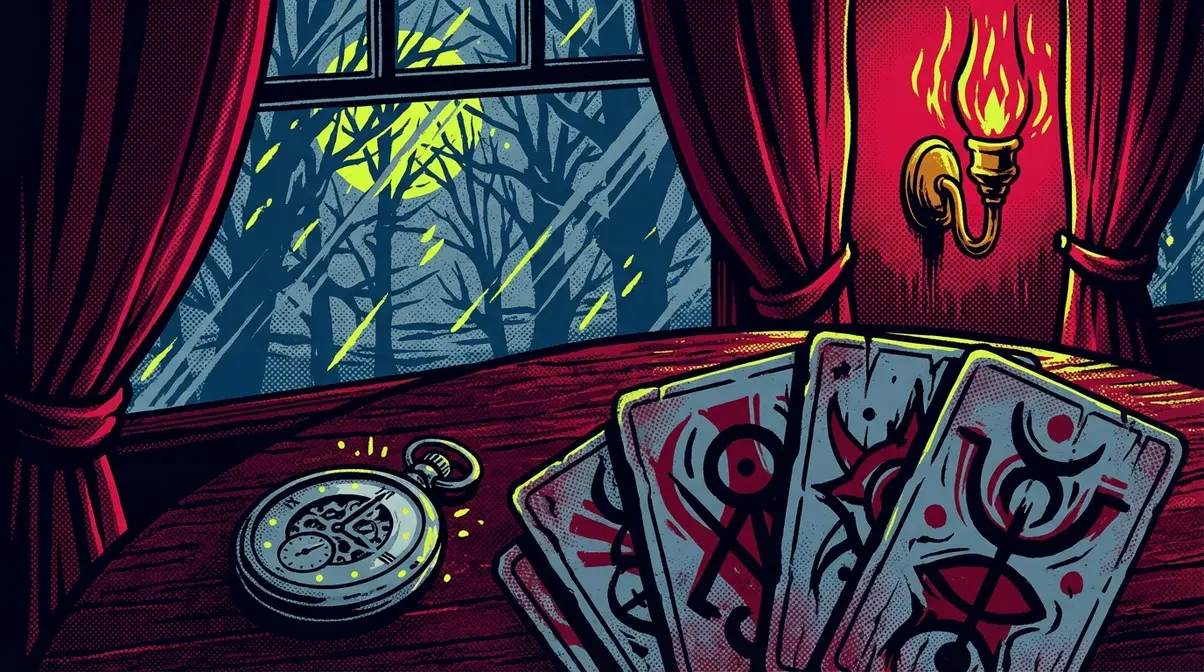
The result is uneven. Five tales of varying quality, bound together by Peter Cushing’s quietly sinister Dr. Schreck reading tarot cards on a train. Christopher Lee plays a sneering art critic tormented by a severed hand. Roy Castle, a real jazz trumpeter who replaced Acker Bilk after Bilk suffered a heart attack, blows his horn in a voodoo segment. Donald Sutherland, paid £1,000 for his trouble, plays a newlywed with a vampire problem. The segments range from genuinely unsettling to cheerfully absurd. That’s the anthology form. You accept the wobble.
What holds it together is Francis. A two-time Academy Award-winning cinematographer (for Sons and Lovers and Glory), later the man behind the camera on David Lynch’s The Elephant Man, Francis directed horror with a craftsman’s restraint. Pauline Kael once marveled at how every time a British movie was something to look at, it turned out to be his work. His compositions in Dr. Terror’s are simple and deliberate. The train carriage is claustrophobic without being showy. The horror segments have a controlled stillness that makes the eruptions of violence genuinely startling.
Why This Object Matters
Dr. Terror’s House of Horrors was the first horror anthology from Amicus, the small company that would go on to produce Tales from the Crypt, Vault of Horror, Asylum, and From Beyond the Grave. It launched a form that defined an entire wing of British horror cinema. And it did so by poaching Hammer’s talent: as critic Tim Brayton has noted, the anthology format made it easier to lure stars like Cushing and Lee, since you only needed to pay them for a fifth of a movie rather than a whole one.
Among collectors, the release sparked immediate debate. Some declared it the definitive Amicus entry. Others ranked it below Vault of Horror or From Beyond the Grave. A few eagle-eyed enthusiasts zeroed in on whether the restoration would include a particular skull shot that was added just before the original theatrical release and has been inconsistently present across various home video editions. This is the level of scrutiny these releases attract. People care about individual frames.
The loudest conversation, though, was about what comes next. If Vinegar Syndrome has the Amicus horror anthologies, the community wants all seven. Asylum was singled out as the title most in need of a proper restoration. The hope is that Dr. Terror’s is not a one-off but the first volume in something larger.
That hope may or may not be realistic. What’s real is the disc in hand. A 4K scan from the original camera negative. Four hours of interviews with people who were there. A slipcover with embossed lettering. This is what preservation looks like when it’s done by people who genuinely love the thing they’re preserving. Not a museum piece. A living object, built to be held and watched and argued about, sixty-one years after Freddie Francis called “cut” at Shepperton and went home for the evening.
'%3e%3cg id='Final-Copy-2_2_' transform='translate(1275.000000, 200.000000)'%3e%3cpath class='st0' d='M7.4,12.8h6.8l3.1-11.6H7.4C4.2,1.2,1.6,3.8,1.6,7S4.2,12.8,7.4,12.8z'/%3e%3c/g%3e%3c/g%3e%3c/g%3e%3cg id='final---dec.11-2020'%3e%3cg id='_x30_208-our-toggle' transform='translate(-1275.000000, -200.000000)'%3e%3cg id='Final-Copy-2' transform='translate(1275.000000, 200.000000)'%3e%3cpath class='st1' d='M22.6,0H7.4c-3.9,0-7,3.1-7,7s3.1,7,7,7h15.2c3.9,0,7-3.1,7-7S26.4,0,22.6,0z M1.6,7c0-3.2,2.6-5.8,5.8-5.8 h9.9l-3.1,11.6H7.4C4.2,12.8,1.6,10.2,1.6,7z'/%3e%3cpath id='x' class='st2' d='M24.6,4c0.2,0.2,0.2,0.6,0,0.8l0,0L22.5,7l2.2,2.2c0.2,0.2,0.2,0.6,0,0.8c-0.2,0.2-0.6,0.2-0.8,0 l0,0l-2.2-2.2L19.5,10c-0.2,0.2-0.6,0.2-0.8,0c-0.2-0.2-0.2-0.6,0-0.8l0,0L20.8,7l-2.2-2.2c-0.2-0.2-0.2-0.6,0-0.8 c0.2-0.2,0.6-0.2,0.8,0l0,0l2.2,2.2L23.8,4C24,3.8,24.4,3.8,24.6,4z'/%3e%3cpath id='y' class='st3' d='M12.7,4.1c0.2,0.2,0.3,0.6,0.1,0.8l0,0L8.6,9.8C8.5,9.9,8.4,10,8.3,10c-0.2,0.1-0.5,0.1-0.7-0.1l0,0 L5.4,7.7c-0.2-0.2-0.2-0.6,0-0.8c0.2-0.2,0.6-0.2,0.8,0l0,0L8,8.6l3.8-4.5C12,3.9,12.4,3.9,12.7,4.1z'/%3e%3c/g%3e%3c/g%3e%3c/g%3e%3c/g%3e%3c/svg%3e) Your Privacy Choices
Your Privacy Choices