

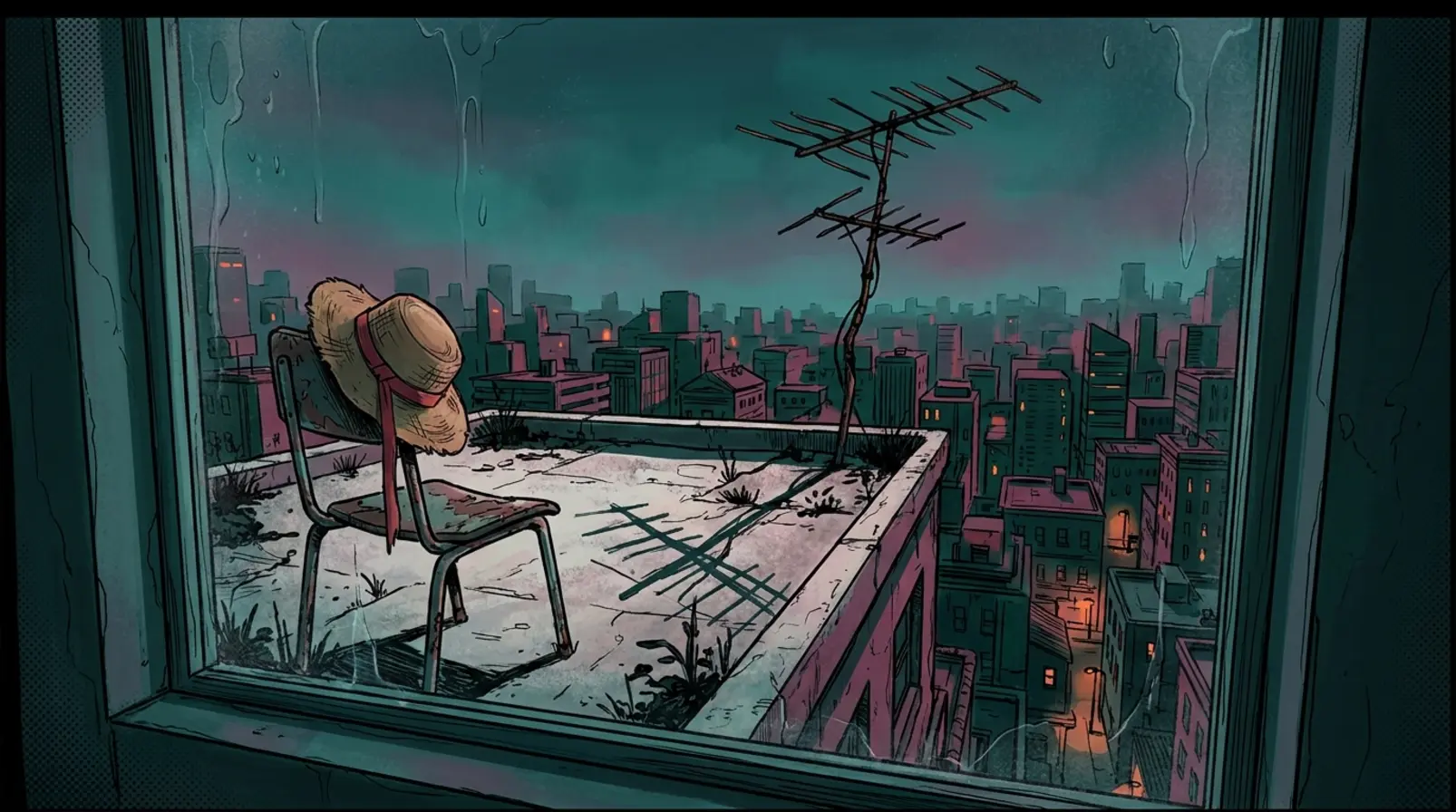


On December 28, 2025, One Piece aired its 1,155th episode and closed the book on something that had been running, unbroken, since Bill Clinton’s second term. After the conclusion of the Egghead story arc, Toei Animation put the series on hiatus and announced it would adopt a two-cour annual schedule, with a maximum of 26 episodes per year going forward. For the first time since October 20, 1999, there would be no new One Piece next Sunday. Or the Sunday after that. Or the one after that.
The show came back on April 5, 2026, with the Elbaph Arc. The twenty-second season is produced by Toei Animation and primarily directed by Wataru Matsumi, with Satoshi Itō and Yasunori Koyama serving as additional co-directors. New timeslot. New director. New rules. And a fundamentally different relationship between the show and the people who watch it.
The Sunday Machine
You have to understand what was lost before you can evaluate what was gained. Tatsuya Nagamine was the series director for the One Piece anime from episode 892 (the start of the Wano Kuni arc) through episode 1122. That stretch included Gear 5, the Egghead revelations, and some of the most visually ambitious work Toei has ever produced. Nagamine died on August 20, 2025, after a year-long battle with an undisclosed illness. He was 53. His death was not publicly disclosed until November 13, when a memorial service was held at Toei’s studio in Higashi-Ōizumi, Nerima, Tokyo. The format change was announced two weeks before that, on October 28. The two events are separate, but taken together they point to the same reality: the way the show had always operated was no longer sustainable.
Before the seasonal shift, One Piece had occupied a Sunday 9:30 a.m. slot on Fuji TV for eighteen years straight, from October 2006 until its late-night move in April 2025. That slot was a fixture of Japanese childhood. It was also, for a global fandom syncing time zones and dodging spoilers, a weekly ritual as reliable as the tides. The show aired roughly 46 to 50 episodes a year. It never stopped. It never paused to breathe. And over time, it developed a reputation for pacing so glacial it became the butt of its own fandom’s jokes.
The Pacing Tax
The numbers tell the story cleanly. In the early days, the Alabasta Arc compressed 64 manga chapters into 39 episodes. By the time the anime reached Dressrosa, that ratio had inverted: 102 manga chapters stretched across 118 episodes, with no filler arcs to blame for the bloat. At the time of writing, the anime is only about 50 chapters behind the manga, a razor-thin buffer that forced the show to pad every scene, extend every reaction shot, and stretch single chapters across entire half-hours of television.
Series producer Ryūta Koike, announcing the change on Toei’s YouTube channel, described it as “a strategic decision to support the advancement and evolution of the anime series.” The official press release promised that new episodes would “incorporate more content, tempo, and pacing of the manga.” In plain language: less drag, more forward motion.
That’s where the debate sharpens. One Piece’s pacing has long divided the audience, and expectations for the seasonal shift were high. Despite the format change, the anime is still adapting at roughly one chapter per episode. Fans who expected a faster pace—two or three chapters per episode—have pushed back, with “seasonal in name only” becoming a common refrain in discussion boards.
The Early Returns
Three episodes in, the picture is more nuanced than either side expected. When episode #1156 premiered and kick-started the Elbaph arc, it covered a single chapter, complete with the usual flashbacks and filler extensions. Visually impressive, but not a convincing argument for change.
Then came episode 1157. In a notable shift, episode #1157 adapted the entirety of chapter #1127 and part of chapter #1128, resulting in a noticeably smoother flow. It suggests the show may move toward a more flexible model: one chapter per episode as a baseline, but with room to expand when the material allows it.
That flexibility is the real shift. The old system didn’t allow for it. Now, at least in theory, episodes can slow down or speed up based on what the story needs.
What 600 Million Copies Buys You
The wraparound jacket band for the 114th compiled volume of Eiichiro Oda’s One Piece manga confirmed the series has surpassed 600 million copies published worldwide. According to Oricon, about 450 million copies are within Japan and about 150 million copies are outside Japan. That milestone, reported by Anime News Network in March, makes One Piece the best-selling manga series in history and, with just 114 volumes, it has now matched or surpassed Superman’s estimated 600 million across 18,000+ issues to become arguably the best-selling comic of any kind.
This is not a franchise scaling back out of necessity. It’s a franchise large enough to change its approach without risking its position. The live-action Netflix series has already been renewed for a third season. WIT Studio and Netflix are actively producing THE ONE PIECE, a high-budget remake starting from the beginning. Toei no longer needs volume to sustain the brand—it needs consistency and quality as the story moves toward its endgame.
The Comfort We Lost
There was something real about the weekly ritual. Fan communities describe it the way people describe a long-running radio show or a Sunday newspaper: not every installment was great, but the constancy itself was the thing. You checked in. The show was there. It had been there since before some of its current viewers were born.
For the first time in over 25 years, the anime has switched to a seasonal format with just 26 episodes per year. That means 26 weeks annually with no new One Piece. For fans who grew up with the Big Three, who watched Naruto and Bleach end their continuous runs and saw One Piece as the last holdout of an older model, this carries weight beyond scheduling. It marks the end of a particular way anime was made—and experienced.
The weekly model delivered some extraordinary television. It also delivered years of stretched pacing and diminishing returns. The ritual mattered, but it came at a cost.
Where This Goes
The Elbaph arc will have 26 episodes in 2026, with the first 13 beginning April 5 and the second cour to follow. At this pace, arcs that once took four years to animate could now take seven or more. That tradeoff is hard to ignore. But it also raises the bar: each episode now carries the expectation that it justifies the wait.
Whether Toei delivers on that expectation is the only question that matters. Episode 1156 raised doubts. Episode 1157 suggested progress. For the first time in years, the One Piece anime feels like it has room to improve—and pressure to do so.
The Sundays are gone. What replaces them has to be better.

'%3e%3cg id='Final-Copy-2_2_' transform='translate(1275.000000, 200.000000)'%3e%3cpath class='st0' d='M7.4,12.8h6.8l3.1-11.6H7.4C4.2,1.2,1.6,3.8,1.6,7S4.2,12.8,7.4,12.8z'/%3e%3c/g%3e%3c/g%3e%3c/g%3e%3cg id='final---dec.11-2020'%3e%3cg id='_x30_208-our-toggle' transform='translate(-1275.000000, -200.000000)'%3e%3cg id='Final-Copy-2' transform='translate(1275.000000, 200.000000)'%3e%3cpath class='st1' d='M22.6,0H7.4c-3.9,0-7,3.1-7,7s3.1,7,7,7h15.2c3.9,0,7-3.1,7-7S26.4,0,22.6,0z M1.6,7c0-3.2,2.6-5.8,5.8-5.8 h9.9l-3.1,11.6H7.4C4.2,12.8,1.6,10.2,1.6,7z'/%3e%3cpath id='x' class='st2' d='M24.6,4c0.2,0.2,0.2,0.6,0,0.8l0,0L22.5,7l2.2,2.2c0.2,0.2,0.2,0.6,0,0.8c-0.2,0.2-0.6,0.2-0.8,0 l0,0l-2.2-2.2L19.5,10c-0.2,0.2-0.6,0.2-0.8,0c-0.2-0.2-0.2-0.6,0-0.8l0,0L20.8,7l-2.2-2.2c-0.2-0.2-0.2-0.6,0-0.8 c0.2-0.2,0.6-0.2,0.8,0l0,0l2.2,2.2L23.8,4C24,3.8,24.4,3.8,24.6,4z'/%3e%3cpath id='y' class='st3' d='M12.7,4.1c0.2,0.2,0.3,0.6,0.1,0.8l0,0L8.6,9.8C8.5,9.9,8.4,10,8.3,10c-0.2,0.1-0.5,0.1-0.7-0.1l0,0 L5.4,7.7c-0.2-0.2-0.2-0.6,0-0.8c0.2-0.2,0.6-0.2,0.8,0l0,0L8,8.6l3.8-4.5C12,3.9,12.4,3.9,12.7,4.1z'/%3e%3c/g%3e%3c/g%3e%3c/g%3e%3c/g%3e%3c/svg%3e) Your Privacy Choices
Your Privacy Choices