

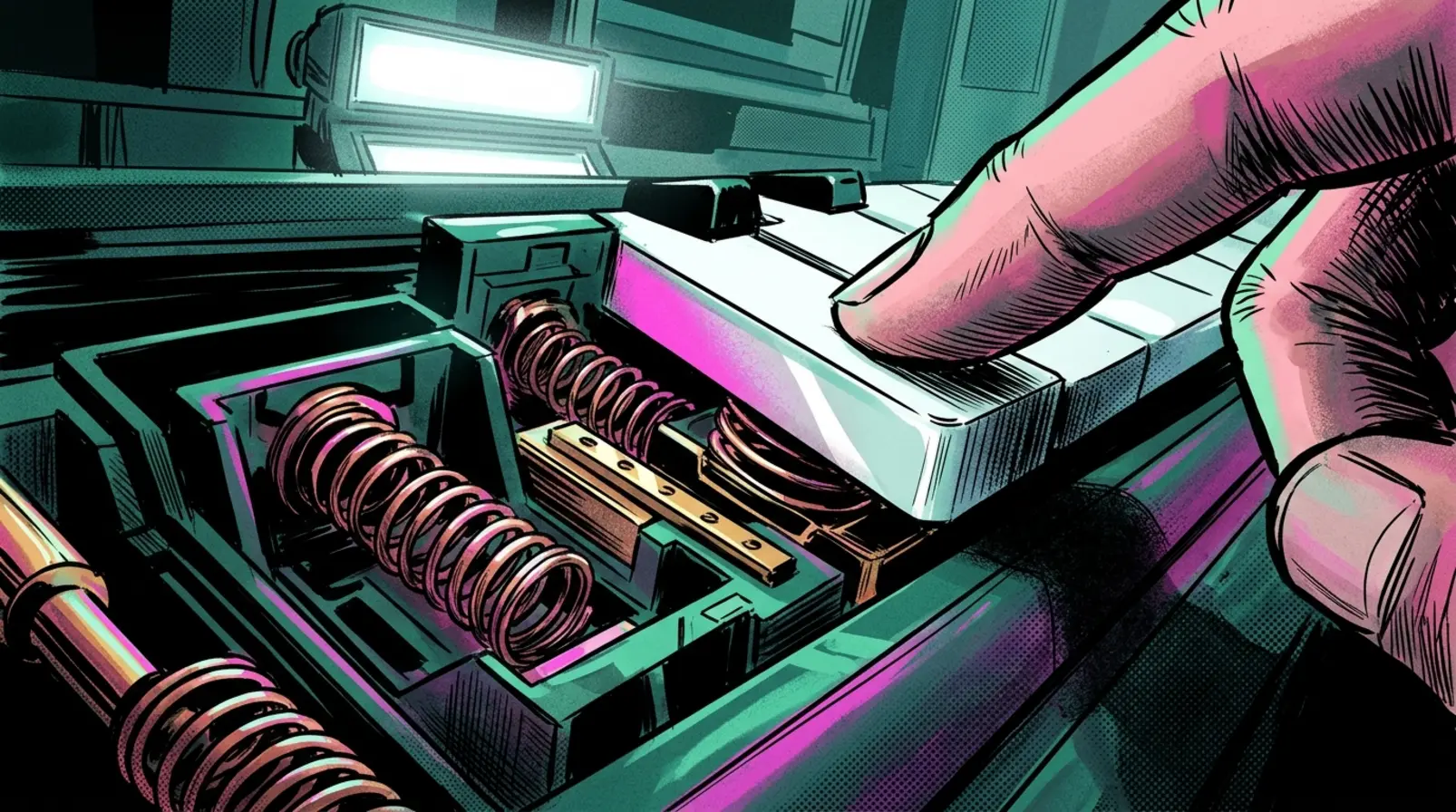

The Arturia PolyBrute 12’s FullTouch keybed is a patented, capacitive-sensing keyboard architecture that tracks the precise vertical position and acceleration of each of its 61 keys across the entire movement range, from initial contact through full depression. Unlike conventional aftertouch systems that only register pressure at the bottom of key travel, FullTouch generates continuous modulation data throughout the keystroke, enabling per-note polyphonic expression, MPE compatibility, and three distinct aftertouch modes.
How Arturia Built the PolyBrute 12’s FullTouch Keybed from Scratch
Arturia was founded in 1999 in Grenoble by INPG engineers Frédéric Brun and Gilles Pommereuil to create affordable software synthesizers. For years, the company was known almost exclusively for its virtual instrument emulations and, later, the scrappy analog hardware of the Brute line. In 2009, Arturia released their first hardware synth, the Origin, followed in 2012 with the MiniBrute, a vintage-style 25-key monophonic analog synthesizer with a Steiner-Parker filter. Despite pre-production uncertainty about sales, the MiniBrute sold well due to its low price point and expressive sound. But the PolyBrute 12, unveiled at Superbooth 2024 in Berlin, represents something fundamentally different. The 12-voice poly synth, which is fully analogue, is an update to the popular PolyBrute that Arturia released in September 2020. In my view, this isn’t just a voice-count bump. It’s a company betting its flagship on a piece of mechanical engineering that nobody asked them to build.
A patented keybed architecture that has been years in the making: FullTouch describes the keyboards’ dynamic aftertouch responsiveness, able to capture the precise position and acceleration of each key across the entire movement range. To me, that description undersells what’s actually going on beneath those cream-colored keys. Most synthesizer keyboards function essentially as switches. An individual key on a synthesizer is, essentially, a type of switch with two states: on and off. Most synthesizers can detect the speed at which the switch is engaged (velocity), but aside from that, the key really only produces two distinct detectable states: on, and off.
The brand new Full Touch keybed was painstakingly developed by Arturia to facilitate maximum expression. Thanks to capacitive sensing, the position of any key can be tracked from rest to fully depressed. That’s the core mechanical innovation. Instead of relying on a pressure strip at the bottom of the key bed, the way conventional polyphonic aftertouch does, FullTouch tracks every key’s full vertical movement, transforming position and pressure into continuous modulation sources.
Understanding FullTouch’s Three Aftertouch Modes on the PolyBrute 12
The system doesn’t just give you one new trick. It gives you a vocabulary. A button on the left side of the synth cycles between three different aftertouch modes: Mono, Poly and Alt. Mono and Poly are straightforward. Monophonic aftertouch applies the same modulation globally when you lean into any depressed key. Polyphonic aftertouch lets each note respond independently. But the Alt modes are where Arturia’s engineering gamble pays off.
These modes are unique to the PolyBrute 12, so they appear to represent a very rare thing: a genuine development in the field of keyboard performance. The Alt modes have been made possible by the development of a new keybed that knows the position of each key in its travel. Arturia have then made use of this in three ways to provide different ways of articulating individual notes while playing.
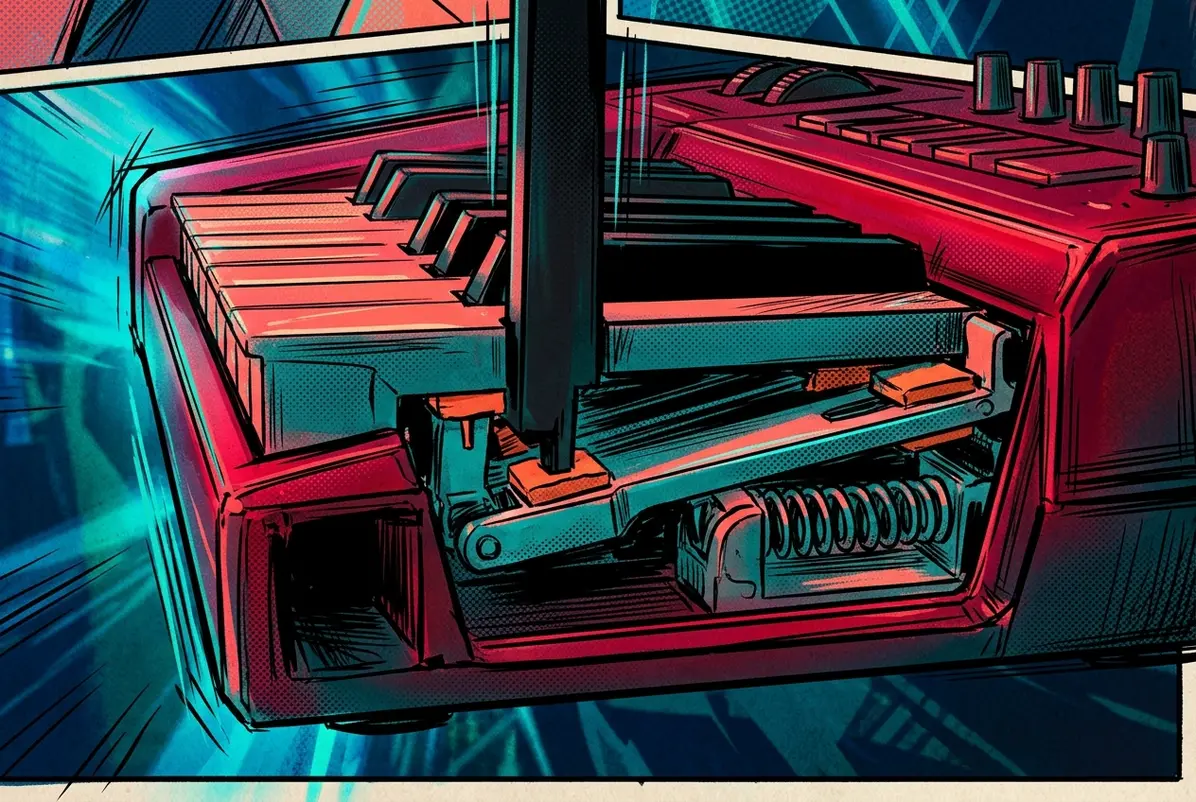
The FullTouch Zone range starts as soon as you press the key, and stops where the Classic AfterTouch area starts. The “Note On” trigger point is higher than on usual keyboards. What this means in practice: you can trigger a note at the slightest touch, then use the entire downward motion of the key as a continuous controller. FullTouch provides three algorithms: FullTouch Envelope. From the touch point, the VCF and VCA envelopes are controlled directly by the movement of your fingers.
There’s also FullTouch + Z, which behaves similar to regular FullTouch mode where notes are triggered immediately and aftertouch is controlled by the travel of the key. The difference is that the normal aftertouch range at the bottom of the key now controls the Z modulation lane. It reads like Arturia designed this specifically for two-handed players who can’t reach the Morphée pad while fingering a wide chord.
PolyBrute 12 FullTouch vs. Expressive E Osmose: Different Roads to MPE
The obvious comparison point is the Expressive E Osmose, the other French-designed synth that put MPE expression into a traditional keyboard form factor. Its closest point of comparison is probably the Expressive E Osmose, but even that isn’t really apt. Whereas the Osmose has full-sized keys with something closer to a piano action that wiggle back and forth, the PolyBrute 12’s keys are synth action and don’t move side to side.
The Osmose tracks seven gestures per key, including lateral pitch bending and per-note vibrato via side-to-side movement. Perhaps the only thing that’s missing from the PolyBrute 12 is the ability to add vibrato using side-to-side movement. This is another natural way of affecting a sound, but the number of synths that offer it can be counted on the fingers of one hand. My take is that this omission is less a flaw and more a design philosophy. Arturia chose to go deep on vertical displacement rather than attempt to cover every axis. The Osmose, meanwhile, covers more gestural territory but pairs its keybed with Haken Audio’s EaganMatrix digital engine rather than a fully analog signal path.
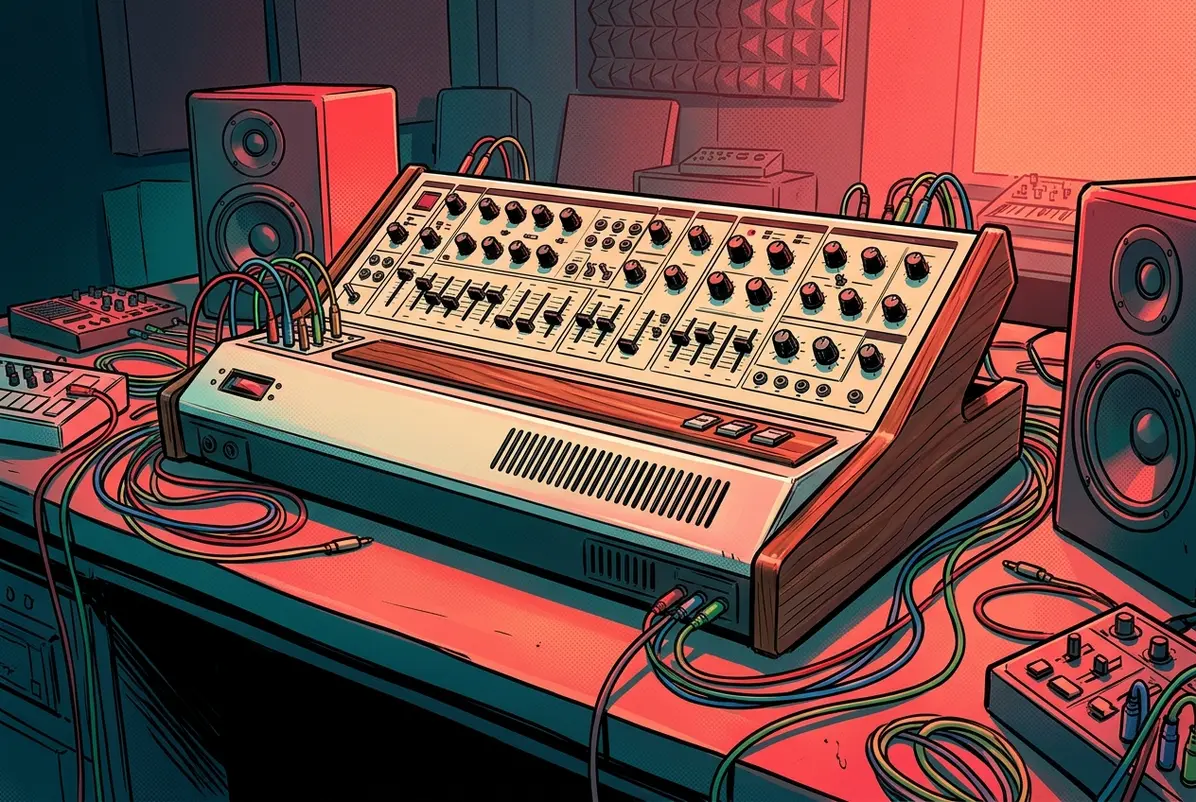
In online synth communities, the debate runs hot. Some players find the FullTouch modes unintuitive at first, and the learning curve is real. The three FullTouch modes are unique to the PolyBrute 12, and learning to play them proficiently is going to take time; trying to hold a given note at a specific height while moving others up or down is, at best, bloody difficult. Others see this as the whole point. The instrument rewards practice in a way that most synthesizers simply don’t ask of you.
The Physical Engineering Behind the PolyBrute 12 Keybed
There’s a case to be made that the FullTouch keybed’s most interesting design decision is structural, not electronic. For the PolyBrute 12, Arturia have increased the size of the PolyBrute’s case, making it higher and adding a substantial extension to the rear. This extension has vents at the top and bottom that allow warm air from inside to escape upward, at the same time sucking in cooler air from underneath. Since these vents run the entire length of the case, there’s no need for a cooling fan. Twelve analog voice cards generate serious heat, and Arturia solved the thermal problem passively. The PolyBrute 12 measures 972 x 435 x 156mm and weighs in at a considerable 23kg. That’s over 50 pounds of synthesizer.
The keys on the newly designed keybed can be longer than those on a shallower instrument, which means the pivot point can be further back, which in turn means that the keys stay flatter as they move up and down. This is a subtle but important detail for FullTouch performance. A flatter key action gives you finer control over vertical position, which is the entire basis of the FullTouch system. What strikes me is how the physical and electronic engineering interlock here. The bigger case isn’t just about cooling. It enables the keybed geometry that makes the whole thing work.
The build uses the finest materials, including black walnut wood, a next-generation keybed and striking aluminum exterior. It arrives in a fetching cream colourway, with expanded dimensions and heavier weight thanks to additional voice cards and cooling vents. Priced at $4,449/€3,999, the PolyBrute 12 is now available to order.
Why the PolyBrute 12 FullTouch Keybed Matters for DIY Builders and Synth Modders
If you build or modify synthesizers, the FullTouch approach raises provocative questions. The synth community has spent years hacking polyphonic aftertouch into instruments that never shipped with it, from Fatar keybed swaps to custom FSR strips under existing keys. Arturia’s approach, using capacitive sensing across the full key travel, suggests a different paradigm entirely. Rather than adding pressure detection after the fact, they engineered position tracking into the mechanism from the start.
Polybrute 12 is the first instrument to use Arturia’s new FullTouch keyboard technology, allowing new levels of expression and control not possible on traditional synthesizer keybeds. For makers and modders, this is both inspiring and sobering. The technology is patented. You can’t simply replicate it. But the underlying concept, treating a key not as a switch but as a continuous position sensor, is something DIY builders can explore with Hall-effect sensors, optical encoders, or even soft potentiometers mounted along the key travel path.

The Sound On Sound review noted that its keybed is a step beyond that of every other polysynth on the market. I think that’s fair. But what matters to the maker community isn’t whether Arturia’s specific implementation can be copied. It’s whether the idea of continuous key-position tracking will spread to other instruments and eventually to open-source keyboard designs. Reasonable people might disagree, but to me this feels like the beginning of a shift in how we think about what a key should actually do.
PolyBrute 12 FullTouch Keybed FAQ
What is the Arturia PolyBrute 12 FullTouch keybed?
FullTouch is a patented keybed architecture that captures the precise position and acceleration of each key across the entire movement range. Thanks to capacitive sensing, the position of any key can be tracked from rest to fully depressed. It supports monophonic aftertouch, polyphonic aftertouch, and three FullTouch Alt modes unique to this instrument.
How does FullTouch differ from standard polyphonic aftertouch?
The Classic Aftertouch range is found on the most common AfterTouch keyboards. This range starts after hitting the “key stop,” and you modulate it by pushing the key further. The FullTouch Zone range starts as soon as you press the key, and stops where the Classic AfterTouch area starts. In other words, FullTouch uses the entire key travel as a modulation source, not just the bottom.
Is the PolyBrute 12 an MPE instrument?
Yes. The PolyBrute 12 is Arturia’s first MPE-capable instrument and the particular implementation here is unique. With the PolyBrute 12, you can modulate any parameter using MPE, essentially making every key a dynamic modulation source.
How much does the Arturia PolyBrute 12 cost?
Priced at $4,449/€3,999, the PolyBrute 12 is now available to order. It was announced at Superbooth 2024 in May 2024.
How does the PolyBrute 12 FullTouch compare to the Expressive E Osmose?
The Osmose has full-sized keys with something closer to a piano action that wiggle back and forth, while the PolyBrute 12’s keys are synth action and don’t move side to side. The Osmose also uses Haken Audio’s EaganMatrix digital synthesis engine, while the PolyBrute 12 is a fully analog polysynth with 12 voice cards. They solve the same problem, expressive per-note control, through very different mechanical and sonic architectures.
Can the FullTouch modes be saved per preset?
These Full Touch modes utilize the entire travel of a key to derive additional modulation sources, and because these modes may be stored and selected on a per-preset basis it’s possible to discover new and unique ways to explore expressivity in any given sound. Polybrute 12 has 768 preset memories, including 480 ready-to-use sounds arranged in 8 banks of 96.

'%3e%3cg id='Final-Copy-2_2_' transform='translate(1275.000000, 200.000000)'%3e%3cpath class='st0' d='M7.4,12.8h6.8l3.1-11.6H7.4C4.2,1.2,1.6,3.8,1.6,7S4.2,12.8,7.4,12.8z'/%3e%3c/g%3e%3c/g%3e%3c/g%3e%3cg id='final---dec.11-2020'%3e%3cg id='_x30_208-our-toggle' transform='translate(-1275.000000, -200.000000)'%3e%3cg id='Final-Copy-2' transform='translate(1275.000000, 200.000000)'%3e%3cpath class='st1' d='M22.6,0H7.4c-3.9,0-7,3.1-7,7s3.1,7,7,7h15.2c3.9,0,7-3.1,7-7S26.4,0,22.6,0z M1.6,7c0-3.2,2.6-5.8,5.8-5.8 h9.9l-3.1,11.6H7.4C4.2,12.8,1.6,10.2,1.6,7z'/%3e%3cpath id='x' class='st2' d='M24.6,4c0.2,0.2,0.2,0.6,0,0.8l0,0L22.5,7l2.2,2.2c0.2,0.2,0.2,0.6,0,0.8c-0.2,0.2-0.6,0.2-0.8,0 l0,0l-2.2-2.2L19.5,10c-0.2,0.2-0.6,0.2-0.8,0c-0.2-0.2-0.2-0.6,0-0.8l0,0L20.8,7l-2.2-2.2c-0.2-0.2-0.2-0.6,0-0.8 c0.2-0.2,0.6-0.2,0.8,0l0,0l2.2,2.2L23.8,4C24,3.8,24.4,3.8,24.6,4z'/%3e%3cpath id='y' class='st3' d='M12.7,4.1c0.2,0.2,0.3,0.6,0.1,0.8l0,0L8.6,9.8C8.5,9.9,8.4,10,8.3,10c-0.2,0.1-0.5,0.1-0.7-0.1l0,0 L5.4,7.7c-0.2-0.2-0.2-0.6,0-0.8c0.2-0.2,0.6-0.2,0.8,0l0,0L8,8.6l3.8-4.5C12,3.9,12.4,3.9,12.7,4.1z'/%3e%3c/g%3e%3c/g%3e%3c/g%3e%3c/g%3e%3c/svg%3e) Your Privacy Choices
Your Privacy Choices