

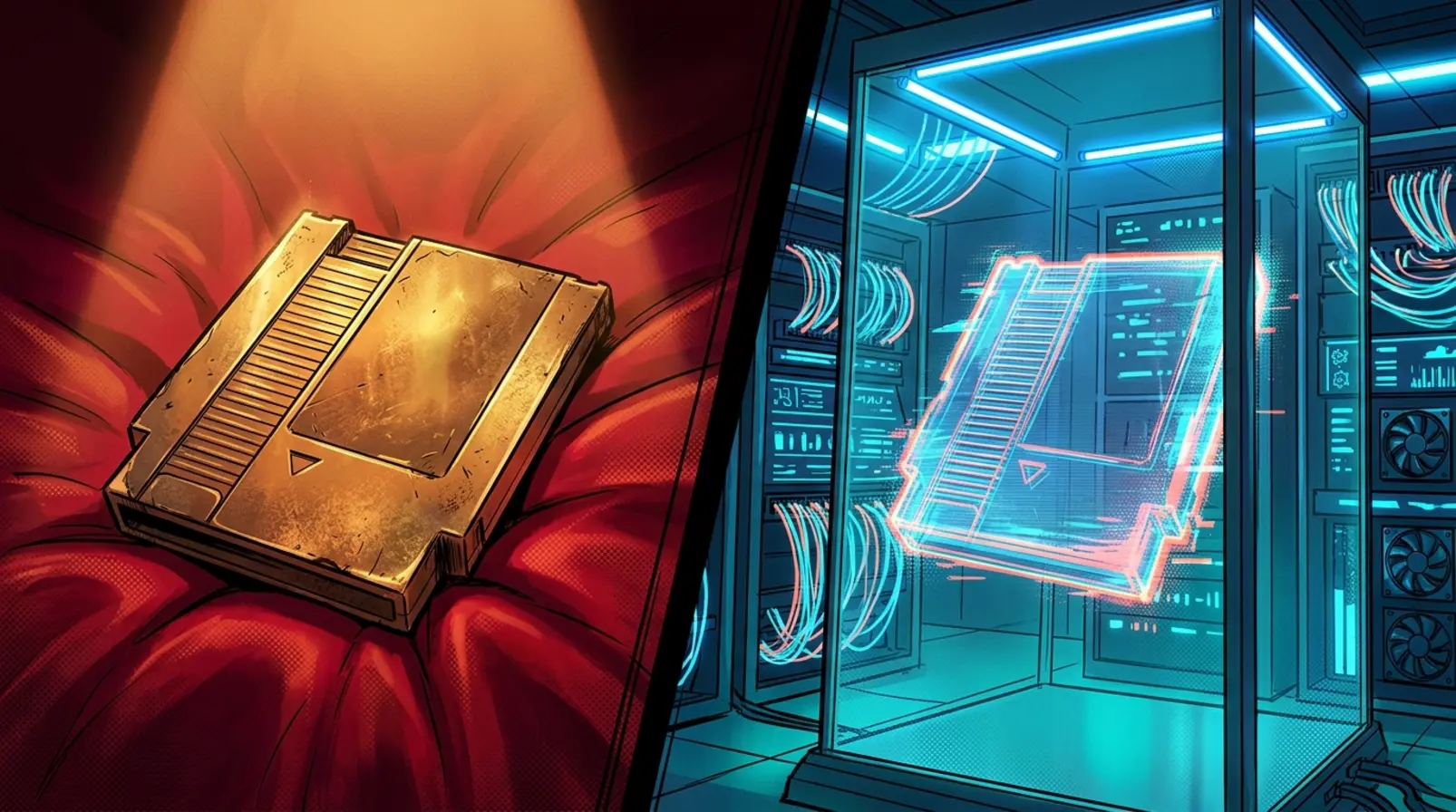

Nintendo’s gold cartridge refers to the distinctive metallic-gold NES cartridge used for the 1987 North American release of The Legend of Zelda, the first NES cartridge to feature battery-backed save memory. The term “pseudo-physical” describes modern game releases, like the Nintendo Switch 2’s game-key cards, that ship in physical packaging but contain no actual game data, functioning instead as download licenses in cartridge form.
The Original Gold Cartridge: How Nintendo Invented Premium Physical
The Legend of Zelda is a 1986 action-adventure game developed and published by Nintendo for the Family Computer Disk System. When Nintendo published the game in North America, the packaging design featured a small portion of the box cut away to reveal the unique gold-colored cartridge. More than a year later, it was released in North America and Europe on the Nintendo Entertainment System in cartridge format; the US version was one of the first games to include an internal battery for saving data.
That gold shell wasn’t just cosmetic. It was a signal. The cartridge version made use of the Memory Management Controller chip (specifically the MMC1 model), which could use bank-switching to allow for larger games than had previously been possible, and could also use battery-powered RAM letting players save their data for the first time on the NES. In my view, that combination of visual distinction and genuine technical innovation is the blueprint every premium physical release has been chasing since.
The game originally retailed for $49.99 in 1987 (approx. $135.00 in 2026 currency), signaling its status as a “Premium” title compared to standard $29.99 releases. It was a critical and commercial success, selling over 6.5 million copies and launching a major franchise. The gold cartridge told you something before you even plugged it in. To me, no piece of physical game media has ever matched that first impression.
Gold Cartridges as Collectible Grails: The NWC and Auction Records
The gold cartridge concept didn’t end with Zelda. Produced in 1990, the auction for one of only 26 copies of the Gold Nintendo World Championships cartridges opened for bidding on July 22. The 26 Gold cartridges were presented as exclusive prizes for Nintendo Power magazine readers. In what is considered the grandfather of today’s eSports, the 1990 Nintendo World Challenge visited 29 cities from March 8, 1990, to December 9, 1990.
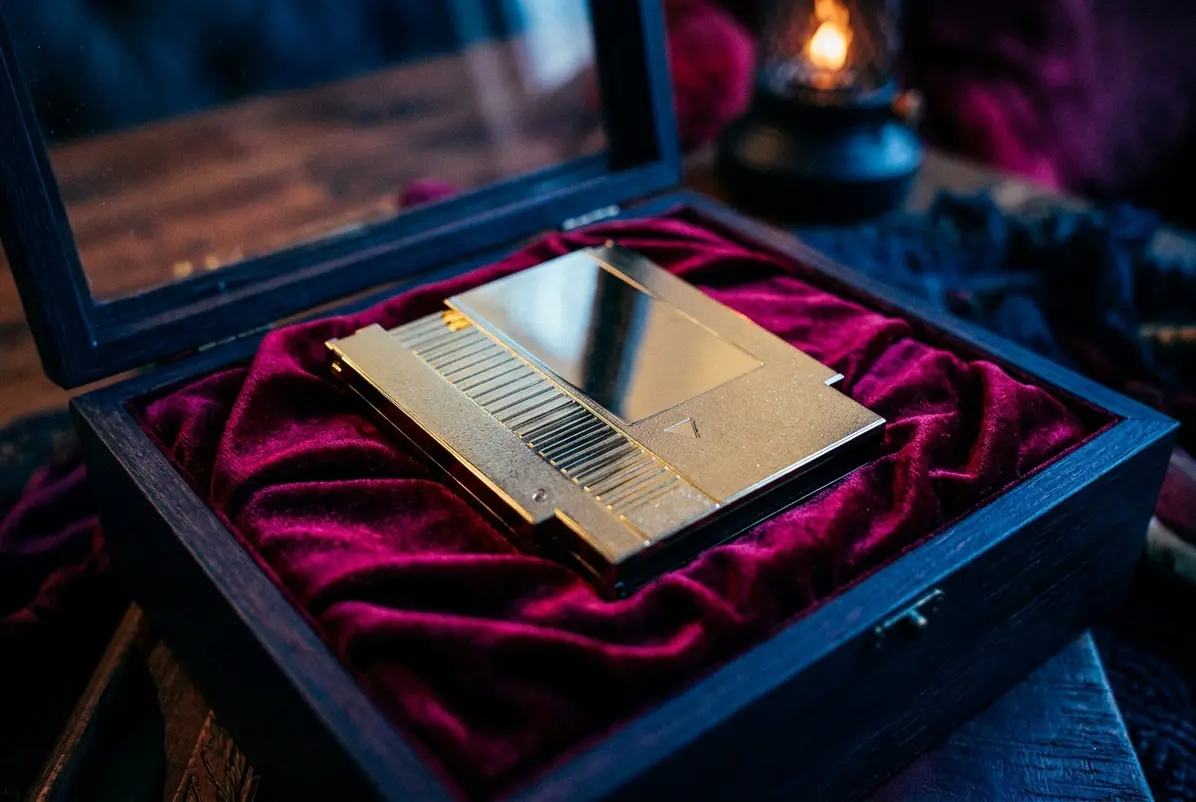
Out of the 26 copies produced and distributed to the poll’s winners, only 16 examples of the gold NWC cartridge are known to exist. Nine copies remain unaccounted for, and one copy was destroyed in a house fire. A gold 1990 Nintendo World Championships cartridge graded by CGC Video Games just realized an impressive $207,400 , according to CGC’s report on the 2024 Goldin 100 auction.
The Zelda carts have their own stratosphere. This $870,000 Zelda has those coveted elements in spades. It’s a rare “NES R” variant, which was produced in late 1987 for only a few months , as Robb Report documented when it sold at Heritage Auctions in 2021. A sealed copy of Super Mario Bros sold for $660,000 in 2021. What strikes me is how these numbers keep climbing. The gold cartridge isn’t just a relic. It’s a financial instrument dressed in plastic.
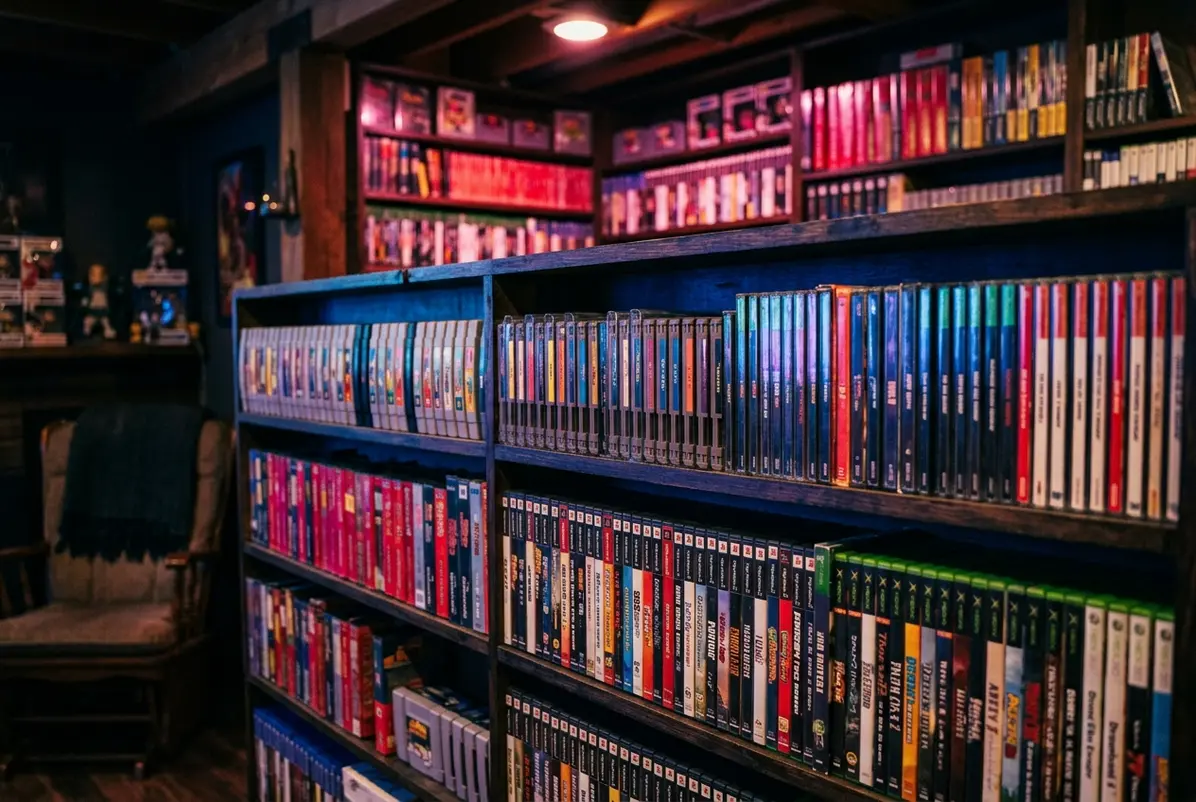
Limited Run Games and the Fight for Real Physical Media
Josh Fairhurst and Douglas Bogart founded Limited Run Games in October 2015 after Fairhurst wanted to preserve the digitally released games developed by his studio, Mighty Rabbit Studios, on physical media. The company released Breach & Clear alongside the launch of its website on October 29, 2015. Limited Run Games sought to test the market response with this release, and it sold out in 108 minutes.
Following major expansion between 2018 and 2022, including branching out into publishing and retrogaming, the company was acquired by Embracer Group through its Embracer Freemode operative group in September 2022. Through it all, the company’s tagline has stayed the same: #ForeverPhysical.
That tagline now lands as more than branding. At PAX East 2025, Limited Run Games commented on the ongoing discussion surrounding physical cartridges for Switch 2. The company, known for bringing both retro and modern digital titles to physical media, confirmed that its own releases should include the full game on the cartridge. It reads like a line in the sand, drawn precisely where the industry is trying to blur it.
The Switch 2’s Game-Key Cards: What “Pseudo-Physical” Actually Means
When Nintendo launched the Switch 2 in June 2025, it introduced a new format alongside traditional cartridges. The launch introduced Game-Key Cards, tiny cartridges that hold only a software license while the full game data is downloaded to the console or a microSD Express card. In short, game-key cards don’t contain the full data of a game. These game-key cards are sealed in a normal package, but instead of actually holding the game inside, it holds a card that unlocks and downloads the full data via the internet once inserted into the Switch 2.
The backlash was swift. Doug Bowser, the head of Nintendo of America, recently spoke with IGN and explained the reasoning behind Nintendo’s game-key cards. He stated, “In the immediate future, physical games are still a key part of our business.” My take is that this statement reads as a promise with a built-in expiration date. It feels like the language of managed decline, not commitment.
Collector forums and discussion boards lit up immediately. One common sentiment online captures the frustration well: if the card is just a key, then buying a physical copy is basically paying for the case. There’s a case to be made that game-key cards preserve some useful traits, like resellability and lending. But the philosophical core of physical ownership has been hollowed out.
Preservation’s Breaking Point: Japan’s National Diet Library Draws the Line
The most consequential response to game-key cards came not from fans but from archivists. The National Diet Library says that games released on Nintendo Switch 2 game-key cards will not be eligible for preservation. The NDL is one of the largest libraries in the world, and it’s also Japan’s only legal deposit library, meaning that it mandates domestic publishers to submit copies of all new publications for collection and preservation purposes.
When asked about Switch 2 game-key cards, NDL representatives say that “only physical media that contains the content itself” is considered eligible for preservation. That determination, reported by Automaton in August 2025, effectively treats game-key cards as digital releases. Currently, NDL possesses over 9,600 video game titles, including most titles published domestically since October 2000.
I think this is the moment the “pseudo-physical” label truly earned its weight. When a national library looks at your cartridge and says it doesn’t qualify as content, the semantic game is over.
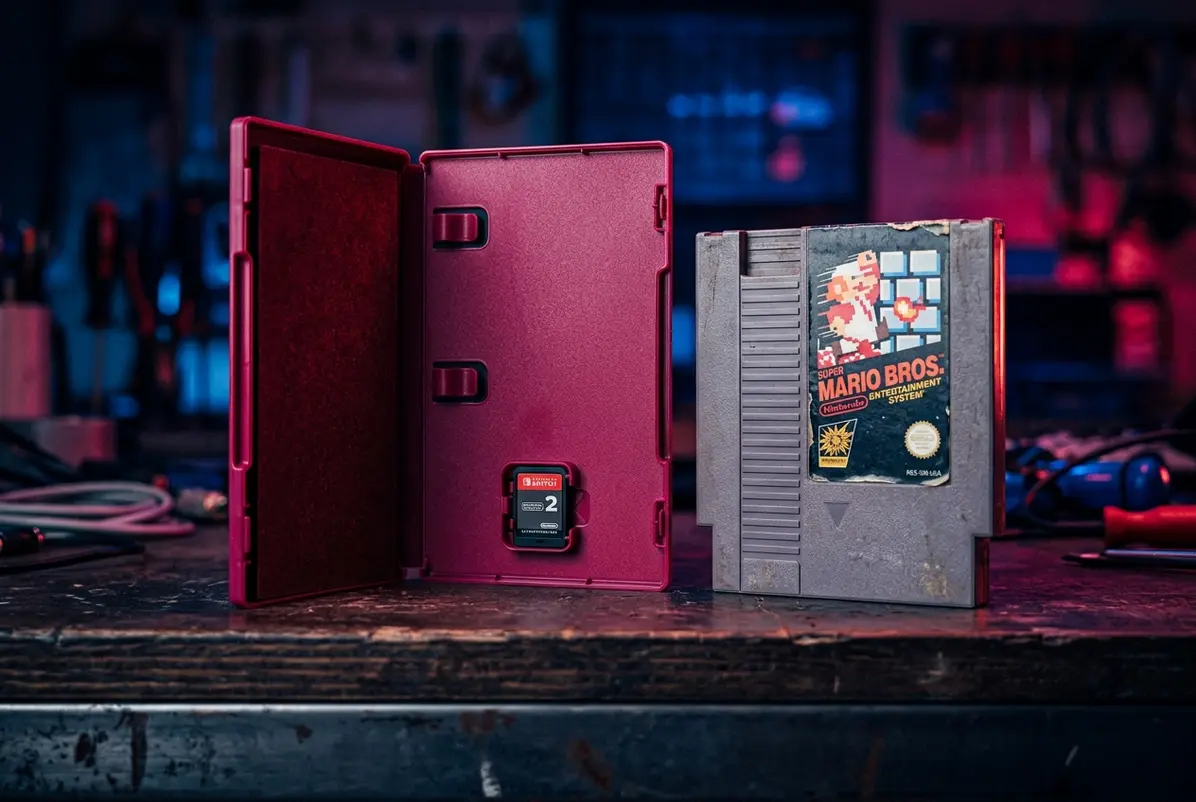
The Gold Standard vs. the Empty Shell
The irony is almost too clean. In 1987, Nintendo made a cartridge that did more than it needed to. The gold Zelda cart saved your progress, signaled its own importance, and shipped complete. In 2025, Nintendo’s platform allows cartridges that do less than the minimum: no data, no offline playability at first boot, no archival value.
Reasonable people might disagree, but to me, the gold cartridge and the game-key card represent the two poles of physical media philosophy. One treated the object as the experience. The other treats the object as a receipt. You hold a license you can touch, trade, or lend, yet still rely on Nintendo’s infrastructure for the actual bytes. This hybrid nature sparks philosophical questions: Does ownership reside in the right to play or in the data itself?
Companies like Limited Run Games are still fighting for the version of physical that means something. Whether the market rewards them or punishes them for it will say more about the future of collecting than any auction record ever could. By our reckoning, the gold cartridge was never just a product. It was a promise that the thing in your hands was real. The question now is whether that promise still has a buyer.
Frequently Asked Questions
What is Nintendo’s gold cartridge?
The original gold cartridge refers to the metallic-gold NES cartridge used for The Legend of Zelda when it launched in North America in 1987. The cartridge version made use of the Memory Management Controller chip and battery-powered RAM for saving data. When Nintendo published the game in North America, the packaging design featured a small portion of the box cut away to reveal the unique gold-colored cartridge. The term also applies to the 26 gold Nintendo World Championships cartridges produced in 1990.
How much is a gold NES cartridge worth today?
Values vary enormously by condition and variant. A loose Legend of Zelda gold cart can be found for under $50, while a rare sealed “NES R” variant sold for $870,000 at Heritage Auctions in 2021. A gold NWC cartridge realized $207,400 at the 2024 Goldin 100 auction.
What are Nintendo Switch 2 game-key cards?
Game-key cards don’t contain the full data of a game. These game-key cards are sealed in a normal package, but instead of actually holding the game inside, the card unlocks and downloads the full data via the internet once inserted into the Switch 2.
Why did Japan’s National Diet Library refuse to preserve game-key cards?
NDL representatives say that “only physical media that contains the content itself” is considered eligible for preservation. “Since a key card, on its own, does not qualify as content, it falls outside of our scope for collection and preservation.”
Does Limited Run Games use game-key cards for Switch 2?
At PAX East 2025, Limited Run Games confirmed that its own numbered releases should include the full game on the cartridge. The only exception applies to partnership titles that aren’t part of its numbered lineup, where the decision is left to the game’s developer or publisher.
Will Nintendo’s own first-party games use game-key cards?
Nintendo insists its own flagship titles will continue shipping on full-data cartridges, at least through the current fiscal year. Titles like Mario Kart World and Donkey Kong Bananza have been confirmed as standard physical releases with full game data on the card.
'%3e%3cg id='Final-Copy-2_2_' transform='translate(1275.000000, 200.000000)'%3e%3cpath class='st0' d='M7.4,12.8h6.8l3.1-11.6H7.4C4.2,1.2,1.6,3.8,1.6,7S4.2,12.8,7.4,12.8z'/%3e%3c/g%3e%3c/g%3e%3c/g%3e%3cg id='final---dec.11-2020'%3e%3cg id='_x30_208-our-toggle' transform='translate(-1275.000000, -200.000000)'%3e%3cg id='Final-Copy-2' transform='translate(1275.000000, 200.000000)'%3e%3cpath class='st1' d='M22.6,0H7.4c-3.9,0-7,3.1-7,7s3.1,7,7,7h15.2c3.9,0,7-3.1,7-7S26.4,0,22.6,0z M1.6,7c0-3.2,2.6-5.8,5.8-5.8 h9.9l-3.1,11.6H7.4C4.2,12.8,1.6,10.2,1.6,7z'/%3e%3cpath id='x' class='st2' d='M24.6,4c0.2,0.2,0.2,0.6,0,0.8l0,0L22.5,7l2.2,2.2c0.2,0.2,0.2,0.6,0,0.8c-0.2,0.2-0.6,0.2-0.8,0 l0,0l-2.2-2.2L19.5,10c-0.2,0.2-0.6,0.2-0.8,0c-0.2-0.2-0.2-0.6,0-0.8l0,0L20.8,7l-2.2-2.2c-0.2-0.2-0.2-0.6,0-0.8 c0.2-0.2,0.6-0.2,0.8,0l0,0l2.2,2.2L23.8,4C24,3.8,24.4,3.8,24.6,4z'/%3e%3cpath id='y' class='st3' d='M12.7,4.1c0.2,0.2,0.3,0.6,0.1,0.8l0,0L8.6,9.8C8.5,9.9,8.4,10,8.3,10c-0.2,0.1-0.5,0.1-0.7-0.1l0,0 L5.4,7.7c-0.2-0.2-0.2-0.6,0-0.8c0.2-0.2,0.6-0.2,0.8,0l0,0L8,8.6l3.8-4.5C12,3.9,12.4,3.9,12.7,4.1z'/%3e%3c/g%3e%3c/g%3e%3c/g%3e%3c/g%3e%3c/svg%3e) Your Privacy Choices
Your Privacy Choices