


The Can They Already Knew
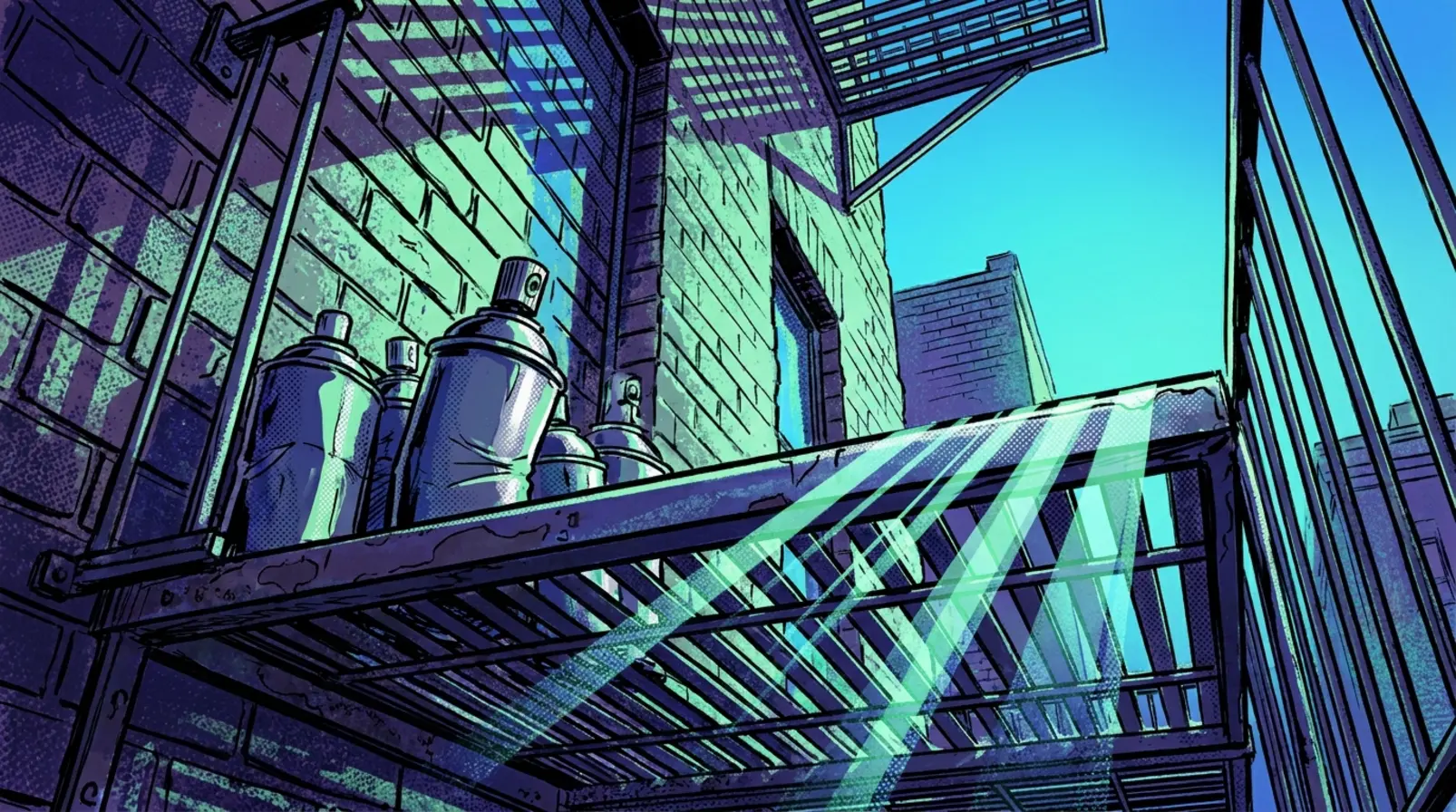
There is a particular sound a Rust-Oleum can makes when you shake it. A low, heavy clatter, the mixing ball thudding against the sides of a steel vessel loaded with enamel so thick it practically has its own gravity. Rusto is legendary as the thickest and most durable of all spray paints. It’s not for finesse: the thickness of the stuff precludes detail work, but there’s nothing that’ll last like it. For decades, that rattle was a kind of secret handshake. If you heard it in a train yard at 2 a.m. or in the stairwell of a housing project, you knew what was about to happen on the wall.
Rust-Oleum is a manufacturer of protective paints and coatings for home and industrial use, founded in 1921 by Robert Fergusson, a sea captain, after he noticed that fish oil spilled on rusty metal decks stopped corrosion from spreading. A century-old company built on the practical problem of keeping ships intact. The irony is rich: the brand that began protecting infrastructure from decay became the medium through which an entire generation defaced it. And for most of that time, Rust-Oleum has been present in spray paint culture since the late ’60s and early ’70s when the movement gained momentum in major cities, but the company primarily marketed to industrial and commercial consumers rather than graffiti artists.
That changed on March 17, 2025, when Rust-Oleum introduced Rust-O, its first spray paint line created specifically for artists. Launching with 30 vibrant shades, Rust-O plans to expand by strengthening relationships with members of the street art community. To me, this is either a long-overdue acknowledgment of the culture that elevated the brand, or it’s the final stage of a particular kind of commercialization. It might be both.
Persue and the Weight of the Handshake
If you’re going to understand what the Rust-O launch means, you need to know who stood at the center of it. Born in San Diego in 1972, Persue’s artistic prowess emerged at a young age under the nurturing guidance of his grandmother, who recognized and cultivated his innate talent for drawing and painting. His introduction to graffiti came through friends, not galleries. He was introduced to skateboarding and BMX, and graffiti re-introduced itself to him in 1988. He was painting characters on walls while still a teenager, and he did not attend art school. He was discovered and entered the skateboard industry as an artist at the age of 19, circa 1992. He learned his crafts through mentors at the job and in the streets.
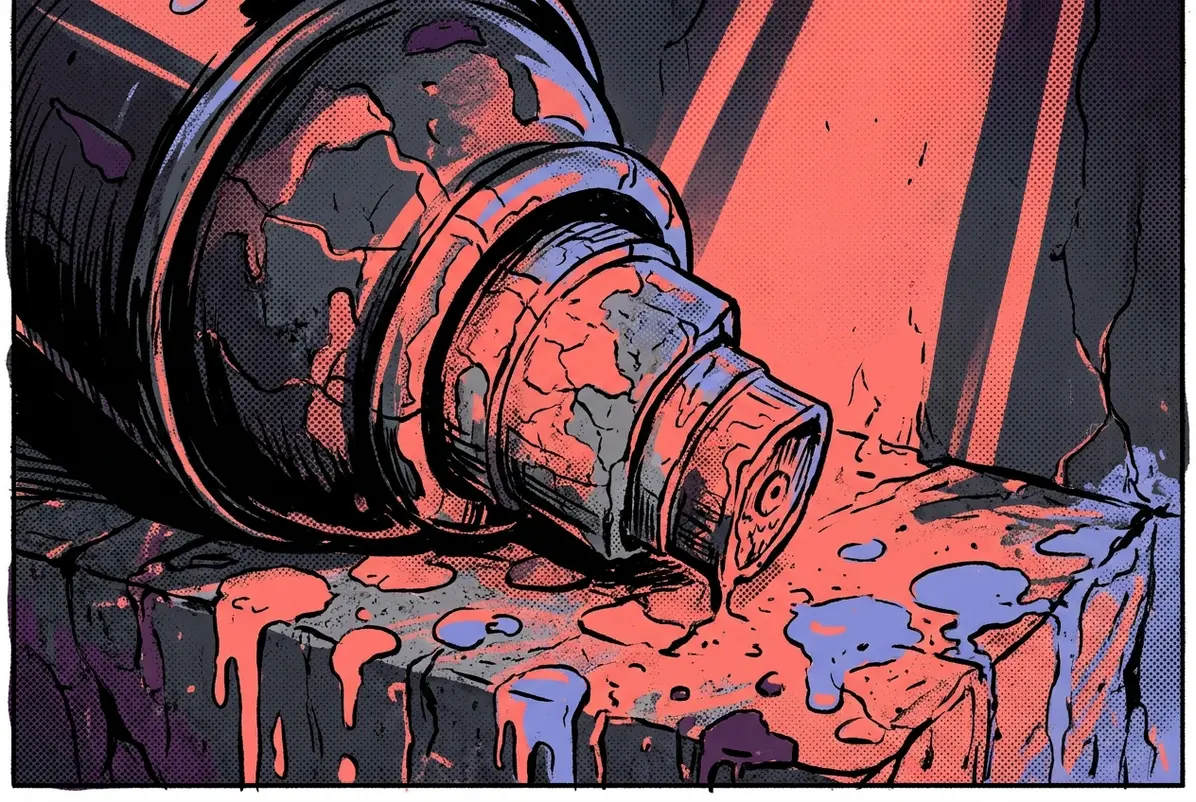
Persue, pronounced “per-SWAY,” is the kind of figure whose career maps the entire arc of aerosol art in America. His creative career emerged from San Diego’s underground graffiti scene, then moved to working alongside mainstream skateboard brands, and eventually to developing his own unique character. That character, BunnyKitty, was created in 2001 when the established graphic designer, illustrator and graffiti artist combined two of the world’s most universally adored animals: bunnies and kitties. It feels like a deliberate act of tenderness injected into a culture often obsessed with aggression and scale.
His involvement with Rust-O isn’t decorative. Rust-Oleum celebrated the inaugural debut by hosting a high-energy evening featuring industry legend Persue and rising talent George F Baker III. At the event, Persue spoke about the significance of the moment. In his words, as reported by Nasdaq’s press release coverage: “This paint was made with artists, for artists, and I’m honored to be part of a launch that celebrates creativity, community and the evolution of our craft.”
The Gap That Took Thirty Years to Close
What strikes me about the Rust-O story is the sheer length of the delay. The two main American spray paint companies, Rustoleum and Krylon, have always played blind to graffiti. While the culture was building itself can by stolen can, the companies whose products made it possible looked the other way. In my view, this wasn’t just a missed opportunity. It was an active refusal to engage with the most passionate and technically demanding users of their product.
European companies stepped into the vacuum. Montana Colors, the spray paint and graffiti supply company, was founded in 1994. In the mid-1990s, European spray paint brands such as Belton and Montana really paid attention to graffiti writers, sponsoring projects and even giving star graffiti writers their own signature color of paint. These brands offered hundreds of colors where Rusto and Krylon offered a couple dozen. While Belton and Montana each have several hundred colors, Rusto and Krylon have kept their color palettes to about a dozen or two at a time, forcing graffiti writers to shop at out-of-the-way discount stores to stock up on colors only available for a season or two.
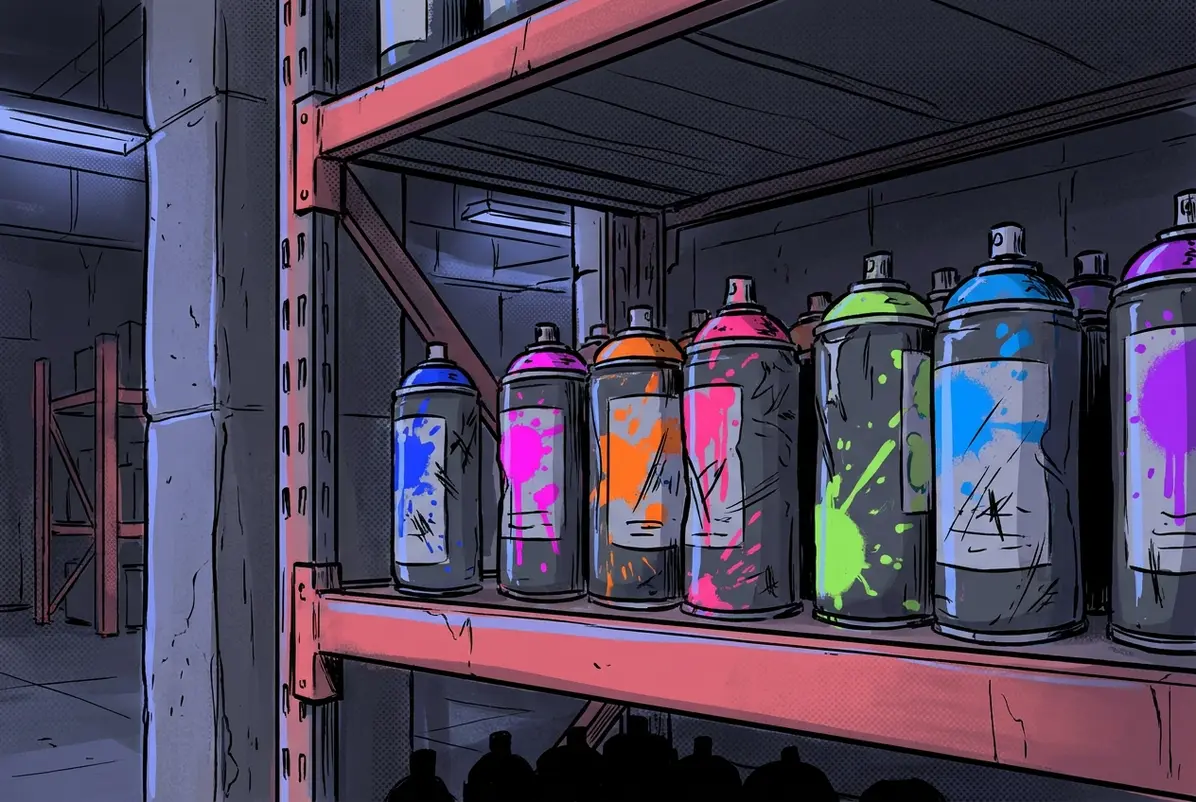
The loyalty persisted anyway. American graffiti writers are fiercely loyal to Rustoleum. There’s a case to be made that this loyalty was less about corporate goodwill and more about material reality. Rusto’s enamel formula was simply harder to buff. It outlasted everything else on a wall. Writers chose it not because the company acknowledged them, but because the paint itself was honest. It did what it said it would do.
What Rust-O Actually Is
Rust-O spray paint features artist-quality pigments, medium pressure output for precision controlled strokes, a fast-drying sag- and drip-resistant formula, and UV resistance to make your work last longer. It has a compatible valve system that’s compatible with your favorite caps. That last detail matters more than it sounds. The cap compatibility question has been a sore point for years. As PRINT Magazine reported, Rustoleum was busily making a switch to a “female” cap, a small detail but one that they wouldn’t have made if they had listened to the people who know their products best.
Rust-Oleum’s product manager, Natalie Klemko, framed the launch in terms of collaboration: “We are not art experts at Rust-Oleum, we’re paint experts.” My take is that this is the right posture, and it’s a telling one. The company is admitting, for the first time publicly, that the expertise lived outside their building. The company also announced a “Spray It Forward” mural program which pairs the power of public art with the creativity of artists and non-profits, aiming to support up to 10 murals across the country in 2025.
The Tension That Won’t Resolve
Online discussions in aerosol art communities have been split. Some writers see Rust-O as a genuine good: a major American paint company finally making a product that respects their practice. Others see it as the latest chapter in a familiar playbook, where a subculture’s aesthetic gets absorbed, repackaged, and sold back to the people who built it. The tension is real, and I think it’s healthy.
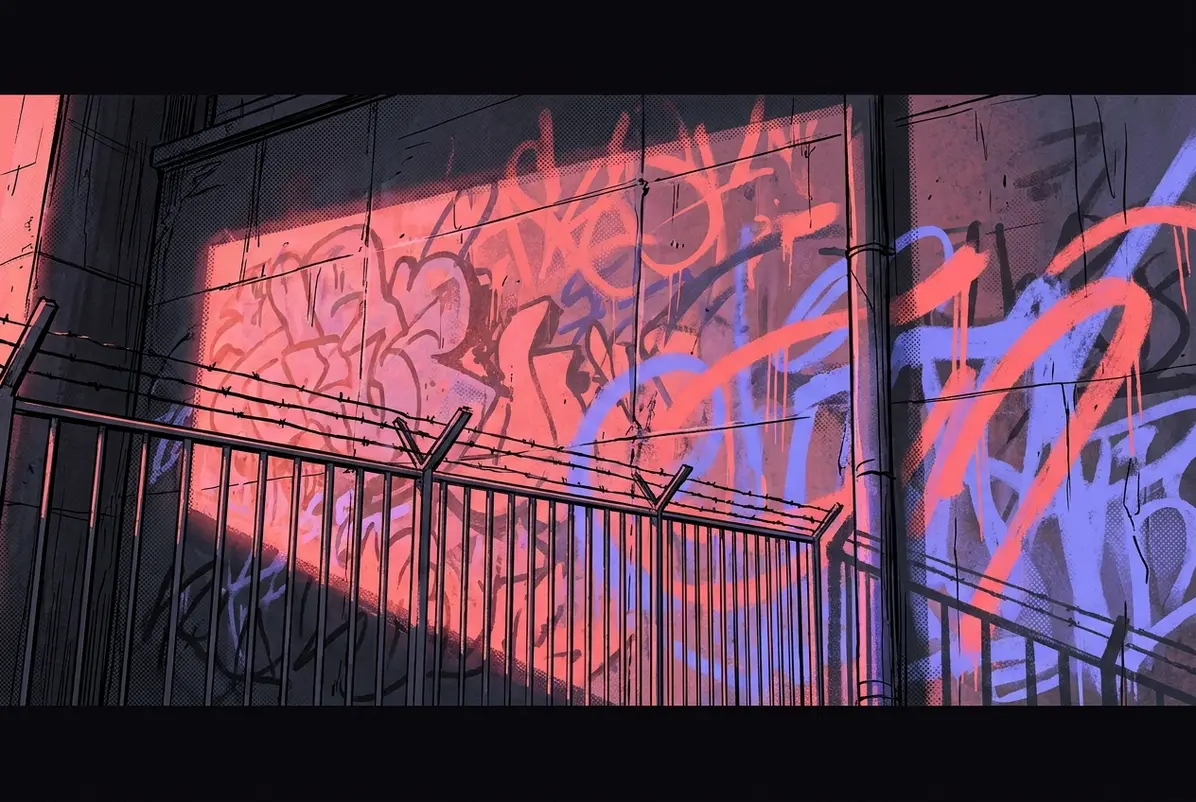
It reads like the same dynamic that played out with skateboarding, with hip-hop, with punk. The culture creates something raw and specific. The market notices. A product appears that is designed for the culture rather than merely tolerated by it. And the people inside the culture have to decide whether that product honors or dilutes what they built. Reasonable people might disagree, but I think the answer depends on who’s holding the can.
Persue seems to know this. He’s noted the rise of “Street Art” as something distinct from graffiti writing, observing that a lot of street artists don’t pay homage to the pioneers of graffiti, who were some of the first to put art in the streets using spray paint as a medium. There’s a quiet insistence in that observation. The hand-style, the tag, the throw-up: these are not branding exercises. They are a language. And when a corporation builds a product line around that language, the question isn’t whether the paint is good. It’s whether the conversation continues to belong to the people who started it.
Every Rust-O can retails at just $7.49. That price point puts it below most European competitors. It feels like a deliberate play for accessibility, a way of saying this product isn’t precious. Whether that accessibility translates into genuine cultural participation or just market share will depend on what happens next. The cans are on the shelf. The walls are still waiting.
'%3e%3cg id='Final-Copy-2_2_' transform='translate(1275.000000, 200.000000)'%3e%3cpath class='st0' d='M7.4,12.8h6.8l3.1-11.6H7.4C4.2,1.2,1.6,3.8,1.6,7S4.2,12.8,7.4,12.8z'/%3e%3c/g%3e%3c/g%3e%3c/g%3e%3cg id='final---dec.11-2020'%3e%3cg id='_x30_208-our-toggle' transform='translate(-1275.000000, -200.000000)'%3e%3cg id='Final-Copy-2' transform='translate(1275.000000, 200.000000)'%3e%3cpath class='st1' d='M22.6,0H7.4c-3.9,0-7,3.1-7,7s3.1,7,7,7h15.2c3.9,0,7-3.1,7-7S26.4,0,22.6,0z M1.6,7c0-3.2,2.6-5.8,5.8-5.8 h9.9l-3.1,11.6H7.4C4.2,12.8,1.6,10.2,1.6,7z'/%3e%3cpath id='x' class='st2' d='M24.6,4c0.2,0.2,0.2,0.6,0,0.8l0,0L22.5,7l2.2,2.2c0.2,0.2,0.2,0.6,0,0.8c-0.2,0.2-0.6,0.2-0.8,0 l0,0l-2.2-2.2L19.5,10c-0.2,0.2-0.6,0.2-0.8,0c-0.2-0.2-0.2-0.6,0-0.8l0,0L20.8,7l-2.2-2.2c-0.2-0.2-0.2-0.6,0-0.8 c0.2-0.2,0.6-0.2,0.8,0l0,0l2.2,2.2L23.8,4C24,3.8,24.4,3.8,24.6,4z'/%3e%3cpath id='y' class='st3' d='M12.7,4.1c0.2,0.2,0.3,0.6,0.1,0.8l0,0L8.6,9.8C8.5,9.9,8.4,10,8.3,10c-0.2,0.1-0.5,0.1-0.7-0.1l0,0 L5.4,7.7c-0.2-0.2-0.2-0.6,0-0.8c0.2-0.2,0.6-0.2,0.8,0l0,0L8,8.6l3.8-4.5C12,3.9,12.4,3.9,12.7,4.1z'/%3e%3c/g%3e%3c/g%3e%3c/g%3e%3c/g%3e%3c/svg%3e) Your Privacy Choices
Your Privacy Choices