



Before computer rage became a meme, before YouTube compilations of smashed keyboards, before freeware let users pretend to burn Windows to the ground, someone tried to sell frustrated computer users a padded mallet. That was the Bit Banger: not a tool, exactly, and not quite a toy either. It was a tiny commercial confession. The machine had entered daily life, and daily life had already begun wanting to hit it.
The funny part is obvious. The stranger part is how early it happened. The original Bit Banger was a novelty mallet for hitting computers, advertised in Bits & P.C.s in 1983, according to the Internet Archive record for the item. The same record tags the artifact with terms including “frustration,” “frustrated computer,” “computer frustration,” and “video display terminals,” which gives the joke away. This was not hardware maintenance. This was emotional maintenance.
The Bit Banger matters because it caught a feeling before that feeling had become cliché. Personal computing was moving into homes, schools, offices, and hobby rooms. The desktop was becoming a place people worked, waited, failed, restarted, and stared. The machine promised control, but often delivered delay. The mallet translated that mismatch into slapstick.
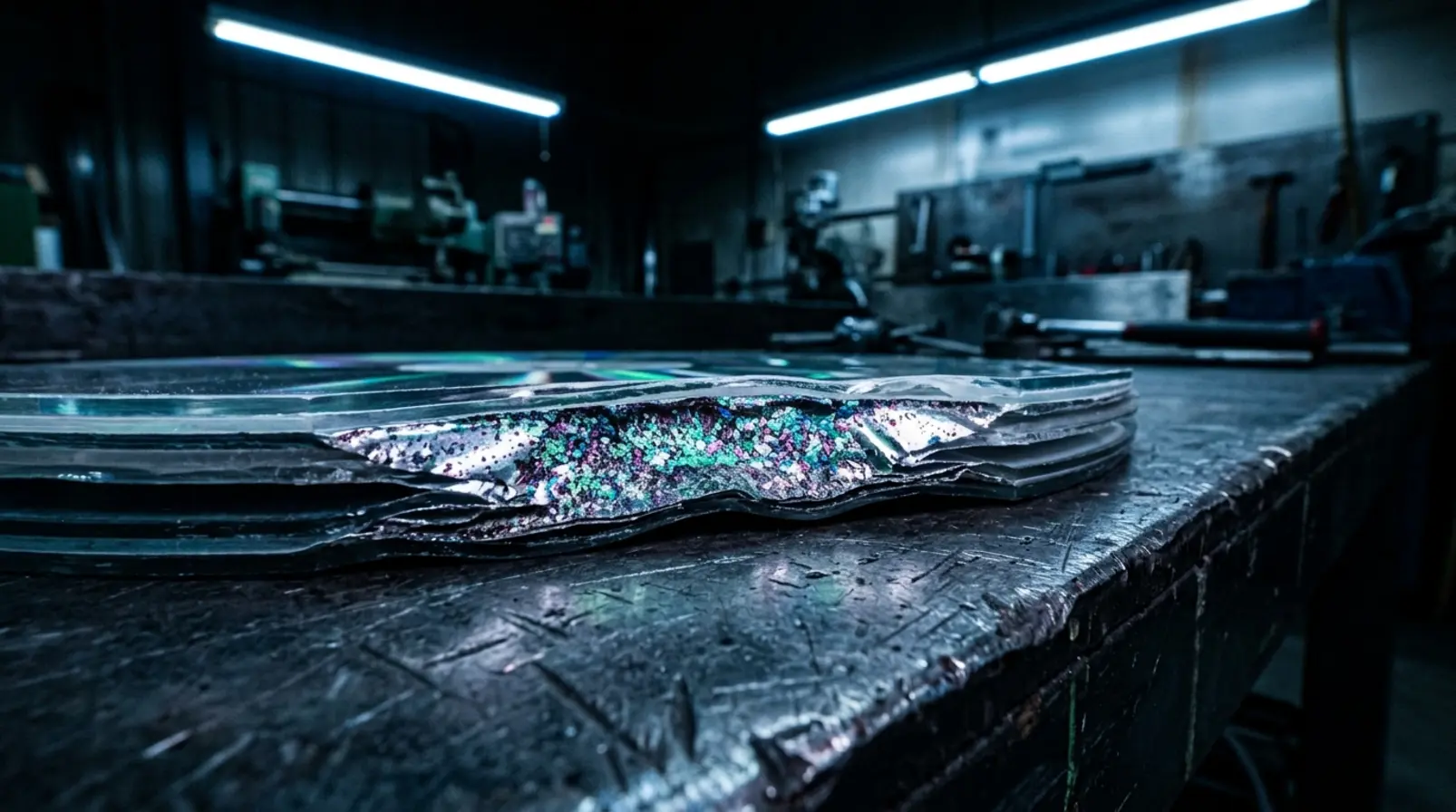
The seal was not the product. The rage was.
The First Joke Was Physical
The Bit Banger belongs to a category of objects that looks ridiculous until the culture around it catches up. It was padded, comic, and practically useless. That uselessness was the point. It let users perform the forbidden gesture without paying the real cost. The computer remained intact. The frustration got a prop.
That is why the object feels more revealing than a novelty catalog gag should. It was not simply saying, “Computers are annoying.” It was saying something sharper: computers had become intimate enough to provoke bodily anger. They were no longer distant mainframes behind glass. They were sitting on desks, glowing back at people, refusing commands in real time.
A hammer joke only works when the audience understands the impulse.
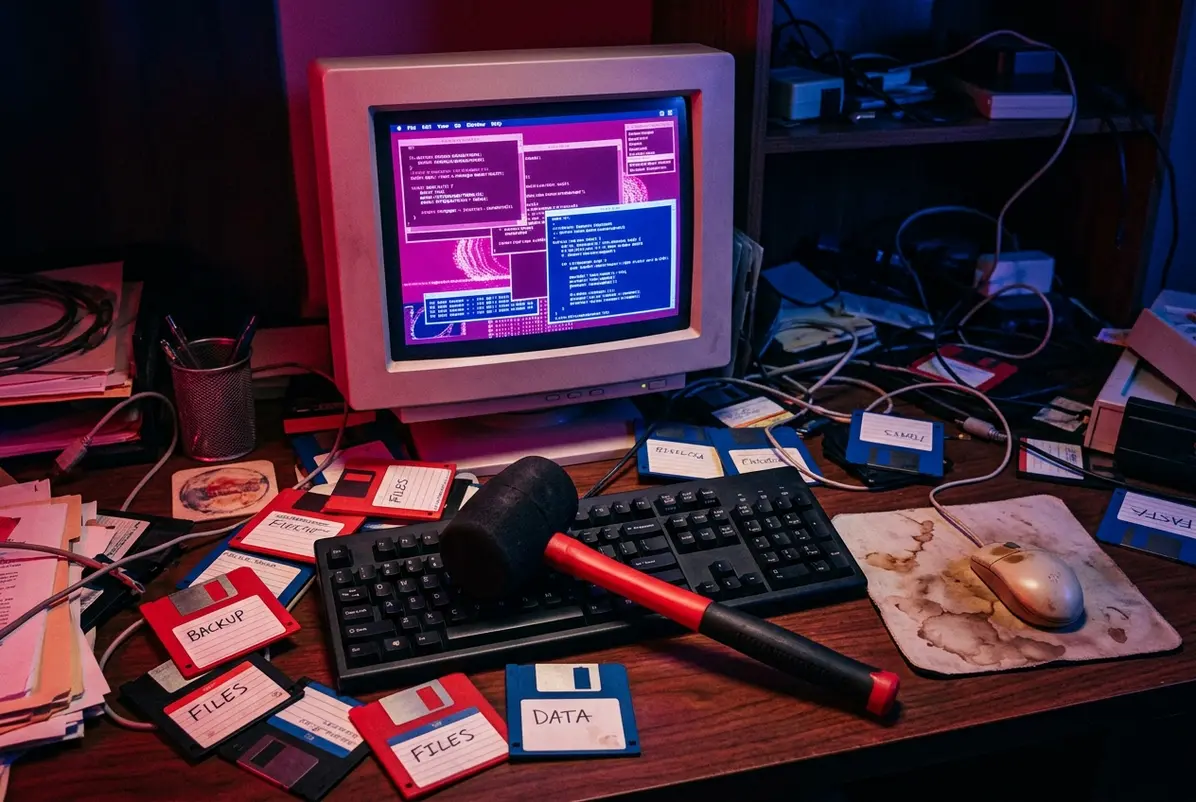
In hindsight, the Bit Banger looks like the analog ancestor of an entire desktop-rage tradition. It took the user’s fantasy of damaging the machine and made it safe, theatrical, and consequence-free. Later software would do the same thing with pixels. The mallet was just the earlier interface.
When the Mallet Became Software
The impulse did not disappear. It migrated into the screen.
Desktop Games, also known in some databases as Stress Reducer or Stress Relief, became one of the cleanest expressions of that migration. CHIP lists Desktop Games as a free English-language Windows program, version 1.0, by Miroslav Nemecek/Gemtree, last updated on February 10, 2010, and compatible with Windows 7 as well as older Windows versions including Vista, XP, 95, Me, 2000, NT 4.0, and 98. A Czech game database, Visiongame, describes it as a simple game also known as Stress Reducer or Stress Relief.
The premise was beautifully blunt. CHIP describes the program as freeware for users who are stressed by work or angry at Windows, allowing them to devastate the desktop and then restore everything with a button press. Its weapons read like a slapstick control panel: hammer, chainsaw, machine gun, flamethrower, paint bags, phaser, rubber stamps, termites, and a screen-clear function, all described in CHIP’s listing.
This was not really a game in the usual sense. There were no stakes, no progression, no opponent, no win condition. It was closer to a ritual: choose a tool, violate the desktop, erase the evidence. The pleasure came from watching the interface temporarily stop being sacred. The workplace became a cartoon wall. The wallpaper became something that could burn.
That is the key difference between the Bit Banger and Desktop Games. The mallet let users pretend to damage the machine from outside the screen. The software let them vandalize the world inside it. Same anger, cleaner loop.
The Desktop Was Not Just a Workspace
The destruction toys were only half the story. Running beside them was a gentler lineage of desktop companions: little creatures that wandered across the interface and did almost nothing useful. Their uselessness was not a flaw either. It was the charm.
Neko is the obvious example. MobyGames describes Neko as a software toy in which an animated cat appears on the desktop, chases the mouse cursor, scratches at window borders, grooms itself, and sleeps when left idle. MobyGames also notes that Neko originated on the Japanese NEC PC-9801. Other histories of the project trace the line from Naoshi Watanabe’s 1988 NEKO.COM for NEC PC-9801 to Kenji Gotoh’s 1989 Macintosh version and later Unix, Windows, OS/2, and web revivals, as summarized by NekoAI’s history.
Then there is eSheep, the little desktop sheep revived for newer systems under Adriano Petrucci’s desktopPet project. The project’s own info page describes it with almost perfect anti-product clarity: “It isn’t really an application, it will not help you for anything and is not an utility.” The same page explains that the newer version exists partly because the original sheep does not work on 64-bit systems, and that the sheep can detect windows, tasks, and screen borders so it can walk around on top of the desktop. That blunt uselessness is documented on the desktopPet info page.
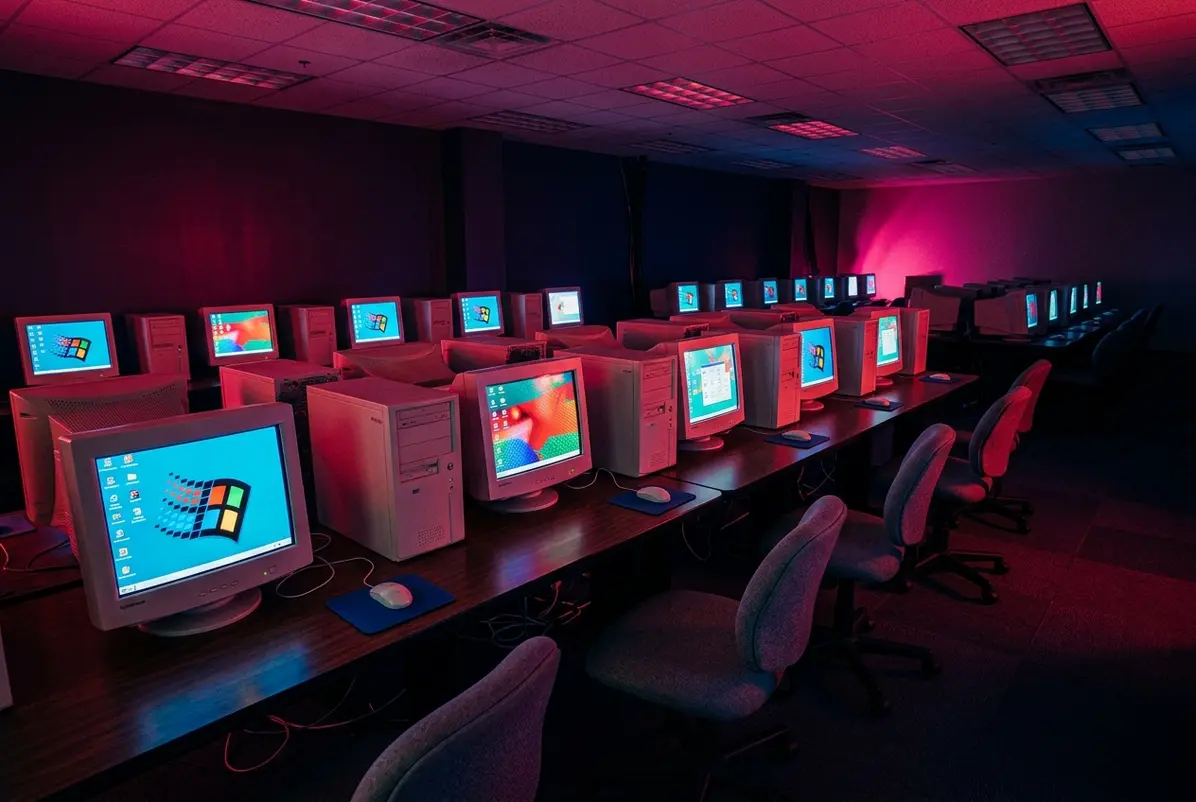
The destruction toys and companion toys look like opposites. One lets users attack the desktop. The other lets users share it with a cat, sheep, or tiny animated stranger. But both genres depend on the same idea: the desktop is a place. Not just a launcher. Not just a file system. A place.
That is why these programs feel so specific to their era. They made sense when the desktop had texture, borders, icons, wallpaper, trash cans, windows, and personal clutter. The user did not merely operate the machine. The user inhabited it.
Why Desktop Destruction Got Quieter
The desktop destruction genre did not vanish in one clean historical moment. It became less visible because the conditions that made it feel natural began to change.
Part of that change is technical. Modern operating systems treat application isolation and sandboxing as central security concerns. Microsoft’s AppContainer documentation describes isolation as the primary goal of the AppContainer execution environment, designed to limit access to unnecessary resources and other applications. In that world, a program that appears to attack or manipulate the screen no longer feels like harmless magic by default. It can feel like suspicious behavior.
But the deeper change is cultural. The desktop itself lost some of its emotional monopoly. Work moved into browsers. Attention moved into phones. Files moved into clouds. Apps became tiles, tabs, feeds, and synchronized states. The persistent desktop environment still exists, but for many users it is no longer the primary psychic room of computing.
There is less to smash if there is less to decorate.
The Bit Banger needed a machine with enough presence to deserve a prop. Desktop Games needed a wallpaper, a taskbar, a set of windows, and a user who had stared at them long enough to enjoy seeing them wrecked. Neko and eSheep needed the same thing from the opposite emotional direction: a screen stable enough to host a pet.
When the interface becomes less like a room and more like a stream, the old jokes lose their furniture.
The Strange Afterlife of the Bit Banger
The Bit Banger survives because it is absurd, but it also survives because it is accurate. It understood that people do not only use machines rationally. They negotiate with them. They blame them. They anthropomorphize them. They threaten them. They decorate them. They punish them in fantasy.
That impulse has not disappeared. It has just changed costumes. It shows up in mechanical keyboards built like ceremonial weapons, in desk toys designed to absorb nervous energy, in retro interfaces that recreate the textures of old operating systems, in browser pets, in fake error screens, in joke apps, in prank overlays, and in the stubborn affection people still feel for machines that once made them furious.
The Bit Banger is easy to laugh at because it is a padded mallet for a computer. But the padding is the whole story. It is rage with restraint. Destruction with a safety mechanism. A punchline engineered around the knowledge that the object being hit is too expensive, too necessary, and too strangely beloved to actually destroy.
The computer became personal. Then it became infuriating. Then someone sold the user a mallet and called it a joke.
The joke worked because the feeling was real.
Bit Banger FAQ
What was the original Bit Banger?
The Bit Banger was a novelty mallet for hitting computers, advertised in Bits & P.C.s in 1983, according to the Internet Archive record for the item. It appears to have been a gag product aimed at computer-related frustration rather than a practical tool.
What was Desktop Games?
Desktop Games was a freeware Windows desktop toy that let users virtually damage the desktop with novelty tools such as a hammer, chainsaw, machine gun, flamethrower, paint bags, phaser, stamps, termites, and a screen-clear function. CHIP lists the program as version 1.0, free, 678.5KB, and last updated on February 10, 2010.
Was Desktop Games also called Stress Reducer or Stress Relief?
Yes. Visiongame identifies Desktop Games as a simple game also known as Stress Reducer or Stress Relief. Because old freeware often circulated through mirrors, school computers, personal archives, and download sites, names and versions can vary.
What was Neko?
Neko is a desktop software toy featuring an animated cat that chases the mouse cursor. MobyGames describes it as more of a software toy than a game and notes that it originated on the Japanese NEC PC-9801.
What was eSheep?
eSheep is a desktop companion concept built around a small animated sheep moving across the screen. Adriano Petrucci’s desktopPet revival describes the sheep as a “screen mate,” not a utility, and says the newer project exists because the original does not work on 64-bit systems. The project details are available on the desktopPet info page.
Can you still run Desktop Games today?
CHIP lists Desktop Games as compatible with Windows 7 and older versions including Windows Vista, XP, 95, Me, 2000, NT 4.0, and 98. Compatibility with current Windows systems is not guaranteed. Because the program is old, users should treat any downloaded executable with caution and verify the source before running it.
'%3e%3cg id='Final-Copy-2_2_' transform='translate(1275.000000, 200.000000)'%3e%3cpath class='st0' d='M7.4,12.8h6.8l3.1-11.6H7.4C4.2,1.2,1.6,3.8,1.6,7S4.2,12.8,7.4,12.8z'/%3e%3c/g%3e%3c/g%3e%3c/g%3e%3cg id='final---dec.11-2020'%3e%3cg id='_x30_208-our-toggle' transform='translate(-1275.000000, -200.000000)'%3e%3cg id='Final-Copy-2' transform='translate(1275.000000, 200.000000)'%3e%3cpath class='st1' d='M22.6,0H7.4c-3.9,0-7,3.1-7,7s3.1,7,7,7h15.2c3.9,0,7-3.1,7-7S26.4,0,22.6,0z M1.6,7c0-3.2,2.6-5.8,5.8-5.8 h9.9l-3.1,11.6H7.4C4.2,12.8,1.6,10.2,1.6,7z'/%3e%3cpath id='x' class='st2' d='M24.6,4c0.2,0.2,0.2,0.6,0,0.8l0,0L22.5,7l2.2,2.2c0.2,0.2,0.2,0.6,0,0.8c-0.2,0.2-0.6,0.2-0.8,0 l0,0l-2.2-2.2L19.5,10c-0.2,0.2-0.6,0.2-0.8,0c-0.2-0.2-0.2-0.6,0-0.8l0,0L20.8,7l-2.2-2.2c-0.2-0.2-0.2-0.6,0-0.8 c0.2-0.2,0.6-0.2,0.8,0l0,0l2.2,2.2L23.8,4C24,3.8,24.4,3.8,24.6,4z'/%3e%3cpath id='y' class='st3' d='M12.7,4.1c0.2,0.2,0.3,0.6,0.1,0.8l0,0L8.6,9.8C8.5,9.9,8.4,10,8.3,10c-0.2,0.1-0.5,0.1-0.7-0.1l0,0 L5.4,7.7c-0.2-0.2-0.2-0.6,0-0.8c0.2-0.2,0.6-0.2,0.8,0l0,0L8,8.6l3.8-4.5C12,3.9,12.4,3.9,12.7,4.1z'/%3e%3c/g%3e%3c/g%3e%3c/g%3e%3c/g%3e%3c/svg%3e) Your Privacy Choices
Your Privacy Choices