


July 1 Was a Long Day for Collectors
On July 1, 2026, Sony Interactive Entertainment published two PlayStation Blog posts that landed like a one-two punch to the shelf.
First came the format cutoff: Sony confirmed that physical game disc production for all new games releasing on PlayStation consoles will be discontinued starting January 2028. After that point, new PlayStation games will be sold through PlayStation Store and at retailers in digital formats only. Sony stressed that the transition will not affect games that already released, or that will release before January 2028, in disc format.
Then came the archive problem: Sony also announced that PlayStation Store on PS3 and PS Vita will close in stages, beginning with the PS3 store in Mexico, Honduras, and Nicaragua in August 2026, followed by additional Latin American and Middle Eastern markets in late 2026, and then PS3 and PS Vita closures in all other countries in July 2027. Previously purchased content will remain downloadable “for the foreseeable future,” but new purchases on those devices will end once the stores close.
Two old storefronts losing purchase access. One new-release disc pipeline heading for a cutoff. And they dropped both on a Wednesday.
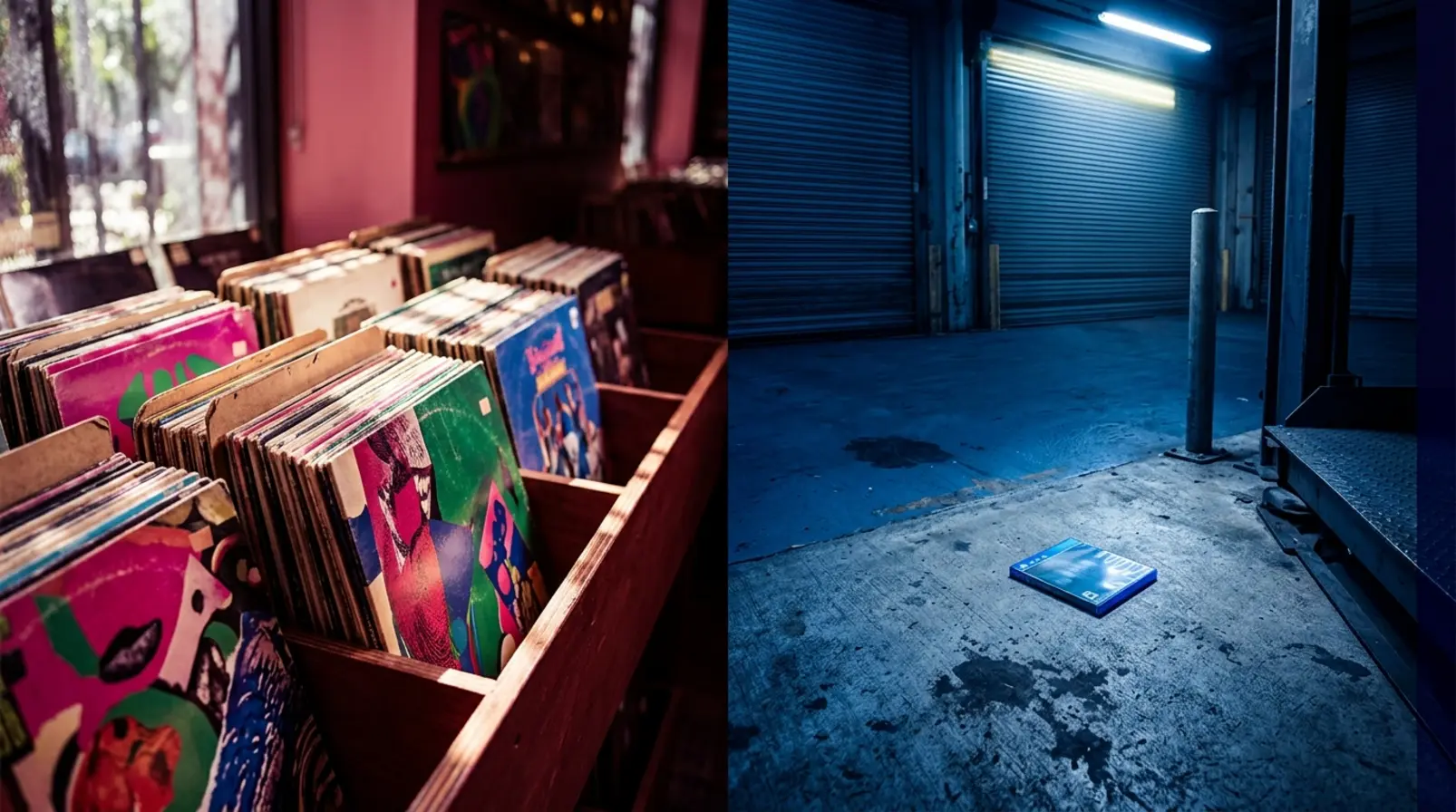
Meanwhile, over in music, vinyl records are not behaving like a dead format at all. The Recording Industry Association of America reported that U.S. vinyl sales surpassed $1 billion in 2025, growing for a 19th consecutive year and selling 46.8 million units. Axios, citing Luminate data, reported that U.S. vinyl sales rose for the 19th straight year to nearly 48 million units, with roughly two in five vinyl records sold at indie stores.
Two physical formats. Two completely different trajectories. Something strange is happening to the things people want to hold in their hands.
Sony’s Bet Against the Shelf
Sony’s announcement was not vague. The company said physical game disc production for all new PlayStation releases will stop in January 2028, while games already released, or releasing before that date in disc format, are not affected by the transition. That distinction matters. Sony is not recalling old discs. It is cutting off the future pipeline.
Analysts immediately read the move as a signal about the next console cycle. Ampere analyst Piers Harding-Rolls told TechRadar that PlayStation’s plan “telegraphs quite a lot” about Sony’s next-generation console plans and predicted that it likely points to a PS6 no earlier than 2028. That remains analysis, not a Sony confirmation, but it shows how quickly the disc announcement became more than a retail-format story.
The timing also made the announcement feel less like an isolated format update and more like the public confirmation of a shift already visible elsewhere. Days earlier, Rockstar’s Grand Theft Auto VI preorder materials indicated that the game’s boxed version would contain a download code rather than a disc. Push Square reported that physical copies of GTAVI would not include a disc, and GameSpot similarly described the release as “physical in name only.”
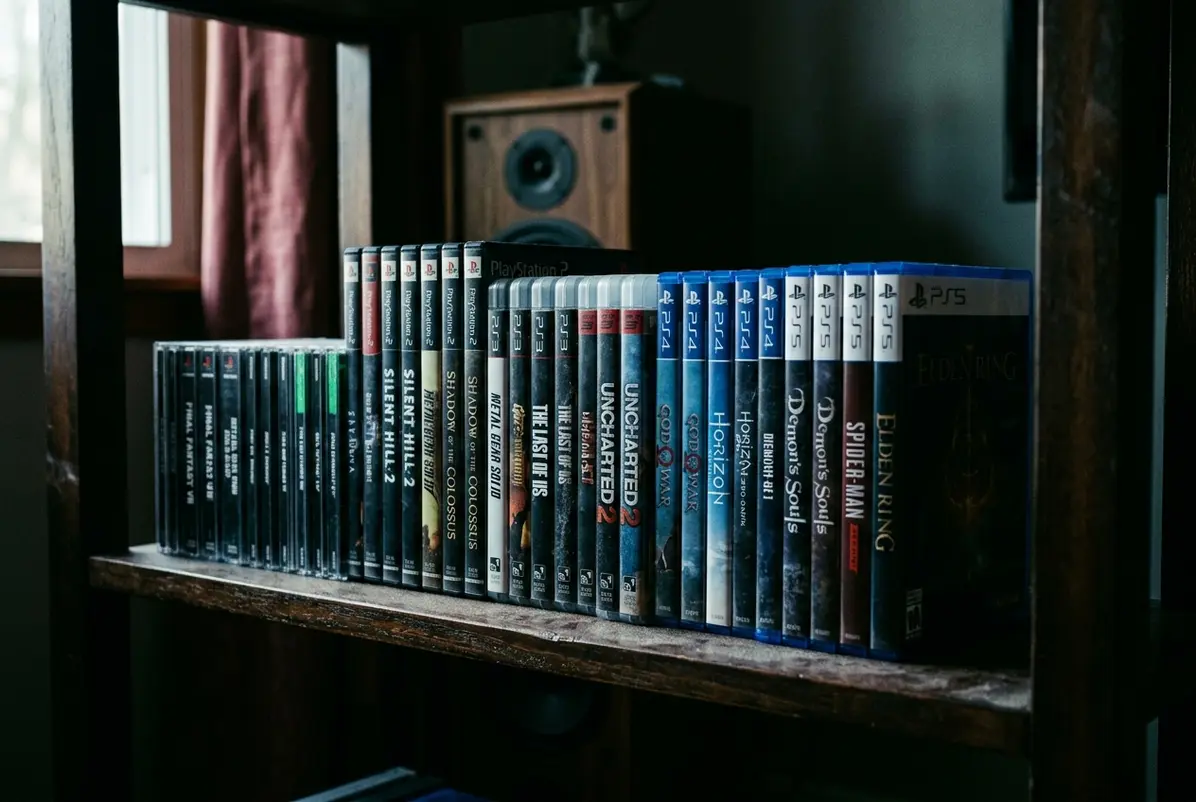
For collectors, the Sony news did not arrive as a clean business update. It arrived beside a reminder that digital storefronts age, legacy payment systems break, and purchase access can become a scheduled event. Sony says existing PS3 and Vita purchases will remain downloadable for the foreseeable future, and that is important. But “foreseeable future” is not the same thing as permanence. It is a weather forecast with a corporate logo on it.
Industry reactions were fast and uneasy. Hideo Kojima, speaking at the Il Cinema in Piazza Film Festival in Italy, said he found the move “really sad,” telling attendees that he grew up with physical media and warning that what is happening to video games in 2028 could also happen to movies. French politician Jean-Luc Mélenchon put the ownership fear more bluntly, writing, according to LCP, “Tomorrow, you will pay without ever owning anything”.
That is the emotional core of the backlash. Not every disc is a perfect archive. Not every digital purchase is doomed. But the direction of travel is obvious enough to make people nervous. The shelf is losing power. The account is gaining it.
Halo Leans In While Sony Steps Back
The contrast became sharper when Halo Studios chose the same week to emphasize that Halo: Campaign Evolved will still have a disc at retail.
In a July Q&A on Halo Waypoint, the studio answered the obvious collector question directly: buying the Xbox or PlayStation version of Halo: Campaign Evolved at a local retailer will come with a physical game case and disc. Xbox Wire says the game launches July 28, 2026, for Xbox Series X|S, Windows PC, Steam, cloud, and PlayStation 5, with the Collector’s Edition including a game disc for Xbox Series X and PlayStation 5 consoles.
There is something almost cheeky about an Xbox-published Halo remake becoming the week’s visible pro-disc contrast. That does not mean Microsoft has suddenly become the patron saint of physical media. It means one public-facing Xbox release had an easy layup at exactly the moment collectors were looking for one.
The caveat matters too. Pure Xbox reported that the Halo: Campaign Evolved box appears to mention a required “content download”, suggesting the disc may not contain the whole playable package by itself. That detail keeps the comparison honest. A disc in the box is better than no disc in the box. But a disc that still needs a major download is not the same preservation object people remember from the older console generations.
The optics still landed. Sony announced a future without new PlayStation discs. Halo answered, essentially, yes, there is a disc in the box. Collectors did not need the contrast to be philosophically perfect. They needed it to be legible.
Vinyl’s Parallel Universe
While PlayStation’s new-game discs head toward a cutoff, the vinyl LP keeps gaining ground as though nobody told it physical media was supposed to be dying.
The RIAA’s 2025 report is not subtle. Vinyl surpassed $1 billion in U.S. sales, grew for a 19th consecutive year, and continued to lead physical music formats. Vinyl also sold 46.8 million units compared with 29.5 million CDs, according to the same RIAA report. In other words, the format that was supposed to be the museum piece is now the physical-media success story.

The Taylor Swift effect is part of that story, but not all of it. Axios reported, citing Luminate, that The Life of a Showgirl sold 1.6 million vinyl copies in the U.S. in 2025, far ahead of the next biggest sellers. The release campaign leaned into variants, scarcity, and the kind of fan-object logic that makes a record more than a playback device. It was not simply music pressed into plastic. It was fandom with a spine.
Available consumer research also complicates the lazy nostalgia explanation. Luminate has reported that younger demos have shown increasing interest among vinyl buyers since 2023, and that artists including Taylor Swift, Gracie Abrams, and Charli XCX were among the top Record Store Day 2025 sellers. These are not only aging collectors trying to recreate the old living room. They are also newer listeners who discovered music through streaming and then decided streaming was not enough.
That is the uncomfortable difference. Vinyl never had to pretend it was convenient. Nobody buys an LP because it is faster than Spotify. The ritual is the point: the sleeve, the weight, the side break, the needle, the forced attention. Vinyl survives by exaggerating the thing digital cannot fully copy.
Modern game discs have had the opposite problem. Too often, they stopped feeling like the thing itself.
Boutique Gaming Hits a Wall
The boutique physical game scene spent the last decade trying to solve that exact problem. Limited Run Games, iam8bit, Strictly Limited, Super Deluxe, Retro-Bit, and other publishers built a market around the idea that digital games deserved physical afterlives: boxes, manuals, steelbooks, reversible covers, cartridges, discs, collector editions, vinyl soundtracks, shelf presence.
But even that market is showing strain. Limited Run Games co-founder Josh Fairhurst, who recently stepped away from the company, wrote on social media that he was working on other things and was happy to be away from the drama, calling the segment “an oversaturated market” and saying that trying to enter it now as a new company would be a “deathwish.” Time Extension noted that several companies now operate in the boutique physical-publishing space, and that Sony’s 2028 cutoff could change the situation quickly.
That is the bind. Boutique publishers exist because collectors still care. But they also depend on platform holders, manufacturing pipelines, certification processes, and the larger console economy. When a platform moves away from discs, the boutique shelf does not simply become more romantic. It becomes more precarious.
Nintendo is not making the same PlayStation announcement, at least not now. Physical software still exists on Switch 2. But Nintendo’s own support page explains that some Switch 2 releases use game-key cards, which store only a key required to launch the software and require an internet connection to download the software data the first time they are used. The card still has resale and physical handling value. But it also shows the same drift: the object remains, while more of the game moves somewhere else.
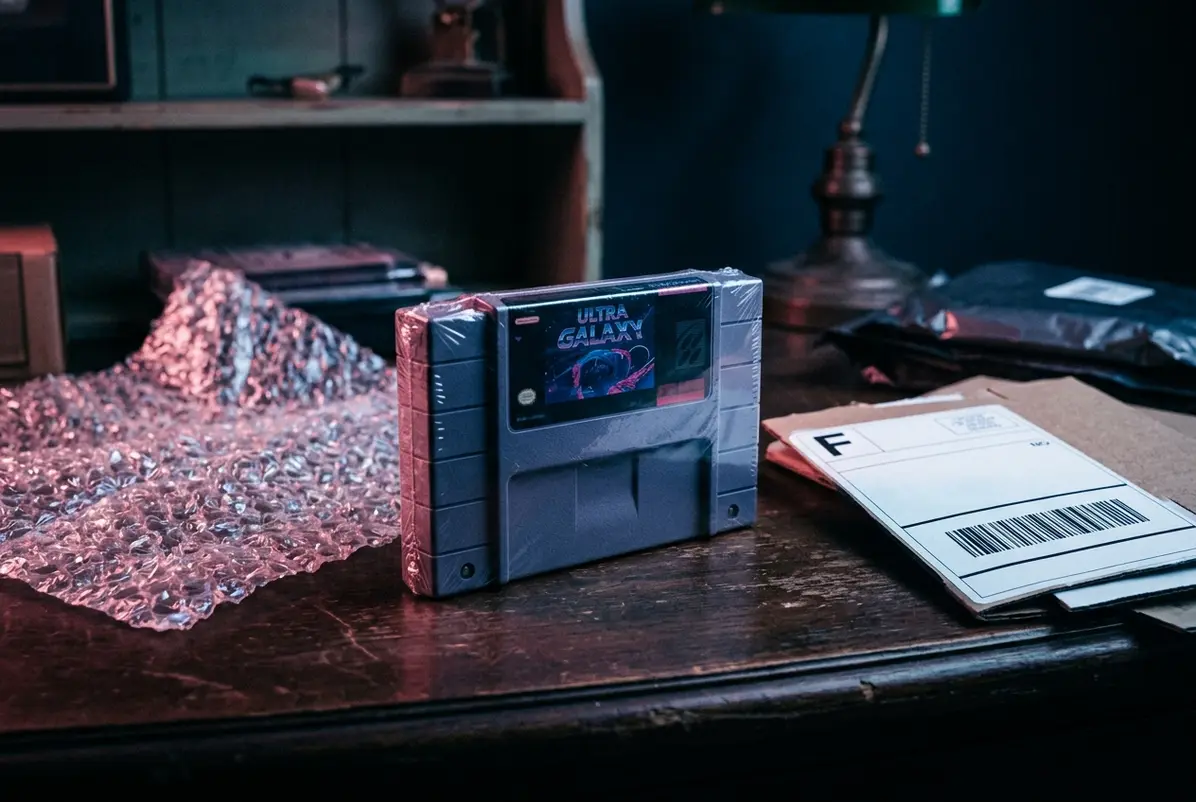
This is where the preservation argument gets thorny. A disc can preserve a game better than a download code. A complete-on-disc release can preserve it better than a disc dependent on patches or server access. A physical box with a code preserves almost nothing except packaging, memory, and resale confusion. The spectrum matters. “Physical” is no longer one thing.
What the Split Tells Us
The divergence between vinyl’s boom and PlayStation’s disc cutoff reveals something worth sitting with. Physical media does not survive because people love plastic. It survives when the object still performs a job digital cannot fully replace.
Vinyl offers friction that feels meaningful. The inconvenience is part of the contract. A record makes the listener handle the album, look at the art, flip the side, store the thing, and live with its size. The object asks for space and gives a ritual back. It is not merely a worse Spotify. It is a different relationship to music.
Game discs, by contrast, have increasingly risked becoming worse versions of digital downloads. Day-one patches. Mandatory installs. Massive games that may not fit cleanly on a single disc. Online dependencies. Deluxe editions where the most collectible material is physical, while the actual software still depends on accounts, stores, and downloads. The disc became a license key you could drop on your toe.
That is why Sony’s announcement, for all the grief it generated, also feels like a spreadsheet catching up with an identity crisis that had already happened. Former PlayStation boss Shawn Layden told TechRadar that Sony’s move was “fairly dramatic,” but he also suggested that decisions of this kind are largely “straight spreadsheet” decisions. That does not make the loss painless. It explains why the loss was allowed to become thinkable.
For collectors and preservationists, the losses remain real. Some PS3 and Vita titles still have no modern ports, no physical versions, and no easy way to buy them elsewhere. When those storefronts close to new purchases, parts of those libraries become harder to reach through legitimate channels. Sony says previously purchased content will remain downloadable for the foreseeable future, but the wider lesson is unavoidable: access that depends on a store is only as stable as the store’s continued usefulness to the company running it.
That is the part vinyl does not have to solve in the same way. A record can be inconvenient, fragile, expensive, warped, scratched, fetishized, and absurd. But once it is on the shelf, it does not need a login. It does not need a storefront. It does not care whether the label still supports the app.
The lesson, if there is one, is uncomfortable for anyone who loves game boxes: physical media survives when it earns the space it takes up. Vinyl became an object again. The game disc became paperwork. And paperwork rarely survives the spreadsheet.
FAQ
When will Sony stop making physical discs for new PlayStation games?
Sony says physical game disc production for all new games releasing on PlayStation consoles will be discontinued starting January 2028. After that date, new games will be available through PlayStation Store and at retailers in digital formats only.
Will existing PlayStation discs stop working?
Sony says the transition has no impact on games that already released, or that will release before January 2028, in disc format. The announcement applies to physical disc production for new games after the cutoff.
What is happening to the PS3 and PS Vita stores?
PlayStation Store on PS3 will begin closing in select markets in August 2026, with additional regional closures in late 2026. In all other countries, PlayStation Store on PS3 and PS Vita will close in July 2027. Once those closures happen, new content purchases will no longer be possible on those devices.
Will players still be able to download PS3 and Vita games they already bought?
Sony says players will still be able to download previously purchased content after the store closing date “for the foreseeable future.” That preserves access for now, but it does not reopen new-purchase access once the stores close.
Why is vinyl growing while game discs are shrinking?
Vinyl succeeds because the object itself still adds value: artwork, ritual, collectability, sound culture, and a sense of ownership that streaming does not fully replicate. Modern game discs have become less distinct when they require installs, patches, downloads, or online access, making them feel closer to physical wrappers around digital licenses.
Do modern game discs preserve games?
Sometimes, but not always. A complete-on-disc game can be valuable for preservation. A disc that requires major downloads, patches, or server access is weaker as an archive. A box with only a download code preserves the packaging, not the playable software.
Is Nintendo still selling physical games?
Yes, Nintendo still sells physical software for Switch 2. However, some Switch 2 releases use game-key cards, which require an internet connection to download the software data the first time they are used. The card must remain inserted to play, but the software data is not fully stored on the card.


'%3e%3cg id='Final-Copy-2_2_' transform='translate(1275.000000, 200.000000)'%3e%3cpath class='st0' d='M7.4,12.8h6.8l3.1-11.6H7.4C4.2,1.2,1.6,3.8,1.6,7S4.2,12.8,7.4,12.8z'/%3e%3c/g%3e%3c/g%3e%3c/g%3e%3cg id='final---dec.11-2020'%3e%3cg id='_x30_208-our-toggle' transform='translate(-1275.000000, -200.000000)'%3e%3cg id='Final-Copy-2' transform='translate(1275.000000, 200.000000)'%3e%3cpath class='st1' d='M22.6,0H7.4c-3.9,0-7,3.1-7,7s3.1,7,7,7h15.2c3.9,0,7-3.1,7-7S26.4,0,22.6,0z M1.6,7c0-3.2,2.6-5.8,5.8-5.8 h9.9l-3.1,11.6H7.4C4.2,12.8,1.6,10.2,1.6,7z'/%3e%3cpath id='x' class='st2' d='M24.6,4c0.2,0.2,0.2,0.6,0,0.8l0,0L22.5,7l2.2,2.2c0.2,0.2,0.2,0.6,0,0.8c-0.2,0.2-0.6,0.2-0.8,0 l0,0l-2.2-2.2L19.5,10c-0.2,0.2-0.6,0.2-0.8,0c-0.2-0.2-0.2-0.6,0-0.8l0,0L20.8,7l-2.2-2.2c-0.2-0.2-0.2-0.6,0-0.8 c0.2-0.2,0.6-0.2,0.8,0l0,0l2.2,2.2L23.8,4C24,3.8,24.4,3.8,24.6,4z'/%3e%3cpath id='y' class='st3' d='M12.7,4.1c0.2,0.2,0.3,0.6,0.1,0.8l0,0L8.6,9.8C8.5,9.9,8.4,10,8.3,10c-0.2,0.1-0.5,0.1-0.7-0.1l0,0 L5.4,7.7c-0.2-0.2-0.2-0.6,0-0.8c0.2-0.2,0.6-0.2,0.8,0l0,0L8,8.6l3.8-4.5C12,3.9,12.4,3.9,12.7,4.1z'/%3e%3c/g%3e%3c/g%3e%3c/g%3e%3c/g%3e%3c/svg%3e) Your Privacy Choices
Your Privacy Choices