

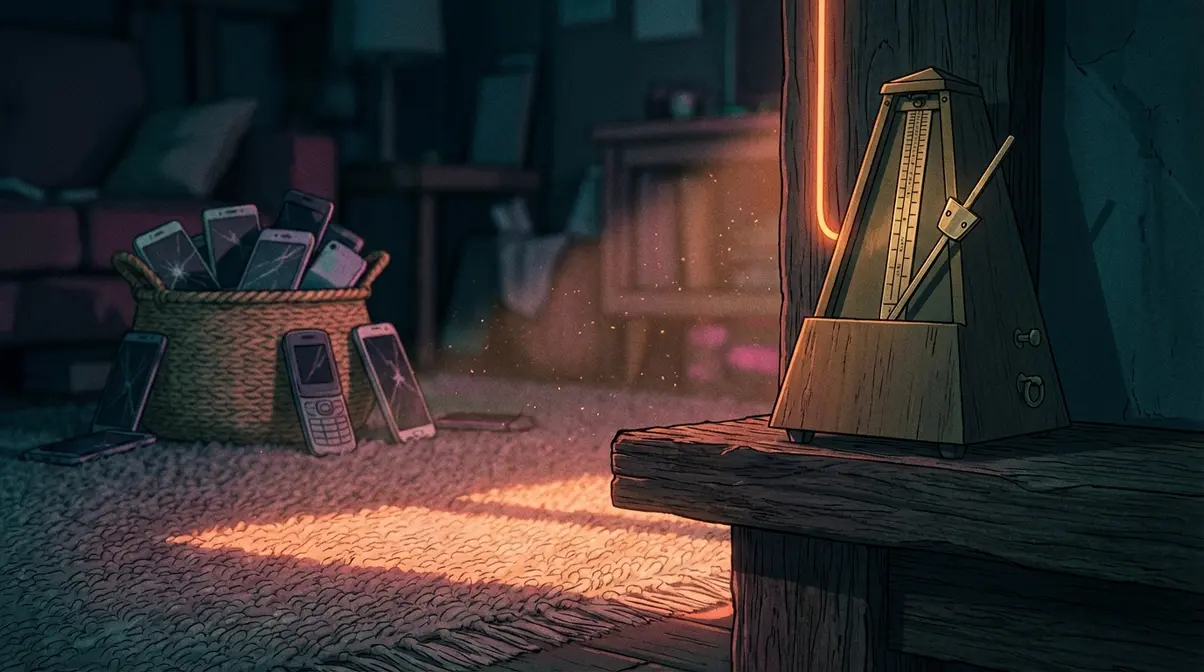

Welcome to 2026, where the most subversive thing you can do is close a door and be unreachable.
The open-concept floor plan is dead. After two decades of knocking down walls to create “seamless flow” between kitchen and living room, we’ve collectively realized something: we like our families, but we also like our peace. When your home doubles as a co-working space, virtual classroom, gym, and entertainment center, that seamless flow becomes a seamless cacophony. The walls are going back up. Only this time, they’re not just dividing rooms. They’re protecting something more valuable than square footage.
The Architecture of Attention
Call it what you want: the analog room, the dead zone, the sanctuary. Online communities have been documenting this shift for months, creating “analog bags” filled with puzzle books and knitting supplies, establishing tech-free zones in bedrooms and dining rooms. The language varies, but the impulse is universal. We’re building physical barriers against digital overwhelm.
Here’s what makes 2026 different from every other year we’ve talked about digital detox: this isn’t about a weekend cleanse or a performative Instagram post announcing you’re “unplugging.” This is infrastructure. People are redesigning their homes around the principle that connection requires disconnection. Searches for “acoustic privacy” are up 40% because we’ve finally understood that open concepts optimized for sight lines while destroying sound barriers. We can see each other, but we can’t think.
The analog sanctuary isn’t a rejection of technology. It’s a rejection of the idea that technology should have unlimited access to every moment of our lives. Gen Z, the first generation raised in natural symbiosis with smartphones, gets this instinctively. For them, the analog room represents the physical validation of JOMO: the Joy Of Missing Out. It’s a space where being unreachable isn’t rude. It’s expected.
What Dead Zones Actually Look Like
Forget the Instagram-perfect reading nook with perfectly arranged vintage books nobody reads. Real analog sanctuaries are working spaces, not showrooms. They’re where the vinyl collection lives alongside the turntable you actually use. Where board games come out of the box and puzzles sprawl across tables for days. Where instruments lean against walls, waiting to be picked up without the pressure of recording and posting.
The most powerful dead zone starts in your bedroom. The science is unambiguous: blue light from screens disrupts melatonin production and wrecks sleep quality. Making your bedroom a sanctuary from screens isn’t fighting temptation. It’s directly improving your physical and mental health. Replace your phone’s alarm with a real alarm clock. Swap your Kindle app for physical books. Trade your camera app for a standalone point-and-shoot if you must document, but keep the smartphone out.
Enthusiast groups have been sharing practical swaps that go beyond the bedroom. Writing by hand instead of typing. Curating playlists on an iPod instead of letting Spotify’s algorithm decide. Joining snail mail groups instead of losing promises in group chats. These aren’t nostalgic affectations. They’re deliberate choices about where attention goes and who controls it.
The Luxury Economy of Disconnection
True luxury in 2026 isn’t owning the latest headset or a disappearing 8K TV. True luxury is owning the space, time, and silence needed to forget, even for just an hour, that the digital world exists. This shift is showing up in real estate values. Homes with defined analog spaces are selling better. Buyers specifically want dedicated screen-free zones, not blank-slate open floor plans. A home that clearly offers a quiet reading nook, a dedicated office, and a social kitchen is more valuable than a space that tries to be everything everywhere all at once.
The dumbphone movement captures this perfectly. Sales are up 25%, driven largely by people who’ve realized that having a device that only calls and texts isn’t a limitation. It’s a feature. Being unreachable has become a status symbol. It signals you’re important enough not to need a digital pacifier, disciplined enough to opt out of doomscrolling. The Luddite Club in New York City has teens meeting up to read paper books and sit in silence, smartphones left at home. This isn’t rebellion. It’s reclamation.
The AI Backlash Nobody Saw Coming
Here’s the timing that makes 2026 the inflection point: AI has gotten good enough that it’s doing our thinking for us. Generative platforms write our emails, create our images, summarize our reading. The more capable these tools become, the more urgent the need for spaces where human cognition happens without algorithmic assistance. Arts and crafts retailer Michaels reports a 136% boost in searches for “analog hobbies” in the last six months. People are seeking tactile experiences, hands-on creation, the resistance of physical materials.
This isn’t technophobia. It’s a correction. When algorithms curate every playlist, recommend every show, and predict every preference, the act of choosing becomes radical. The analog sanctuary is where that choosing happens. Where you decide what to read without recommendation engines. Where you play music without skipping tracks after thirty seconds. Where you have conversations while looking each other in the eye.
Building Your Own Dead Zone
Start with one room. Not the whole house, just one space where screens don’t belong. Stock it with the materials for whatever you’ve been meaning to do but never have time for. Books you want to read, not books you think you should read. Games that require other people. Art supplies that don’t photograph well. An analog clock, because even checking the time shouldn’t pull you back into the notification stream.
The key is making it a space you actually use, not a museum of intentions. Online forums are full of people who created beautiful analog spaces that became storage for good intentions. The sanctuary works when it’s functional, when the barrier to entry is lower than reaching for your phone. Keep the guitar out of its case. Leave the puzzle half-finished. Make it easier to engage with the physical than the digital.
Remember: any length of disconnection provides benefits. One hour. One evening. One weekend. The goal isn’t perfection or permanent exile from technology. It’s creating regular intervals where your attention belongs entirely to you.
The Frequency of Presence
The average person will spend 21 years of their life looking at screens. That’s a quarter of their existence, more than 40% of waking hours. The analog sanctuary isn’t about recovering some imagined past where everything was better. It’s about claiming space in a future where everything competes for your attention.
This is the frequency we’re tuning into: presence over productivity, depth over breadth, intention over algorithm. The dead zone is where that signal comes through clearly. Not because technology is bad, but because unlimited access to technology is corrosive to the very things that make us human. Creativity requires boredom. Connection requires full attention. Thinking requires silence.
Build your sanctuary. Close the door. Be unreachable. In 2026, that’s not dropping out. That’s opting in to the life you actually want to live.
The walls are going back up. Make sure yours protect something worth keeping.



'%3e%3cg id='Final-Copy-2_2_' transform='translate(1275.000000, 200.000000)'%3e%3cpath class='st0' d='M7.4,12.8h6.8l3.1-11.6H7.4C4.2,1.2,1.6,3.8,1.6,7S4.2,12.8,7.4,12.8z'/%3e%3c/g%3e%3c/g%3e%3c/g%3e%3cg id='final---dec.11-2020'%3e%3cg id='_x30_208-our-toggle' transform='translate(-1275.000000, -200.000000)'%3e%3cg id='Final-Copy-2' transform='translate(1275.000000, 200.000000)'%3e%3cpath class='st1' d='M22.6,0H7.4c-3.9,0-7,3.1-7,7s3.1,7,7,7h15.2c3.9,0,7-3.1,7-7S26.4,0,22.6,0z M1.6,7c0-3.2,2.6-5.8,5.8-5.8 h9.9l-3.1,11.6H7.4C4.2,12.8,1.6,10.2,1.6,7z'/%3e%3cpath id='x' class='st2' d='M24.6,4c0.2,0.2,0.2,0.6,0,0.8l0,0L22.5,7l2.2,2.2c0.2,0.2,0.2,0.6,0,0.8c-0.2,0.2-0.6,0.2-0.8,0 l0,0l-2.2-2.2L19.5,10c-0.2,0.2-0.6,0.2-0.8,0c-0.2-0.2-0.2-0.6,0-0.8l0,0L20.8,7l-2.2-2.2c-0.2-0.2-0.2-0.6,0-0.8 c0.2-0.2,0.6-0.2,0.8,0l0,0l2.2,2.2L23.8,4C24,3.8,24.4,3.8,24.6,4z'/%3e%3cpath id='y' class='st3' d='M12.7,4.1c0.2,0.2,0.3,0.6,0.1,0.8l0,0L8.6,9.8C8.5,9.9,8.4,10,8.3,10c-0.2,0.1-0.5,0.1-0.7-0.1l0,0 L5.4,7.7c-0.2-0.2-0.2-0.6,0-0.8c0.2-0.2,0.6-0.2,0.8,0l0,0L8,8.6l3.8-4.5C12,3.9,12.4,3.9,12.7,4.1z'/%3e%3c/g%3e%3c/g%3e%3c/g%3e%3c/g%3e%3c/svg%3e) Your Privacy Choices
Your Privacy Choices