

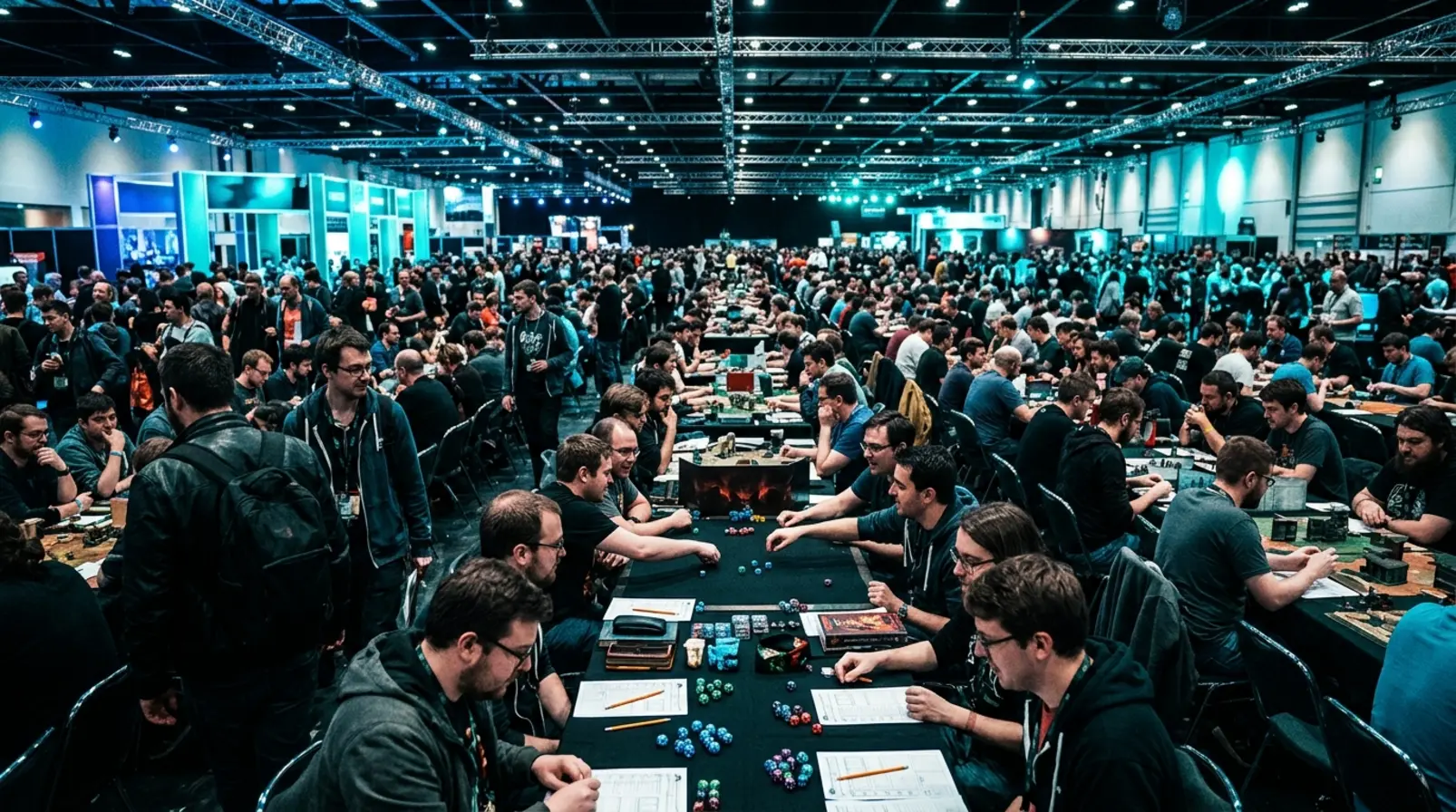


Gen Con ended its July 30 to August 2, 2026, run with more than 74,000 attendees, another all-time record after the convention had already broken its attendance mark in each of the previous three years. It had also sold every badge before the doors opened. That is where the familiar comeback story starts to get shaky. Tabletop gaming certainly has lapsed players returning to dice, cards, and character sheets. But a comeback describes restoration. Gen Con is already beyond its pre-pandemic high and still running out of room.
The Record That Kept Breaking
The pandemic makes the early part of the curve easy to misread. Gen Con drew nearly 70,000 unique attendees in 2019, then canceled its physical 2020 convention and returned at reduced scale. By 2023, however, it had passed the old record with more than 70,000 attendees. The count rose above 71,000 in 2024, approached 72,000 in 2025, and cleared 74,000 in 2026. The four-year sequence is growth after recovery, not merely the audience crawling back to where it had been.
The constraint is now physical. Gen Con became fully sold out for the first time in its history in 2024 and has sold out before opening for three consecutive years. President David Hoppe has described the show as capacity-constrained, saying it fills every “nook and cranny” of the downtown core. A 143,500-square-foot expansion of the Indiana Convention Center is scheduled to be available for Gen Con’s 60th edition in 2027, alongside the new 800-room Signia by Hilton.
What the Money Can Actually Prove
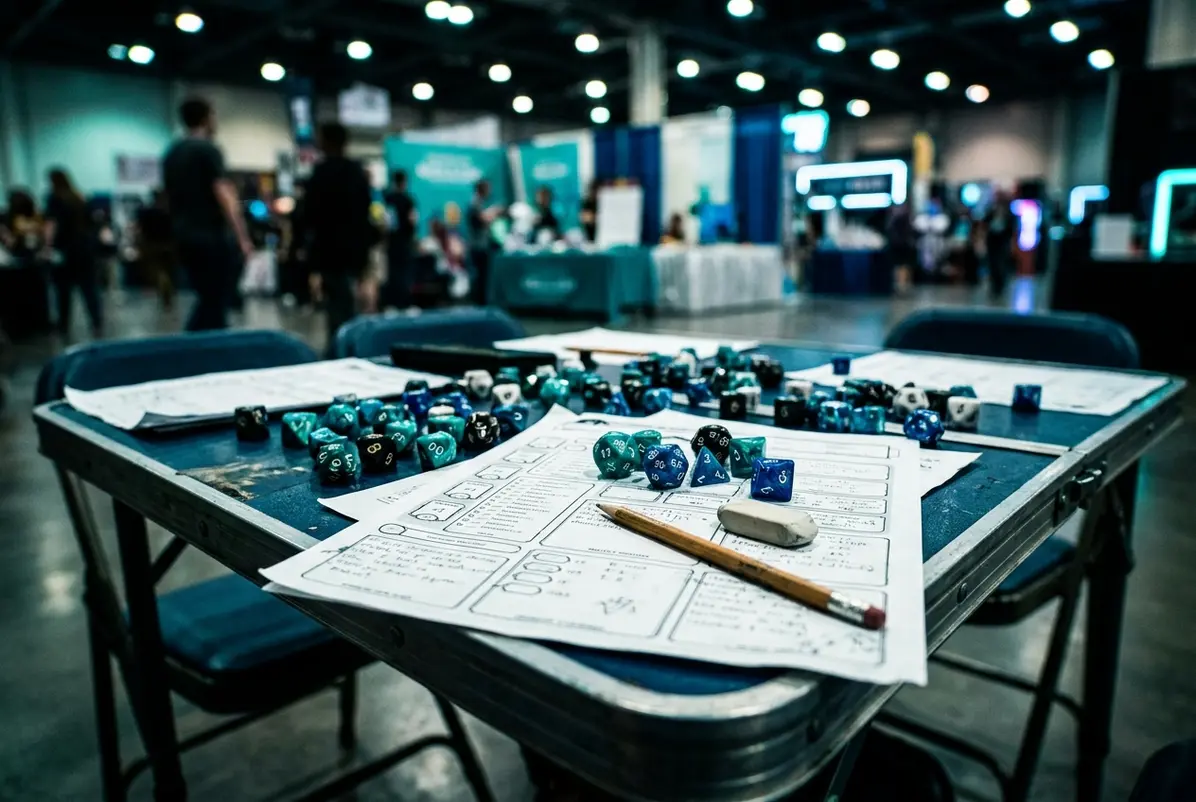
Convention attendance cannot reveal how many people are new, returning, or simply attending more often. Hasbro offers a different piece of the picture through Magic: The Gathering, one of tabletop gaming’s largest commercial franchises. In the second quarter of 2026, the company’s Wizards of the Coast and Digital Gaming segment generated $663.8 million in revenue, up 27.1 percent year over year. Tabletop gaming inside the segment rose 30 percent to $528.3 million, driven primarily by Magic, whose revenue increased 32.3 percent.
That does not make Hasbro a proxy for every board game, roleplaying game, miniatures line, or independent publisher. It does make Magic difficult to dismiss as a temporary nostalgia flare. Hasbro says the franchise has grown in 15 of the 17 years from 2009 through 2025 and produced a 17 percent compound annual growth rate over that period. In 2025 alone, Magic generated $1.72 billion across tabletop and digital products.
A Comeback Is Only Part of the Audience
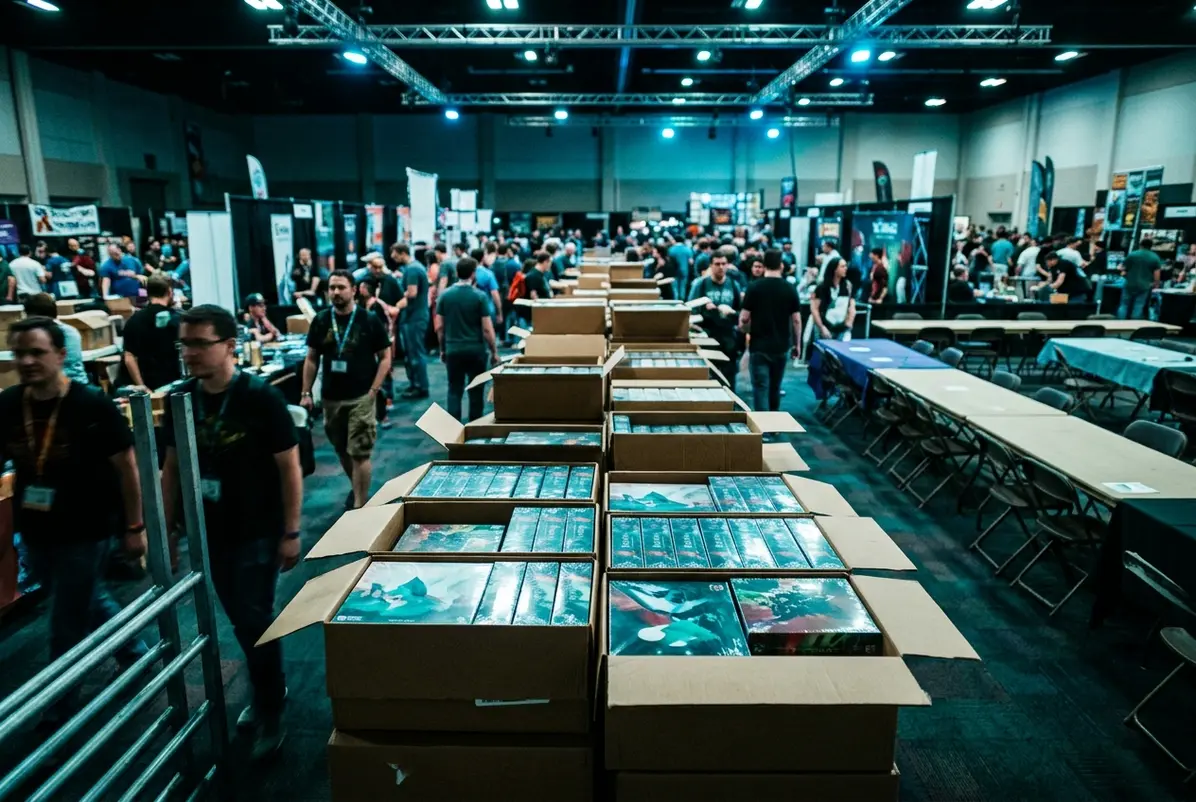
The more revealing evidence came when Hasbro CEO Chris Cocks was asked on the company’s second-quarter earnings call how Magic could continue growing from an already high base. His answer separated three groups that nostalgia narratives tend to mash together. The Magic player base was growing, he said; new players were growing, and Hasbro was “reacquiring lapsed players.” He also said distribution was growing at a double-digit rate as the Wizards Play Network and mass-market availability expanded.
Returning players are therefore real. They just are not the whole mechanism.
Hasbro’s own Magic player profile makes the generational mix harder to reduce to nostalgia. The company puts the average tabletop player at about 30 years old and says roughly one-third of players have been playing for less than three years, another third for up to ten years, and the remaining third for more than a decade. Those are company-reported demographics, not an independent census of tabletop gaming, but they describe a franchise continually feeding new players into the bottom of the age-and-experience ladder while retaining veterans at the other end.
Nostalgia Does Not Explain the Extra Chairs
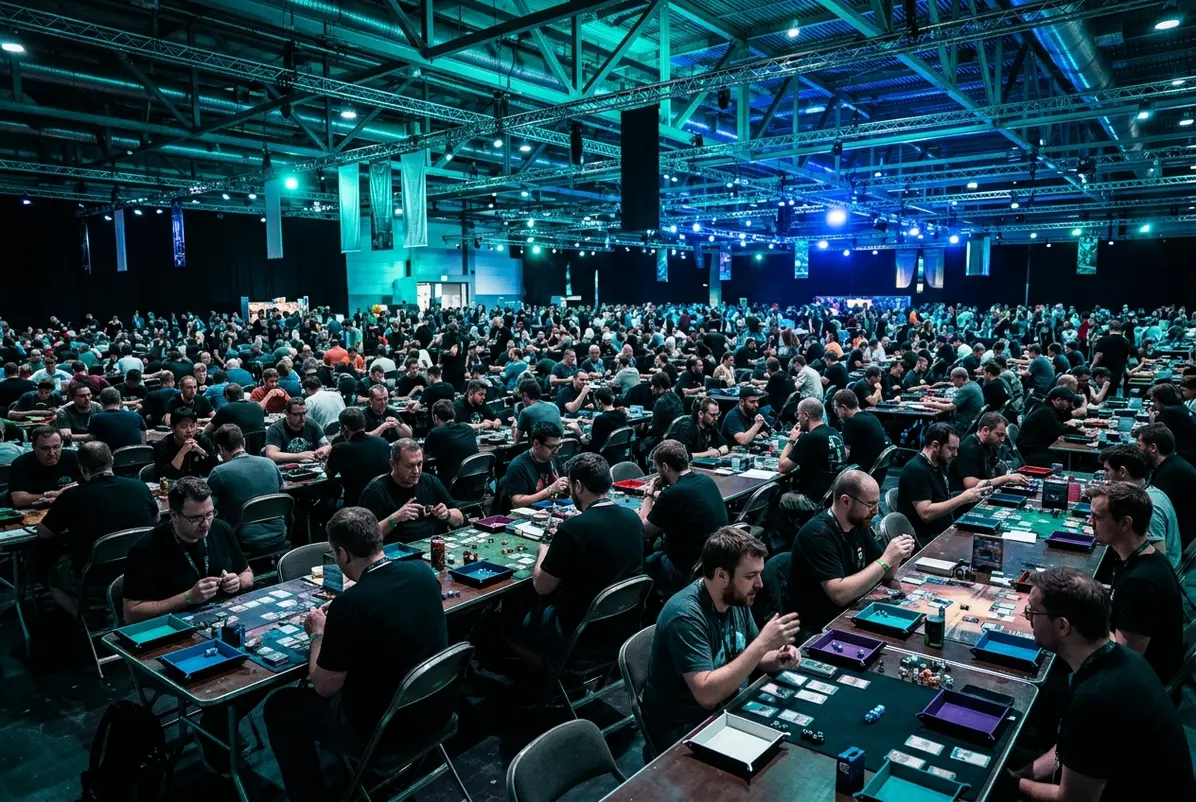
None of this makes nostalgia irrelevant. Dungeons & Dragons can sell its own history. Magic can bring back somebody who last shuffled a deck in college. Gen Con itself is approaching its 60th edition. Old attachments are part of the machinery, and Hasbro explicitly says it is winning lapsed players back.
What the numbers resist is the cleaner story that tabletop gaming disappeared, waited for its childhood audience to age into disposable income, and then returned with them. Gen Con had already exceeded its 2019 attendance record by 2023 and has broken it every year since. Magic has been compounding for well over a decade while adding new players, reacquiring old ones, and widening the places where cards can be bought.
The revealing problem is no longer whether an old audience will come back. In Indianapolis, the problem has become architectural: where to put everybody who showed up.


'%3e%3cg id='Final-Copy-2_2_' transform='translate(1275.000000, 200.000000)'%3e%3cpath class='st0' d='M7.4,12.8h6.8l3.1-11.6H7.4C4.2,1.2,1.6,3.8,1.6,7S4.2,12.8,7.4,12.8z'/%3e%3c/g%3e%3c/g%3e%3c/g%3e%3cg id='final---dec.11-2020'%3e%3cg id='_x30_208-our-toggle' transform='translate(-1275.000000, -200.000000)'%3e%3cg id='Final-Copy-2' transform='translate(1275.000000, 200.000000)'%3e%3cpath class='st1' d='M22.6,0H7.4c-3.9,0-7,3.1-7,7s3.1,7,7,7h15.2c3.9,0,7-3.1,7-7S26.4,0,22.6,0z M1.6,7c0-3.2,2.6-5.8,5.8-5.8 h9.9l-3.1,11.6H7.4C4.2,12.8,1.6,10.2,1.6,7z'/%3e%3cpath id='x' class='st2' d='M24.6,4c0.2,0.2,0.2,0.6,0,0.8l0,0L22.5,7l2.2,2.2c0.2,0.2,0.2,0.6,0,0.8c-0.2,0.2-0.6,0.2-0.8,0 l0,0l-2.2-2.2L19.5,10c-0.2,0.2-0.6,0.2-0.8,0c-0.2-0.2-0.2-0.6,0-0.8l0,0L20.8,7l-2.2-2.2c-0.2-0.2-0.2-0.6,0-0.8 c0.2-0.2,0.6-0.2,0.8,0l0,0l2.2,2.2L23.8,4C24,3.8,24.4,3.8,24.6,4z'/%3e%3cpath id='y' class='st3' d='M12.7,4.1c0.2,0.2,0.3,0.6,0.1,0.8l0,0L8.6,9.8C8.5,9.9,8.4,10,8.3,10c-0.2,0.1-0.5,0.1-0.7-0.1l0,0 L5.4,7.7c-0.2-0.2-0.2-0.6,0-0.8c0.2-0.2,0.6-0.2,0.8,0l0,0L8,8.6l3.8-4.5C12,3.9,12.4,3.9,12.7,4.1z'/%3e%3c/g%3e%3c/g%3e%3c/g%3e%3c/g%3e%3c/svg%3e) Your Privacy Choices
Your Privacy Choices