


In late 1979, a small film crew moved into a remote cabin near Morristown, Tennessee, with no running water and no professional effects operation waiting outside the frame. The building was not simply the setting for The Evil Dead. It was the production model: isolated, uncomfortable, and dependent on whatever its occupants could build before the next shot.
Sam Raimi, Rob Tapert, Bruce Campbell, and their collaborators had already made the short film Within the Woods as a pilot designed to attract investors. It worked well enough to get a feature started, but not well enough to make that feature comfortable. The Tennessee shoot stretched through weeks of freezing nights, injuries, disappearing crew members, and improvised solutions. The money did not remove the limitations. It merely bought the crew the opportunity to confront them.
That distinction matters because The Evil Dead did not become memorable despite its lack of resources. It converted that lack into a visual language. Its real achievement was handmade impact.
Three Weeks to Build the Dead
The film’s special makeup effects were handled by Tom Sullivan, a self-taught Michigan artist who had already worked on Within the Woods. Sullivan is sometimes incorrectly described as a Michigan State University student. According to the American Film Institute’s production history, his wife attended MSU, and Sullivan discovered Raimi and Tapert’s filmmaking society through the campus newspaper.
He joined a production with no effects house, little preparation time, and almost nothing finished. Sullivan has said that he received Raimi’s script only three weeks before filming began. Those weeks had to contain the jobs that a larger movie would divide among departments: breaking down the script, designing the Deadites, buying materials, creating molds, preparing makeup, building severed body parts, and determining how the film’s bodies would finally collapse into gore.
The shortage was not only financial. It was organizational. There was no supply chain to call when a prop failed. Whatever the film needed had to be invented by the people already inside the cabin.
Coffee in the Blood
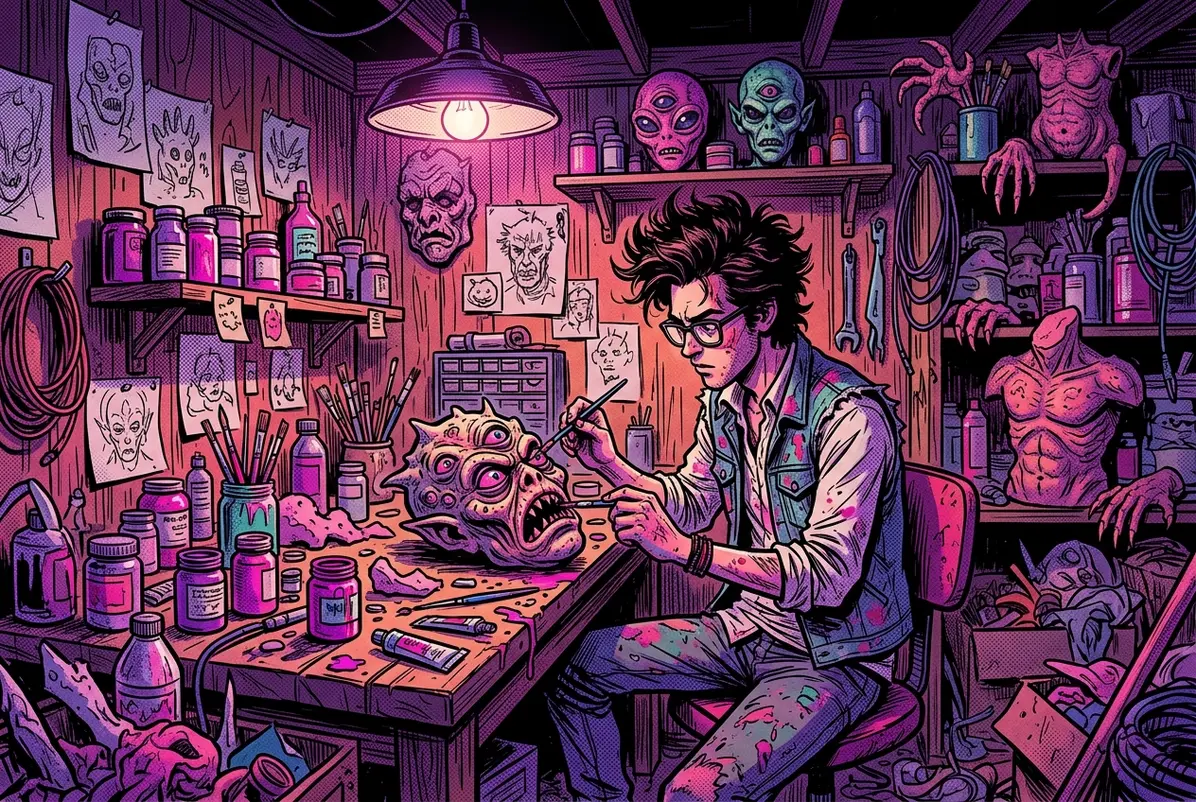
The film’s most famous material solution was its blood. Sullivan’s recipe was simple enough to sound like something assembled from a grocery run: corn syrup, red food coloring, and instant coffee mixed into a paste. In a retrospective interview, Sullivan credited the formula to Raimi, who had taught it to him during Within the Woods.
The coffee did not make the mixture mystical. It made it usable. It thickened the syrup, darkened its texture, and helped turn ordinary kitchen ingredients into something that could cling to faces, floors, props, and costumes long enough to survive a take.
That is the important part of the anecdote. The coffee was not a quirky signature added for mythology. It was material problem-solving. Someone needed blood. Someone looked at what was available. The solution became part of the movie’s identity.
Sullivan applied the same logic to the Book of the Dead. Raimi’s script described an animal-skin volume with ancient lettering. Sullivan thought that would read as ordinary leather, so he proposed a cover made to resemble human skin, complete with a face. He built it from a rubber casting attached to cardboard, bound the pages with grocery-bag paper, and filled them with anatomical illustrations influenced by Leonardo da Vinci’s notebooks. The writing was invented by hand. Sullivan called it “Bullscript”.
The prop became iconic because it did not feel purchased. It felt discovered. Its ugliness had authorship.
The Camera Becomes a Machine
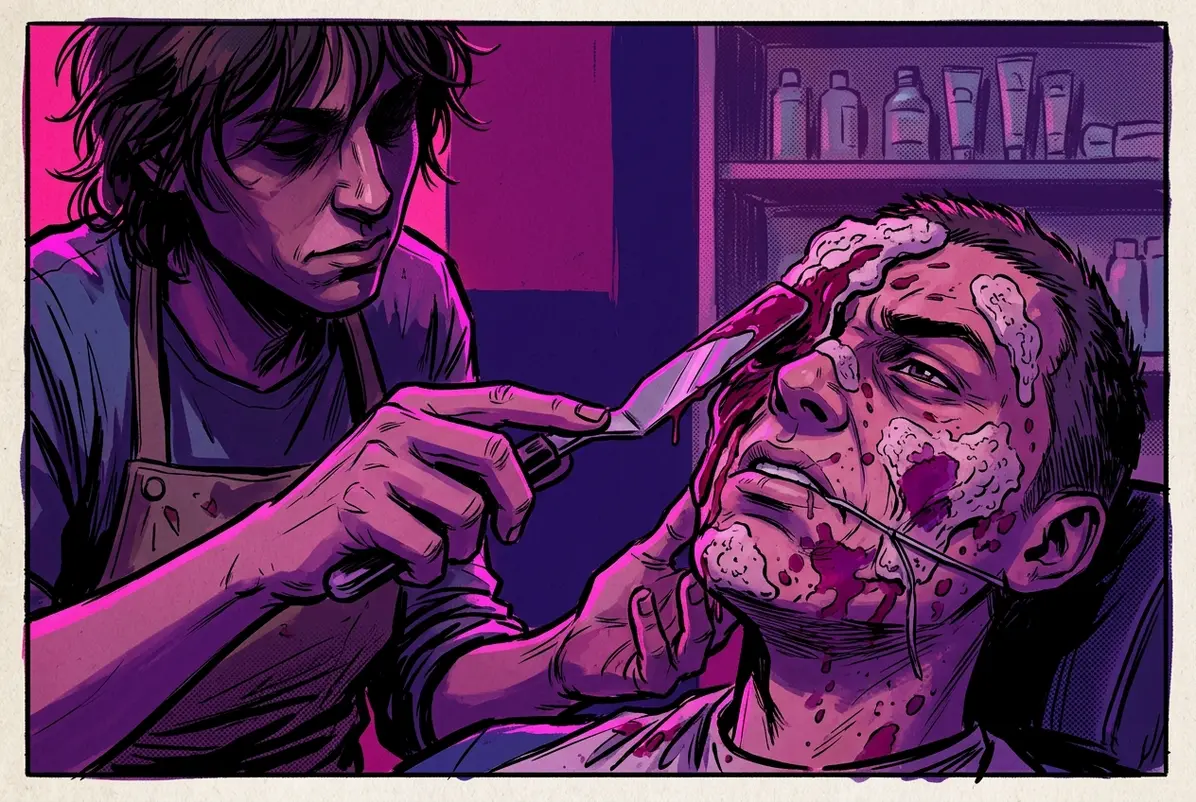
The same scarcity reshaped the camerawork, although that invention belonged to the wider production rather than Sullivan alone. Unable to afford conventional stabilization equipment, the crew constructed its own moving-camera systems. Production accounts collected by AFI describe the “Shaky-cam” as a 16mm camera balanced on a fifteen-foot wooden plank and carried by two crew members. Raimi and cinematographer Tim Philo also carried the ten-pound camera by hand for some shots.
The result was not a discount imitation of expensive studio movement. It was stranger and more aggressive. The camera did not glide politely through the woods. It appeared to hunt.
This is where limitation becomes style. A conventional dolly might have made the movie smoother, but smoothness was not what the movie needed. The homemade rig gave the unseen force a body. Wood, weight, sprinting operators, uneven ground, and a small camera became a monster before the effects team had to show one.
The old workflow was not a cathedral. It was a beautiful, productive mess.
From a Basement Meltdown to Cannes
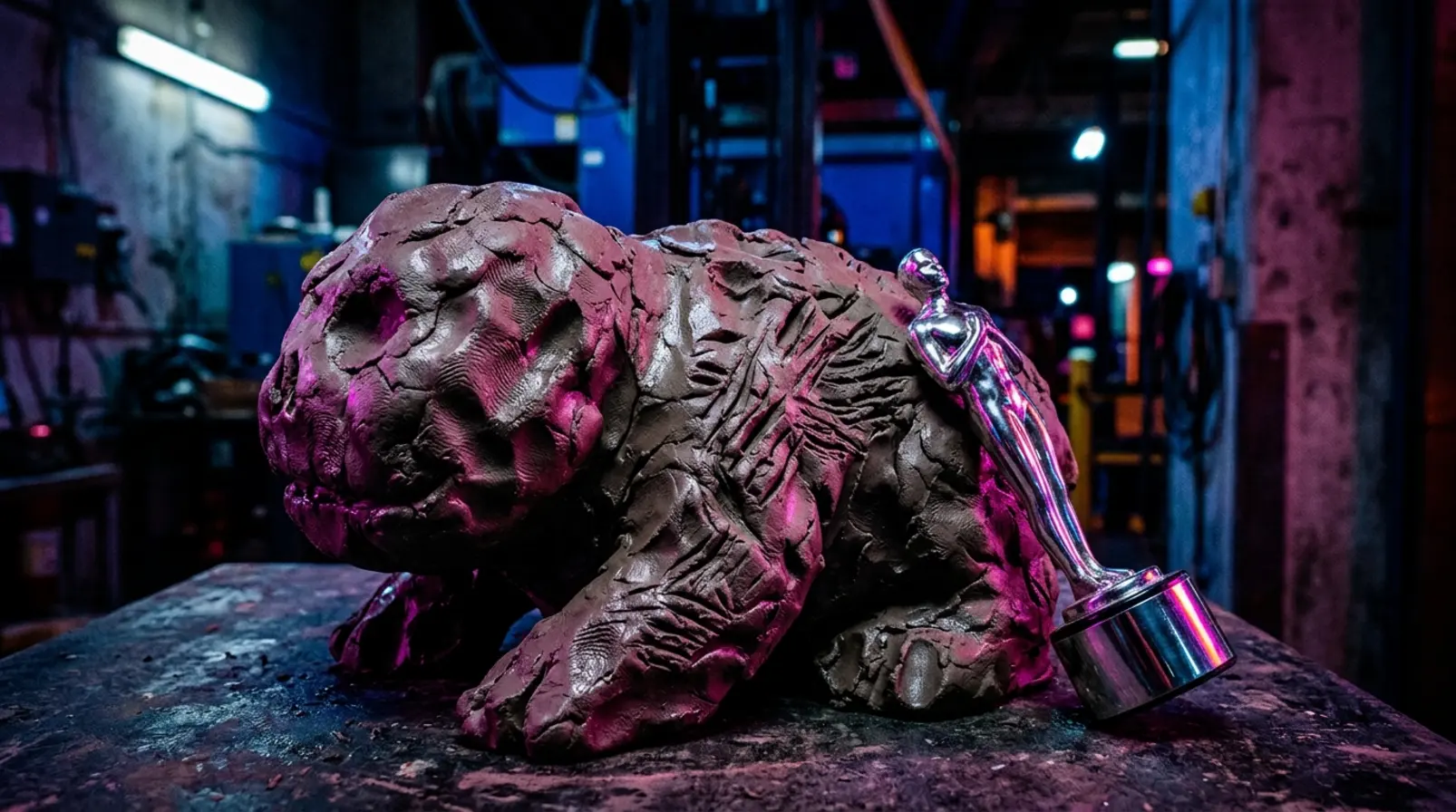
The climactic decomposition sequence extended the production far beyond the cabin. Sullivan and photographic-effects artist Bart Pierce combined clay animation, mechanical effects, mattes, and live-action photography, spending more than three months filming elements in Pierce’s basement studio. AFI notes that individual effects could require several days and that some shots passed through the camera repeatedly as the pair layered the images together.
None of this looked like the foundation of a durable franchise at the time. Sullivan has said the crew thought they would be fortunate if the film reached Southern drive-ins. Instead, it first premiered at Detroit’s Redford Theatre, then reached the Cannes market in 1982, where Stephen King championed it in a piece for Twilight Zone. AFI’s account says King’s support helped draw attention to a film American distributors had largely avoided, and New Line Cinema acquired its domestic distribution rights in January 1983.
The triumph was not simply that a cheap film became profitable. Plenty of cheap films disappear. The Evil Dead survived because viewers could feel the effort pressing against the image. The seams were not always hidden, but the energy behind them was impossible to miss.
Real Fire, Real Wires
The franchise returned to theaters on July 10, 2026, with Evil Dead Burn, directed by Sébastien Vaniček and produced by Raimi and Tapert. Vaniček came to the project after his feature debut, the French spider horror film Infested.
Burn was not made with Sullivan’s grocery-store budget. It had studio infrastructure, experienced departments, digital tools, and decades of franchise recognition behind it. Yet Vaniček’s effects philosophy returned to the same physical premise.
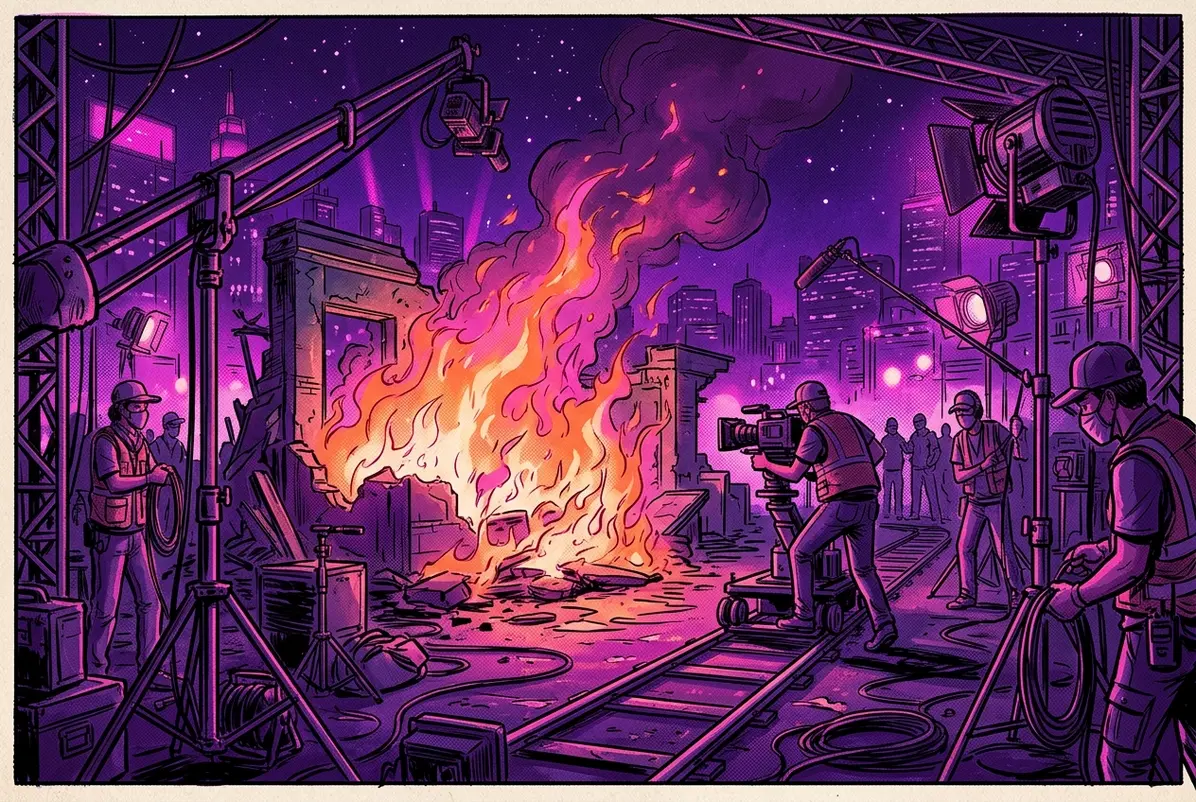
In interviews surrounding the film’s release, Vaniček said that everything that could be achieved practically was done practically. The final creature was performed physically, with computer imagery used to add details such as holes that could not be created safely in an actor’s face. He also rejected digital flames, using real fire on set and, in some scenes, allowing that fire to light the actors.
The bathroom sequence pushed the same principle into stunt choreography. Vaniček described two stunt doubles positioned in a bathtub, each attached to multiple wires. Groups of stunt performers pulled those wires from behind the camera, requiring roughly fifteen stunt workers to coordinate the shot.
The workers were not pulling the camera through the scene, as some accounts have suggested. They were physically moving the performers while the production coordinated the shot around them. The image was built from bodies, tension, timing, and machinery hidden just outside the frame.
The Practical-Effects Contract
The point is not that practical effects are automatically superior to digital ones. Bad rubber is still bad rubber. Real fire can be photographed poorly. Computer imagery can create convincing weight, texture, and performance when it is designed with care.
The stronger distinction is between an image built around physical consequences and one that treats those consequences as decoration added later. Evil Dead works best when the actors, camera, light, props, fluids, and stunt mechanisms are responding to the same event. The violence occupies the room with them.
That physical agreement is the franchise’s practical-effects contract. The audience may know that the blood is syrup, the book is cardboard, the monster is an appliance, and the invisible force is two people carrying a plank. The illusion survives because every material in the shot is participating in the lie.
Sullivan’s blood and Vaniček’s fire belong to different production economies, but they answer the same question: what does the camera need to encounter for the image to feel dangerous?
The coffee was never the secret ingredient. The secret was allowing material resistance to become style.
Frequently Asked Questions
What was the fake blood in The Evil Dead made from?
Tom Sullivan said the recipe combined corn syrup, red food coloring, and instant coffee mixed with water into a paste. He credited Sam Raimi with teaching him the formula during Within the Woods.
Did Tom Sullivan create the Book of the Dead?
Sullivan designed and constructed the original film’s Book of the Dead prop. He created its face-like cover, drew its anatomical illustrations, and invented the symbols and text on its pages.
Where was the original The Evil Dead filmed?
Principal location filming took place near Morristown, Tennessee. Additional production and effects work was completed in Detroit, Michigan.
Did Tom Sullivan invent the Shaky-cam?
The homemade camera systems were products of the wider production crew. AFI’s history attributes the Shaky-cam to the filmmakers collectively and describes Raimi and cinematographer Tim Philo carrying the camera for some shots. Sullivan’s primary credited role was special makeup effects.
Does Evil Dead Burn use practical effects?
Yes. Director Sébastien Vaniček said the production used practical effects whenever feasible, including a physically performed final creature and real fire. Digital effects were used selectively for elements that practical work could not safely or convincingly provide.
'%3e%3cg id='Final-Copy-2_2_' transform='translate(1275.000000, 200.000000)'%3e%3cpath class='st0' d='M7.4,12.8h6.8l3.1-11.6H7.4C4.2,1.2,1.6,3.8,1.6,7S4.2,12.8,7.4,12.8z'/%3e%3c/g%3e%3c/g%3e%3c/g%3e%3cg id='final---dec.11-2020'%3e%3cg id='_x30_208-our-toggle' transform='translate(-1275.000000, -200.000000)'%3e%3cg id='Final-Copy-2' transform='translate(1275.000000, 200.000000)'%3e%3cpath class='st1' d='M22.6,0H7.4c-3.9,0-7,3.1-7,7s3.1,7,7,7h15.2c3.9,0,7-3.1,7-7S26.4,0,22.6,0z M1.6,7c0-3.2,2.6-5.8,5.8-5.8 h9.9l-3.1,11.6H7.4C4.2,12.8,1.6,10.2,1.6,7z'/%3e%3cpath id='x' class='st2' d='M24.6,4c0.2,0.2,0.2,0.6,0,0.8l0,0L22.5,7l2.2,2.2c0.2,0.2,0.2,0.6,0,0.8c-0.2,0.2-0.6,0.2-0.8,0 l0,0l-2.2-2.2L19.5,10c-0.2,0.2-0.6,0.2-0.8,0c-0.2-0.2-0.2-0.6,0-0.8l0,0L20.8,7l-2.2-2.2c-0.2-0.2-0.2-0.6,0-0.8 c0.2-0.2,0.6-0.2,0.8,0l0,0l2.2,2.2L23.8,4C24,3.8,24.4,3.8,24.6,4z'/%3e%3cpath id='y' class='st3' d='M12.7,4.1c0.2,0.2,0.3,0.6,0.1,0.8l0,0L8.6,9.8C8.5,9.9,8.4,10,8.3,10c-0.2,0.1-0.5,0.1-0.7-0.1l0,0 L5.4,7.7c-0.2-0.2-0.2-0.6,0-0.8c0.2-0.2,0.6-0.2,0.8,0l0,0L8,8.6l3.8-4.5C12,3.9,12.4,3.9,12.7,4.1z'/%3e%3c/g%3e%3c/g%3e%3c/g%3e%3c/g%3e%3c/svg%3e) Your Privacy Choices
Your Privacy Choices