


The CRT Revival Has a Repairman Problem
The tube is dying. The image is becoming software.
Our Street Fighter II cabinet has lost its CRT twice. Each failure has left an otherwise complete arcade machine unable to do the most basic thing expected of it: display the game.
Both times, we got it running again because we knew the right repairman. His day job includes maintaining CRT displays at Disneyland. That is the level of specialist knowledge now keeping our cabinet alive. We are lucky to have his number. He feels like the last of his breed.
That experience changes how the CRT revival looks from inside an actual gaming cabinet. The problem is not simply finding another old screen. It is finding someone who understands what failed, can work on high-voltage hardware safely, and still knows how these displays were built.
The cabinet is waiting on labor.
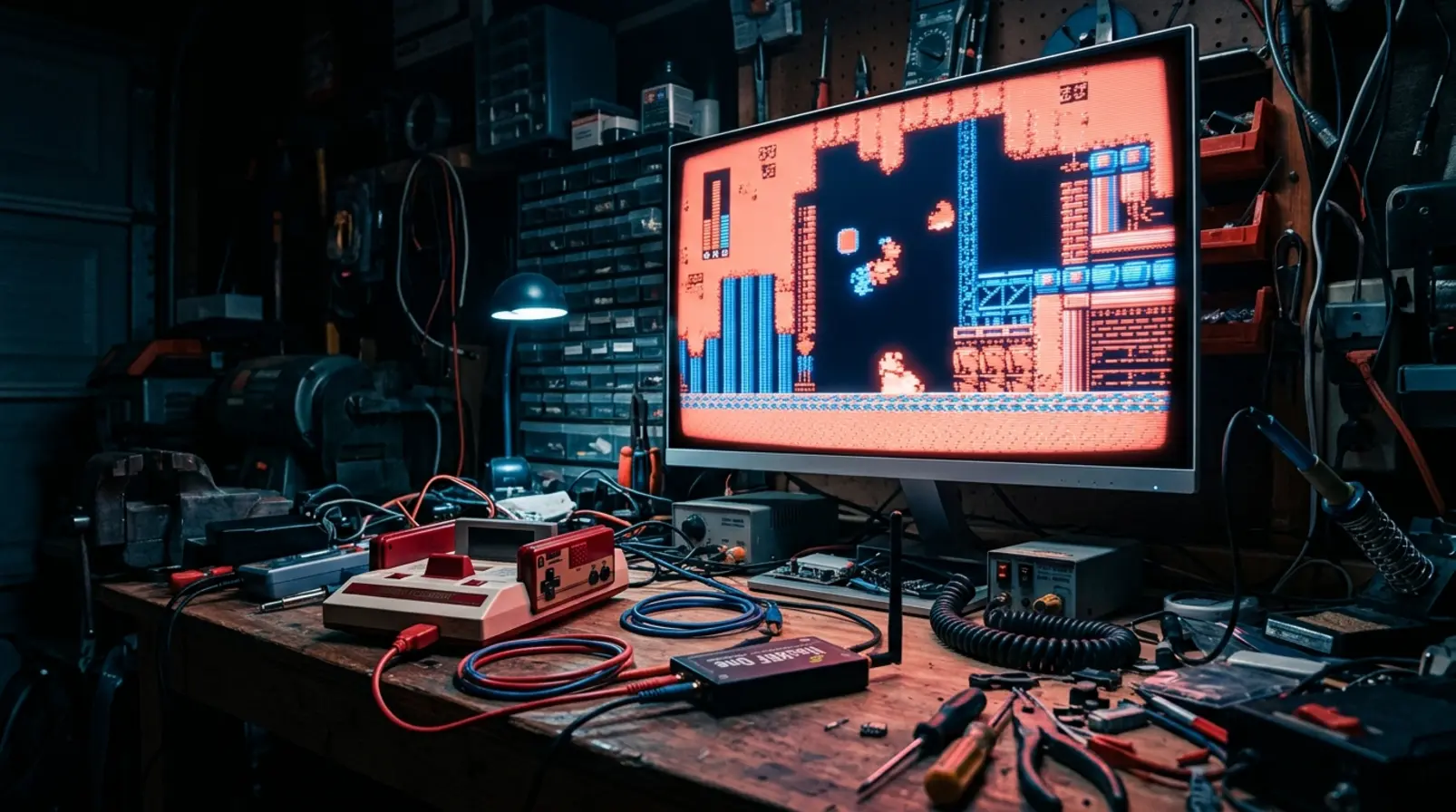
That is what makes GOROman’s Famicom project more interesting than another retro filter. The open-source software receives a Nintendo Famicom’s actual VHF RF output through a HackRF One software-defined radio, performs NTSC-J color decoding in software, and displays the result on a computer in real time, according to the project documentation. An optional mode adds barrel distortion, scanlines, and a vignette.
The console is real. The RF signal is real. The television has become software.
The Television Is Being Rebuilt After the Signal Leaves the Console
GOROman, a former Sega and Facebook engineer, released the project in mid-July 2026. Tom’s Hardware reported that the demonstrated output appeared in a desktop window on a modern LCD rather than on a cathode-ray tube.
That distinction matters. The project is not simply placing a scanline effect over an emulated game. It begins with the analog signal produced by original hardware and reconstructs parts of the television receiver chain in software, including carrier detection, synchronization, luminance and chroma separation, color decoding, line doubling, and display.
The project documentation also describes accommodations for the Famicom’s non-interlaced 240p output and the frequency drift of its RF modulator. The old console is still producing the signal. The computer is taking over work once performed inside the television.
GOROman is not preserving a particular tube. He is separating the television into functions that can survive without it.
The “TV Apocalypse” Is Also a Knowledge Problem
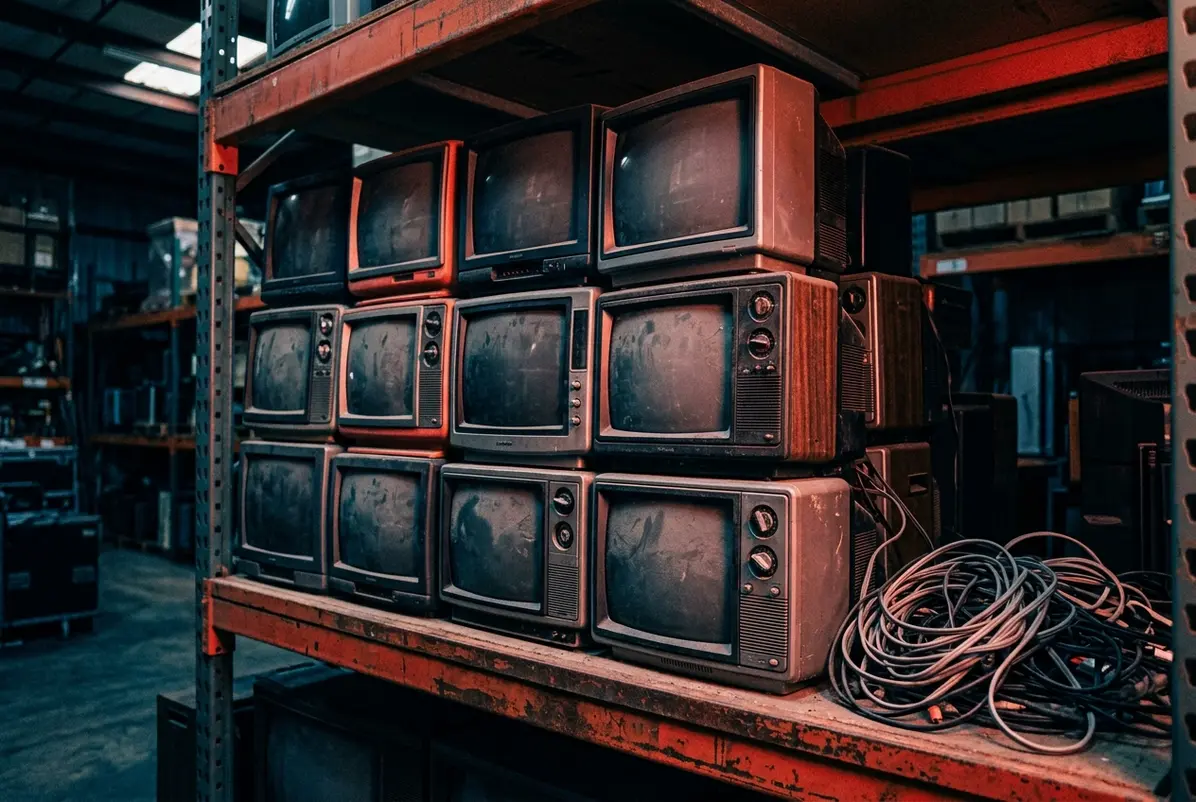
Mainstream new CRT production has effectively disappeared outside specific cases, while every surviving set continues accumulating age. Windows Central reported in April 2026 that CRT displays are no longer generally produced and that failures can affect both the tubes and the electronics surrounding them.
At a game-preservation roundtable during GDC 2026, Andrew Borman, director of digital preservation at the Strong Museum, described the situation as a “TV apocalypse.” He argued that preservationists need to document proper CRT repair because repairing surviving sets remains the most direct way to keep them operating, according to GamesRadar.
The shortage is not only measured in screens. It is measured in people.
An old television or arcade monitor may still turn up in a garage, warehouse, auction, or classified listing. The harder thing to replace is the person who knows what to do when it starts collapsing, rolling, dimming, losing color, or refusing to turn on.
Our Street Fighter II cabinet makes that problem tangible. The cabinet still exists. The board, controls, wiring, artwork, and physical structure can all remain intact. Yet when the CRT fails, the machine stops functioning as the object it was designed to be. Its survival depends on whether someone with increasingly uncommon knowledge is still available.
The real crisis is not only that the hardware is aging. The people capable of reading, diagnosing, and repairing it are disappearing too.
The Tube Is Becoming a Menu
Modern video processors reveal what is happening to CRT authenticity. Characteristics once produced together by a physical display are becoming adjustable settings.
As of August 2, 2026, RetroTINK’s official store listed the RetroTINK-4K Pro at $750 and the 4K CE at $475. The 4K CE specifications include simulated beam profiles, adjustable CRT masks, beam-strength controls, intensity modulation, and effects intended to reproduce aspects of interlaced video.
On an original television, those characteristics emerge from the interaction of the tube, electron beam, phosphors, mask, circuitry, signal format, and condition of the individual machine. In a modern processor, they become parameters that can be selected, adjusted, saved, and compared.
The television used to be one object. Now its visual behavior can be broken into a menu.
That does not make the result worthless or automatically inauthentic. A reconstruction can be useful, convincing, and historically informed without being physically identical. The more important question is which parts of the original display chain have been studied and preserved—and which have been simplified, exaggerated, or lost.
The Pixel Was Never Alone
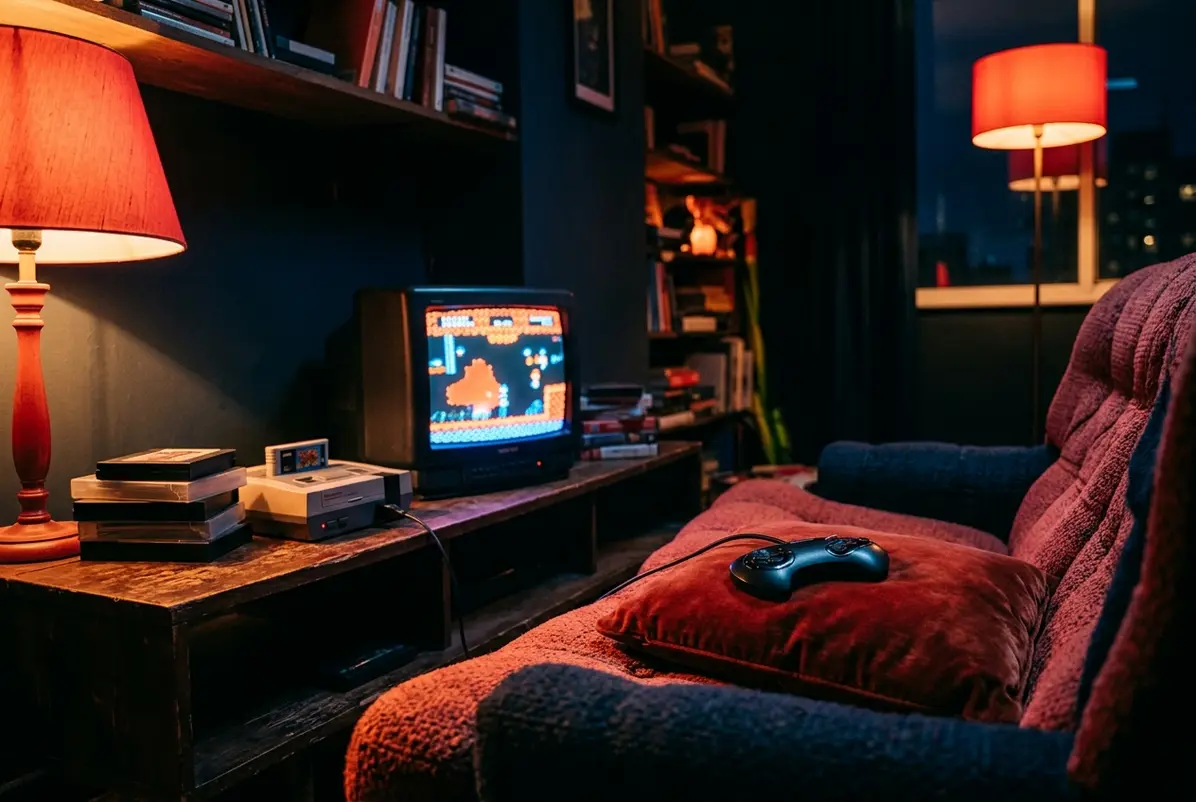
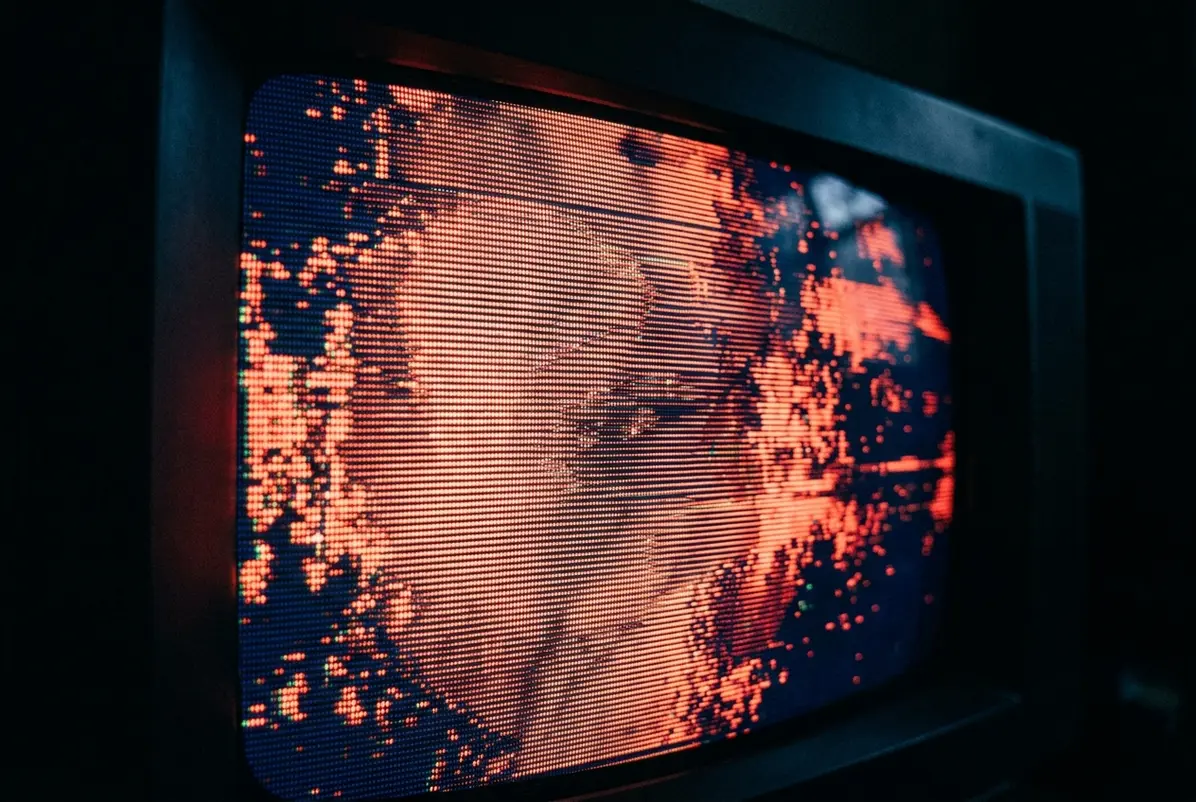
The case for CRT preservation is not simply nostalgia for heavy glass, curved screens, and humming cabinets. Old game graphics were not historically viewed as naked pixel data on a perfectly sharp grid. They passed through encoders, cables, analog signals, phosphors, masks, scan structure, softness, bloom, and motion before reaching the player.
During the GDC 2026 preservation roundtable, an audience member argued that many SNES-era games used the CRT’s blending effect as part of their visual presentation, allowing neighboring pixels to form shapes and depth that can look different when enlarged sharply to 1080p, as GamesRadar reported.
That should not be inflated into a claim that every old game was secretly designed around blur. Artists, platforms, regions, cables, televisions, and arcade monitors produced different results. There was no single universal CRT image.
The stronger conclusion is that pixel data represented only one layer of the final picture. The display completed the image.
A razor-sharp upscale can preserve every source pixel while changing the relationship between those pixels. It can reveal the data more clearly while moving the presentation farther from the conditions under which the artwork was originally seen.
The glow is not decoration. The glow is part of the archive.
Authenticity Is Moving Upstream
Repair and emulation do not preserve the same thing. Repair keeps the original machine operating. Decoding, scaling, and simulation preserve selected behaviors when the original display can no longer be used reliably.
Serious preservation needs both approaches.
Borman said the Strong Museum preserves materials including hardware schematics and chip plots, and that this kind of documentation has helped improve emulation. He also discussed FPGA-based hardware emulation as another approach that can benefit from preserved technical records, according to GamesRadar.
GOROman’s decoder occupies a strange middle ground. It preserves the original Famicom and the actual RF signal leaving it, but replaces the television receiver and display with software and modern hardware. The source remains analog. The destination does not.
Authenticity is moving upstream—from the glass toward the signal.
The original CRT still matters because it remains the reference against which simulated beams, masks, scanlines, color behavior, softness, and distortion can be judged. Without surviving examples, future simulations risk becoming copies of copies: increasingly convenient, increasingly configurable, and gradually less connected to the machines they claim to reproduce.
But preservation cannot depend entirely on immortal hardware or on our continued access to one unusually skilled technician. It will require surviving tubes, repair documentation, measured signals, open-source decoders, modern processors, and displays capable of carrying the result forward.
The CRT revival is not really a comeback. It is an evacuation.
The tube is dying. The image is learning how to escape.
'%3e%3cg id='Final-Copy-2_2_' transform='translate(1275.000000, 200.000000)'%3e%3cpath class='st0' d='M7.4,12.8h6.8l3.1-11.6H7.4C4.2,1.2,1.6,3.8,1.6,7S4.2,12.8,7.4,12.8z'/%3e%3c/g%3e%3c/g%3e%3c/g%3e%3cg id='final---dec.11-2020'%3e%3cg id='_x30_208-our-toggle' transform='translate(-1275.000000, -200.000000)'%3e%3cg id='Final-Copy-2' transform='translate(1275.000000, 200.000000)'%3e%3cpath class='st1' d='M22.6,0H7.4c-3.9,0-7,3.1-7,7s3.1,7,7,7h15.2c3.9,0,7-3.1,7-7S26.4,0,22.6,0z M1.6,7c0-3.2,2.6-5.8,5.8-5.8 h9.9l-3.1,11.6H7.4C4.2,12.8,1.6,10.2,1.6,7z'/%3e%3cpath id='x' class='st2' d='M24.6,4c0.2,0.2,0.2,0.6,0,0.8l0,0L22.5,7l2.2,2.2c0.2,0.2,0.2,0.6,0,0.8c-0.2,0.2-0.6,0.2-0.8,0 l0,0l-2.2-2.2L19.5,10c-0.2,0.2-0.6,0.2-0.8,0c-0.2-0.2-0.2-0.6,0-0.8l0,0L20.8,7l-2.2-2.2c-0.2-0.2-0.2-0.6,0-0.8 c0.2-0.2,0.6-0.2,0.8,0l0,0l2.2,2.2L23.8,4C24,3.8,24.4,3.8,24.6,4z'/%3e%3cpath id='y' class='st3' d='M12.7,4.1c0.2,0.2,0.3,0.6,0.1,0.8l0,0L8.6,9.8C8.5,9.9,8.4,10,8.3,10c-0.2,0.1-0.5,0.1-0.7-0.1l0,0 L5.4,7.7c-0.2-0.2-0.2-0.6,0-0.8c0.2-0.2,0.6-0.2,0.8,0l0,0L8,8.6l3.8-4.5C12,3.9,12.4,3.9,12.7,4.1z'/%3e%3c/g%3e%3c/g%3e%3c/g%3e%3c/g%3e%3c/svg%3e) Your Privacy Choices
Your Privacy Choices