

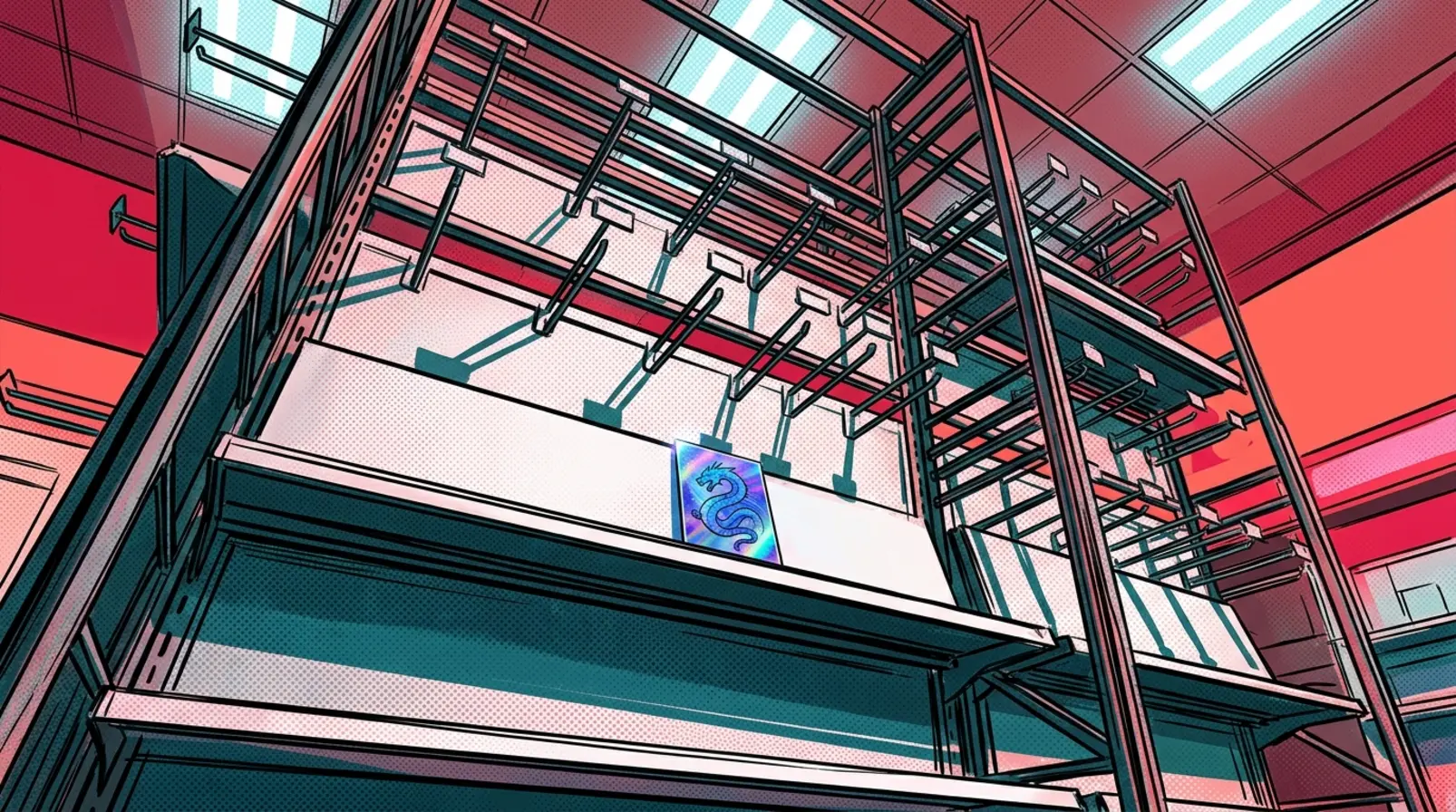


Palworld’s card game had already produced a four-figure resale before its official release. On July 31, one day after the game’s July 30, 2026 worldwide launch, GamesRadar reported that a Cattiva Gold Soul card had sold on eBay for almost $4,000 three days before release. A Chillet Dragon Whisperer sold for $1,400 the day before launch, with later completed sales reported around $1,100.
Then came a number large enough to make the frenzy look inevitable: 3.5 million packs. Bushiroad’s English card-game site called the figure worldwide “pack sales” on July 9. But Bushiroad’s Japanese corporate listing described it as planned worldwide shipments exceeding 3.5 million packs. Both notices appeared three weeks before launch. The figure did not represent 3.5 million packs purchased by players in a single day.
The early sales were real enough to demonstrate immediate speculation. The shipment announcement showed that Bushiroad was preparing a substantial global launch. Neither proves that Pocketpair or Bushiroad deliberately created empty shelves to manufacture hype.
Palworld Entered the Collector Machine Before Release
Palworld did not merely become collectible after launch. Collecting differences were built into the object. Bushiroad’s official product page lists 100 standard card types across four rarity tiers, plus 61 parallel variants. The machinery of desire is visible: alternate treatments, rarity labels, foil surfaces, and one card that can become more valuable than the box it came from.
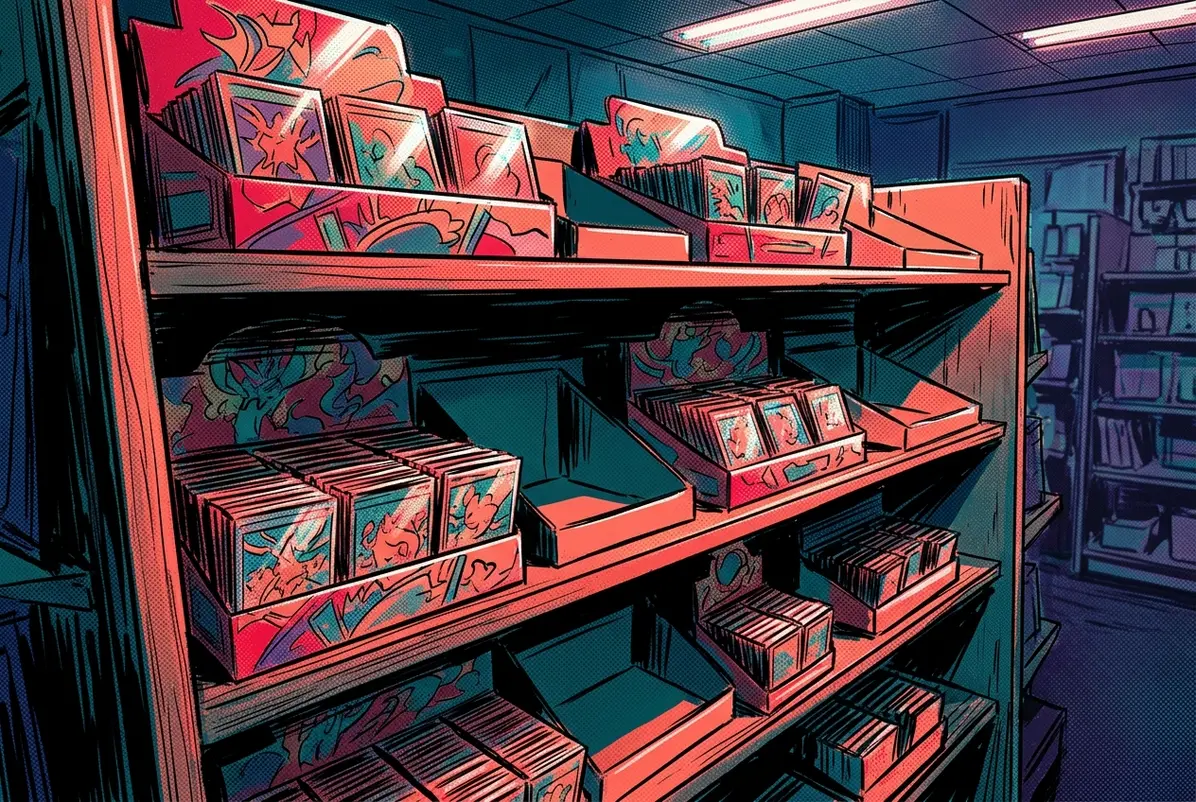
The machinery of distribution is not. The same page does not publish the total print run, regional allocations, retailer order-fill rates, or the pull rate for Cattiva Gold Soul. A chase card can be intentionally difficult to pull while sealed packs remain plentiful. Packs can also disappear because of demand, uneven allocations, reseller activity, production limits, or several of those forces at once.
Rarity describes what might be inside the wrapper. Retail scarcity describes whether the wrapper reaches the shelf. Treating them as the same phenomenon turns a product specification into a theory of intent.

A Rare Card Is Not a Missing Pack
The first Pokémon card boom offers a useful historical demonstration because both kinds of scarcity appeared at the same time. A 1999 Washington Post report said some Pokémon characters were made intentionally scarce. Children bought another booster without knowing whether the desired card would be inside. That uncertainty was part of the product.
The same report said more than two million two-player starter sets had sold and that Wizards of the Coast was struggling to keep pace after exhausting most available card-printing capacity in the United States. The shortage surrounding the packs was therefore reported as a production bottleneck during explosive demand, not simply as a consequence of Charizard being difficult to pull.
Engineered rarity and constrained production can coexist. That does not make them interchangeable. Evidence that a publisher designed rare cards does not establish that it deliberately underproduced every pack containing them.
Limited Means Something When It Is Documented
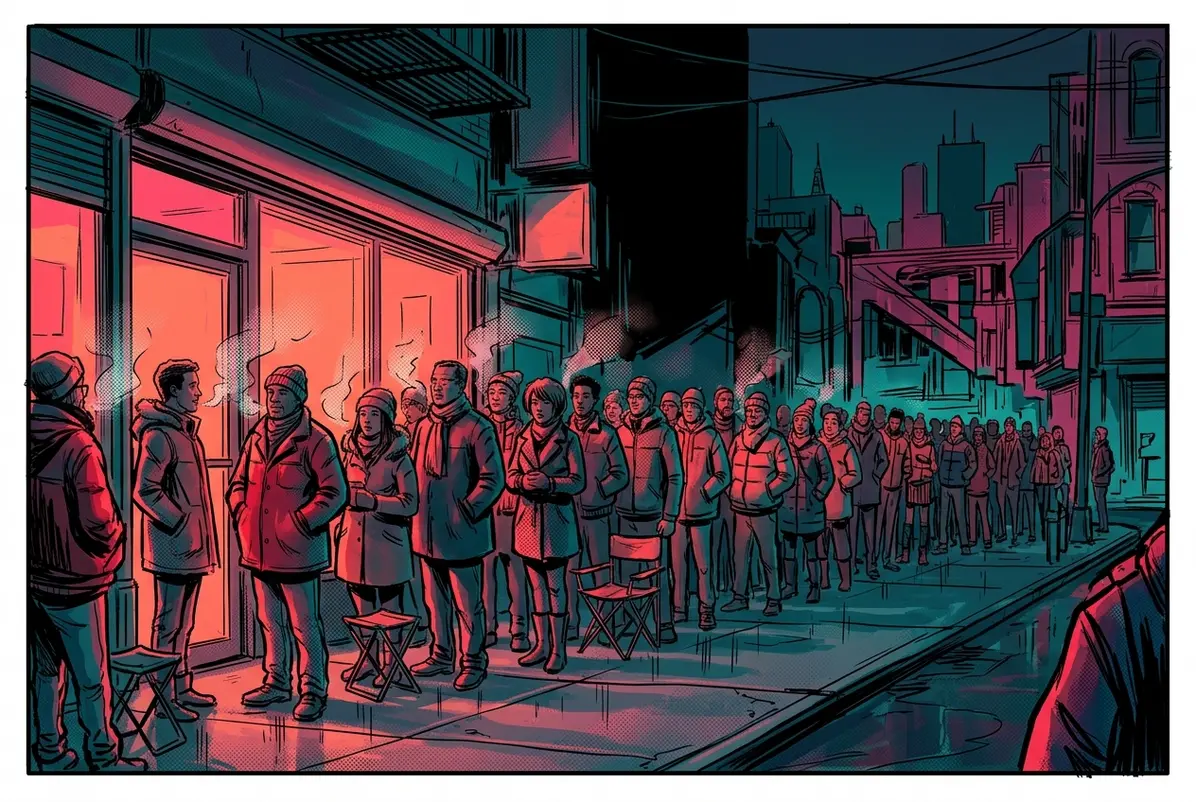
Disney Lorcana provides the cleaner example of intentional restriction. Ravensburger announced that limited quantities of the Curator’s Collection: Heroines Edition would be released on July 17, 2026. The company named five physical locations in Florida, California, London, Dublin, and Disneyland Paris, along with Disney’s Australian online store.
There is no need to reverse-engineer a scarcity strategy from auction prices or photographs of bare shelving. The limitation is written into the announcement. Access to that specific collector product was intentionally restricted.
That evidence applies to that product. It does not prove that ordinary Lorcana booster shortages were designed the same way, and it says nothing about Palworld’s allocations. Scarcity claims become defensible when the mechanism is documented, not merely when the outcome looks suspicious.
The Missing Number Is Allocation
For Palworld, the defensible record remains narrower. Planned worldwide shipments exceeded 3.5 million packs before launch. GamesRadar documented several four-figure completed sales. The first set uses rarity tiers and dozens of parallel variants. Those facts describe a large launch entering a collector market already trained to turn visual difference into financial hierarchy.
What remains missing is the information that would convert suspicion into a supply strategy: total print quantities, regional allocation rules, retailer order-fill data, restock schedules, and the relationship between orders placed and packs delivered. A photograph of an empty shelf contains none of that paperwork.
The official product page also acknowledges that “Palworld” was misspelled on the packs and boxes and says the error will be corrected in future reprints. It is a small detail, but a revealing one. A physical card game is not merely intellectual property passing through a hype cycle. It is printing, packaging, freight, allocations, corrections, and another run through the machines.
The empty shelf is real. Its meaning is not self-authenticating. Collector markets turn absence into narrative almost as quickly as they turn foil into money. The chase card was designed to be chased. The missing pack still has to be explained.



'%3e%3cg id='Final-Copy-2_2_' transform='translate(1275.000000, 200.000000)'%3e%3cpath class='st0' d='M7.4,12.8h6.8l3.1-11.6H7.4C4.2,1.2,1.6,3.8,1.6,7S4.2,12.8,7.4,12.8z'/%3e%3c/g%3e%3c/g%3e%3c/g%3e%3cg id='final---dec.11-2020'%3e%3cg id='_x30_208-our-toggle' transform='translate(-1275.000000, -200.000000)'%3e%3cg id='Final-Copy-2' transform='translate(1275.000000, 200.000000)'%3e%3cpath class='st1' d='M22.6,0H7.4c-3.9,0-7,3.1-7,7s3.1,7,7,7h15.2c3.9,0,7-3.1,7-7S26.4,0,22.6,0z M1.6,7c0-3.2,2.6-5.8,5.8-5.8 h9.9l-3.1,11.6H7.4C4.2,12.8,1.6,10.2,1.6,7z'/%3e%3cpath id='x' class='st2' d='M24.6,4c0.2,0.2,0.2,0.6,0,0.8l0,0L22.5,7l2.2,2.2c0.2,0.2,0.2,0.6,0,0.8c-0.2,0.2-0.6,0.2-0.8,0 l0,0l-2.2-2.2L19.5,10c-0.2,0.2-0.6,0.2-0.8,0c-0.2-0.2-0.2-0.6,0-0.8l0,0L20.8,7l-2.2-2.2c-0.2-0.2-0.2-0.6,0-0.8 c0.2-0.2,0.6-0.2,0.8,0l0,0l2.2,2.2L23.8,4C24,3.8,24.4,3.8,24.6,4z'/%3e%3cpath id='y' class='st3' d='M12.7,4.1c0.2,0.2,0.3,0.6,0.1,0.8l0,0L8.6,9.8C8.5,9.9,8.4,10,8.3,10c-0.2,0.1-0.5,0.1-0.7-0.1l0,0 L5.4,7.7c-0.2-0.2-0.2-0.6,0-0.8c0.2-0.2,0.6-0.2,0.8,0l0,0L8,8.6l3.8-4.5C12,3.9,12.4,3.9,12.7,4.1z'/%3e%3c/g%3e%3c/g%3e%3c/g%3e%3c/g%3e%3c/svg%3e) Your Privacy Choices
Your Privacy Choices