


HyperSynth
Polyphonic Analog Emulator
Oscillator
Detune
0
Sub Osc
0
Filter
Cutoff
18k
Res
1.0
Envelope
Atk
10ms
Dec
300ms
Sus
70%
Rel
500ms
Effects
Delay
0%
Time
300ms
Reverb
0%
60%
Oct 4
If you've ever wondered why so much modern music has that distinctly nostalgic shimmer, you can thank a handful of revolutionary vintage synths "synthesizers" from the 1980s. These weren't just instruments. They were sonic time machines that transformed pop culture, created entirely new genres, and established sounds so iconic that producers in 2026 still can't get enough of them.
The 1980s represented a seismic shift in music production. Technology finally caught up with creative ambition, making synthesizers affordable enough for bedroom producers while powerful enough for stadium anthems. What happened next changed everything.
The Icons: Vintage Synths That Built a Decade
Yamaha DX7: The Digital Revolution
When Yamaha released the DX7 in 1983 for $1,995, they hoped to sell 20,000 units. Within a year, orders exceeded 150,000. By 1986, this single synthesizer appeared on 40% of Billboard Hot 100 number-one singles. Think about that for a moment: nearly half of the biggest hits in America featured the same instrument.
The DX7 brought FM (frequency modulation) synthesis to the masses, creating sounds that were bright, glassy, and unmistakably digital. Those metallic bell tones, punchy electric pianos, and crystalline pads became the soundtrack of an entire era. Unlike the warm, fuzzy analog synths that came before, the DX7 sounded crisp and futuristic.
Here's the catch: programming it was notoriously difficult. With membrane buttons, a single data slider, and a tiny LCD screen, most users stuck with the factory presets. Yet those presets were so distinctive and versatile that they defined countless hits anyway.
Roland Juno-106: The Indie Darling
While the DX7 dominated the charts, the Roland Juno-106 (released in 1984) quietly became the secret weapon of musicians who craved analog warmth. Online communities consistently describe Juno sounds as "about as '80s as it gets," and they're not wrong.
The Juno-106 offered lush analog tones, a creamy 24dB filter, pulse-width modulation, and that gorgeous built-in chorus effect. Early adopters used it on pop hits, but the synth found its second life in the early '90s when techno enthusiasts discovered its affordability and character. Fast forward to today, and artists like Tame Impala, Mac DeMarco, The Weeknd, and Dua Lipa have cemented its legacy in modern indie and pop music.
Sequential Circuits Prophet-5: The Studio Standard
Before the Prophet-5 arrived in 1977, polyphonic synthesizers couldn't save settings. Every time you wanted a particular sound, you had to recreate it manually by adjusting dozens of knobs. The Prophet-5 changed that by being the first fully programmable polyphonic synth, making it an instant game-changer for recording studios.
Michael Jackson used it. So did Peter Gabriel, Pet Shop Boys, and Eurythmics. Kraftwerk built entire albums around it. The Terminator soundtrack wouldn't exist without it. The Prophet-5 became the gold standard for professional synthesis, and its influence echoes through every modern synth with preset memory.
Oberheim OB-Xa: The Powerhouse
Two sounds will instantly remind you of the OB-Xa's power: the haunting ostinato driving Eurythmics' "Sweet Dreams (Are Made of This)" and the anthemic hook in Van Halen's "Jump." This beast of a synthesizer delivered thick, punchy analog sounds that cut through any mix.
The OB-Xa represented the pinnacle of early '80s analog synthesis, offering rich polyphony and a distinctive character that made it indispensable for both pop and rock producers. Its legacy proved so enduring that Oberheim released the OB-X8 in 2022, merging the voice architecture of three classic models into one modern package.
From $2,000 to $200: The Democratization of Legendary Sounds
Here's where things get interesting for today's producers. Those vintage synths that once cost thousands of dollars and required studio access are now available to anyone with a laptop. Enthusiast groups have been buzzing about how technology has completely democratized access to these iconic sounds.
Software emulations from companies like Arturia, Roland Cloud, and Native Instruments offer stunning recreations of vintage instruments. The debate in collector circles often centers on whether these digital models capture the "real" sound, but most agree they're remarkably close. For practical music production in 2026, they're more than good enough.
Hardware hasn't disappeared either. Behringer has made waves by releasing affordable clones of classic synths, bringing Juno-inspired sounds to budget-conscious producers. The Korg Volca FM resurrects DX7 tones in a tiny, portable package that's fully compatible with original DX7 patches. Meanwhile, Sequential and Oberheim have released modern versions of their classics, designed by the original creators, offering vintage character with contemporary reliability.
The Modern Landscape: What's Replaced the Legends?
Walk into any producer's studio in 2026, and you'll likely find a hybrid setup. Physical hardware sits alongside powerful software synths like Xfer Serum, Native Instruments Massive, and Spectrasonics Omnisphere. These modern tools offer sound design capabilities that would have seemed like science fiction in the '80s.
The global synthesizer market tells the story in numbers. Between 2025 and 2026, it expanded from $1.34 billion to $1.40 billion, projected to reach $1.85 billion by 2032. This growth reflects both nostalgia for vintage sounds and excitement about new technologies.
Innovation hasn't stopped either. The Ashun Sound Machines Leviasynth, which arrived just before NAMM 2026, reimagines FM synthesis with 16 voices, eight oscillators, analog filters, and over 300 waveforms. It takes the concept Yamaha pioneered with the DX7 and pushes it into entirely new sonic territory.
The Synth-Pop Renaissance
Perhaps the most fascinating development is how '80s synth aesthetics have become trendy again, 40 years later. Genres like synthwave, vaporwave, and outrun explicitly celebrate vintage sounds. Mainstream artists from The Weeknd to Miley Cyrus incorporate retro synth elements into contemporary productions.
New synth-pop acts are keeping the flame alive: Belarusian band Molchat Doma, American duo Xeno & Oaklander, Canadian artist Automelodi, and Los Angeles-based French artist Noisegun all channel that '80s energy through a modern lens. Online communities dedicated to these genres continue growing, proving that the appeal of these sounds transcends nostalgia.
Where Are Synthesizers Heading?
The future appears to be hybrid. Modern synths increasingly combine analog signal paths with digital control and effects. This approach captures the warmth and character of vintage circuits while offering the flexibility and reliability of digital technology.
AI and machine learning are beginning to influence synthesis design, though we're still in early days. Modular synthesis has experienced a major renaissance, with Eurorack systems allowing unprecedented customization. Meanwhile, software continues advancing, with some emulations becoming virtually indistinguishable from the hardware they model.
Forum discussions reveal an interesting consensus: vintage synths are celebrated more for their historical significance and unique quirks than practical superiority. As one longtime collector noted, a decade ago vintage gear seemed essential, but today's standards and repair costs make modern alternatives increasingly attractive for actual music-making.
The Enduring Magic
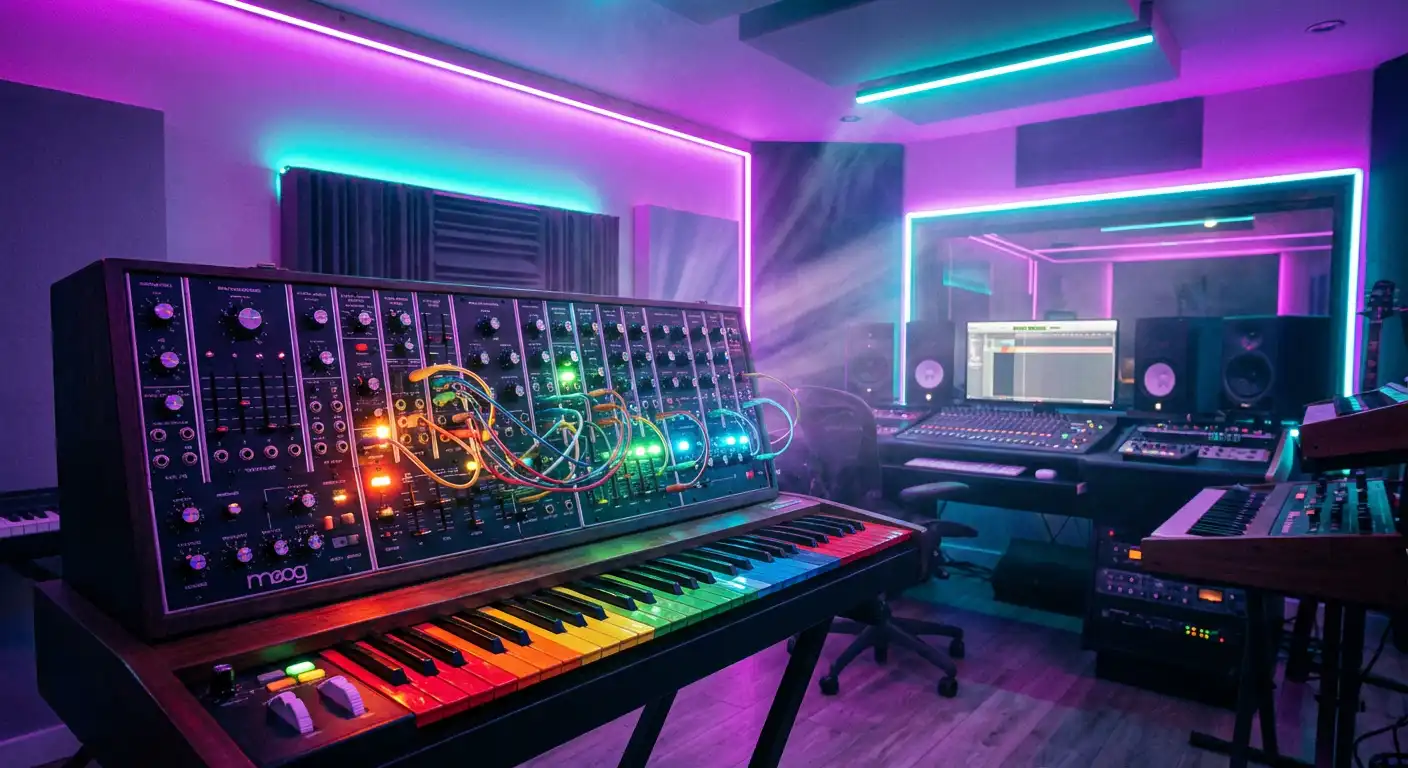
So why do these '80s vintage synths still matter in 2026? It comes down to character. The DX7's glassy brightness, the Juno's warm chorus, the Prophet's programmable versatility, the OB-Xa's punchy power. These weren't just tools; they were instruments with distinct personalities that shaped how we think about electronic sound.
Modern technology has made these sounds more accessible than ever, whether through affordable hardware clones, software emulations, or entirely new designs inspired by vintage classics. The barrier to entry has never been lower, and the creative possibilities have never been wider.
Whether you're a bedroom producer exploring vintage sounds for the first time or a seasoned professional with a collection of original hardware, the legacy of '80s synthesizers continues shaping music today. These instruments didn't just define a decade. They established a sonic vocabulary that remains fluent and relevant four decades later.
By the way, our founder's favorite vintage synth is the Prophet V which he acquired once it was re-issued one last time in 2020.
'%3e%3cg id='Final-Copy-2_2_' transform='translate(1275.000000, 200.000000)'%3e%3cpath class='st0' d='M7.4,12.8h6.8l3.1-11.6H7.4C4.2,1.2,1.6,3.8,1.6,7S4.2,12.8,7.4,12.8z'/%3e%3c/g%3e%3c/g%3e%3c/g%3e%3cg id='final---dec.11-2020'%3e%3cg id='_x30_208-our-toggle' transform='translate(-1275.000000, -200.000000)'%3e%3cg id='Final-Copy-2' transform='translate(1275.000000, 200.000000)'%3e%3cpath class='st1' d='M22.6,0H7.4c-3.9,0-7,3.1-7,7s3.1,7,7,7h15.2c3.9,0,7-3.1,7-7S26.4,0,22.6,0z M1.6,7c0-3.2,2.6-5.8,5.8-5.8 h9.9l-3.1,11.6H7.4C4.2,12.8,1.6,10.2,1.6,7z'/%3e%3cpath id='x' class='st2' d='M24.6,4c0.2,0.2,0.2,0.6,0,0.8l0,0L22.5,7l2.2,2.2c0.2,0.2,0.2,0.6,0,0.8c-0.2,0.2-0.6,0.2-0.8,0 l0,0l-2.2-2.2L19.5,10c-0.2,0.2-0.6,0.2-0.8,0c-0.2-0.2-0.2-0.6,0-0.8l0,0L20.8,7l-2.2-2.2c-0.2-0.2-0.2-0.6,0-0.8 c0.2-0.2,0.6-0.2,0.8,0l0,0l2.2,2.2L23.8,4C24,3.8,24.4,3.8,24.6,4z'/%3e%3cpath id='y' class='st3' d='M12.7,4.1c0.2,0.2,0.3,0.6,0.1,0.8l0,0L8.6,9.8C8.5,9.9,8.4,10,8.3,10c-0.2,0.1-0.5,0.1-0.7-0.1l0,0 L5.4,7.7c-0.2-0.2-0.2-0.6,0-0.8c0.2-0.2,0.6-0.2,0.8,0l0,0L8,8.6l3.8-4.5C12,3.9,12.4,3.9,12.7,4.1z'/%3e%3c/g%3e%3c/g%3e%3c/g%3e%3c/g%3e%3c/svg%3e) Your Privacy Choices
Your Privacy Choices