

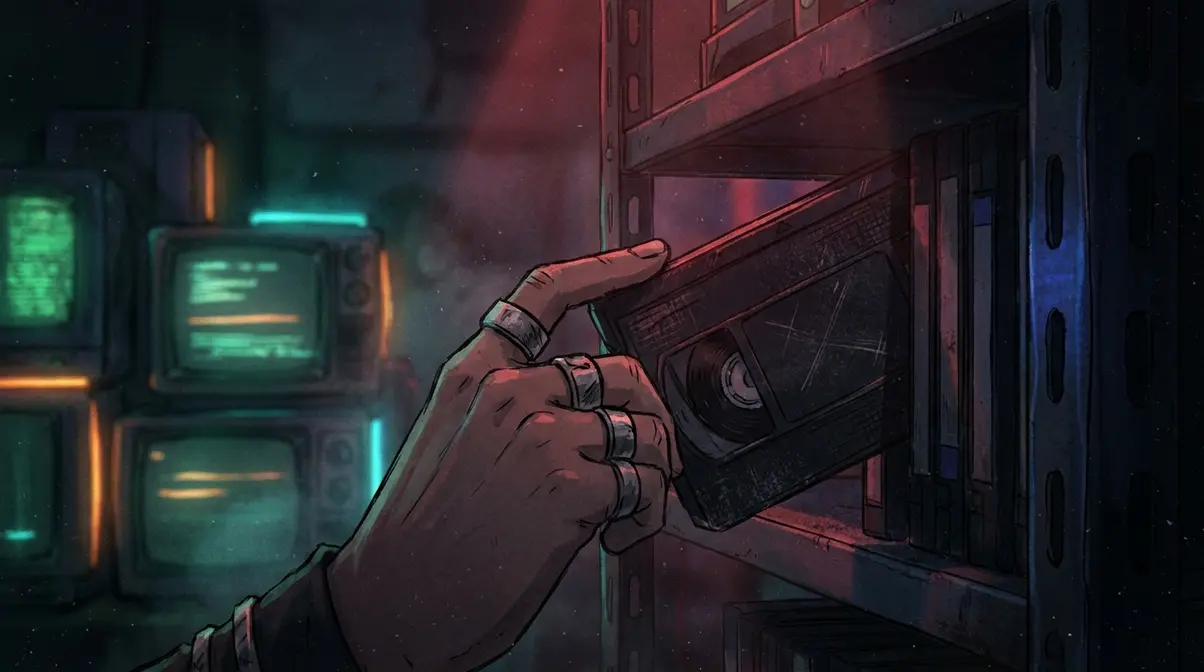

This isn’t nostalgia. This is resistance.
The Algorithm Doesn’t Know You
When Vidiots in Los Angeles reopened in 2023 as a nonprofit, they expected modest interest. Instead, they hit their biggest month ever in January 2026, renting an average of 170 movies daily. One day saw 500 titles walk out the door. These aren’t people who can’t afford streaming. They’re people who’ve had enough of it.
The complaint surfaces constantly in collector circles and enthusiast forums: streaming promised infinite choice but delivered infinite scroll. You sit down to watch something, anything, and thirty minutes later you’re still clicking through tiles, paralyzed by options that somehow feel like no options at all. The algorithm knows what you’ve watched. It doesn’t know what you need to watch.
A video store clerk does. That’s the difference between data and intuition, between pattern recognition and actual recognition. When you walk into a place like Scarecrow Video in Seattle or Videodrome in Atlanta, you’re not a user profile. You’re a person who might be ready for something you didn’t know existed.
The Third Place We Forgot We Lost
Sociologist Ray Oldenburg coined the term “third place” for those informal gathering points that exist between home and work. Cafes, barbershops, bookstores. Places where you show up without an agenda and leave having talked to someone. Video stores were always third places, even when we didn’t have the language for it.
What streaming killed wasn’t just a business model. It was a ritual. The weekend trip to pick out movies was never really about the movies. It was about the browsing, the debates in the aisles, the clerk who steered you toward something weird that turned out to be exactly right. It was about being in a room with other people who cared about the same thing you cared about, even if you never learned their names.
Online communities of physical media enthusiasts keep returning to this point: we’re drowning in a mental health crisis, and staring at the same four walls while scrolling through content isn’t helping. Video stores offer something streaming can’t replicate. They offer presence. The tactile act of choosing a case, reading the back, committing to something sight unseen. It carries weight in a world where everything is weightless.
Gen Z Gets It
Here’s what nobody predicted: the kids are leading this. Twenty-somethings who barely remember Blockbuster are burning through everything from Criterion releases to run-of-the-mill ’90s titles at stores across the country. At Vidiots, young renters say the same thing: “We grew up watching DVDs. This was still our generation.”
Similar to vinyl’s resurgence among millennials, DVDs and Blu-rays are finding new life with Gen Z buyers who see physical media not as a throwback but as an act of ownership. When you pay for streaming, you’re renting access. When you buy a disc, you own it. Forever. No licensing deals can take it away. No corporate merger can make it vanish.
Fan forums are full of stories from film students who had access to cinema history at video stores but watch their peers struggle with whatever the streamers dictate. The cost of subscribing to multiple platforms is prohibitive. The selection is curated by business decisions, not cultural value. A good video store is a library with a vision. Streaming is a warehouse with a search bar.
What’s Actually on the Shelves
The most popular rentals at these revived stores aren’t Marvel movies. They’re international films, anime, horror, A24 releases, Criterion editions. The stuff that’s become harder to find since streaming took over, not easier. The promise was that everything would be available everywhere. The reality is that licensing makes the virtual landscape more fractured than physical retail ever was.
Collectors often point out that there’s a false notion everything is online and accessible. It’s simply not true. Massive amounts of content haven’t been digitized. Special editions, director’s cuts, films with complicated rights situations exist only on physical media. When you rely entirely on streaming, you’re accepting someone else’s choices about what deserves to exist.
Some collectors take this to apocalyptic conclusions, worrying about a digital dark age. The next burning of the Library of Alexandria, except this time we did it to ourselves by trusting everything to servers we don’t control. Physical media is permanent. Digital access is conditional.
The New Model
These aren’t your ’90s video stores. Most are running as nonprofits now, combining rentals with cafes, theaters, community events. They’re adding beer and wine, hosting film discussions, creating spaces where people can actually build relationships. Visions Video opened in Massachusetts in 2025 with this hybrid model baked in from the start. The rental is the excuse. The destination is the point.
At three dollars for a five-day rental, Vidiots isn’t trying to compete with streaming on convenience. They’re offering something else entirely: curation, community, commitment. You choose something, you take it home, you watch it. No infinite scroll. No algorithm steering you toward what performs well with your demographic. Just you and a movie someone thought was worth preserving.
Store owners report that this model is working. After weathering the storm of the streaming transition, the future for video stores looks surprisingly bright. The industry as a whole continues to contract (down 14 percent annually between 2019 and 2024), but the stores that remain are thriving. They’re not fighting streaming. They’re offering an alternative to people who’ve realized streaming isn’t enough.
The Underground Goes Overground
Call it what it is: at a time when convenience is default, experience has become valuable. The video store isn’t competing with Netflix. It’s competing with isolation, with algorithmic determinism, with the feeling that culture is something that happens to you rather than something you participate in.
When you walk into a video store, you’re entering a space that believes movies matter. Not as content, not as IP, but as art worth discussing, preserving, and sharing. You’re joining a community that’s decided the convenience of streaming doesn’t outweigh the cost of what we lost.
This is the rental resistance. Not nostalgia for Blockbuster, but a recognition that we gave up something essential when we traded physical spaces for digital interfaces. The video store as underground club isn’t metaphor. It’s literal. These are places where people gather around a shared passion, where discovery happens through conversation instead of code, where the act of choosing something matters.
The revolution won’t be streamed. It’ll be rented, returned, and recommended to someone else who needs to see it. Find your local video store. Get a membership. Pick something you’ve never heard of because the case looks interesting. Talk to the clerk. Talk to the person browsing next to you. Remember what it feels like to be somewhere, with other people, doing something together.
That’s the frequency. Tune in.
'%3e%3cg id='Final-Copy-2_2_' transform='translate(1275.000000, 200.000000)'%3e%3cpath class='st0' d='M7.4,12.8h6.8l3.1-11.6H7.4C4.2,1.2,1.6,3.8,1.6,7S4.2,12.8,7.4,12.8z'/%3e%3c/g%3e%3c/g%3e%3c/g%3e%3cg id='final---dec.11-2020'%3e%3cg id='_x30_208-our-toggle' transform='translate(-1275.000000, -200.000000)'%3e%3cg id='Final-Copy-2' transform='translate(1275.000000, 200.000000)'%3e%3cpath class='st1' d='M22.6,0H7.4c-3.9,0-7,3.1-7,7s3.1,7,7,7h15.2c3.9,0,7-3.1,7-7S26.4,0,22.6,0z M1.6,7c0-3.2,2.6-5.8,5.8-5.8 h9.9l-3.1,11.6H7.4C4.2,12.8,1.6,10.2,1.6,7z'/%3e%3cpath id='x' class='st2' d='M24.6,4c0.2,0.2,0.2,0.6,0,0.8l0,0L22.5,7l2.2,2.2c0.2,0.2,0.2,0.6,0,0.8c-0.2,0.2-0.6,0.2-0.8,0 l0,0l-2.2-2.2L19.5,10c-0.2,0.2-0.6,0.2-0.8,0c-0.2-0.2-0.2-0.6,0-0.8l0,0L20.8,7l-2.2-2.2c-0.2-0.2-0.2-0.6,0-0.8 c0.2-0.2,0.6-0.2,0.8,0l0,0l2.2,2.2L23.8,4C24,3.8,24.4,3.8,24.6,4z'/%3e%3cpath id='y' class='st3' d='M12.7,4.1c0.2,0.2,0.3,0.6,0.1,0.8l0,0L8.6,9.8C8.5,9.9,8.4,10,8.3,10c-0.2,0.1-0.5,0.1-0.7-0.1l0,0 L5.4,7.7c-0.2-0.2-0.2-0.6,0-0.8c0.2-0.2,0.6-0.2,0.8,0l0,0L8,8.6l3.8-4.5C12,3.9,12.4,3.9,12.7,4.1z'/%3e%3c/g%3e%3c/g%3e%3c/g%3e%3c/g%3e%3c/svg%3e) Your Privacy Choices
Your Privacy Choices