



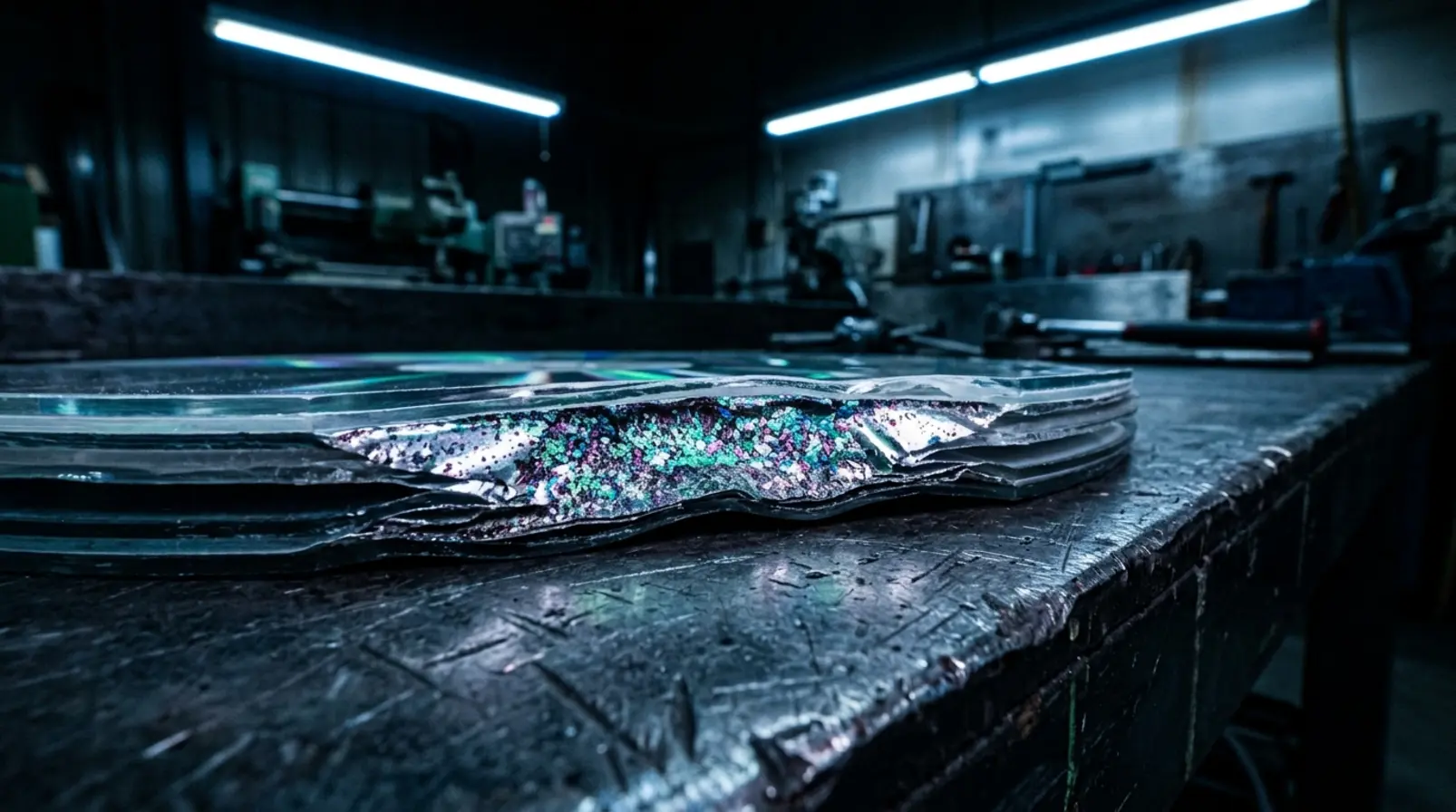
One evening in the early 1960s, a Dutch engineer named Lou Ottens sat at home losing a fight with a reel-to-reel tape recorder. He was trying to thread a ribbon of magnetic tape through its metal guides so he could listen to something he later could not pin down—probably classical music, he thought, though he was not certain. The machine won. The next morning, Ottens walked into the Philips factory in Hasselt, Belgium, where he led product development, and told his team to build something smaller, cheaper, and far easier to load. Documentary filmmaker Zack Taylor later repeated a line attributed to Ottens’s colleague Willy Leenders: the cassette was born from “the clumsiness of a very clever man.”
What followed reshaped how the world carried sound. Twice.
A Block of Wood Sets the Standard
Ottens had a gift for making abstractions physical. To fix the size of the recorder he wanted, he had a block of wood cut to the largest dimensions that would still slide into his coat pocket, then handed it to his engineers as the target. The word he reached for was pocketable. Portability was not a marketing angle bolted on afterward. It was the founding constraint, measured in millimeters of tweed.

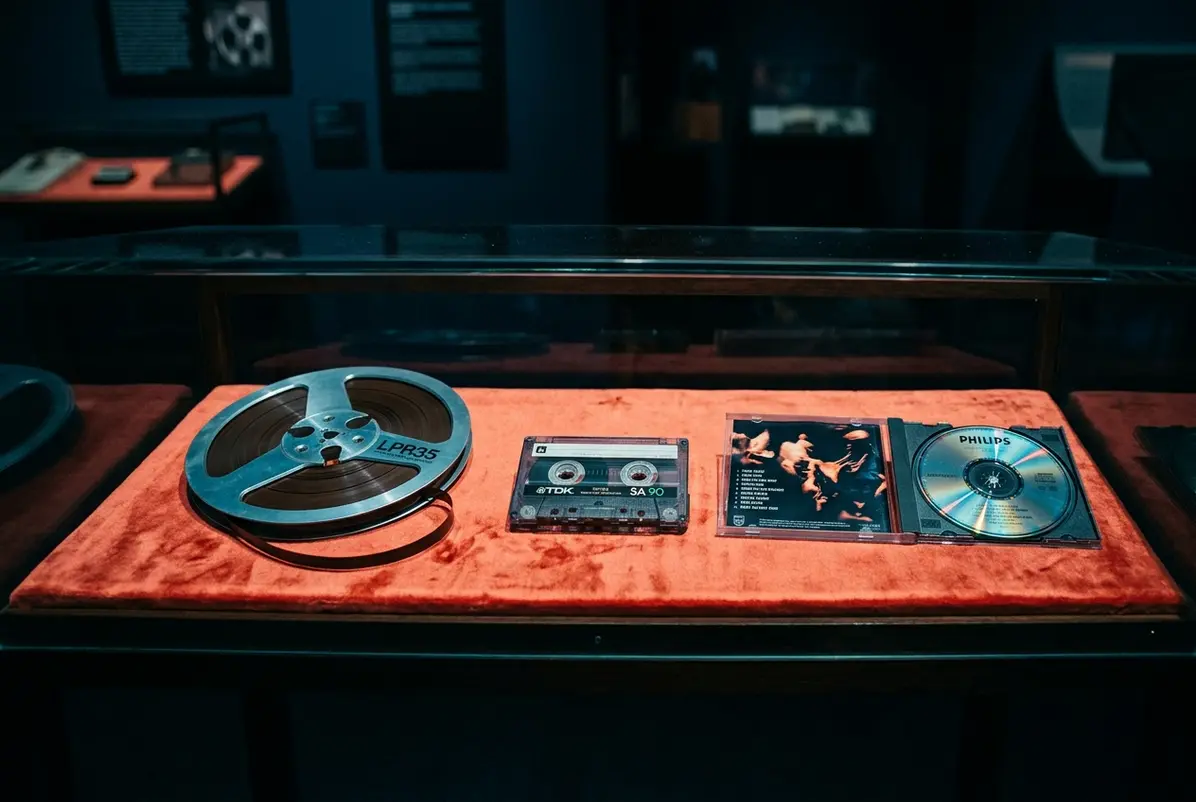
The engineering followed the wood. The cassette his team produced was roughly half the width of the RCA tape cartridge introduced in 1958 and ran its tape at half the speed, reducing the amount of tape required and helping shrink the shell around it. Philips unveiled its first Compact Cassette recorder at the Berlin radio exhibition in August 1963.
The first system was designed primarily for speech recording, not audiophile listening. Philips used narrow tape and a slow playback speed to keep the machine small, and made little pretense that the early cassette offered high-fidelity sound. The audio establishment had reasons to shrug. Consumers had a different question: could they finally use the thing without threading a loose ribbon of tape through a machine?
Other manufacturers did not wait for an answer. Competing cassette systems and rival designs appeared around the same period, many larger than the Philips version. Compatibility was not guaranteed. Before the cassette could become culture, it had to avoid becoming merely another format.
The Giveaway That Won the War
Then Ottens and Philips made the decision that turned a clever product into infrastructure. Ottens advocated for Philips to license the format to other manufacturers without royalties, and companies including Sony adopted it.
The point was not generosity. The point was compatibility.
One interoperable format meant that a tape bought in Tokyo could play in a deck built in Eindhoven. Manufacturers could compete over machines without forcing listeners to gamble on incompatible plastic shells. The format could become a platform instead of a proprietary island. That decision helped the Compact Cassette become a worldwide standard, and Philips estimates that more than 100 billion cassette tapes were eventually sold.
The little shell went on to live a thousand lives its inventor never planned. It caught songs off the radio and made the home mixtape feel ordinary. It carried sermons, bootlegs, language lessons, field recordings, love letters, and demo tapes. It became part of hip-hop’s mixtape culture, giving aspiring rappers and producers an inexpensive way to circulate work and demonstrate what they could do.
And in one famous case recounted by Philips, a groggy Keith Richards hit record on his cassette machine in the middle of the night, fell back asleep, and woke to find the riff of “(I Can’t Get No) Satisfaction” at the start of the tape, followed by roughly forty minutes of snoring.

The Sequel Was Digital
Most engineers are lucky to help define one format. Ottens helped define two.
In the 1970s, as a senior figure in Philips’s audio division, Ottens helped steer the company’s optical-disc research toward a consumer audio format. Philips later partnered with Sony to co-develop a single worldwide compact-disc standard. The arrangement echoed the cassette story in one crucial respect: the technology would matter only if discs and players from competing manufacturers could work together.
Even the name was a deliberate callback. According to the Philips Museum, “Compact Disc” referred to the success of the Compact Cassette. The format launched in Japan at the end of 1982 before Philips introduced it in Europe in 1983. The finished disc measured 12 centimeters across, although Ottens reportedly grumbled that he would have preferred it half a centimeter smaller.
The resemblance between the two projects was not perfect. The cassette began with a pocket and a block of wood. The CD emerged from a multinational collaboration involving large teams of engineers and competing technical proposals. Ottens did not invent either format alone.
But the instinct rhymed: reduce the object to a human scale, then make compatibility the condition of mass adoption. One project put loose tape inside a shell. The other put digital audio beneath a transparent surface. Both replaced a fiddly ritual with a simpler gesture.
Frequently Asked Questions
Who invented the Compact Cassette?
Lou Ottens led the Philips product-development team that created the Compact Cassette. He consistently emphasized that the format was the work of a team, not a solitary invention.
When was the cassette tape introduced?
Philips introduced its first Compact Cassette recorder at the Berlin radio exhibition in August 1963.
Why did Philips license the cassette format for free?
Royalty-free licensing encouraged other manufacturers to adopt the same design, helping the cassette become an interoperable worldwide standard rather than one of several incompatible formats.
Did Lou Ottens invent the compact disc?
Not alone. Ottens played an important role in Philips’s consumer-audio work, but the final compact-disc system was jointly developed by Philips and Sony.
What happened to Ottens’s wooden prototype?
The original wooden sizing block was lost after Ottens reportedly used it to support a car jack while changing a flat tire.
He Never Looked Back, So We Do It for Him
Here is the detail collectors tend to love most. Ottens kept almost nothing. The original wooden block—perhaps one of the most consequential props in consumer-audio history—was lost decades ago when he used it to prop up a car jack while changing a flat tire. He later dismissed cassette tape as primitive, noisy, and superseded by better technology.
When documentary maker Zack Taylor arrived at his door in 2013 to film him for a movie about the format, he expected to meet an inventor ready to celebrate his revolution. Instead, Taylor found a man puzzled that anyone still cared, later calling Ottens “by far the most critical of the format” among the people interviewed for the film.
Ottens died in March 2021 at 94 in Duizel, the Netherlands, after retiring from Philips in 1986 and outliving the mass-market dominance of both formats he helped shape. On the cassette’s fiftieth anniversary, he told the Philips Museum that his team knew the thing might become big but “could have never imagined it would be a revolution.”
Every sealed tape protected in a collector’s case, every restored Walkman, every lovingly shelved wall of plastic shells preserves something its own inventor did not seem inclined to preserve. That may be the purest form a tribute can take.
The man moved forward his entire life. The least the rest of us can do is keep one pocket of the past exactly the size he cut it.
'%3e%3cg id='Final-Copy-2_2_' transform='translate(1275.000000, 200.000000)'%3e%3cpath class='st0' d='M7.4,12.8h6.8l3.1-11.6H7.4C4.2,1.2,1.6,3.8,1.6,7S4.2,12.8,7.4,12.8z'/%3e%3c/g%3e%3c/g%3e%3c/g%3e%3cg id='final---dec.11-2020'%3e%3cg id='_x30_208-our-toggle' transform='translate(-1275.000000, -200.000000)'%3e%3cg id='Final-Copy-2' transform='translate(1275.000000, 200.000000)'%3e%3cpath class='st1' d='M22.6,0H7.4c-3.9,0-7,3.1-7,7s3.1,7,7,7h15.2c3.9,0,7-3.1,7-7S26.4,0,22.6,0z M1.6,7c0-3.2,2.6-5.8,5.8-5.8 h9.9l-3.1,11.6H7.4C4.2,12.8,1.6,10.2,1.6,7z'/%3e%3cpath id='x' class='st2' d='M24.6,4c0.2,0.2,0.2,0.6,0,0.8l0,0L22.5,7l2.2,2.2c0.2,0.2,0.2,0.6,0,0.8c-0.2,0.2-0.6,0.2-0.8,0 l0,0l-2.2-2.2L19.5,10c-0.2,0.2-0.6,0.2-0.8,0c-0.2-0.2-0.2-0.6,0-0.8l0,0L20.8,7l-2.2-2.2c-0.2-0.2-0.2-0.6,0-0.8 c0.2-0.2,0.6-0.2,0.8,0l0,0l2.2,2.2L23.8,4C24,3.8,24.4,3.8,24.6,4z'/%3e%3cpath id='y' class='st3' d='M12.7,4.1c0.2,0.2,0.3,0.6,0.1,0.8l0,0L8.6,9.8C8.5,9.9,8.4,10,8.3,10c-0.2,0.1-0.5,0.1-0.7-0.1l0,0 L5.4,7.7c-0.2-0.2-0.2-0.6,0-0.8c0.2-0.2,0.6-0.2,0.8,0l0,0L8,8.6l3.8-4.5C12,3.9,12.4,3.9,12.7,4.1z'/%3e%3c/g%3e%3c/g%3e%3c/g%3e%3c/g%3e%3c/svg%3e) Your Privacy Choices
Your Privacy Choices