

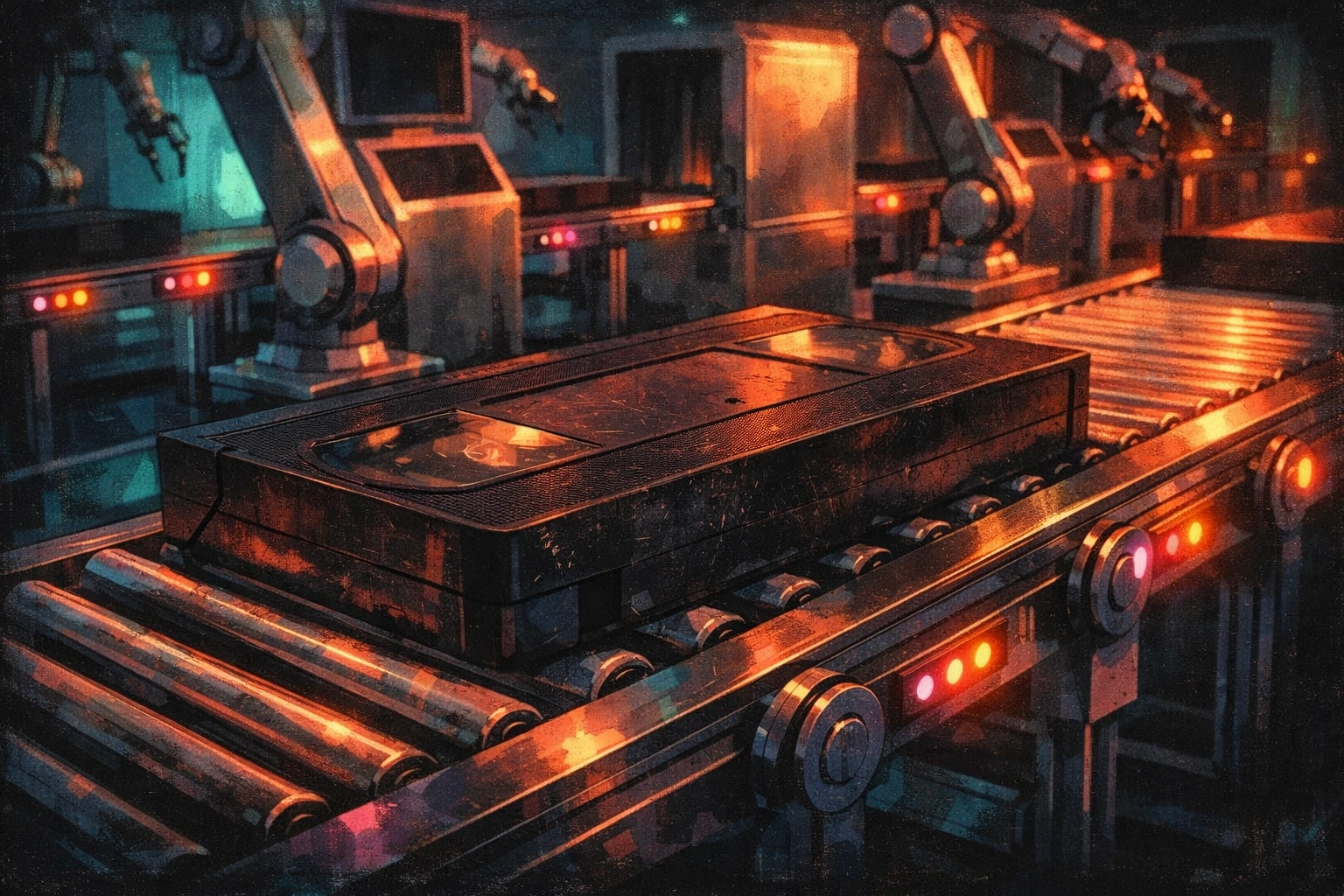

Something unexpected is happening in the world of physical media. While streaming services continue their march toward total dominance, a scrappy group of filmmakers, distributors, and nostalgic rebels are planning something audacious: a race to release the first new VHS tape of 2026. It’s called “First Pressing,” and it represents more than just a gimmick. This is a movement.
The concept is deceptively simple. Multiple independent creators are working against the clock to manufacture, distribute, and officially release their films on VHS before anyone else can claim the title of “first.” What started as a playful challenge in enthusiast circles has evolved into something with real stakes, real money, and real cultural significance. The winner gets bragging rights, sure, but they also get to plant their flag in a market that’s experiencing a genuine revival.
The Unlikely Renaissance of Magnetic Tape
To understand why anyone would race to release a VHS in 2026, you need to understand what’s been happening in collector communities over the past few years. The format that was declared dead two decades ago is experiencing a genuine revival, and the numbers tell a compelling story.
Consider this: a sealed Star Wars VHS recently sold for $40,000 at auction. That’s not a typo. Five figures for a format that most people associate with fuzzy tracking lines and the anxiety of forgetting to rewind. Meanwhile, major studios like Disney and A24 have quietly started releasing limited edition VHS versions of new films, treating them as premium collectibles rather than budget alternatives.
Online communities dedicated to physical media have been buzzing about this trend for months. The common sentiment? People are tired of their favorite films disappearing from streaming platforms without warning. There’s something deeply satisfying about owning a physical object that no corporation can revoke access to with the flip of a switch.
The Contenders and Their Strategies
While the specific participants in the First Pressing race remain somewhat mysterious (part of the appeal is the surprise reveal), we know several projects are in active development. Some filmmakers are taking the purist approach, creating original content specifically designed for the VHS format. Others are adapting recent indie films, banking on the nostalgia factor to drive sales.
The logistics alone are fascinating. Manufacturing VHS tapes in 2026 requires tracking down facilities that still have working equipment, sourcing magnetic tape stock that meets quality standards, and navigating a supply chain that basically doesn’t exist anymore. One creator mentioned in enthusiast forums that they had to contact seven different manufacturers across three countries before finding one willing to take on a small run.
Then there’s the distribution challenge. How do you get physical tapes into customers’ hands fast enough to claim the “first” title? Some are partnering with specialty retailers who cater to collectors. Others are handling fulfillment themselves, turning their living rooms into makeshift distribution centers. The scrappiness of it all feels very much in the spirit of independent filmmaking.
The Marketing Angle Nobody Expected
Here’s where it gets really interesting. The First Pressing race has generated genuine media attention, the kind of organic buzz that money can’t buy. Film blogs are covering it. Collectors are speculating about it. Even people who don’t own VCRs anymore are paying attention because the story itself is compelling.
This matters because independent filmmakers are always looking for ways to cut through the noise. When you’re competing against Marvel movies and Netflix algorithms, you need an angle. “We made a good movie” isn’t enough anymore. But “we’re racing to release the first VHS of 2026 because we believe in physical media and creative ownership”? That’s a story people want to share.
More Than Nostalgia
It would be easy to dismiss all of this as pure nostalgia, a temporary blip driven by millennials who grew up rewinding tapes before bed. But conversations in collector circles suggest something deeper is happening. People are reassessing their relationship with media consumption and ownership.
The streaming model promised convenience and access to everything. What it delivered was a fragmented marketplace where content constantly migrates between platforms, where shows get cancelled and erased from existence, where you never really own anything. Physical media, even on a “dead” format like VHS, represents a counter-argument to that model.
There’s also an aesthetic consideration that shouldn’t be ignored. VHS has a distinctive look that digital formats can’t replicate. The slight blur, the color bleeding, the analog warmth; these aren’t bugs, they’re features. Some filmmakers are deliberately creating content that plays to these strengths, treating VHS as an artistic choice rather than a limitation.
The Business Case for Magnetic Tape
Let’s talk numbers for a moment. Limited edition VHS releases are selling for anywhere from $25 to $50, with some special editions commanding even higher prices. Compare that to the revenue from streaming views, where creators might earn fractions of a penny per play. For independent filmmakers working with modest budgets, physical media sales can actually move the needle.
The Leprechaun VHS “Be Kind, Rewind Edition” launching in March 2026 is priced as a premium collectible, not a budget option. The film “Stream” is shipping its VHS version at $28 to $33. These aren’t desperate cash grabs. They’re calculated releases targeting a specific market that’s proven willing to pay for physical media.
Enthusiast groups often point out that the VHS market has lower barriers to entry than other collectible formats. You don’t need the same level of pristine condition or grading that drives the vinyl or comic book markets. A tape that plays well is valuable, even if the box has some wear. This makes it more accessible to both creators and collectors.
What This Means for Independent Film
The First Pressing race might seem like a novelty, but it represents something larger: independent creators finding new ways to connect with audiences and generate revenue outside traditional channels. Whether VHS specifically has staying power is almost beside the point. The real story is about filmmakers refusing to accept the streaming-only future as inevitable.
This is the kind of creative problem-solving that defines independent cinema at its best. When the system doesn’t work for you, you build something new. When distribution channels are closed, you create your own. When everyone says a format is dead, you prove them wrong by making it cool again.
Join the Movement
The race to release the first VHS of 2026 is happening right now, probably while you’re reading this. Filmmakers are finalizing masters, manufacturers are running tape, and collectors are preparing their wishlists. By the time you hear about the winner, they’ll already be shipping tapes to customers around the world.
But here’s the beautiful part: there’s room for more. The First Pressing race isn’t a one-time event. It’s proof of concept for a distribution model that works. If you’re a filmmaker sitting on a completed project, wondering how to get it in front of audiences, maybe it’s time to consider the format everyone forgot about.
Dust off that VCR. The future of independent film might just be magnetic.
'%3e%3cg id='Final-Copy-2_2_' transform='translate(1275.000000, 200.000000)'%3e%3cpath class='st0' d='M7.4,12.8h6.8l3.1-11.6H7.4C4.2,1.2,1.6,3.8,1.6,7S4.2,12.8,7.4,12.8z'/%3e%3c/g%3e%3c/g%3e%3c/g%3e%3cg id='final---dec.11-2020'%3e%3cg id='_x30_208-our-toggle' transform='translate(-1275.000000, -200.000000)'%3e%3cg id='Final-Copy-2' transform='translate(1275.000000, 200.000000)'%3e%3cpath class='st1' d='M22.6,0H7.4c-3.9,0-7,3.1-7,7s3.1,7,7,7h15.2c3.9,0,7-3.1,7-7S26.4,0,22.6,0z M1.6,7c0-3.2,2.6-5.8,5.8-5.8 h9.9l-3.1,11.6H7.4C4.2,12.8,1.6,10.2,1.6,7z'/%3e%3cpath id='x' class='st2' d='M24.6,4c0.2,0.2,0.2,0.6,0,0.8l0,0L22.5,7l2.2,2.2c0.2,0.2,0.2,0.6,0,0.8c-0.2,0.2-0.6,0.2-0.8,0 l0,0l-2.2-2.2L19.5,10c-0.2,0.2-0.6,0.2-0.8,0c-0.2-0.2-0.2-0.6,0-0.8l0,0L20.8,7l-2.2-2.2c-0.2-0.2-0.2-0.6,0-0.8 c0.2-0.2,0.6-0.2,0.8,0l0,0l2.2,2.2L23.8,4C24,3.8,24.4,3.8,24.6,4z'/%3e%3cpath id='y' class='st3' d='M12.7,4.1c0.2,0.2,0.3,0.6,0.1,0.8l0,0L8.6,9.8C8.5,9.9,8.4,10,8.3,10c-0.2,0.1-0.5,0.1-0.7-0.1l0,0 L5.4,7.7c-0.2-0.2-0.2-0.6,0-0.8c0.2-0.2,0.6-0.2,0.8,0l0,0L8,8.6l3.8-4.5C12,3.9,12.4,3.9,12.7,4.1z'/%3e%3c/g%3e%3c/g%3e%3c/g%3e%3c/g%3e%3c/svg%3e) Your Privacy Choices
Your Privacy Choices