



Here is what happened. Sometime before the project was announced, Hirokazu Kore-eda was passing through Shinagawa Station on a return trip from Kyoto. He saw a book cover. A figure’s back. He picked it up, read it that night in one sitting, and decided he had no choice but to adapt it. The book was Tatsuki Fujimoto’s Look Back, a 143-page one-shot manga about two girls in a small town who compete with and inspire each other on their way to becoming manga artists, until tragedy intervenes and reshapes everything. That kind of story, in those hands, is worth paying very close attention to.
What You’re Walking Into
If you’re coming to this cold, here’s the short version. Look Back first appeared on Shueisha’s Shōnen Jump+ platform on July 19, 2021, where it recorded over 2.5 million views on its first day and climbed past 4 million within 48 hours. Fujimoto, already famous for Chainsaw Man, had written something quieter and more personal than anything fans expected. The manga was later published in 37 countries and sold more than 750,000 copies internationally. In 2024, director Kiyotaka Oshiyama adapted it into a 58-minute anime film through Studio Durian. That film topped the Japanese box office for two consecutive weeks, grossed roughly $12.8 million worldwide, and won Best Animation of the Year at the Japan Academy Film Prize.
So why do it again? Why live-action? Why now?
The Kore-eda Factor
Because Kore-eda doesn’t take on projects lightly, and when he explains his reasons, you listen. In his own words, published across Variety and other outlets in December 2025: “As a fellow creator, I felt the desperate resolve behind this work. I could feel, almost painfully, that Mr. Fujimoto simply couldn’t move forward without creating this piece. For me, Nobody Knows was that kind of work.” That comparison is not casual. Nobody Knows was Kore-eda’s 2004 breakthrough, the film that announced him as one of the great humanist directors working anywhere. To place Look Back in that lineage is to say something enormous about what this project means to him.
This is a director who won the Palme d’Or at Cannes in 2018 for Shoplifters and who has since directed Broker, Monster, and the Netflix limited series Asura. He rarely adapts manga. He typically writes original material. The fact that Fujimoto’s one-shot pulled him out of that habit should tell you everything about the gravitational force of the source material.
Fujimoto himself kept it characteristically brief: “If director Kore-eda is going to film Look Back, I have nothing more to say. I’m looking forward to it.”
What to Know About the Production
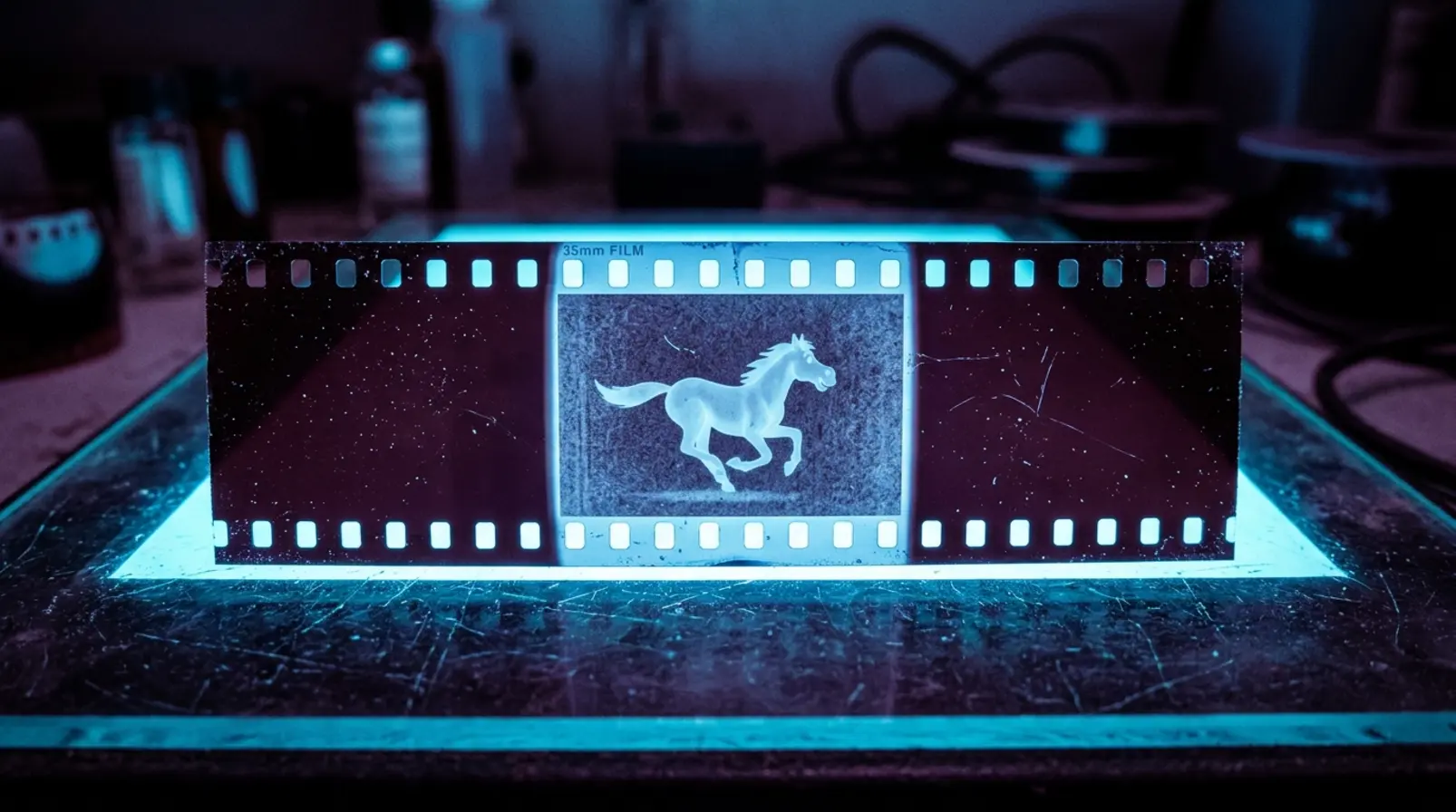
The film was shot on location in Nikaho City, Akita Prefecture, in the rural northwest of Japan. Kore-eda chose to shoot on 35mm film stock rather than digital, a decision intended to mirror the tactile, hands-on artistic process at the heart of the story. Winter and spring scenes were captured from February to May 2025, summer in July, autumn in November. The full cycle of seasons, for a story that meticulously depicts a 13-year journey beginning in elementary school. Cinematographer Senzo Ueno handled the camera. Yūta Bandō, who has composed for Kaiju No. 8 and worked with Kenshi Yonezu, is scoring the film. Kore-eda is directing, writing, and editing.
The film is currently in post-production and is expected to arrive in late 2026, with industry watchers eyeing a possible Venice Film Festival premiere. No cast has been publicly announced as of this writing.
The Distribution Picture
In March 2026, GKids acquired North American, UK, and Ireland rights for the film. This is notable. GKids built its reputation on animation, but Look Back marks their continued push into live-action territory. Chance Huskey, VP of Distribution, called Kore-eda “a master storyteller whose work continues to define contemporary world cinema.” Goodfellas is handling international sales outside Asia, with deals already in place for Taiwan and South Korea. In Japan, the film will be distributed by K2 Pictures.
K2 Pictures and Why the Money Matters
K2 Pictures deserves your attention. Founded in 2023 by Muneyuki Kii, a 25-year Toei veteran who produced Evangelion: 3.0 You Can (Not) Redo and The First Slam Dunk, the company is built on a fund-based model that represents a genuine alternative to the sprawling production committees that have long dominated Japanese filmmaking. K2’s structure offers transparent profit-sharing that returns revenue directly to creators. The Development Bank of Japan invested 500 million yen in K2’s flagship fund. Producer Daiju Koide, who studied under Kore-eda in university, is shepherding the project.
This matters because the way a film gets financed shapes the film itself. Creator-friendly money tends to produce creator-driven work.
Your Field Guide Checklist
- Read the manga first. It’s 143 pages. Viz Media published the English volume in September 2022. You can finish it in under an hour. Do this before anything else.
- Watch the 2024 anime, but hold it loosely. Oshiyama’s film is beautiful and earned every award it received. But don’t treat it as the definitive version. Kore-eda is working in a completely different medium with different tools and a different sensibility.
- Pay attention to the 35mm choice. In a story about the physical act of drawing, about pencil on paper, about ink and effort and the weight of making something by hand, Kore-eda chose celluloid over digital sensors. That’s not nostalgia. That’s thematic precision.
- Don’t sleep on the composer. Yūta Bandō’s work is versatile and emotionally sophisticated. The score will matter enormously for a story this interior.
- Watch for Venice. If the film premieres there, the awards conversation starts immediately. A Palme d’Or winner adapting one of the decade’s most beloved manga one-shots is exactly the kind of event that festival programmers build their slates around.
The Honest Take
Fan communities are split, and that’s healthy. Some people feel the anime was already perfect and wonder what a second adaptation adds. Others see the Kore-eda announcement as a dream pairing, the rare case where a director’s entire sensibility seems engineered for a specific piece of source material. I’m in the second camp. Kore-eda’s whole career has been about children navigating worlds that don’t quite protect them, about the quiet accumulation of time and loss, about what people make when they have nothing left but the need to create. That’s Look Back.
Fujimoto wrote a story about two kids who draw manga because they can’t not draw manga. Kore-eda read it and decided he couldn’t not make this film. If that kind of compulsion doesn’t produce something worth watching, nothing will.

'%3e%3cg id='Final-Copy-2_2_' transform='translate(1275.000000, 200.000000)'%3e%3cpath class='st0' d='M7.4,12.8h6.8l3.1-11.6H7.4C4.2,1.2,1.6,3.8,1.6,7S4.2,12.8,7.4,12.8z'/%3e%3c/g%3e%3c/g%3e%3c/g%3e%3cg id='final---dec.11-2020'%3e%3cg id='_x30_208-our-toggle' transform='translate(-1275.000000, -200.000000)'%3e%3cg id='Final-Copy-2' transform='translate(1275.000000, 200.000000)'%3e%3cpath class='st1' d='M22.6,0H7.4c-3.9,0-7,3.1-7,7s3.1,7,7,7h15.2c3.9,0,7-3.1,7-7S26.4,0,22.6,0z M1.6,7c0-3.2,2.6-5.8,5.8-5.8 h9.9l-3.1,11.6H7.4C4.2,12.8,1.6,10.2,1.6,7z'/%3e%3cpath id='x' class='st2' d='M24.6,4c0.2,0.2,0.2,0.6,0,0.8l0,0L22.5,7l2.2,2.2c0.2,0.2,0.2,0.6,0,0.8c-0.2,0.2-0.6,0.2-0.8,0 l0,0l-2.2-2.2L19.5,10c-0.2,0.2-0.6,0.2-0.8,0c-0.2-0.2-0.2-0.6,0-0.8l0,0L20.8,7l-2.2-2.2c-0.2-0.2-0.2-0.6,0-0.8 c0.2-0.2,0.6-0.2,0.8,0l0,0l2.2,2.2L23.8,4C24,3.8,24.4,3.8,24.6,4z'/%3e%3cpath id='y' class='st3' d='M12.7,4.1c0.2,0.2,0.3,0.6,0.1,0.8l0,0L8.6,9.8C8.5,9.9,8.4,10,8.3,10c-0.2,0.1-0.5,0.1-0.7-0.1l0,0 L5.4,7.7c-0.2-0.2-0.2-0.6,0-0.8c0.2-0.2,0.6-0.2,0.8,0l0,0L8,8.6l3.8-4.5C12,3.9,12.4,3.9,12.7,4.1z'/%3e%3c/g%3e%3c/g%3e%3c/g%3e%3c/g%3e%3c/svg%3e) Your Privacy Choices
Your Privacy Choices