


From Flash to the Deep End
There’s a popular assumption floating around indie game discourse right now, and it goes something like this: if you want your game to feel handmade, go low-poly. Crank the PS1 aesthetic. Let the wobbling vertices and affine texture mapping do the heavy lifting, and players will project soul onto the seams. It worked for Crow Country. It works for dozens of retro-horror titles saturating Steam every month. It’s become a kind of shorthand for authenticity.
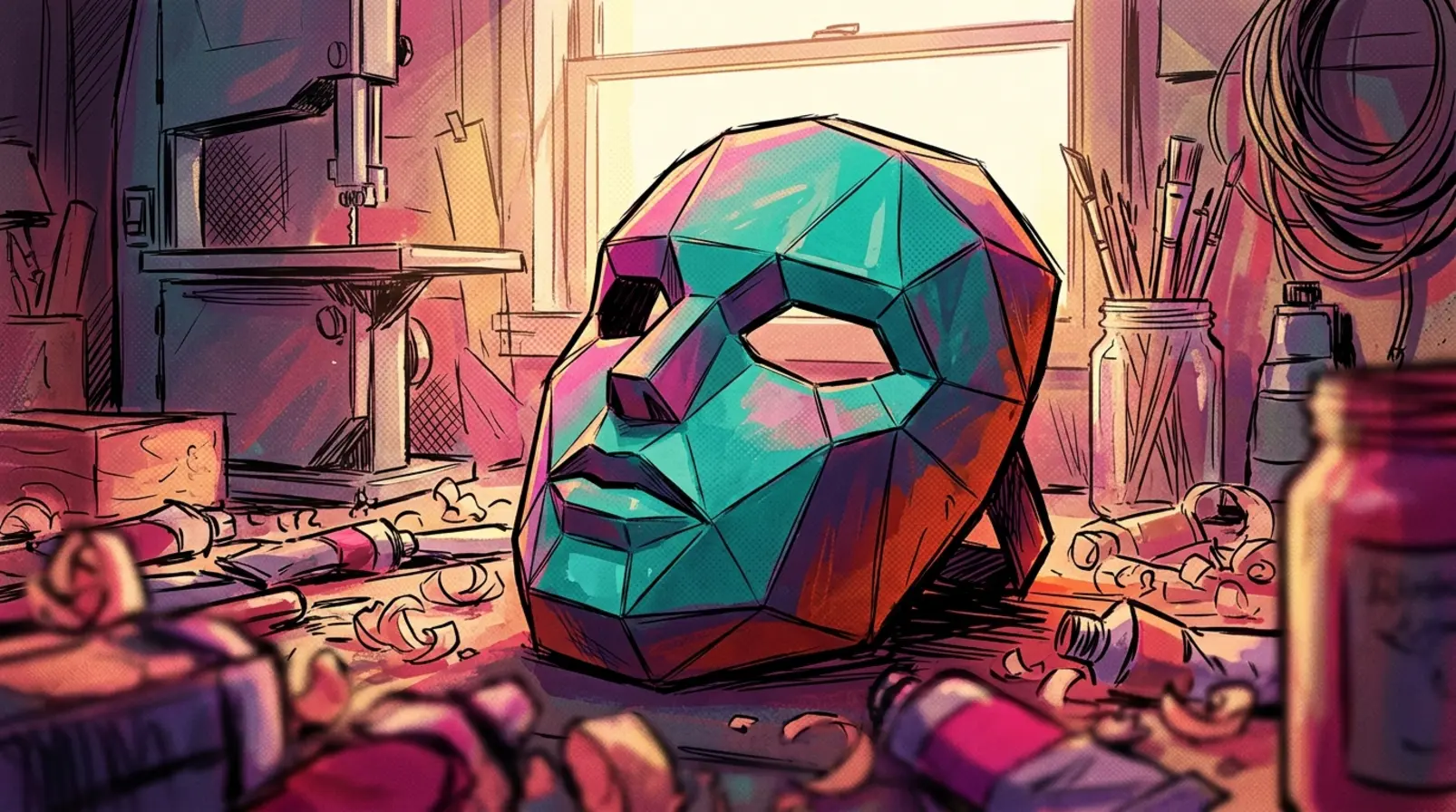
Adam Vian knows this trick better than most. Crow Country, the 2024 survival horror game developed and published by his studio SFB Games, is set in 1990 and follows an investigator exploring an abandoned theme park. Its visual style and gameplay were designed to be similar to early survival horror titles released for the PlayStation in the 1990s, including Resident Evil and Silent Hill. The game surpassed 100,000 copies sold by October 2024. But with The Mermaid Mask, the upcoming sequel to 2019’s Tangle Tower, Vian is doing something that feels almost contrarian. He’s doubling down on 2D.
Not 2D as a budget constraint. Not 2D as a nostalgic wink. 2D as a creative conviction.
Two Decades of Drawing Detective Grimoire
SFB Games is a British independent game studio, founded by brothers Tom and Adam Vian, who have been making games together since 2003. While SFB Games was only founded in the summer of 2012, the brothers had been making games under the name “The Super Flash Bros” since 2003, when they were just 17 and 14 respectively, posting their work to Newgrounds.com. Detective Grimoire began as a flash game published by Armor Games on Newgrounds in 2007. That original game, inspired by Phoenix Wright, was a browser-window mystery about a fairground murder. It ran in a few megabytes. It was, by every metric, small.
What followed was an almost absurdly varied career. Snipperclips, a puzzle game developed by SFB Games and published by Nintendo, was released worldwide as a launch title for the Nintendo Switch on March 3, 2017. During their financial briefing in April 2017, Nintendo reported that over 350,000 digital copies of the game had been downloaded. Then came Tangle Tower in 2019, a lush point-and-click mystery that earned a BAFTA nomination. Then Crow Country, a hard pivot into survival horror that proved the Vians could build convincing 3D worlds when they wanted to. My take is that this range makes the decision behind The Mermaid Mask all the more telling.
The Counter-Intuitive Move
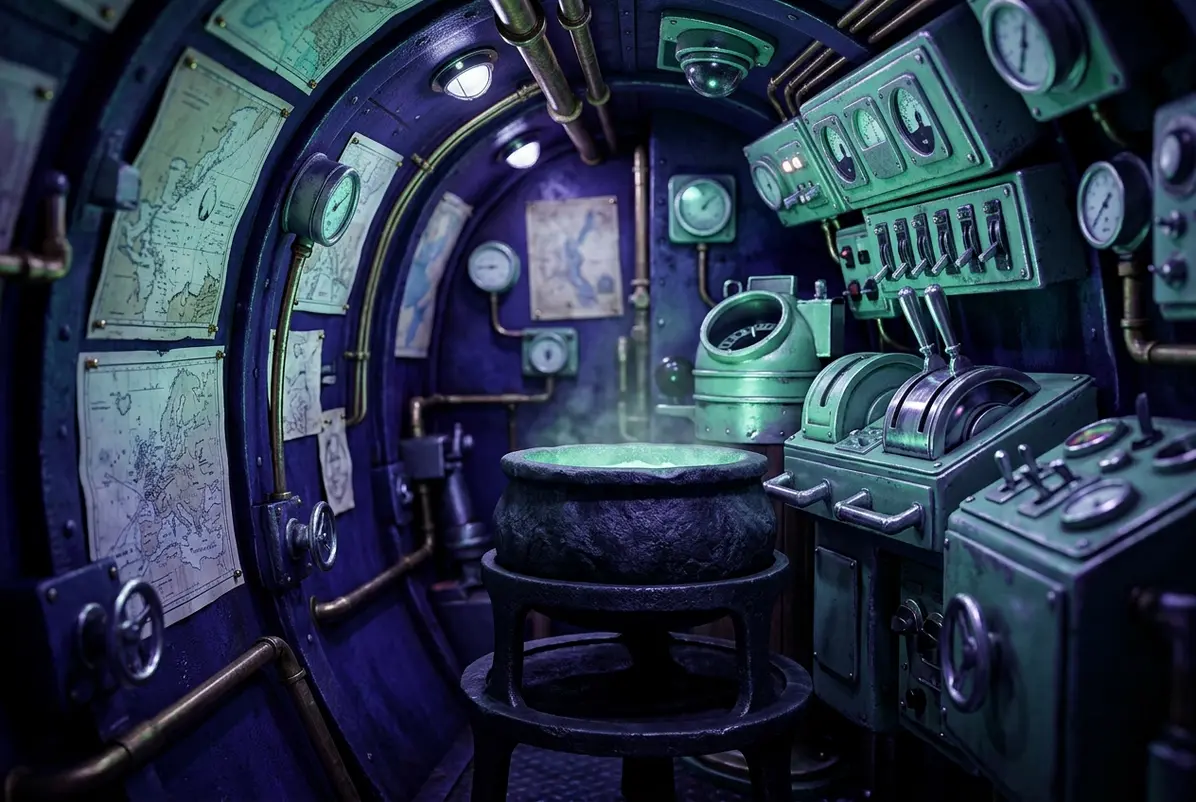
Here’s what makes The Mermaid Mask interesting beyond its premise (an impossible locked-room murder aboard a submarine, which, fine, is also interesting). In an interview with Creative Bloq, Vian said: “This is the first time we’ve done a Detective Grimoire game that hasn’t been a complete start-from-scratch reboot.” He added, “I look back at Tangle Tower and I still think it looks great, I don’t really need it to look better than this.”
That’s a remarkable thing for a game developer to say in 2026. The instinct in indie development, just as much as in AAA, is to always push forward visually. New engine, new renderer, new dimension. Vian looked at his own trajectory and decided the art had already arrived. What strikes me is how rare that kind of creative self-assurance really is.
There is one crucial new element in The Mermaid Mask: 3D objects, specifically for clues, which can now be turned around and inspected all over to see what secrets they’re hiding. But the characters themselves? Still drawn. Still flat. Still expressive in ways that to me feel unreachable in polygonal space. As Vian told Creative Bloq: “Getting 3D characters to be as soulful and nuanced as 2D characters is very hard… 2D characters are still the heart and soul of the game and I want to be a champion of 2D drawing as well.”
Champion is a loaded word. It reads like a manifesto in miniature.
The Alchemy of the Wobbly Line
The technical details of how 3D and 2D coexist in The Mermaid Mask are worth sitting with. Vian explained that the studio has “a whole custom pipeline in Unity” where 3D artist Kindra Dantone paints textures and models objects to look like Catherine Unger’s 2D paintings, while Tom Vian applies a dynamic outline shader that creates a wobbly colored outline on 3D edges. The result is a game where you can rotate a clue in three-dimensional space and it still looks like someone painted it by hand.
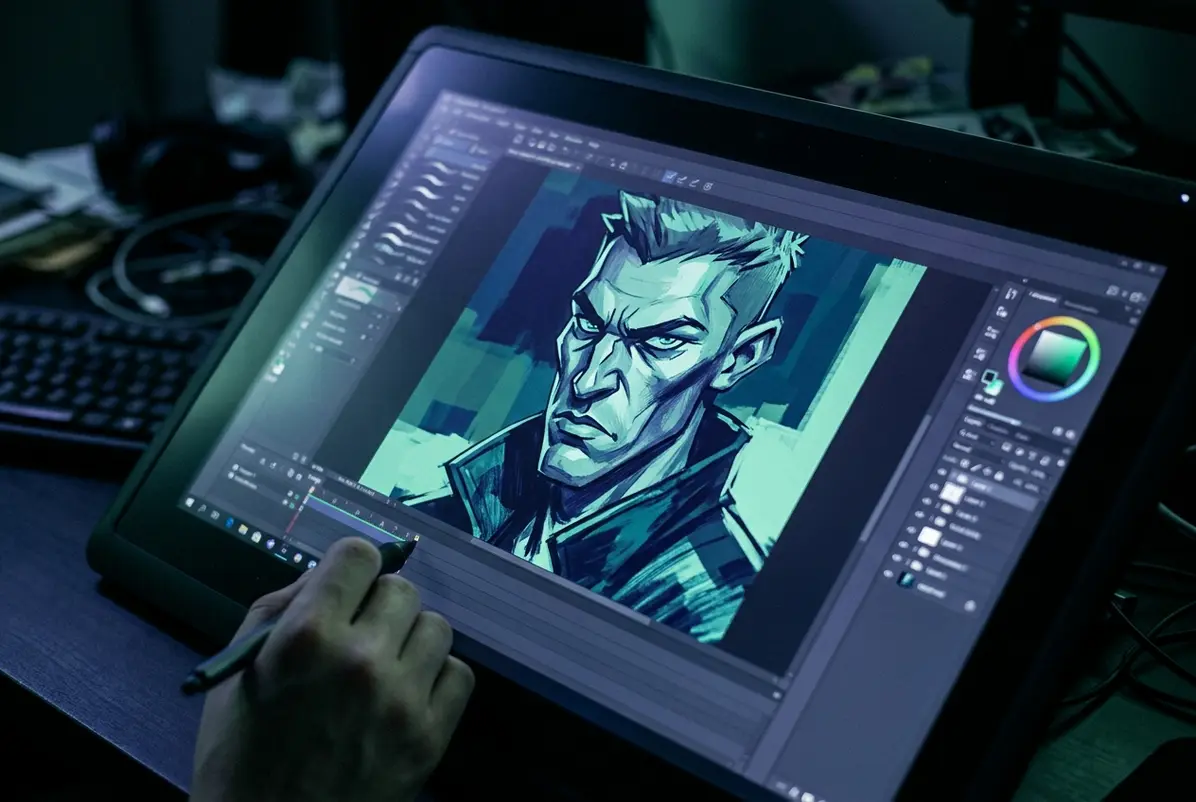
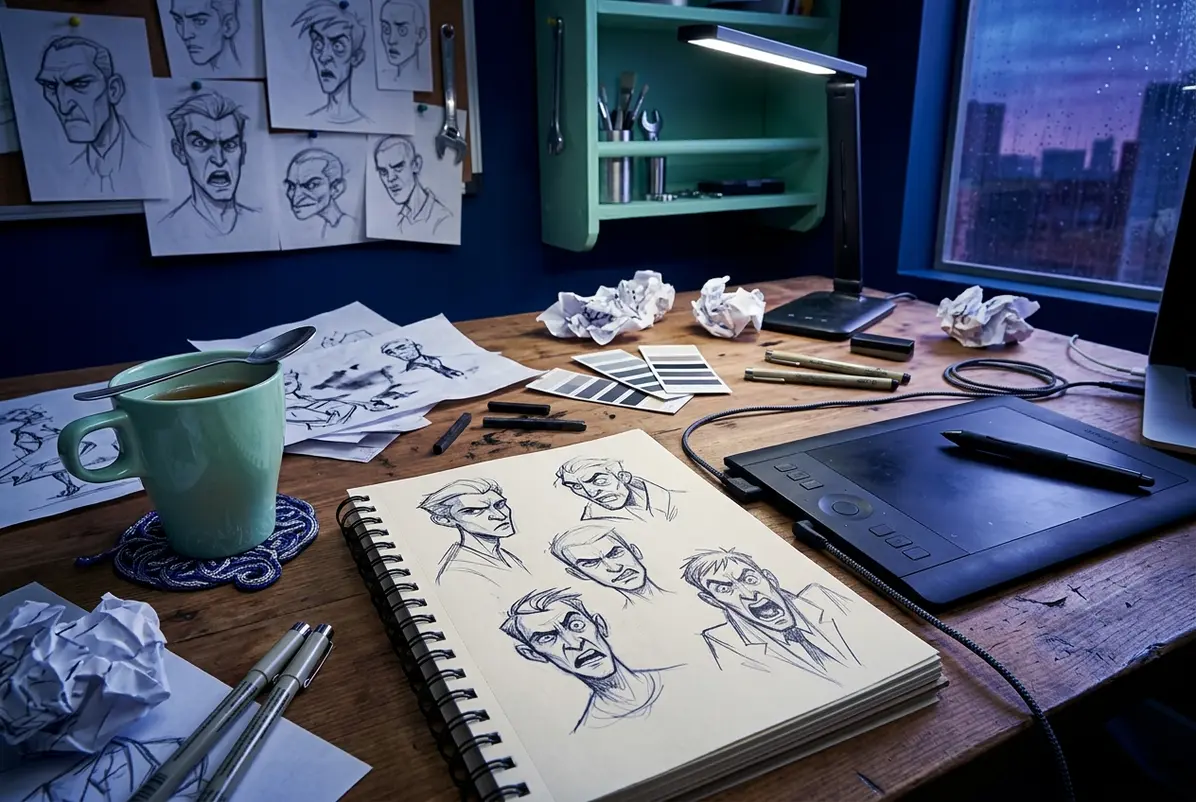
There’s a case to be made that this hybrid approach is actually harder than going full 3D. It requires two artistic vocabularies to harmonize without either one breaking the spell. Vian’s influences span from political cartoonist Gerald Scarfe to Samurai Jack creator Genndy Tartakovsky , and both of those artists share a commitment to shapes that carry emotional weight over anatomical accuracy. Vian summarized his philosophy: “Never draw an arm that’s a medium arm, it should be a skinny arm or a big curving arm. Every single line has to be a commitment. Every line that you add is an opportunity to convey meaning.”
It feels like an ethos borrowed from animation more than from game design. And I think that’s the point.
Scale Without Spectacle
According to Vian, The Mermaid Mask was more work than Snipperclips, more work than Crow Country, and more work than Tangle Tower. Much more. The game, formerly titled The Mermaid’s Tongue, will launch for consoles and PC via Steam this summer. During Steam Next Fest, the demo brought lifetime demo downloads to over 30,000.
Online discussion threads have been buzzing about the demo’s details. Fans have catalogued every new character portrait, every sleeping animation for Sally, every subtle tweak between demo versions. In one community, someone noted that Sally now has sleepy portraits where she’s using her jacket as a pillow. That’s the kind of granular attention a game earns when its art invites you to look closely rather than sweep past in awe.
Vian has noted that while The Mermaid Mask is officially a single-player game, there is a significant cooperative experience to be had, with many people having told him how they played through Tangle Tower with a friend or loved one, sharing theories out loud and openly speculating about characters. In my view, this is a game designed less for spectacle than for intimacy. Two people on a couch, pointing at a screen, arguing about whether the submarine’s captain was really a vampire. That’s a different kind of design ambition than what usually gets celebrated.
Drawing as Defiance
The conventional wisdom says that low-poly is the indie aesthetic of soul. Rough polygons, visible edges, the warm imperfection of early 3D. Reasonable people might disagree, but I think The Mermaid Mask quietly dismantles that assumption. It suggests that soul doesn’t live in the polygon count at all. It lives in the line. In the decision to make an arm too skinny or a chin too sharp. In the wobble of a hand-painted outline applied by code to a 3D object so it doesn’t betray its own geometry.
SFB Games was founded by brothers Tom and Adam Vian, who have been making games together since 2003, and they remain passionate about designing unique games with a focus on fun, artistry, and innovation. Almost a quarter century of making things together. The Mermaid Mask lands as the product of all that accumulated instinct, and it arrives wearing its 2D art not as a limitation but as a thesis statement.
By our reckoning, that’s worth paying attention to. Not because flat art is better than 3D. But because the choice to stay flat, when you’ve already proven you can go deep, says something about what a studio actually values. And sometimes the most radical thing a game can do in 2026 is simply be drawn.
'%3e%3cg id='Final-Copy-2_2_' transform='translate(1275.000000, 200.000000)'%3e%3cpath class='st0' d='M7.4,12.8h6.8l3.1-11.6H7.4C4.2,1.2,1.6,3.8,1.6,7S4.2,12.8,7.4,12.8z'/%3e%3c/g%3e%3c/g%3e%3c/g%3e%3cg id='final---dec.11-2020'%3e%3cg id='_x30_208-our-toggle' transform='translate(-1275.000000, -200.000000)'%3e%3cg id='Final-Copy-2' transform='translate(1275.000000, 200.000000)'%3e%3cpath class='st1' d='M22.6,0H7.4c-3.9,0-7,3.1-7,7s3.1,7,7,7h15.2c3.9,0,7-3.1,7-7S26.4,0,22.6,0z M1.6,7c0-3.2,2.6-5.8,5.8-5.8 h9.9l-3.1,11.6H7.4C4.2,12.8,1.6,10.2,1.6,7z'/%3e%3cpath id='x' class='st2' d='M24.6,4c0.2,0.2,0.2,0.6,0,0.8l0,0L22.5,7l2.2,2.2c0.2,0.2,0.2,0.6,0,0.8c-0.2,0.2-0.6,0.2-0.8,0 l0,0l-2.2-2.2L19.5,10c-0.2,0.2-0.6,0.2-0.8,0c-0.2-0.2-0.2-0.6,0-0.8l0,0L20.8,7l-2.2-2.2c-0.2-0.2-0.2-0.6,0-0.8 c0.2-0.2,0.6-0.2,0.8,0l0,0l2.2,2.2L23.8,4C24,3.8,24.4,3.8,24.6,4z'/%3e%3cpath id='y' class='st3' d='M12.7,4.1c0.2,0.2,0.3,0.6,0.1,0.8l0,0L8.6,9.8C8.5,9.9,8.4,10,8.3,10c-0.2,0.1-0.5,0.1-0.7-0.1l0,0 L5.4,7.7c-0.2-0.2-0.2-0.6,0-0.8c0.2-0.2,0.6-0.2,0.8,0l0,0L8,8.6l3.8-4.5C12,3.9,12.4,3.9,12.7,4.1z'/%3e%3c/g%3e%3c/g%3e%3c/g%3e%3c/g%3e%3c/svg%3e) Your Privacy Choices
Your Privacy Choices