

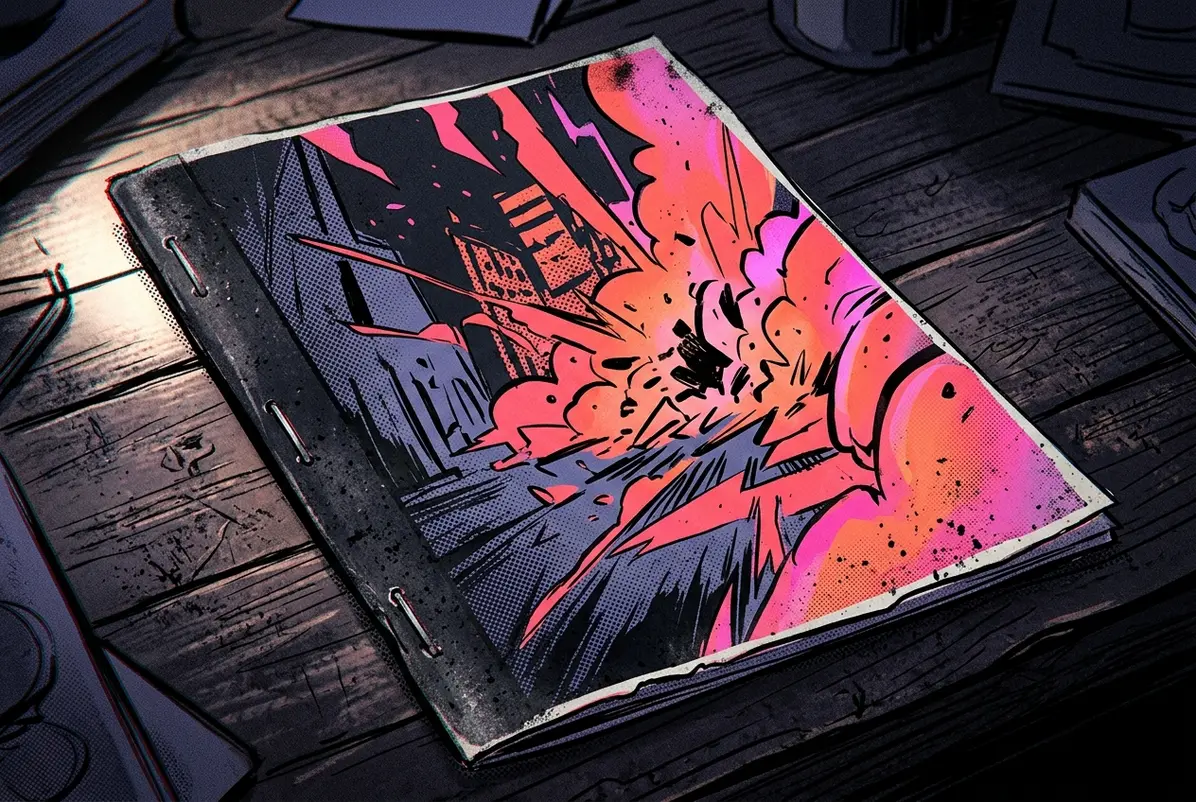

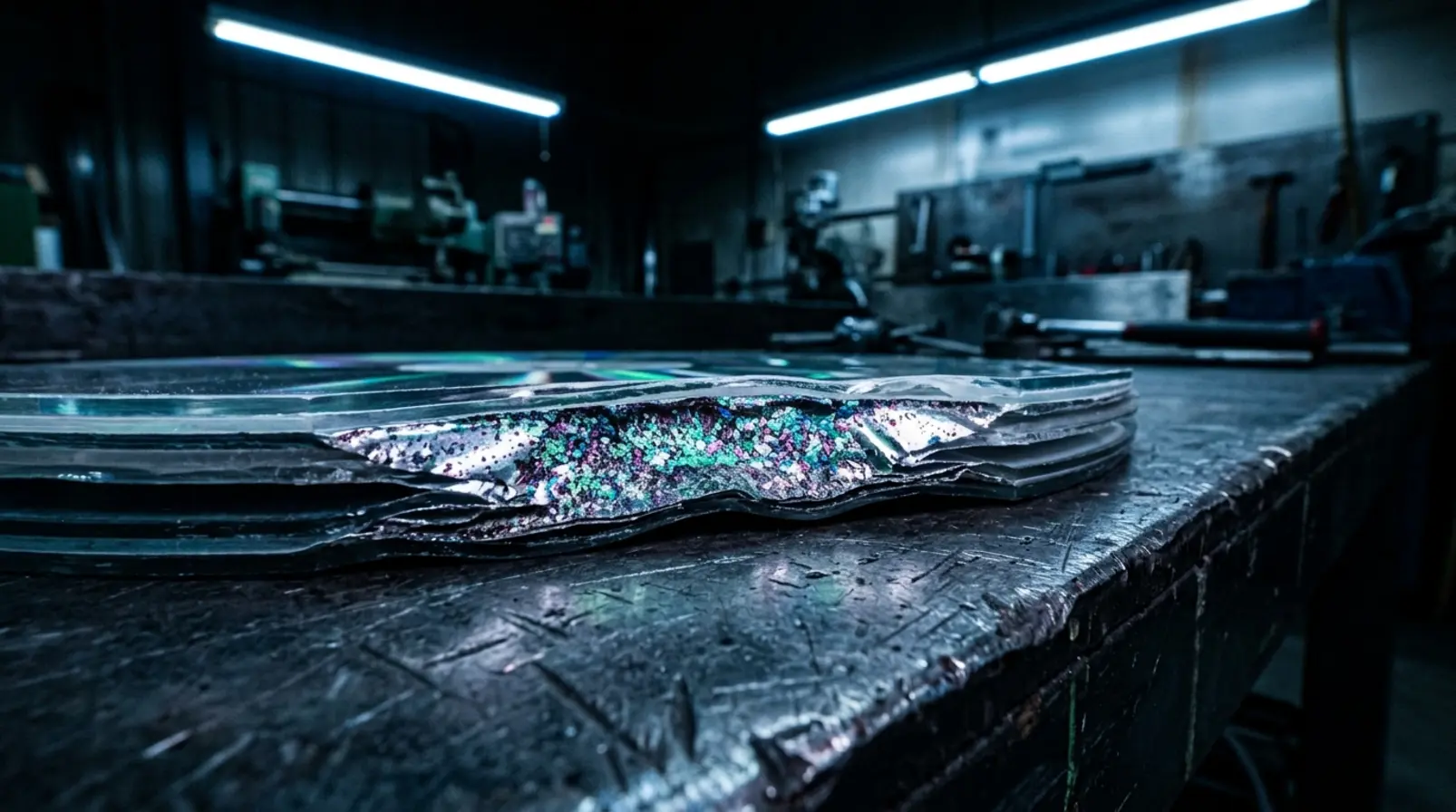
Zines are unusually difficult objects to preserve without changing what made them interesting in the first place. The SKATEBOARDMUSEUM found itself with exactly that problem: publications created for temporary exhibitions eventually became material worth archiving, but putting them into a retail box meant severing them from the circumstances in which readers originally found them.
According to Gingko Press’s description of the collection, the SKATEBOARDMUSEUM premiered its first exhibition, Skateboard-Fever, in 2003 and later organized specially themed traveling exhibitions. For those shows, it produced zines that the publisher describes as available only at the exhibitions and in very limited runs.
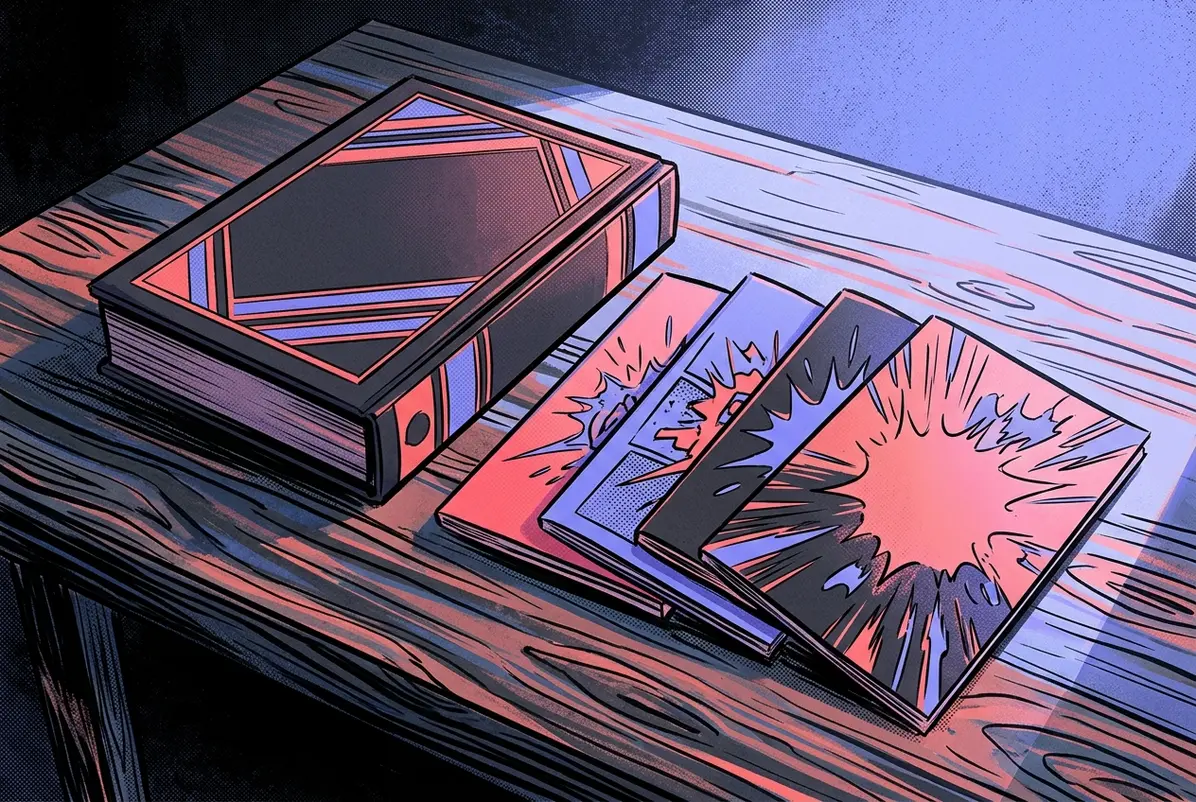
Gingko was already promoting a collected edition in its Fall 2019 catalog, while Bookshop lists a February 25, 2020 publication date. The finished collection put five updated zines into a 352-page slipcase, gave the set ISBN 978-3-943330-30-4, and carried a $34.95 list price. Crucially, the publisher says the collected versions include additional exhibits and photographs from the exhibitions. These were not exact facsimiles.
That makes the collection more interesting than a simple reprint. Gingko did not merely reproduce five scarce objects. It converted publications tied to particular events into something that could circulate independently of those events.
The Original Scarcity Was a Route, Not Just a Number
The most defensible distinction between the originals and the collection is not that one was rare and the other was common. It is how readers could reach them.
The publisher describes the exhibition zines as show-only and very limited. That does not establish exact print runs, prove that every copy sold out, or document whether exceptions ever existed. What it does establish is an intended point of access: the exhibitions themselves.
To encounter one of those zines was therefore connected to being somewhere. The publication belonged to the show not only because of what was printed inside it, but because the exhibition was part of its distribution system.
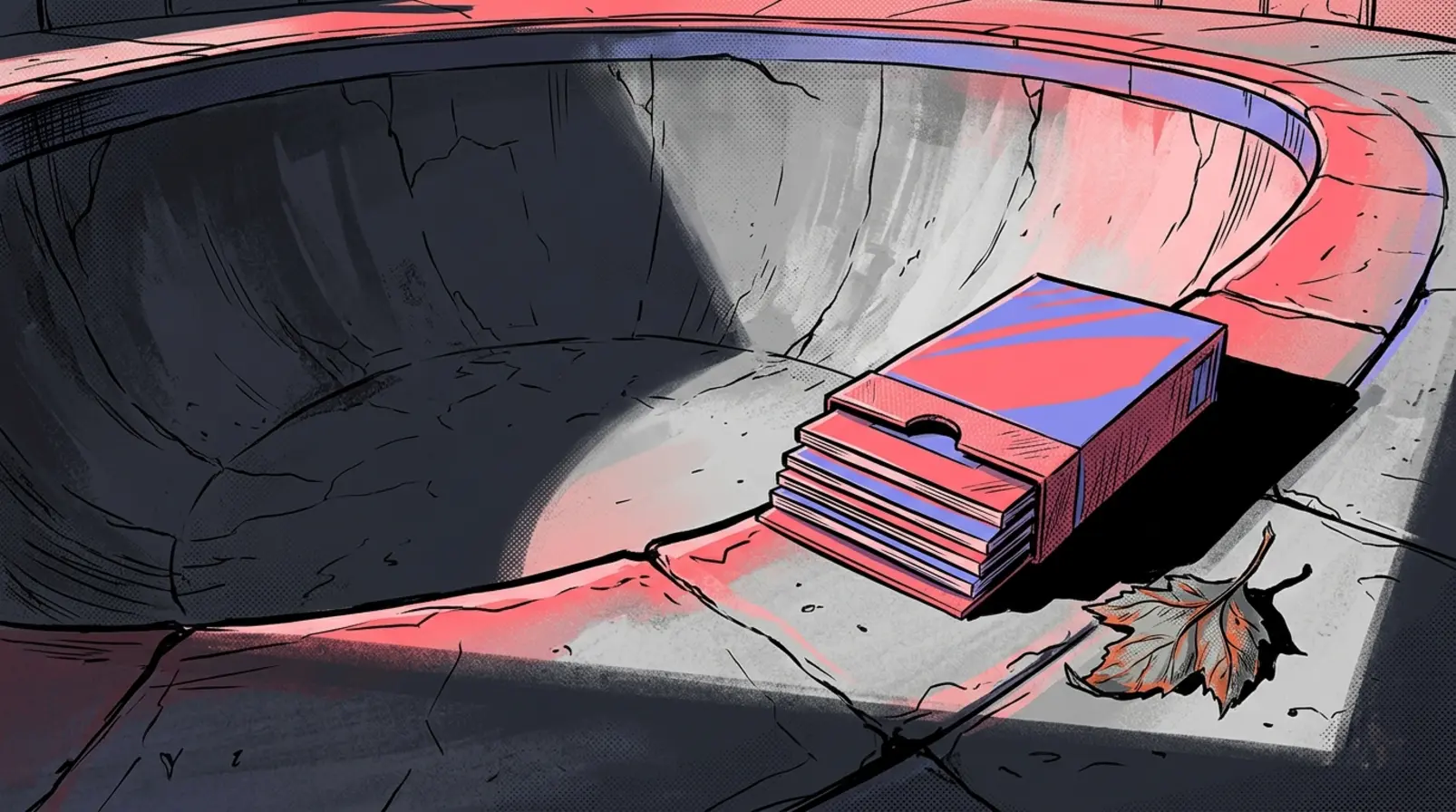
The collected edition broke that dependency. An ISBN made the material legible to ordinary book distribution. A list price replaced the exhibition as the primary route of access. The same history could now reach someone who had never stood inside one of the shows.
Five Zines Became One Retail Object
The collection contains five titles: DIY: The History of Creative-Culture in Skateboarding; Harry Blitzstein: Welcome to the Jungle / The Art of Harry Blitzstein on Skateboards; I LOVE MY, covering Vans skateboarding footwear heritage; NO SHITTY ADS IN THIS ZINE, a retrospective of 1980s skate zines; and NO AGE LIMIT!, a collection of punk and hardcore flyers associated with Jason Jessee.
Together they became a cataloged retail title: five zines, 352 pages in total, one slipcase, one ISBN. That transformation made the work easier to preserve, identify, order, resell, and eventually rediscover.
It did not make it permanently available. As of August 7, 2026, Bookshop.org marks the collection unavailable, while TGM Skateboards lists it as sold out. AbeBooks currently shows one used and one new copy, both offered above the original $34.95 list price. Those are asking prices, not completed sales, so they do not establish a market value. They do show something simpler: entering normal book distribution did not guarantee endless supply.
A Zine Is Also a Distribution System
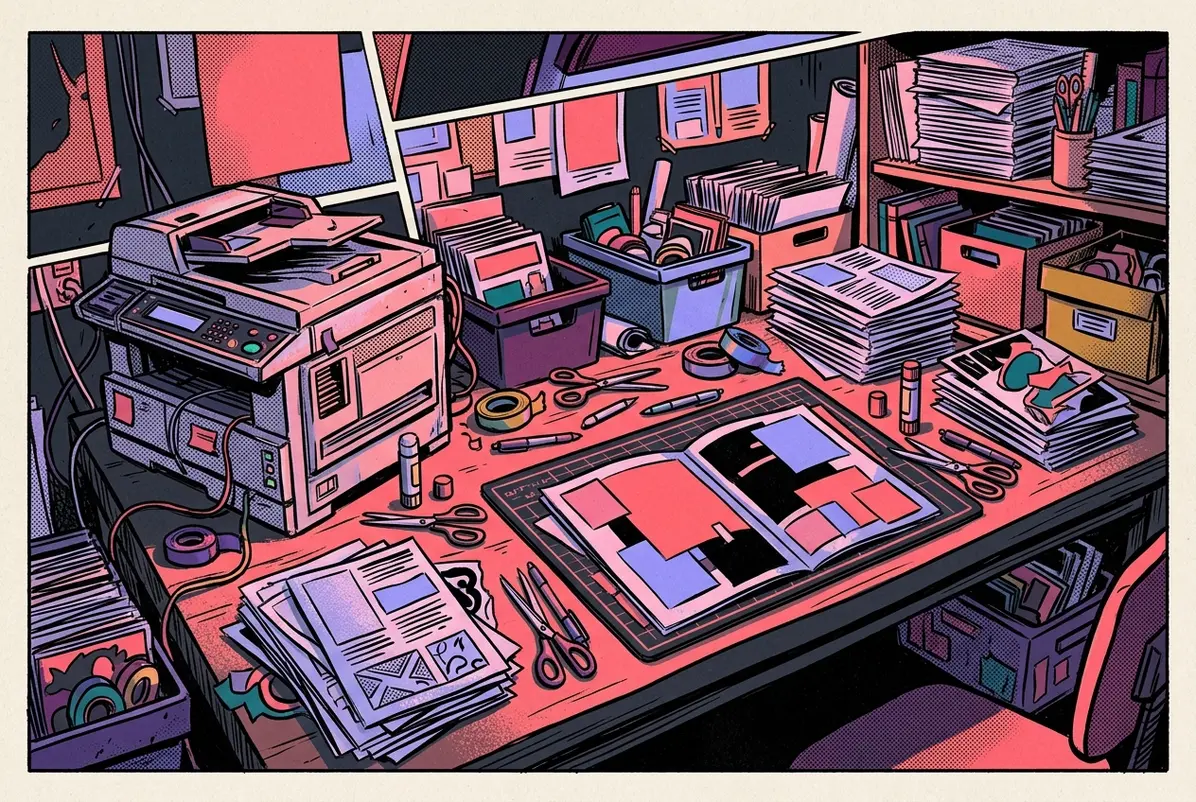
Trying to define zines entirely by paper size, photocopy quality, circulation numbers, or production method quickly falls apart. In the American Library Association’s Zines in Libraries, Meg Metcalf describes the format as resistant to fixed definitions while emphasizing DIY production, grassroots distribution, communication, and community as recurring characteristics.
Writer Roy Christopher remembers the same machinery from inside skateboard and BMX culture. In his account of making and trading zines, he describes those publications as a pre-web network of news, stories, interviews, events, art, and photographs, and calls zines “power in the hands of the fans.” The object mattered, but so did the route: making something, handing it over, mailing it away, getting something back.
The SKATEBOARDMUSEUM publications were already a hybrid version of that tradition. They were produced around museum exhibitions rather than emerging from a lone zinester’s bedroom or a mail-order distro. Yet their distribution still depended on a direct cultural encounter. Readers found them where the skate history, boards, photographs, graphics, footwear, flyers, and other artifacts were being assembled into a temporary physical argument.
The box set changed that relationship without erasing its value. It made the material easier to preserve precisely by making it less dependent on the original encounter.
The Archive Cannot Preserve the Doorway
Preservation always makes choices. Here, the changes were unusually visible. The collected versions added exhibits and exhibition photographs. The slipcase gathered separate publications into a single object. The ISBN moved them into a commercial cataloging system that could carry them far beyond the museum’s traveling shows.
None of that makes the collection less authentic. It makes it a different artifact.
The original zines carried an implicit condition: you had to encounter the exhibition to encounter the publication. The collected edition removed that condition so the material could survive the exhibition itself. What it preserved was the imagery, research, design, and history. What it could not preserve was the small piece of friction that once stood between a reader and the page.
That may be the unavoidable bargain of archiving subculture. The box can preserve the zines. It cannot preserve the fact that, once, you had to be there.
'%3e%3cg id='Final-Copy-2_2_' transform='translate(1275.000000, 200.000000)'%3e%3cpath class='st0' d='M7.4,12.8h6.8l3.1-11.6H7.4C4.2,1.2,1.6,3.8,1.6,7S4.2,12.8,7.4,12.8z'/%3e%3c/g%3e%3c/g%3e%3c/g%3e%3cg id='final---dec.11-2020'%3e%3cg id='_x30_208-our-toggle' transform='translate(-1275.000000, -200.000000)'%3e%3cg id='Final-Copy-2' transform='translate(1275.000000, 200.000000)'%3e%3cpath class='st1' d='M22.6,0H7.4c-3.9,0-7,3.1-7,7s3.1,7,7,7h15.2c3.9,0,7-3.1,7-7S26.4,0,22.6,0z M1.6,7c0-3.2,2.6-5.8,5.8-5.8 h9.9l-3.1,11.6H7.4C4.2,12.8,1.6,10.2,1.6,7z'/%3e%3cpath id='x' class='st2' d='M24.6,4c0.2,0.2,0.2,0.6,0,0.8l0,0L22.5,7l2.2,2.2c0.2,0.2,0.2,0.6,0,0.8c-0.2,0.2-0.6,0.2-0.8,0 l0,0l-2.2-2.2L19.5,10c-0.2,0.2-0.6,0.2-0.8,0c-0.2-0.2-0.2-0.6,0-0.8l0,0L20.8,7l-2.2-2.2c-0.2-0.2-0.2-0.6,0-0.8 c0.2-0.2,0.6-0.2,0.8,0l0,0l2.2,2.2L23.8,4C24,3.8,24.4,3.8,24.6,4z'/%3e%3cpath id='y' class='st3' d='M12.7,4.1c0.2,0.2,0.3,0.6,0.1,0.8l0,0L8.6,9.8C8.5,9.9,8.4,10,8.3,10c-0.2,0.1-0.5,0.1-0.7-0.1l0,0 L5.4,7.7c-0.2-0.2-0.2-0.6,0-0.8c0.2-0.2,0.6-0.2,0.8,0l0,0L8,8.6l3.8-4.5C12,3.9,12.4,3.9,12.7,4.1z'/%3e%3c/g%3e%3c/g%3e%3c/g%3e%3c/g%3e%3c/svg%3e) Your Privacy Choices
Your Privacy Choices