


Colton Abernathy spent a few weeks doing something that sounds almost willfully old-fashioned: digging through forgotten corners of YouTube, Reddit, and the wider internet for skatepark fight videos. Some were clips he remembered from the mid-2000s. Most were newer. Many had already disappeared from YouTube.
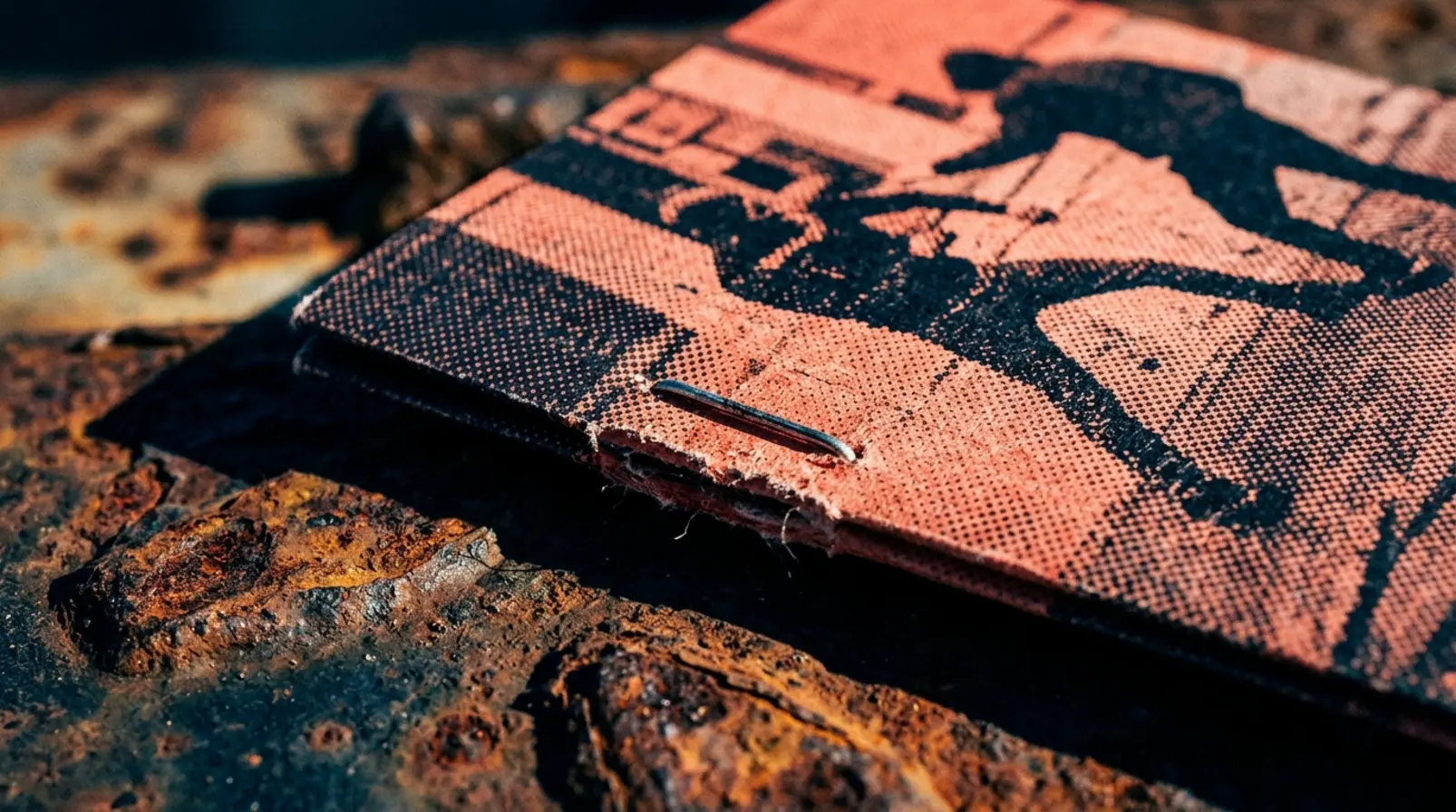
From footage of at least 40 fights, Abernathy selected isolated frames, printed them, scanned them back into a computer, and arranged them into Skate Park Fights, a physical zine available through Pointers Goold. He developed the idea after spending two years working at Tenant Skate Shop and revisiting the magazines and videos that had shaped his relationship with skating. As he told Jenkem Magazine, “I love the videos because there’s a lack of context.”
The zine removes even more of that context. The motion is gone. The shouting is gone. The buildup, impact, and aftermath are gone. What remains is a single unstable instant: a raised fist, a collapsing body, a crowd beginning to react.
This is not preservation in the comprehensive sense. Abernathy is not restoring the videos or rebuilding the platforms that lost them. He is doing something stranger. He is converting a fragment of disposable internet culture into an editorial decision that can be held.
The video was temporary. The choice of frame becomes the artifact.
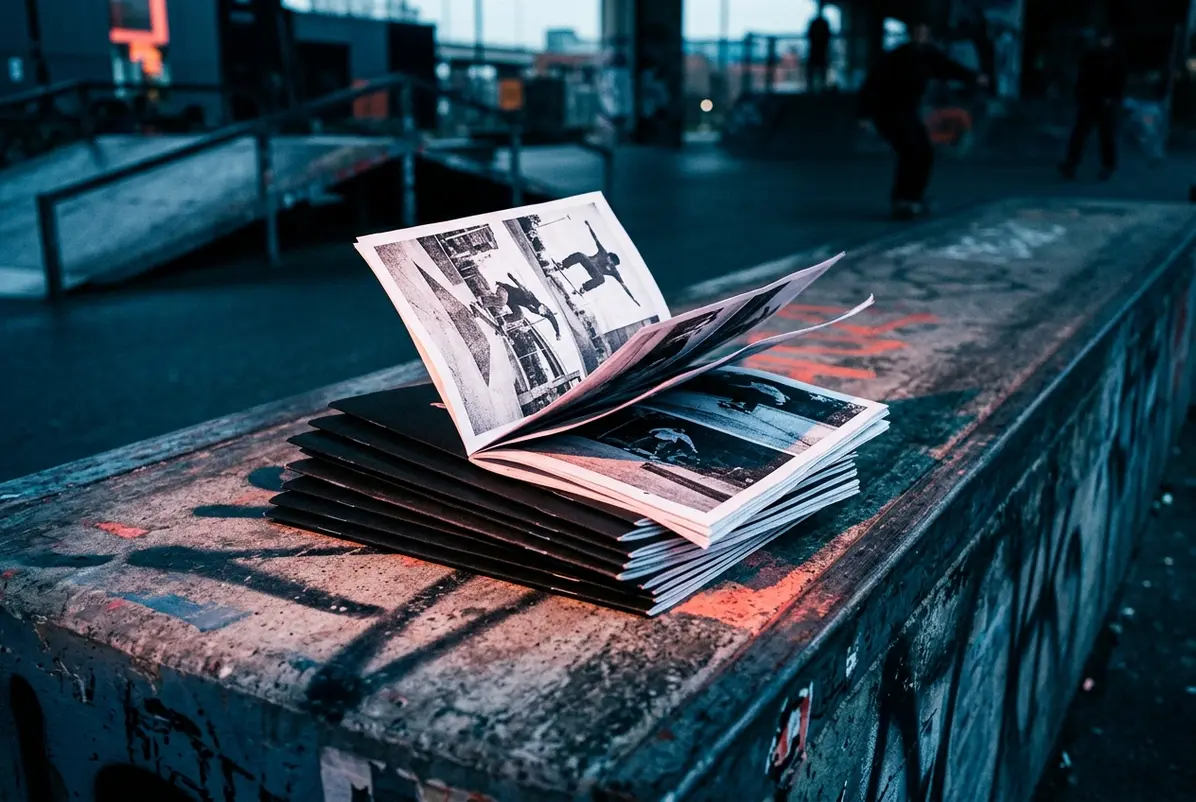
It is a small project, but the move lands on old ground. Whenever the systems around skate media become too polished, too unstable, or too dependent on somebody else’s machinery, paper reappears. Not because paper is magically permanent. It can be damaged, discarded, or lost like anything else. Its advantage is more practical: once printed, it no longer requires a platform’s continued permission to exist.
Skateboarding did not begin with an orderly media industry and later discover the virtues of working small. Its publishing culture was built small.
Skateboarding Did Not Inherit Print Culture. It Built One.
Thrasher launched in January 1981, founded by Eric Swenson and Fausto Vitello, two of the co-founders of Independent Truck Company. The magazine was initially conceived partly as a vehicle for promoting the company’s trucks. Kevin Thatcher became its first editor, while photographer Mörizen “MoFo” Föche was its second employee.
That commercial origin did not prevent Thrasher from becoming something larger. It helps explain how skate publishing worked in the first place. The magazine was not merely commentary placed above the culture. It was part of the machinery that made the culture visible, connected scenes, sold equipment, circulated images, and established a language for what skating was supposed to feel like.
Between 1983 and 1990, Thrasher also released the Skate Rock compilation series, featuring punk and thrash bands made up of skaters and distributed on cassette and vinyl. A skate magazine was simultaneously acting as a music publisher. The page, the photograph, the record, and the tape were not separate lifestyle accessories. They were different methods of moving the same culture from one person to another.
Print was not simply documenting the scene. Print was part of the scene’s infrastructure.
When the Magazine Became the Stunt
Big Brother turned that infrastructure into an object of deliberate sabotage. Steve Rocco launched the magazine in 1992, and its early issues repeatedly changed physical form. Issue No. 2 was oversized, No. 3 used spiral binding, No. 5 included trading cards, No. 6 arrived inside a cereal box, and No. 8 included an audio tape.
These were not tasteful collector upgrades. They were jokes made out of manufacturing decisions. The magazine itself became another stunt: awkward to display, expensive to produce, and hostile to the idea that publishing needed a consistent, professional shell.
That chaos eventually became expensive. According to an account by former Big Brother contributor Sean Cliver, the elaborate packaging generated attention while helping push the magazine deeper into debt, with the cereal-box issue causing particular damage. Larry Flynt Publications acquired it in 1997, and the magazine closed in 2004.
Its larger influence did not close with it. Jeff Tremaine had served as an early art and editorial director, and several figures from the magazine’s orbit later moved into television. Reviews of the 2017 documentary Dumb: The Story of Big Brother Magazine have described the publication’s gonzo worldview as a direct precursor to Jackass.
The familiar version of that history is that an obscure skate magazine eventually evolved into mainstream entertainment. The more revealing version is that television inherited a set of ideas already tested in print: amateur danger, bad judgment, bodily comedy, intentional ugliness, and the belief that the people making the media should also be implicated in the mess.
What Paper Gives Back
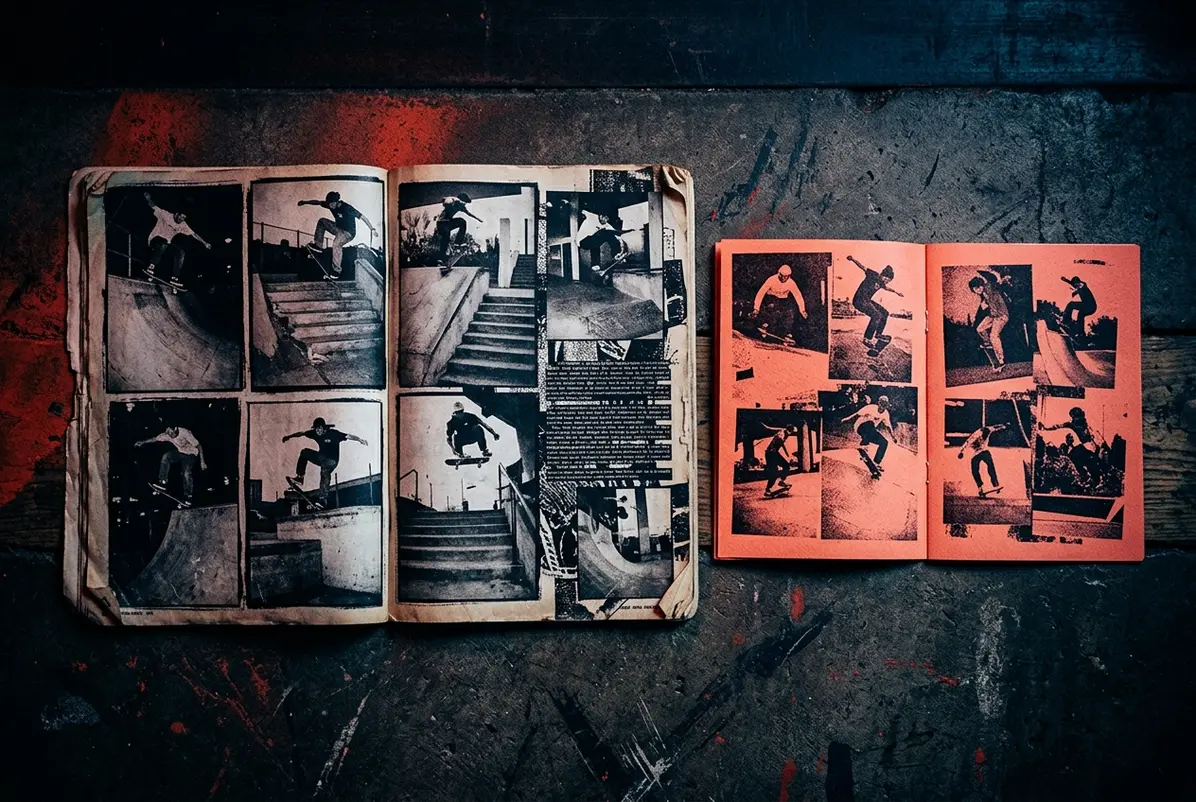
A photocopier or short-run printer does not liberate a publication from every dependency. Ink costs money. Distribution takes work. Physical objects need storage, and small print runs can disappear almost as easily as dead links.
What print changes is the location of control.
A physical zine is not automatically removed when an account closes. Its contents are not reorganized by an engagement algorithm. It does not become inaccessible because a video host changes policy, abandons an archive, or decides that old material is no longer commercially useful. The object can still be lost, but its continued existence is no longer synchronized with a company’s product strategy.
Abernathy put the distinction more sharply: “Online is so censored, offline is premium.” His zine could easily have become another compilation page. Instead, he deliberately kept it off the internet and placed it into circulation as an object. He has also discussed plans for a Denver Skatepark-specific follow-up, drawing from the park where he grew up. The project is therefore less a transfer of content than a transfer of custody.
That instinct extends beyond skateboarding. Brigitte of Commonplace Zines has argued that renewed interest in zines reflects a broader desire for tangible media amid increasing censorship concerns and the rise of AI. That is one interpretation rather than a proven single cause. Still, it overlaps with wider reporting on zine makers using physical publishing to work outside the churn of social platforms and their algorithms. As Wired reported, contemporary zine culture is not necessarily anti-technology. It is often a response to the conditions technology imposes: surveillance, platform dependence, unstable reach, and uncertain ownership over what gets posted.
Skateboarding does not need that broader revival to explain its attachment to paper. It already has decades of evidence that a small publication can function as a shop window, a scene report, a record label, a prank, a community signal, and an escape route.

The Archive Is the Edit
The most interesting thing about Skate Park Fights is not that it rescues online videos by putting them on paper. It does not. Most of the information contained in those videos is discarded.
The zine preserves less evidence but more intention.
Every screenshot declares that this instant mattered enough to isolate. Every page removes the clip from autoplay, comments, recommendations, takedowns, and whatever platform originally gave it context. The fight becomes harder to explain but easier to keep.
That tradeoff is central to every archive. Preservation is never the saving of everything. It is a chain of decisions about what remains legible after the original machinery disappears.
Abernathy’s zine, and whatever follows it from Pointers Goold or the next skate shop with access to a copier, reads less like a revival than a resumption. Skate print culture does not simply die and return. It goes quiet until another generation discovers that the fastest way to remove something from the internet’s custody is still to put it on paper and staple it shut.
The staple is not nostalgia. It is a claim of custody.
Frequently Asked Questions
What is Skate Park Fights?
Skate Park Fights is a physical zine created by Colton Abernathy from altered screenshots of skatepark fight videos. Abernathy told Jenkem Magazine that it draws from at least 40 fights.
Are all the videos in the zine from the early YouTube era?
No. Abernathy initially searched for older videos he remembered, but he said most of the fights included in the zine were newer. Several were discovered through Reddit and had been filmed within the previous decade.
When was Thrasher founded?
Thrasher was founded in January 1981 by Eric Swenson and Fausto Vitello. Kevin Thatcher was its first editor.
How was Big Brother connected to Jackass?
Big Brother employed or worked with several people who later became involved with Jackass, including Jeff Tremaine. The documentary Dumb: The Story of Big Brother Magazine traces the publication’s influence on the television series and its surrounding culture.
Why do zines remain useful in the internet era?
Zines give their makers direct control over editing, production, and physical distribution. They can still be lost or destroyed, but they do not require a social platform, active account, or recommendation algorithm to remain readable.
'%3e%3cg id='Final-Copy-2_2_' transform='translate(1275.000000, 200.000000)'%3e%3cpath class='st0' d='M7.4,12.8h6.8l3.1-11.6H7.4C4.2,1.2,1.6,3.8,1.6,7S4.2,12.8,7.4,12.8z'/%3e%3c/g%3e%3c/g%3e%3c/g%3e%3cg id='final---dec.11-2020'%3e%3cg id='_x30_208-our-toggle' transform='translate(-1275.000000, -200.000000)'%3e%3cg id='Final-Copy-2' transform='translate(1275.000000, 200.000000)'%3e%3cpath class='st1' d='M22.6,0H7.4c-3.9,0-7,3.1-7,7s3.1,7,7,7h15.2c3.9,0,7-3.1,7-7S26.4,0,22.6,0z M1.6,7c0-3.2,2.6-5.8,5.8-5.8 h9.9l-3.1,11.6H7.4C4.2,12.8,1.6,10.2,1.6,7z'/%3e%3cpath id='x' class='st2' d='M24.6,4c0.2,0.2,0.2,0.6,0,0.8l0,0L22.5,7l2.2,2.2c0.2,0.2,0.2,0.6,0,0.8c-0.2,0.2-0.6,0.2-0.8,0 l0,0l-2.2-2.2L19.5,10c-0.2,0.2-0.6,0.2-0.8,0c-0.2-0.2-0.2-0.6,0-0.8l0,0L20.8,7l-2.2-2.2c-0.2-0.2-0.2-0.6,0-0.8 c0.2-0.2,0.6-0.2,0.8,0l0,0l2.2,2.2L23.8,4C24,3.8,24.4,3.8,24.6,4z'/%3e%3cpath id='y' class='st3' d='M12.7,4.1c0.2,0.2,0.3,0.6,0.1,0.8l0,0L8.6,9.8C8.5,9.9,8.4,10,8.3,10c-0.2,0.1-0.5,0.1-0.7-0.1l0,0 L5.4,7.7c-0.2-0.2-0.2-0.6,0-0.8c0.2-0.2,0.6-0.2,0.8,0l0,0L8,8.6l3.8-4.5C12,3.9,12.4,3.9,12.7,4.1z'/%3e%3c/g%3e%3c/g%3e%3c/g%3e%3c/g%3e%3c/svg%3e) Your Privacy Choices
Your Privacy Choices