

The cleanest version of Æon Flux may not be the truest version.
That sounds backwards because restoration culture has trained viewers to treat clarity as virtue. Higher resolution. Cleaner audio. Stable color. Removed noise. Corrected damage. But some works were not merely distributed by old technology. They were completed by it. Peter Chung’s Æon Flux belongs to that category: a show whose knives, limbs, silhouettes, whispers, and wounds were filtered through MTV broadcast chains, NTSC composite video, VHS tape, and CRT glow until the playback system felt like part of the art.
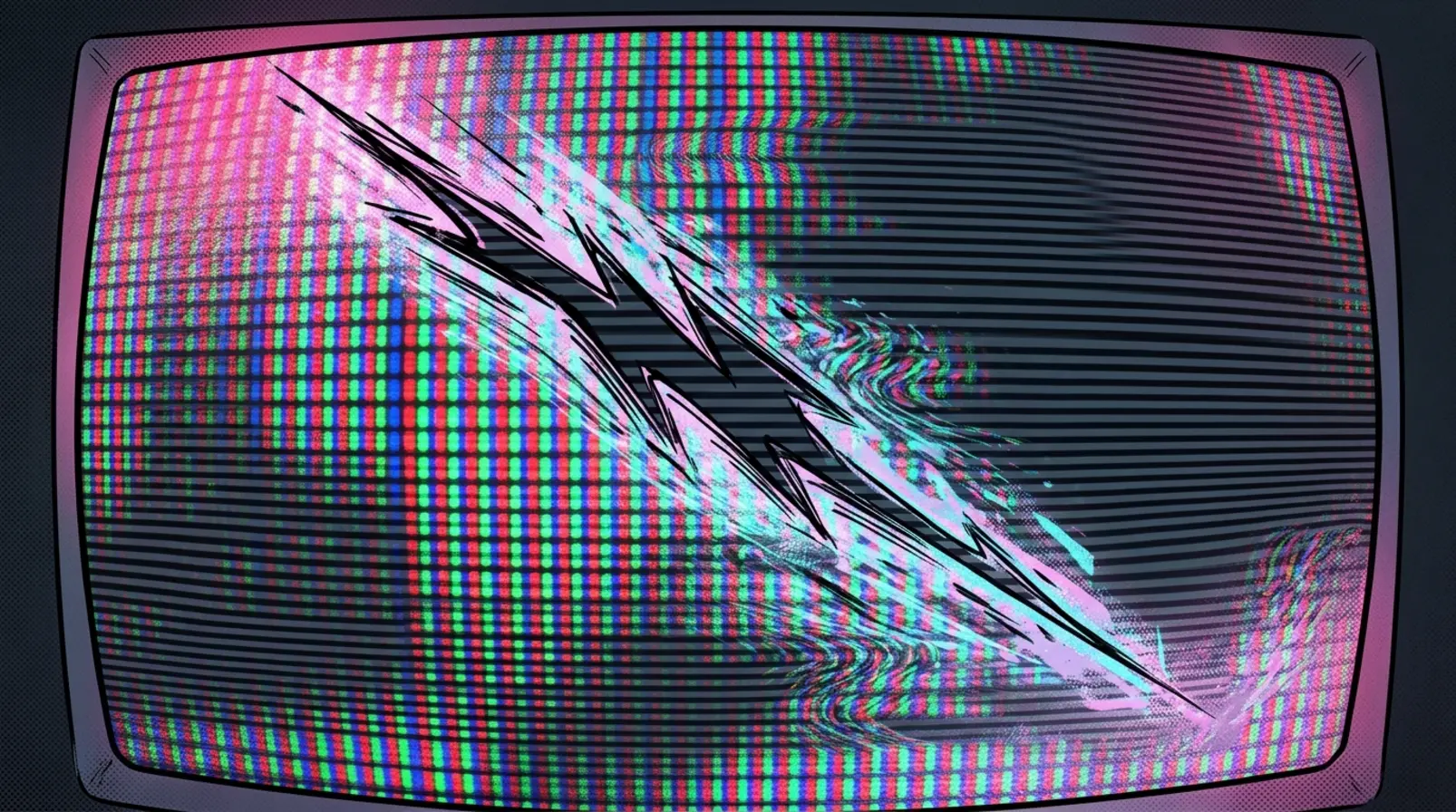
This is where phosphor bleed, as used here, becomes more than a display artifact. It describes the visible color fringing, analog glow, persistence, smear, and edge instability that could appear when high-contrast animation met CRT televisions, composite video, and VHS playback. The point is not that Chung secretly designed the series as a technical demo for analog flaws. The stronger argument is stranger: Chung built a visual language that analog television happened to punish beautifully.
The Show That Knew the Screen Was Watching
Peter Chung arrived at Æon Flux with a career that already cut across several incompatible corners of American animation. CalArts notes that Chung entered the school in 1979, spending one year in Character Animation and another in Experimental Animation, before working on projects including Fire and Ice, Teenage Mutant Ninja Turtles, C.O.P.S., and Rugrats according to CalArts. That background matters because Æon Flux does not feel like a rebellion from craft. It feels like craft refusing to behave.
The series arrived through MTV’s experimental animation ecosystem. Waxwork Records, in its notes for the Æon Flux soundtrack release, describes the show as originally airing from 1991 through 1995, beginning as a six-part serial on Liquid Television, followed by five individual shorts in 1992 and a 1995 season of ten half-hour episodes assembled around the full 21-episode body of work. Paramount+ currently lists the ten 1995 half-hour episodes, running from “Utopia or Deuteranopia” on August 8, 1995, to “End Sinister” on October 10, 1995 on its episode guide.
The official facts are tidy. The experience was not.
Æon Flux looked like something smuggled into American television from a harsher design future. Its bodies were elongated until anatomy became accusation. Its faces could seem both erotic and insectile. Its action sequences refused the usual moral comfort of the heroic body moving through space. The heroine did not save the world so much as disturb the idea that the world wanted saving.
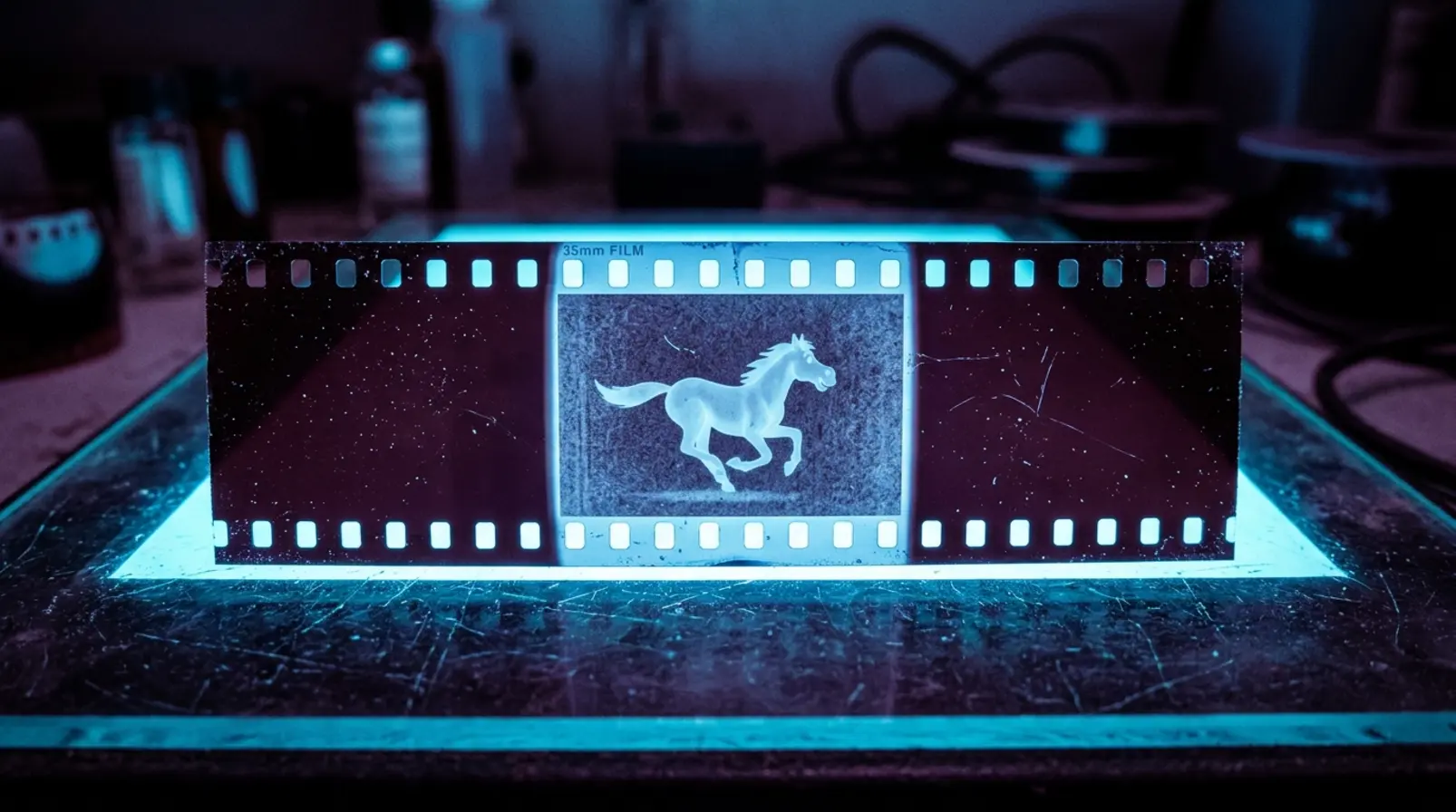
Chung told Art of the Title that the early 1990s production was made traditionally, with “paper, pencil and hand-painted cells” shot under a 35mm film camera, not software in a discussion of the show’s title sequence. That detail is not nostalgia bait. It matters because the series was already a chain of translations before it ever reached a viewer: drawing to cel, cel to film, film to broadcast, broadcast to television, television to memory.
The Phosphor Bleed Aesthetic
Chung’s own description of the work points toward the visual logic that made the analog afterimage so potent. In an interview with The A.V. Club, he said he wanted a style “much more dependent on expressive drawing as opposed to lots of surface detail” while discussing the show’s influences and method. In the Art of the Title interview, he also connected the look to Moebius, Hergé, ligne claire, Japanese animation, and the paintings and drawings of Egon Schiele when asked about the series’ visual inspirations.
That mixture created a very particular kind of television image: hard outlines, flat color, stretched bodies, violent negative space, and sudden graphic contrasts. On paper, it was design. On a CRT receiving a composite signal, it became weather.
Composite video is not a neutral pipe. Analog Devices explains that NTSC, PAL, and SECAM were created to squeeze color into the original monochrome broadcast bandwidth, reducing bandwidth and generating artifacts, including crawling or hanging dots along edges in its technical overview of analog video signals. The Canadian Conservation Institute describes dot crawl in composite video as a problem caused when chroma and luma share the same channel, making one signal occasionally interpreted as the other, with moving dots especially evident along saturated borders in its VHS digitization bulletin.
That is the technical floor under the aesthetic claim. Æon Flux used the kinds of hard edges and saturated graphic decisions that could make analog artifacts visible. The image did not just sit on the screen. It shimmered at the border between signal and failure. Æon’s body could become a contour map of bad transmission. Trevor Goodchild’s world could look less drawn than decoded incorrectly.
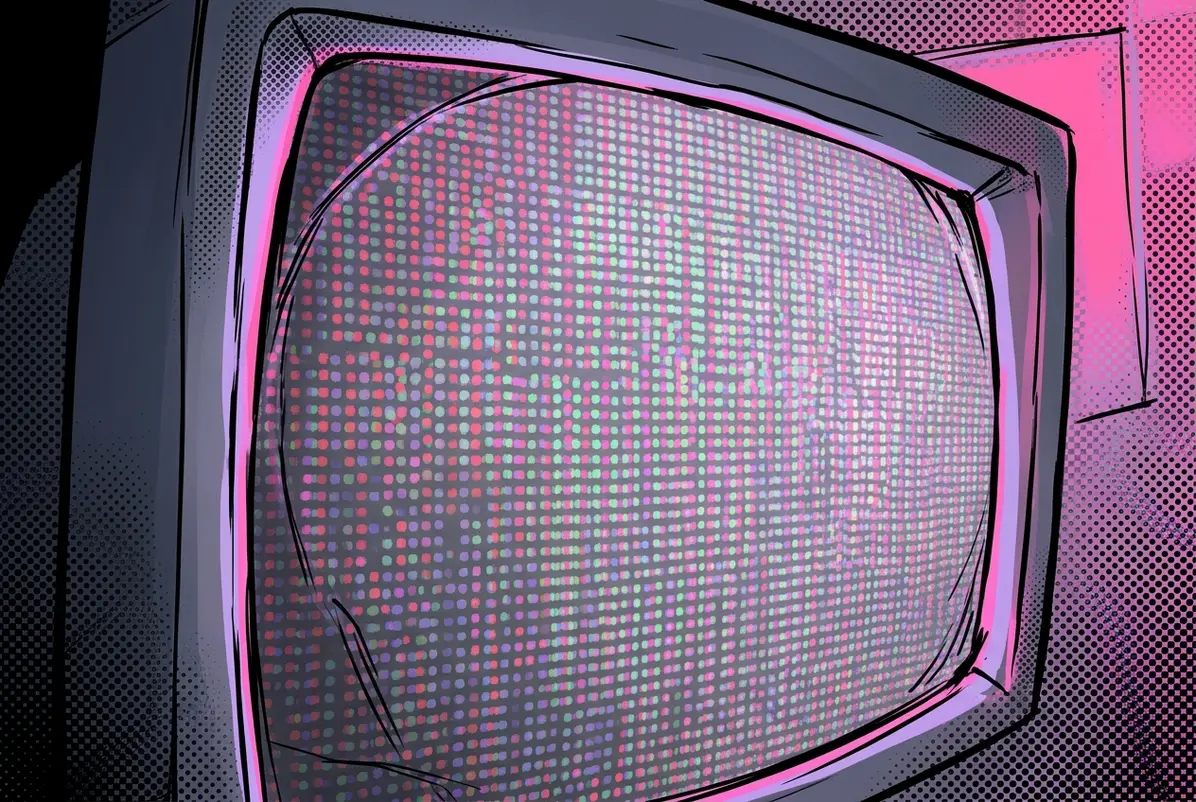
The old display chain did not make the show better in some simple purist sense. It made it unstable in a way that matched the work. Æon Flux was already about bodies refusing fixed meaning, borders failing to hold, ideology turning erotic, and clarity collapsing into suspicion. Analog video did not betray that vision. It gave the vision a nervous system.
VHS Was the Second Author
The broadcast image was only the first layer. VHS added another.
By the late 1990s, Æon Flux had also become a home-video object. Wired wrote in 1999 about The Complete Aeon Flux, a box video set including ten full-length episodes and three shorts by Peter Chung that had originally aired on MTV’s Liquid Television in its “State of Flux” writeup. The important part is not only that the show was available on tape. It is that tape changed the ritual of viewing it.
VHS was not a transparent container. It was a machine for producing mood by accident. The Canadian Conservation Institute identifies common videotape playback problems including dropout, tracking error, horizontal noise lines, snow, and dot crawl, while also warning that VHS playback technology and repair expertise are nearing end-of-life in its preservation guidance. Those flaws were not equally welcome in every work. On Æon Flux, they could feel uncannily appropriate.
Tracking error did not simply degrade the image. It made the image feel hunted. Dropout did not merely interrupt the frame. It made the frame seem mortal. Dot crawl did not just reveal the limits of composite video. It turned the edge of the drawing into an event.
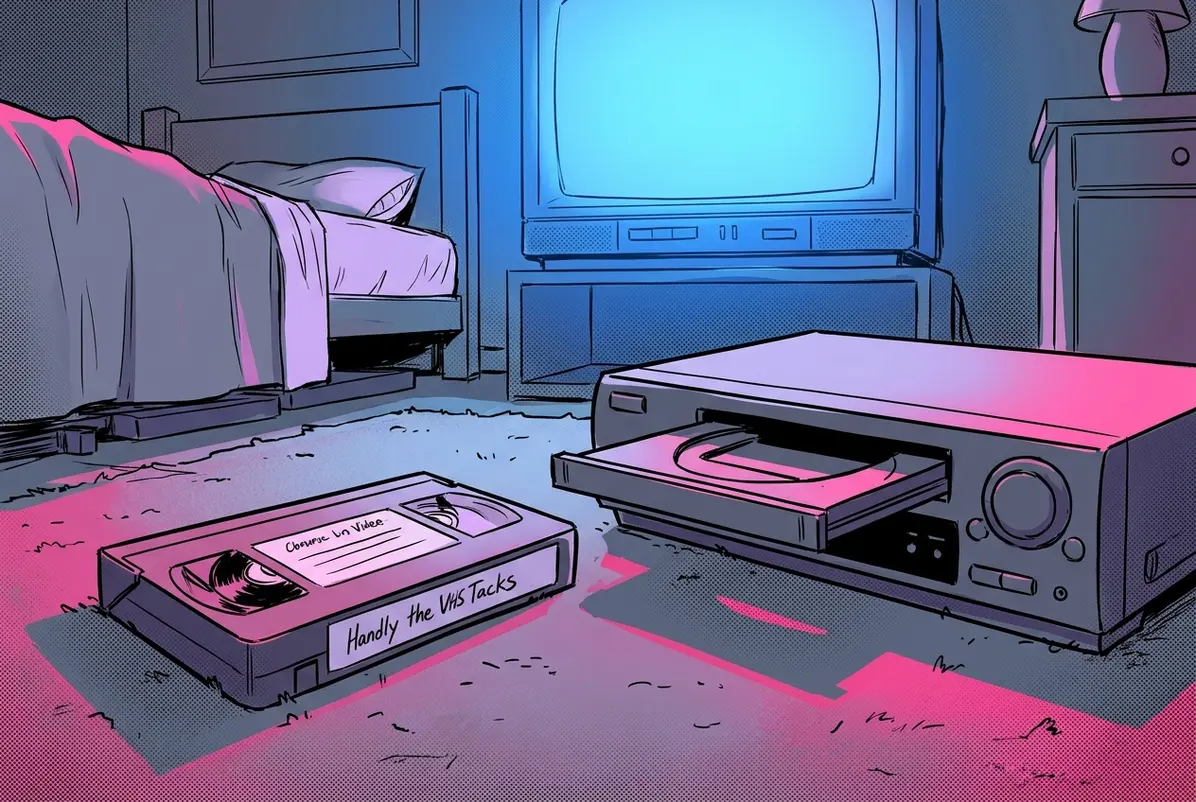
This is why the VHS memory of Æon Flux carries a different charge from the clean archive version. A pristine transfer can show the drawing. A worn tape can show the encounter. The old workflow made the viewer aware of distance: between the artist and the screen, between the signal and the body, between the original object and the unstable copy arriving in a dark room.
That distance mattered because Chung’s storytelling often resisted exposition. In Art of the Title, Chung said he fought against the idea of giving Æon expository narration, calling it antithetical to the character, and added, “I resist dialogue as much as possible” when discussing the half-hour title sequence. The less the show explained itself verbally, the more the image had to carry. Every analog imperfection became part of the pressure placed on looking.
Drew Neumann and the Sound of Signal Decay
The visual bleed had an audio counterpart in Drew Neumann’s score and sound design. Waxwork Records credits Neumann with creating the music and sound design of Æon Flux, noting that he studied film, animation, and composition at CalArts, where he met Chung, and later worked across film, television, hardware synthesizers, sound libraries, and music technology in its soundtrack release notes.
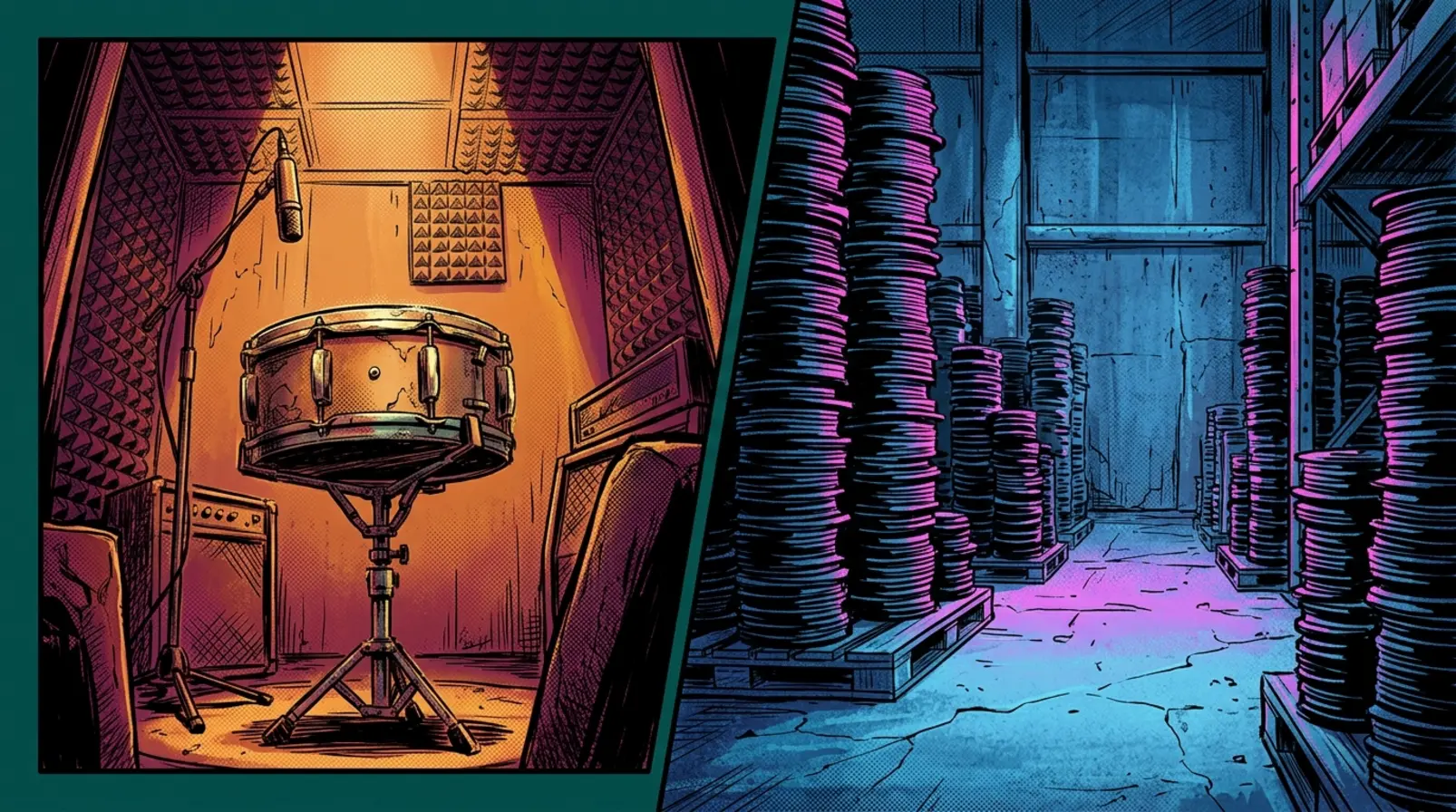
The score does not simply accompany Æon Flux. It behaves like another unstable system. Metallic textures drift in and out. Percussion arrives like machinery misreading a pulse. The sound design gives bodies weight, but not comfort. It is not warm futurism. It is cold circuitry dreaming about flesh.
Waxwork says its soundtrack set was assembled in partnership with Peter Chung, Drew Neumann, and MTV, using complete soundtrack music from all 21 episodes sourced from Neumann’s original masters in its making-of note for the box set. That release is valuable because it clarifies the composition. But the original viewing chain often complicated it. On tape, hiss, alignment issues, television speakers, and room noise could blur the line between Neumann’s designed sound and the machine’s own noise floor.
The stronger point is not that Æon Flux was alone in this. Plenty of television lived inside compromised playback chains. The difference is that Æon Flux made compromise feel thematically native. Its world already sounded like damaged equipment trying to explain desire.
The Archive Keeps Cleaning Away the Ghost
Preservation has to clean things. That is not the problem. Without transfers, reissues, streaming, disc releases, and restoration work, much of television history would simply vanish into dead formats and failed machines. The Canadian Conservation Institute is blunt about this: VHS has a finite lifetime, and its playback technology is nearing end-of-life as a preservation concern. The archive has to move the signal forward or lose it.
But moving a signal forward is never neutral. It decides what counts as the work. Is Æon Flux the drawing? The edit? The soundtrack master? The MTV broadcast? The VHS tape? The DVD director’s cut? The Paramount+ stream? Every format answers differently.
The 2005 DVD set is a useful example. Animated Views described Aeon Flux: The Complete Collection as a three-disc Paramount Home Entertainment/MTV Home Entertainment release dated November 22, 2005, and noted that the episodes were not exactly the original versions seen on MTV, with enhanced video and audio, some altered dialogue, and changes supervised by Chung in its review of the collection. That does not make the DVD illegitimate. It makes the object complicated.
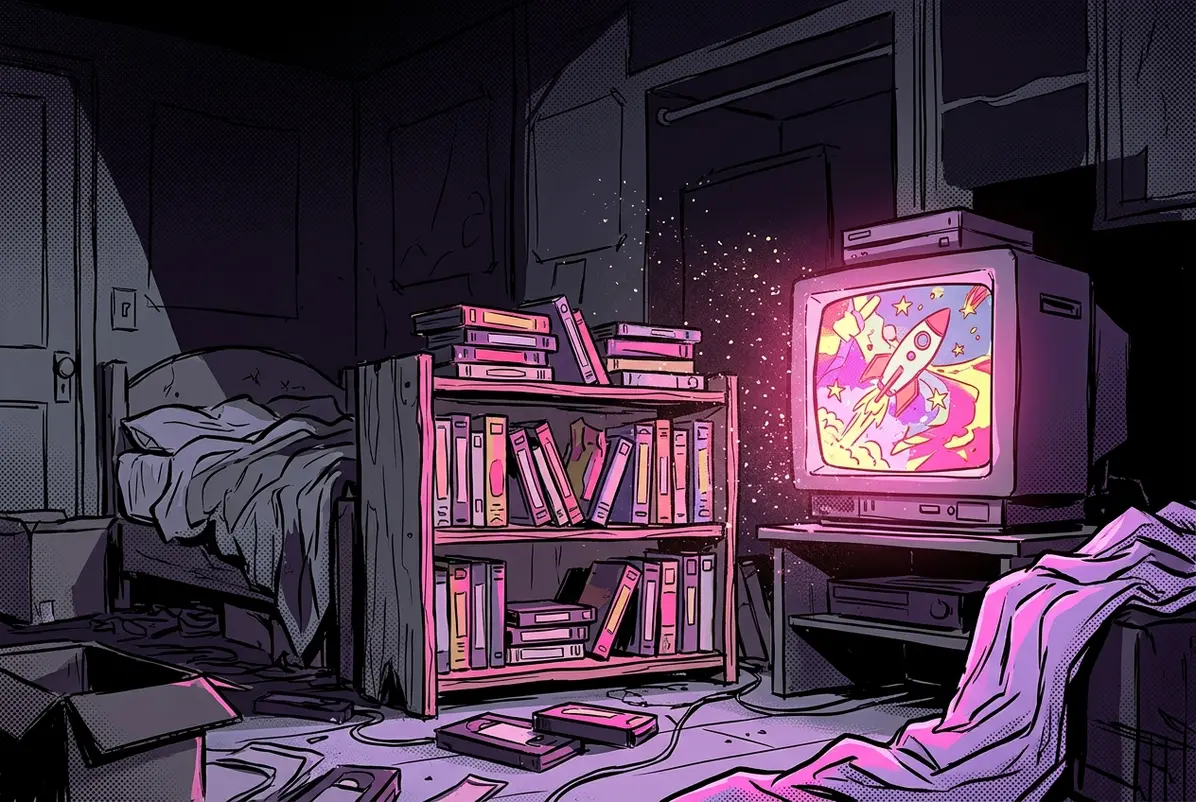
The issue is not access. Access is good. The issue is what gets quietly separated when access improves. The image can become cleaner while the historical experience becomes harder to reconstruct. The sound can become fuller while the room that once degraded it disappears. The show can become easier to watch while the conditions that made it feel illicit, unstable, and physically strange recede into anecdote.
That is the real case for the 1991 phosphor bleed. It is not a demand that everyone watch Æon Flux on a failing VCR through a soft tube television. It is a reminder that the display chain was part of the cultural object. The glow was not decoration. The glow was part of the archive.
More than three decades later, Æon Flux still looks like a warning transmitted from a future that could not hold its signal steady. It survives cleanly now, and that matters. But the ghost of the show lives in the older encounter: the fringing edge, the breathing tape, the CRT halo, the sense that the image was not being shown so much as summoned.
The phosphor bleed was never listed in the credits. It still deserves a mention.
Frequently Asked Questions
What is phosphor bleed on a CRT television?
In this article, phosphor bleed refers to the visible mix of CRT glow, phosphor persistence, composite-video artifacts, and analog edge instability that can appear around high-contrast images. It is not being used as one single formal engineering term. It is a shorthand for how CRT display behavior, composite-video artifacts, and VHS playback flaws can combine into a recognizable analog texture. Composite video can produce dot crawl because luma and chroma share the same channel, as explained by the Canadian Conservation Institute.
When did Æon Flux first air?
Æon Flux first appeared on MTV’s Liquid Television in 1991. Waxwork Records describes the series as beginning with a six-part serial, followed by five individual shorts in 1992 and a ten-episode half-hour season in 1995 in its soundtrack notes. Paramount+ currently lists the ten half-hour episodes from August 8, 1995, through October 10, 1995 on its episode guide.
Who created Æon Flux?
Æon Flux was created by Peter Chung. CalArts identifies Chung as the creator of the avant-garde sci-fi action series and notes his broader animation career, including work connected to Fire and Ice, Teenage Mutant Ninja Turtles, C.O.P.S., Rugrats, The Animatrix, and Firebreather in its profile of Chung.
Who composed the music for Æon Flux?
Drew Neumann created the music and sound design for Æon Flux. Waxwork Records says Neumann studied film, animation, and composition at CalArts, where he met Peter Chung, and that Waxwork later assembled the complete soundtrack music from all 21 episodes using Neumann’s original masters for its soundtrack box set.
Was Æon Flux released on VHS?
Yes. Wired wrote in 1999 about The Complete Aeon Flux, a box video set that included ten full-length episodes and three shorts by Peter Chung that originally aired on MTV’s Liquid Television in its home-video writeup. Those VHS-era releases are important to the article’s argument because tape playback could add tracking noise, dropout, dot crawl, and other analog artifacts to the viewing experience.
What influenced the visual style of Æon Flux?
Chung has discussed influences including Moebius, Hergé, ligne claire, Japanese animation, and Egon Schiele. In The A.V. Club, he described wanting a style dependent on expressive drawing rather than surface detail in a career interview. In Art of the Title, he connected the show’s look to clear-line comics, Japanese animation, and Schiele’s expressive figure work while discussing the series’ title design.
Where can you watch or buy Æon Flux today?
As of publication, Paramount+ lists the ten 1995 half-hour Æon Flux episodes as available with a subscription on its show page. Physical editions, including DVD and older VHS releases, circulate through secondary markets, but availability changes. Waxwork Records has also released soundtrack editions based on Drew Neumann’s original masters for listeners interested in the score.
'%3e%3cg id='Final-Copy-2_2_' transform='translate(1275.000000, 200.000000)'%3e%3cpath class='st0' d='M7.4,12.8h6.8l3.1-11.6H7.4C4.2,1.2,1.6,3.8,1.6,7S4.2,12.8,7.4,12.8z'/%3e%3c/g%3e%3c/g%3e%3c/g%3e%3cg id='final---dec.11-2020'%3e%3cg id='_x30_208-our-toggle' transform='translate(-1275.000000, -200.000000)'%3e%3cg id='Final-Copy-2' transform='translate(1275.000000, 200.000000)'%3e%3cpath class='st1' d='M22.6,0H7.4c-3.9,0-7,3.1-7,7s3.1,7,7,7h15.2c3.9,0,7-3.1,7-7S26.4,0,22.6,0z M1.6,7c0-3.2,2.6-5.8,5.8-5.8 h9.9l-3.1,11.6H7.4C4.2,12.8,1.6,10.2,1.6,7z'/%3e%3cpath id='x' class='st2' d='M24.6,4c0.2,0.2,0.2,0.6,0,0.8l0,0L22.5,7l2.2,2.2c0.2,0.2,0.2,0.6,0,0.8c-0.2,0.2-0.6,0.2-0.8,0 l0,0l-2.2-2.2L19.5,10c-0.2,0.2-0.6,0.2-0.8,0c-0.2-0.2-0.2-0.6,0-0.8l0,0L20.8,7l-2.2-2.2c-0.2-0.2-0.2-0.6,0-0.8 c0.2-0.2,0.6-0.2,0.8,0l0,0l2.2,2.2L23.8,4C24,3.8,24.4,3.8,24.6,4z'/%3e%3cpath id='y' class='st3' d='M12.7,4.1c0.2,0.2,0.3,0.6,0.1,0.8l0,0L8.6,9.8C8.5,9.9,8.4,10,8.3,10c-0.2,0.1-0.5,0.1-0.7-0.1l0,0 L5.4,7.7c-0.2-0.2-0.2-0.6,0-0.8c0.2-0.2,0.6-0.2,0.8,0l0,0L8,8.6l3.8-4.5C12,3.9,12.4,3.9,12.7,4.1z'/%3e%3c/g%3e%3c/g%3e%3c/g%3e%3c/g%3e%3c/svg%3e) Your Privacy Choices
Your Privacy Choices