

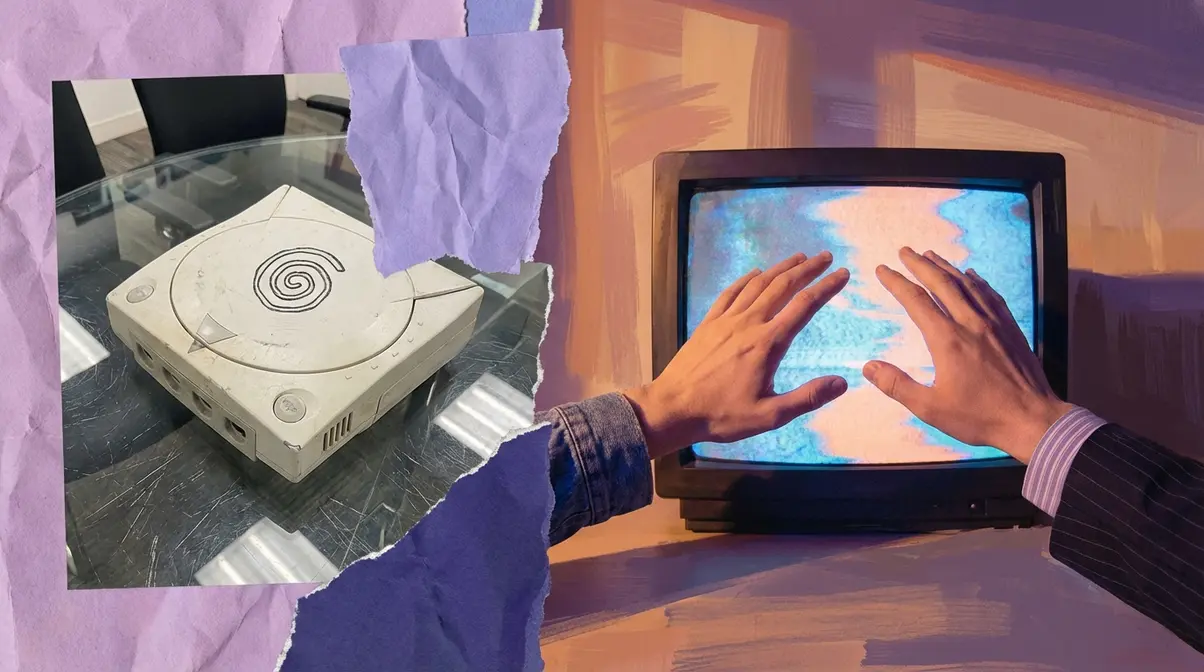

In March 1999, a two-person company called bleem! shipped a PlayStation emulator for Windows and immediately drew Sony’s legal crosshairs. Bleem! was a PlayStation emulator designed to allow people to play original PlayStation games on Windows 95 or 98. It was released in March 1999. Within days, the lawyers came. Two days after Bleem! started taking preorders for their emulator, Sony took umbrage and sued the company for unfair competition and copyright infringement. What nobody outside a few conference rooms knew was that bleem!’s most audacious move wasn’t the PC version. It was something far stranger, involving Sega hardware, a flight to Japan, and one of the most elaborate exercises in corporate plausible deniability the games industry has ever produced.
The Pitch
The company that developed and commercialized Bleem! initially consisted of just two people, David Herpolsheimer (president) and Randy Linden. Linden was the programmer. Herpolsheimer was the dealmaker. And it was Herpolsheimer who had the idea that would change everything: put bleem! on the Dreamcast.
Linden explains that Bleem president David Herpolsheimer asked him about the idea of porting the emulator to the new console: “I took a look at the specs for the Dreamcast and thought, ‘Yeah, it could be done. Absolutely. Let’s get in contact with Sega.’ So, we got in contact with Sega, and Sega was thrilled at the idea, and they sent us all the technical specs for the Dreamcast. They loaned us a Dreamcast hardware development system, including a GD-ROM writer and all the necessary software to do the development.” That quote, from a March 2026 interview published by Time Extension, is the clearest confirmation yet of what the retro gaming community has long suspected: Sega wanted this to happen.
The Architecture of Denial
But wanting it and owning it publicly are two very different postures. Sega decided plausible deniability was the best approach and refused to allow Linden and his team to use the GD-ROM format for Bleemcast. Linden shares his thoughts on why this was the case: “They did not want the title to be licensed officially by Sega. Because they didn’t want to get into a big legal battle with Sony.”
Think about what this means in practice. Sega handed over a Katana dev kit, a GD-ROM burner, and reams of low-level hardware documentation. When asked if he could count on help from Sega, Linden replied: “Sort of — Sega could help us but could not allow us to publish the project officially. This meant I needed to find another way to get bleemCast! running on an official Dreamcast without using GDROM format.” Then Sega drew a line: no official licensing, no Sega libraries, no GD-ROM publishing. Everything had to be written from scratch.
Linden explained: “So that meant that everything written for Bleemcast was written from the ground up. There are no Sega libraries that are used. There’s no Sega code that is used. There’s no Sony code that’s used, either. But Sega would not license the technology that they had developed for talking to the chips to the hardware. So that’s why they sent along all the low-level technical specs, and technical documentation for all the hardware on the Sega Dreamcast.” It was the corporate equivalent of leaving the back door unlocked and a map on the table, then going out for coffee.
The Trip to Tokyo
Herpolsheimer engaged with Sega, traveling to Japan to discuss the project with Sega’s president and board of directors. Linden didn’t make the trip himself. He stayed home and coded. What came back from Tokyo was the final verdict: Sega wouldn’t put their name on it. But they also wouldn’t stop it. And someone at Sega, according to Linden, pointed them toward a very specific Japanese product. Linden recalled: “I had to reverse engineer the Sega BIOS, so I dug into that and discovered the ‘Mil-CD’ somebody at Sega said you should go to Japan and buy. They sort of told us with, you know, a ‘nudge nudge wink wink’, to buy Heartbreak Diaries.”
That MIL-CD exploit became the entry point. The discs were manufactured at a standard CD pressing plant, not on GD-ROM. It was a workaround born of necessity and quiet encouragement.
100% SH-4 Assembly
If the political maneuvering was intricate, the technical achievement was borderline absurd. Co-written with Roderick Maher, bleemcast! was developed entirely in SH-4 assembly, distinct from any code used in the Windows version of bleem!, with the entire endeavor requiring approximately a year to complete. None of the PC codebase carried over. As Linden confirmed: “bleemCast! is 100% SH4 Assembly Language so it runs very fast.”
The games ran in a 640×480 resolution, as opposed to the PS1’s 320×240 resolution, and featured anti-aliasing and bilinear filtering. This drastically improved the games’ graphics. That detail still makes people lose their minds in emulation forums. A $5.95 disc made PlayStation games look better on Dreamcast than they did on Sony’s own hardware.
Standing distinguished as the sole instance where one console, still active within its lifecycle at the time, was emulated on a different console , bleemcast! remains unique. Nothing like it has been attempted commercially since.
Sony’s Response
Sony did what Sony does. The release of the Bleemcast! caused Sony to file another lawsuit accusing them of unfair competition and patent infringement regarding the use of PlayStation BIOSs on the Dreamcast. This approach had become problematic for Bleem!, despite no actual court ruling against them. The lawsuits were a war of attrition, not merit. The main issue regarded the financial problems Bleem! had faced as they had to deal with defense costs of $1 million per patent.
This had caused Bleem!’s work to decline, so that they had only managed to release three games: Metal Gear Solid, Gran Turismo 2, and Tekken 3, for the Bleemcast!. Three discs out of a planned library of hundreds. The ambition had been enormous. The legal machine ground it to dust.
What to Know if You’re Entering This History
If you’re a collector, all three retail bleemcast! discs are still findable. They’re cheap. They’re fascinating artifacts. But know this: the three retail games do not work on ODE devices still to this day due to heavy protections. You need original Dreamcast hardware with MIL-CD support, which means early-revision consoles only. Late-model units had the exploit patched out.
If you’re a student of emulation, study the Ninth Circuit opinion in Sony v. Bleem. The case of Bleem! software has been analyzed by legal scholars in the context of the industry’s treatment of third-party emulation of video games. The lawsuits shed light on the scope of fair use in United States copyright law and the extent to which video game companies rely on anti-circumvention provisions of the DMCA to drive out competing products, regardless of whether copyright had actually been infringed. The legal precedent bleem! set is foundational. Every time Nintendo sells you an NES game on Switch, emulation’s legitimacy traces back, in part, to the battles this two-person company fought and won.
And if you’re just someone who loves the Dreamcast, understand the bitter poetry of the ending. Bleem! shut down in November 2001, the same year Sega announced that they would discontinue the Dreamcast in North America. Bleem! closed their website, with only an image on their front page showing Sonic the Hedgehog tearfully holding a flower next to a Bleem! gravestone. However, the image was later altered and Sonic was removed, ironically to avoid a lawsuit from Sega. The company that had secretly helped them could not even allow a cartoon hedgehog to mourn at their grave.
The Footnote That Launched an Empire
One more thing. Linden said in an interview that “[bleem!] was the original demo used to pitch the Xbox concept to Bill Gates,” leading to Linden being requested to produce a modified version of the emulator that excluded any references to bleem!’s brand, which, he notes, was used by Microsoft internally to demonstrate to Gates the possibility of designing a video game console based on PC hardware. A PlayStation emulator, built by two people, was apparently the demo that convinced the richest man in the world to greenlight the Xbox. That claim has never been independently verified by Microsoft, but Linden has repeated it consistently across multiple interviews over the years.
Randy Linden is still coding. He is currently employed at Limited Run Games. The Dreamcast is still beloved. And the story of the secret handshake between Sega and bleem! is, twenty-five years later, finally being told in full. It deserves to be heard clearly, without myth or embellishment, because the truth is already stranger than anything anyone could have invented.
'%3e%3cg id='Final-Copy-2_2_' transform='translate(1275.000000, 200.000000)'%3e%3cpath class='st0' d='M7.4,12.8h6.8l3.1-11.6H7.4C4.2,1.2,1.6,3.8,1.6,7S4.2,12.8,7.4,12.8z'/%3e%3c/g%3e%3c/g%3e%3c/g%3e%3cg id='final---dec.11-2020'%3e%3cg id='_x30_208-our-toggle' transform='translate(-1275.000000, -200.000000)'%3e%3cg id='Final-Copy-2' transform='translate(1275.000000, 200.000000)'%3e%3cpath class='st1' d='M22.6,0H7.4c-3.9,0-7,3.1-7,7s3.1,7,7,7h15.2c3.9,0,7-3.1,7-7S26.4,0,22.6,0z M1.6,7c0-3.2,2.6-5.8,5.8-5.8 h9.9l-3.1,11.6H7.4C4.2,12.8,1.6,10.2,1.6,7z'/%3e%3cpath id='x' class='st2' d='M24.6,4c0.2,0.2,0.2,0.6,0,0.8l0,0L22.5,7l2.2,2.2c0.2,0.2,0.2,0.6,0,0.8c-0.2,0.2-0.6,0.2-0.8,0 l0,0l-2.2-2.2L19.5,10c-0.2,0.2-0.6,0.2-0.8,0c-0.2-0.2-0.2-0.6,0-0.8l0,0L20.8,7l-2.2-2.2c-0.2-0.2-0.2-0.6,0-0.8 c0.2-0.2,0.6-0.2,0.8,0l0,0l2.2,2.2L23.8,4C24,3.8,24.4,3.8,24.6,4z'/%3e%3cpath id='y' class='st3' d='M12.7,4.1c0.2,0.2,0.3,0.6,0.1,0.8l0,0L8.6,9.8C8.5,9.9,8.4,10,8.3,10c-0.2,0.1-0.5,0.1-0.7-0.1l0,0 L5.4,7.7c-0.2-0.2-0.2-0.6,0-0.8c0.2-0.2,0.6-0.2,0.8,0l0,0L8,8.6l3.8-4.5C12,3.9,12.4,3.9,12.7,4.1z'/%3e%3c/g%3e%3c/g%3e%3c/g%3e%3c/g%3e%3c/svg%3e) Your Privacy Choices
Your Privacy Choices