


The Machine
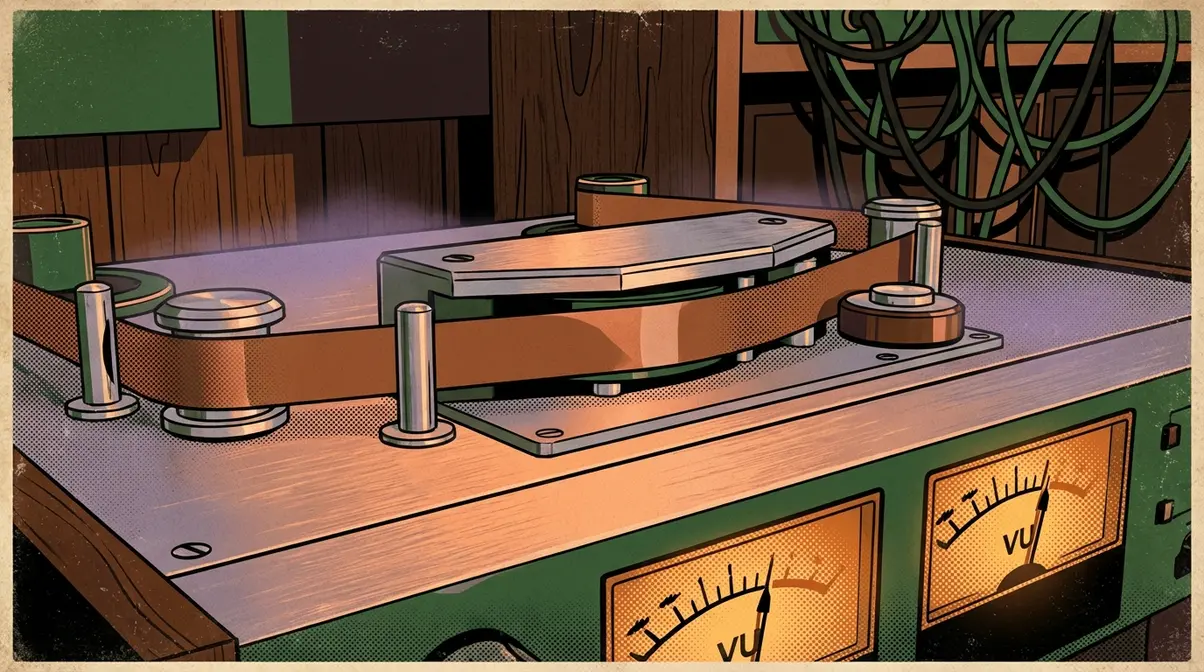
The Revox B77 MK III became available at the end of December 2024 for $15,950. Twenty units per month emerge from the factory in Villingen, Germany. Not twenty per day. Twenty total. The math is deliberate: high-level production and quality control don’t scale.
The mechanics are unchanged from the MK II, which was built from 1980 to 1998. What Revox redesigned was everything else. The electronics were rebuilt from scratch. Every capacitor that might color the sound was removed. The tape heads are new, technically superior. For the first time, the machine features fully balanced XLR inputs and outputs. No semiconductors with software exist anywhere in the signal path. Three motors drive the transport: two for the reels, one for the capstan. The capstan shaft tolerance is one thousandth of a millimeter in concentricity.
This is not a lifestyle product. It’s a tool for people who want to hear what’s on the tape.
What You’re Actually Buying
A quarter-inch tape running at 38 centimeters per second captures information that vinyl and digital formats compress or discard. Tape saturation—harmonic distortion that thickens bass and gently compresses high frequencies—is a form of inaccuracy that many engineers find more musical than digital precision. Professional mastering engineers report that running mixes through analog equipment and recording to half-inch two-track at 15 or 30 ips consistently sounds better than the original digital files. Tape shaves off transients in ways digital processing doesn’t replicate.
The B77 MK III plays and records multiple quarter-inch two-track formats: 19 cm/sec with 257 nWb/m and NAB equalization, or 38 cm/sec with 510 or 320 nWb/m and NAB or CCIR curves. The playback head gap measures 2 micrometers—0.002 millimeters.
But the machine is only half the equation. The master tapes matter more.
The Tape Problem
As of 2020, two companies manufactured magnetic recording tape: ATR Services in York, Pennsylvania, and Recording the Masters in Avranches, France. RTM employs thirty people. That’s the entire European production workforce for professional analog tape.
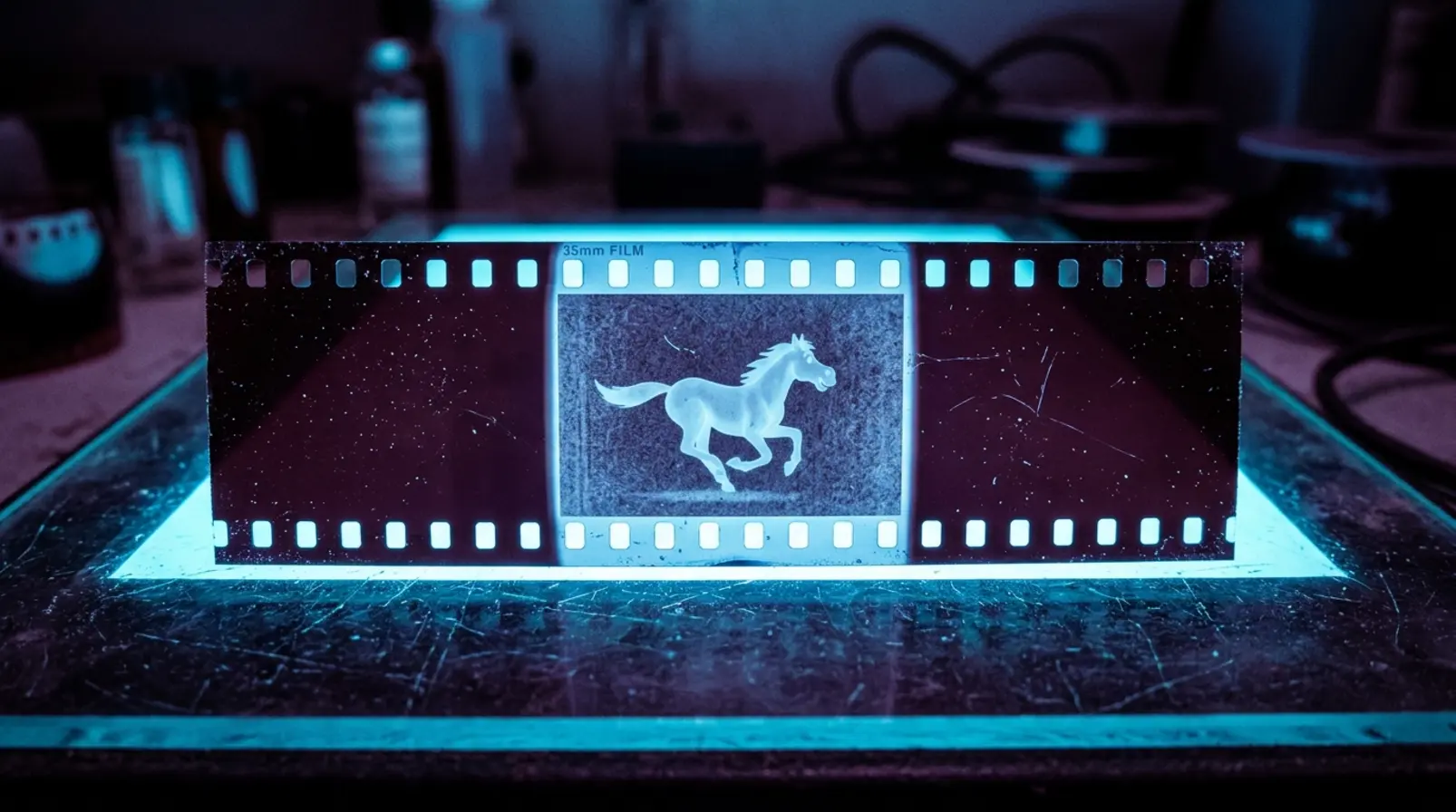
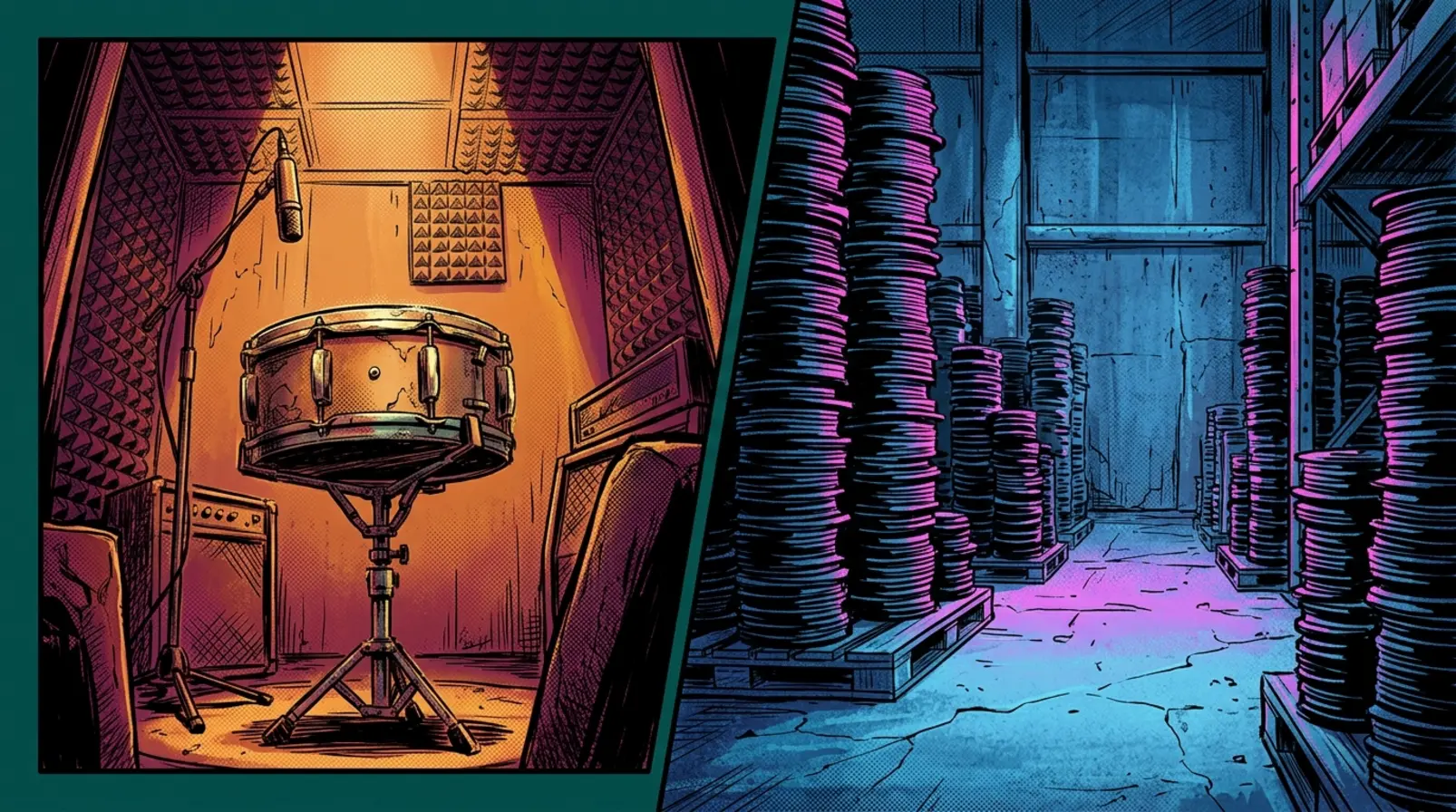
Master tapes cost between $450 and $1,000 per album. Revox offers its own catalog, copied in real time at 1:1 speed at their Klangwerk facility in partnership with Horch House. The original studio master—the first generation—serves as the blueprint. With each subsequent copy, information degrades. A true original studio master is, according to collectors, rarer than hen’s teeth.
The authentication problem is real. Enthusiast communities report unscrupulous sellers passing off recordings from high-end CD players as authentic two-track masters. A clandestine club has operated since 1983, dealing in quarter-inch copies of significant recordings to preserve damn-close-to-the-master-tape quality. The market runs on trust and expertise most buyers don’t possess.
The Studer Question
A meticulously restored Studer A807 sold for $7,500 a year ago. Today it might fetch $6,500. For the price of one B77 MK III, you could buy both a restored 807 and an 810. Studer machines were built for professional studios. The A810 and A807 remain reference standards, though many available units logged heavy use in radio stations and require $1,500 or more in new heads and parts.
Online communities are divided. Some consider the B77 mediocre, its tape handling far from spectacular, its transport functionality rudimental at best. Others counter: find me another new reel-to-reel tape recorder for $16,000. The last new reel-to-reel player before this recent revival was released in 2018—the first in over twenty years.
The argument isn’t purely sonic. It’s about warranty, support, and whether you want to become a tape machine technician. Vintage Revox A77s and B77s require mandatory recapping and replacement of all trimpots. VU meter pricing has skyrocketed; meters commonly stick due to separated glue bonds. Reel motors gum up. Capstans require cleaning every hundred hours to prevent tape salad. The dual-capstan transport may deliver near-perfect results, but it’s finicky compared to single-capstan drives.
The Hybrid Reality
Modern studios combine the warmth of analog with the precision of digital. Musicians track on tape for its sonic qualities, then transfer to digital for mixing and editing flexibility. Hybrid studios keep large-format tape machines for the mix process, sending final stems to tape to deliver that specific sound. Some artists of all genres still prefer analog, claiming it sounds more musical or natural despite—or because of—its inaccuracies.
This is the context the B77 MK III enters. Not as a replacement for digital workflows, but as a final stage. A way to hear what tape does that plugins can’t.
What the Money Doesn’t Buy
Convenience. A massive music library. Instant access. The B77 MK III demands ritual: threading tape, cleaning heads, storing reels properly, managing a physical collection that takes space and degrades over time. Plan on spending $10,000 for entry-level quality in this world, upwards of $50,000 for machines with all the features. Then add the cost of tapes with limited artist availability.
Audiophiles chase the last vestige of sonic improvement. Reel-to-reel accomplishes that, according to its advocates, in spades. The first time you hear a proper master tape copy on a machine like the MK III, you need a moment to process—not because something’s missing, but because nothing is. The music feels immediate, physical, natural rather than artificially spectacular.
Reviewer Maximilian Merk from FIDELITY magazine described the experience: mechanical clicking and whirring that grounds the machine in physical space, a tactile delight before the music even starts.
The Threshold
The B77 MK III represents a return to what matters: sound, not features. Depth and emotion over convenience. It’s a serious tool for people who want to hear music direct, unfiltered, analog. Whether that’s worth fifteen thousand dollars depends entirely on whether you’ve crossed the threshold where good enough stops being acceptable.
Most people haven’t. Most people never will. For the 240 individuals per year who acquire one of these machines, the question isn’t whether digital sounds good enough. The question is whether they’re willing to pay for the difference between very good and as close to the source as physically possible in a home environment.
Revox can only build twenty per month because precision at this level doesn’t scale. That’s not marketing. That’s manufacturing reality. The tolerance is one thousandth of a millimeter, and someone has to verify it.
'%3e%3cg id='Final-Copy-2_2_' transform='translate(1275.000000, 200.000000)'%3e%3cpath class='st0' d='M7.4,12.8h6.8l3.1-11.6H7.4C4.2,1.2,1.6,3.8,1.6,7S4.2,12.8,7.4,12.8z'/%3e%3c/g%3e%3c/g%3e%3c/g%3e%3cg id='final---dec.11-2020'%3e%3cg id='_x30_208-our-toggle' transform='translate(-1275.000000, -200.000000)'%3e%3cg id='Final-Copy-2' transform='translate(1275.000000, 200.000000)'%3e%3cpath class='st1' d='M22.6,0H7.4c-3.9,0-7,3.1-7,7s3.1,7,7,7h15.2c3.9,0,7-3.1,7-7S26.4,0,22.6,0z M1.6,7c0-3.2,2.6-5.8,5.8-5.8 h9.9l-3.1,11.6H7.4C4.2,12.8,1.6,10.2,1.6,7z'/%3e%3cpath id='x' class='st2' d='M24.6,4c0.2,0.2,0.2,0.6,0,0.8l0,0L22.5,7l2.2,2.2c0.2,0.2,0.2,0.6,0,0.8c-0.2,0.2-0.6,0.2-0.8,0 l0,0l-2.2-2.2L19.5,10c-0.2,0.2-0.6,0.2-0.8,0c-0.2-0.2-0.2-0.6,0-0.8l0,0L20.8,7l-2.2-2.2c-0.2-0.2-0.2-0.6,0-0.8 c0.2-0.2,0.6-0.2,0.8,0l0,0l2.2,2.2L23.8,4C24,3.8,24.4,3.8,24.6,4z'/%3e%3cpath id='y' class='st3' d='M12.7,4.1c0.2,0.2,0.3,0.6,0.1,0.8l0,0L8.6,9.8C8.5,9.9,8.4,10,8.3,10c-0.2,0.1-0.5,0.1-0.7-0.1l0,0 L5.4,7.7c-0.2-0.2-0.2-0.6,0-0.8c0.2-0.2,0.6-0.2,0.8,0l0,0L8,8.6l3.8-4.5C12,3.9,12.4,3.9,12.7,4.1z'/%3e%3c/g%3e%3c/g%3e%3c/g%3e%3c/g%3e%3c/svg%3e) Your Privacy Choices
Your Privacy Choices