

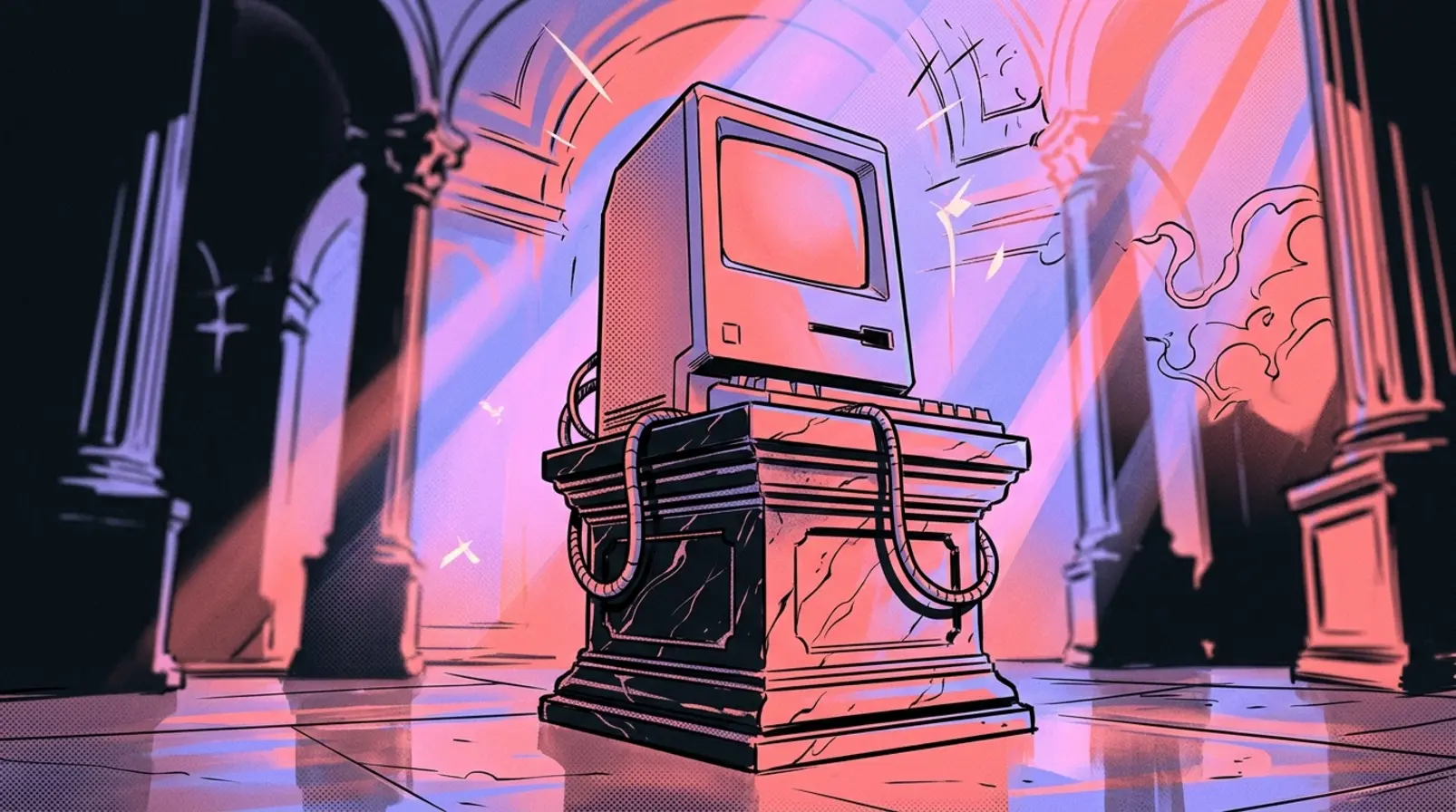

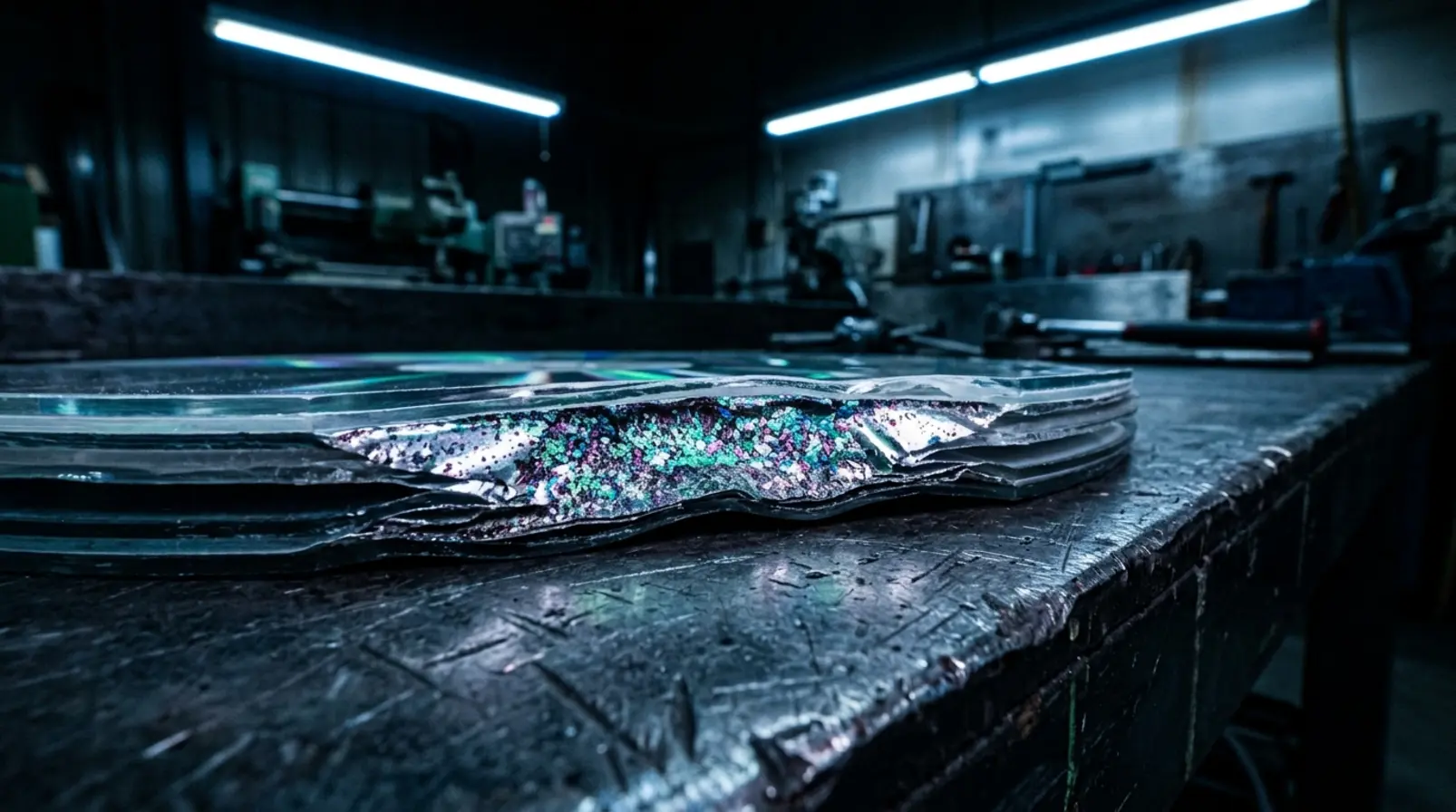
The demoscene grew out of cracker culture, where copy protection was removed from games and audiovisual signatures were attached to the altered software. Four decades later, organizers are collecting consent for a multinational cultural-heritage nomination.
The scene has not run out of constraints. It has acquired its strangest one: bureaucracy.
A demoscene demo is a self-contained audiovisual program rendered in real time, usually combining code, graphics, and music. The works are presented online and at demoparties, where creators compete across executable, visual, and musical categories. By 2026, the Art of Coding campaign counted eight European countries that had recognized the demoscene through national intangible-heritage inventories or comparable frameworks.
That recognition is not merely a trophy. It forces a decentralized subculture to explain what, exactly, it wants institutions to preserve.
How Crack Intros Became Demos
In the early 1980s, crackers who removed copy protection from games began attaching introductory screens known as cracktros. These screens credited groups through handles, logos, scrolling text, graphics, and music. What began as a signature gradually became a competition over who could make the machine perform the most impressive introduction.
An academic history of crack intros identifies a 1986 stand-alone production by 1001 Crew as an important point in that transition. The cracktro had started to detach itself from the cracked game. The signature was becoming the work.
The separation was not immediate or perfectly clean. Cracking groups, demo groups, distribution networks, pseudonyms, and technical practices continued to overlap. The demoscene did not emerge by erasing its origins. It emerged when the introduction no longer needed anything to introduce.
The Amiga widened the available audiovisual canvas. Its famous Boing Ball animation, credited to Dale Luck and Robert J. Mical in an archive of early Amiga demonstrations, was a prototype hardware showcase rather than a demoscene production. It nevertheless demonstrated how custom graphics hardware could turn technical capability into spectacle.
Later Amiga scene productions used broader palettes, vector graphics, sampled sound, and increasingly elaborate visual design. The machine demonstrated what it could do. The demoscene built a culture around asking what it could do under pressure.
The Art of Making Almost Nothing Hold Everything
Many demoparties include categories governed by strict executable-size limits. A 64K intro must fit inside 65,536 bytes. A 4K intro gets 4,096. Both limits appear in the published executable-competition rules for Evoke.
Those files do not contain a conventional finished video. The executable generates the work as it runs. Depending on the production, code may construct textures, geometry, animation, camera movement, visual effects, and music rather than storing them as completed assets. A detailed breakdown of a 64K intro production shows how procedural generation and compression allow an audiovisual world to emerge from a file smaller than many ordinary photographs.
The limit is not simply an inconvenience. It is the medium. A size-limited intro makes every byte part of the composition, because every technical decision alters what can appear on the screen or come through the speakers.
The scene’s deeper trick is not compression alone. It is conversion. Code becomes light. Mathematics becomes movement. Scarcity becomes style.
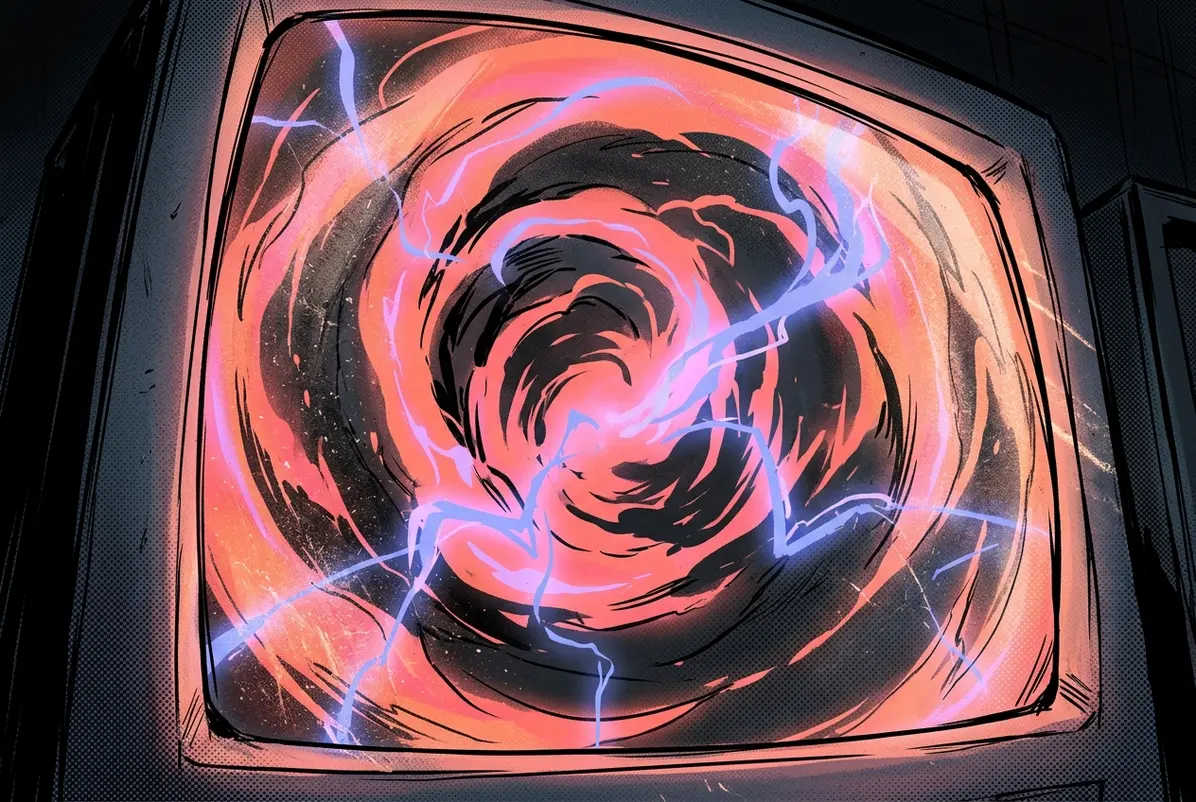
When an Underground Culture Becomes Heritage
Andreas Lange and Tobias Kopka launched the Art of Coding campaign in April 2019. Its long-term aim was to pursue international recognition through UNESCO’s intangible-cultural-heritage system, beginning with national applications.
Finland’s Ministry of Education and Culture added the demoscene to its National Inventory of Living Heritage on April 9, 2020. Germany followed on March 19, 2021. Poland’s official inventory records its entry on December 1, 2021.
The Netherlands and Switzerland received campaign-announced recognition in 2023. Sweden and France followed in 2025. The campaign announced Norway’s recognition on April 25, 2026, calling it the eighth country in the sequence.
These are national recognitions, not an inscription on UNESCO’s international Representative List of the Intangible Cultural Heritage of Humanity. The campaign’s multinational nomination is a separate and unfinished project.
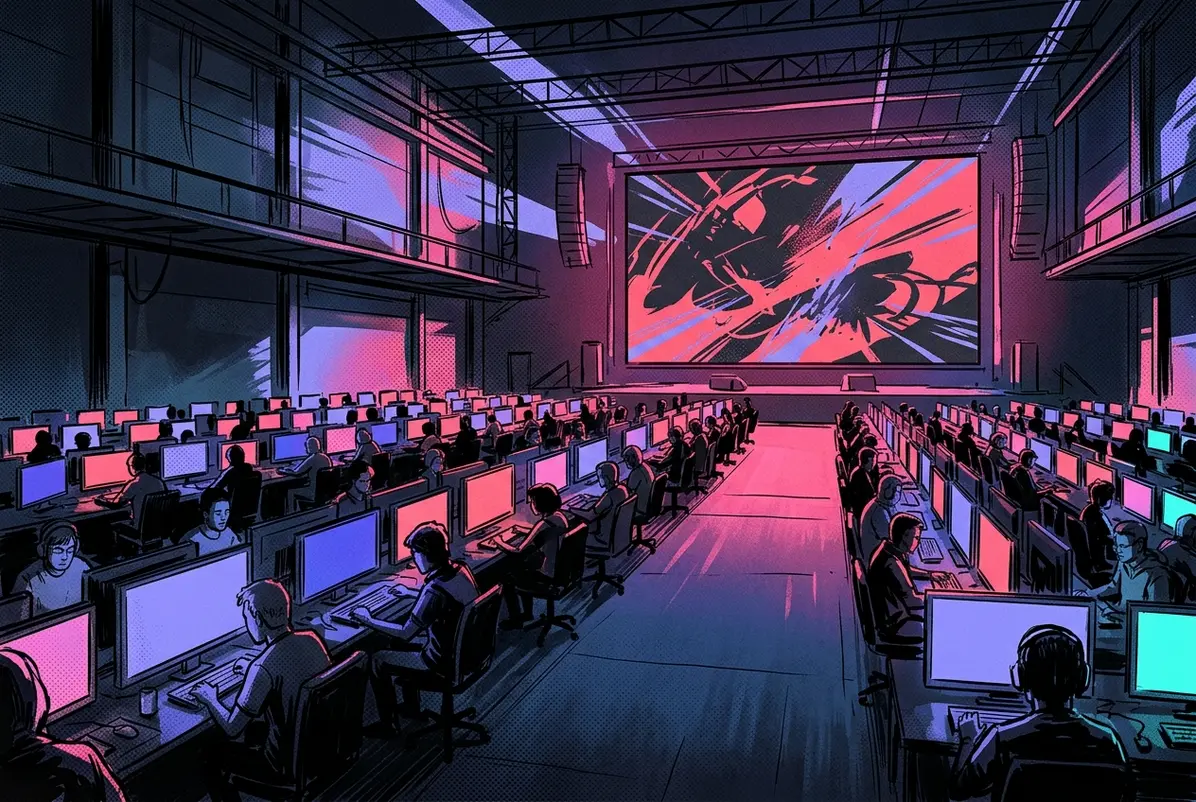
That distinction matters because national recognition can be assembled country by country. An international nomination must describe a culture that has never belonged neatly to one country in the first place.
The demoscene developed through copied disks, postal exchanges, bulletin-board systems, internet archives, shared code, traveling productions, and physical gatherings. Its borders were shaped more by machines, groups, and friendships than by states. Heritage administration reverses that logic. Countries must now formally cooperate to recognize a community that learned to operate across them.
The Scene Has to Consent to Being Preserved
UNESCO’s international nomination procedure requires community participation and evidence of free, prior, sustained, and informed consent. In 2026, Art of Coding organizers invited individual practitioners to document that consent while Norway led the proposed multinational nomination and Germany participated.
A community notice described June 1, 2026, as the nomination deadline, although it also said supporters could continue signing afterward. UNESCO’s published forms page listed March 31, 2026 as the submission deadline for nominations seeking possible inscription in 2027. Whatever internal stage the June date referred to, it was not UNESCO’s published cutoff for that cycle.
The paperwork introduces a different kind of production constraint. Revision 2026, held from April 3 to 6 in Saarbrücken, presented executable demos and intros alongside graphics, music, and other categories. Its general competition rules covered authorship, submission requirements, technical screening, preselection, copyright, and disqualification.
A demoparty asks whether a production runs, fits the category, follows the rules, and deserves the audience’s vote. A heritage application asks who constitutes the community, how its practices are transmitted, what threatens their continuation, what safeguarding might mean, and whether participants consent to being represented.
The first process judges the work. The second must define the culture.
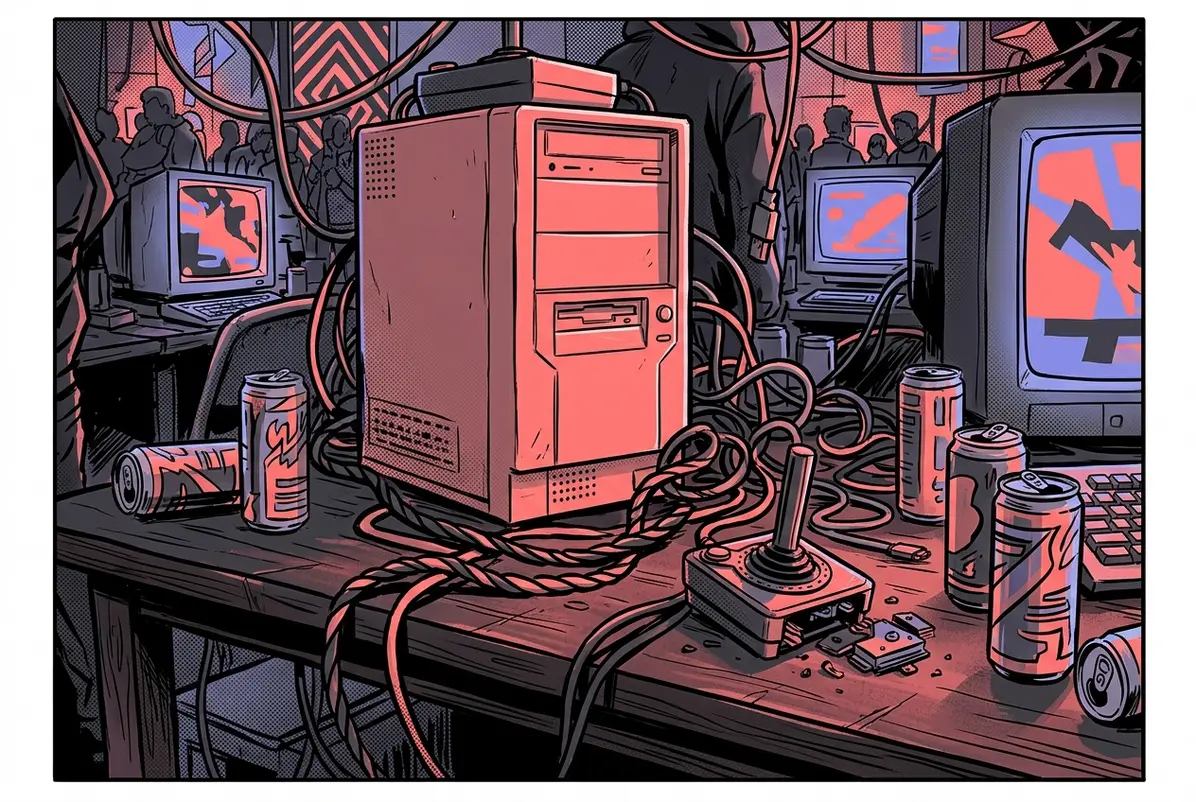
The Form Is the Scene’s Newest Size Limit
Heritage recognition does not freeze a culture automatically, and an official inventory does not decide what artists will make next. The stronger tension is subtler. Institutions require a stable description of a culture whose identity was built through mutation, competition, technical improvisation, and informal networks.
Any definition will leave something out. The scene spans multiple generations, countries, platforms, aesthetics, event traditions, and relationships to its own cracker history. The task is not merely to document that diversity. It is to compress it without pretending the compression is the whole thing.
The 4K intro asks how much of a world can fit inside 4,096 bytes. The heritage bid asks how much of a transnational, pseudonymous culture can fit inside an official definition without being compressed into something dead.
The form is the scene’s newest size limit.
Frequently Asked Questions About the Demoscene
What is a demoscene “demo”?
A demo is a computer program that generates an audiovisual work in real time, usually combining code, graphics, and music. Poland’s national inventory describes demos as noncommercial multimedia productions generated programmatically and presented as executable software.
What are 4K and 64K intros?
They are competition categories that cap an executable at 4,096 or 65,536 bytes. Published Evoke competition rules document both limits. Creators use techniques including compression, procedural generation, and real-time synthesis to fit graphics and sound inside those files.
Is the demoscene already on a UNESCO international list?
No. The eight recognitions discussed here are national listings or comparable national recognitions. The proposed multinational nomination to UNESCO’s international intangible-cultural-heritage system is a separate process.
Is the demoscene still active?
Yes. Revision 2026, held from April 3 to 6 in Saarbrücken, presented executable demos and intros, graphics, music, and other competition categories. New productions and physical events continue alongside the heritage applications.
'%3e%3cg id='Final-Copy-2_2_' transform='translate(1275.000000, 200.000000)'%3e%3cpath class='st0' d='M7.4,12.8h6.8l3.1-11.6H7.4C4.2,1.2,1.6,3.8,1.6,7S4.2,12.8,7.4,12.8z'/%3e%3c/g%3e%3c/g%3e%3c/g%3e%3cg id='final---dec.11-2020'%3e%3cg id='_x30_208-our-toggle' transform='translate(-1275.000000, -200.000000)'%3e%3cg id='Final-Copy-2' transform='translate(1275.000000, 200.000000)'%3e%3cpath class='st1' d='M22.6,0H7.4c-3.9,0-7,3.1-7,7s3.1,7,7,7h15.2c3.9,0,7-3.1,7-7S26.4,0,22.6,0z M1.6,7c0-3.2,2.6-5.8,5.8-5.8 h9.9l-3.1,11.6H7.4C4.2,12.8,1.6,10.2,1.6,7z'/%3e%3cpath id='x' class='st2' d='M24.6,4c0.2,0.2,0.2,0.6,0,0.8l0,0L22.5,7l2.2,2.2c0.2,0.2,0.2,0.6,0,0.8c-0.2,0.2-0.6,0.2-0.8,0 l0,0l-2.2-2.2L19.5,10c-0.2,0.2-0.6,0.2-0.8,0c-0.2-0.2-0.2-0.6,0-0.8l0,0L20.8,7l-2.2-2.2c-0.2-0.2-0.2-0.6,0-0.8 c0.2-0.2,0.6-0.2,0.8,0l0,0l2.2,2.2L23.8,4C24,3.8,24.4,3.8,24.6,4z'/%3e%3cpath id='y' class='st3' d='M12.7,4.1c0.2,0.2,0.3,0.6,0.1,0.8l0,0L8.6,9.8C8.5,9.9,8.4,10,8.3,10c-0.2,0.1-0.5,0.1-0.7-0.1l0,0 L5.4,7.7c-0.2-0.2-0.2-0.6,0-0.8c0.2-0.2,0.6-0.2,0.8,0l0,0L8,8.6l3.8-4.5C12,3.9,12.4,3.9,12.7,4.1z'/%3e%3c/g%3e%3c/g%3e%3c/g%3e%3c/g%3e%3c/svg%3e) Your Privacy Choices
Your Privacy Choices