

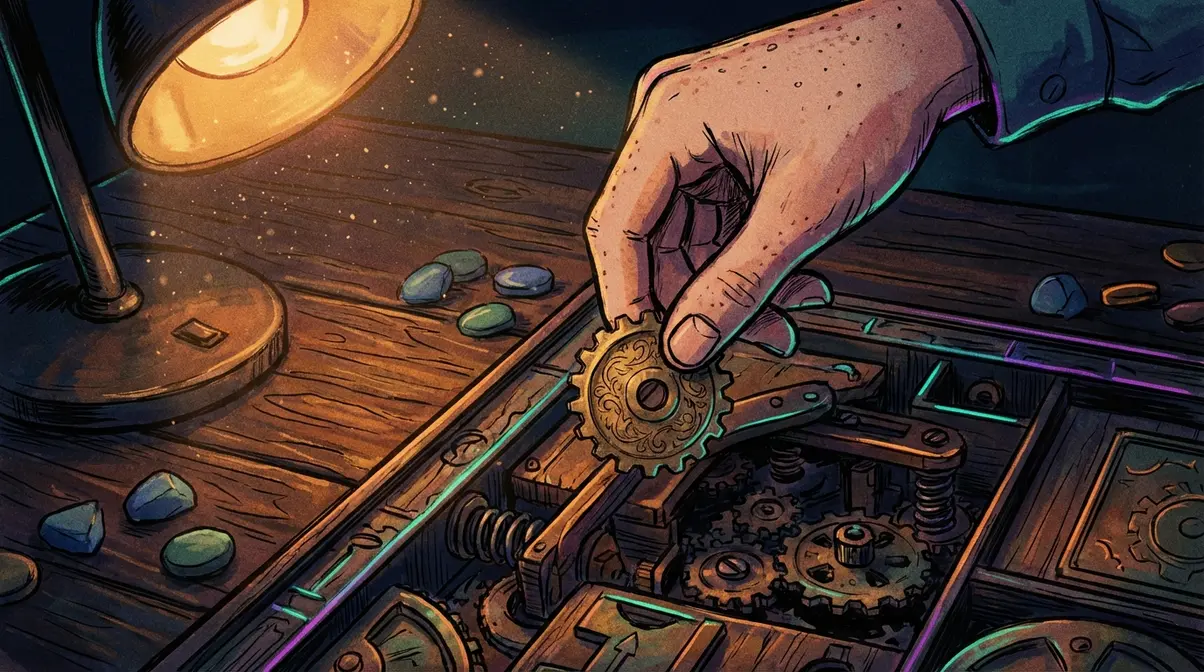

They’re calling it “Analog 2026,” though it’s less a movement than a collective exhale. A cultural correction. After years of battle passes turning leisure into obligation, of live-service games demanding weekly check-ins like some digital overlord, players are remembering something fundamental: games used to end. They used to exist in your hands. They used to let you be present.
The Breaking Point
Digital fatigue didn’t announce itself with fanfare. It accumulated quietly, one notification at a time, one season pass at a time, one “limited-time event” at a time. Enthusiast forums are filled with players articulating what many felt but couldn’t name: modern gaming started feeling like work. When every title you boot up asks for daily engagement, weekly challenges, monthly subscriptions, it stops being your favorite hobby. It becomes a second shift.
The numbers tell part of the story. Two out of three people now report digital eye strain. Screen time studies reveal what our bodies already knew: extended daily use (more than six hours) correlates with reduced gray matter density in areas controlling focus. Our brains, quite literally, were running out of resources to maintain normal function. Neurologists have a term for it: cognitive overload. Gamers have a simpler one: burnout.
But here’s what the data can’t capture: the specific exhaustion of games that never end. The psychological weight of perpetual incompletion. Digital games, especially the live-service variety, exist in a state of permanent becoming. There’s always another season, another update, another reason you can’t just finish and walk away satisfied.
The Weight of the Physical
Board games and tabletop experiences offer something subversive in 2026: they stop. A game concludes. The box closes. You experience what researchers call “completion satisfaction,” that psychological closure digital games deliberately withhold to keep you engaged. It’s not nostalgia driving the board game market to a projected $31.93 billion by 2030. It’s exhaustion with the alternative.
Collectors and enthusiasts often point out the tactile dimension that got lost in the digital migration. Removing cellophane from a new game. The specific weight of dice in your palm. The shuffle and snap of cards. The satisfying click of a game piece moving across a board. These aren’t decorative details; they’re the multisensory engagement that makes experiences stick in memory, that creates what touch researchers call “psychological connection.”
Online gaming communities have been vocal about preferring physical games because they “actually own things they can handle.” This isn’t Luddite resistance. It’s a reasoned response to discovering that many modern “physical” games are incomplete without downloads, that digital libraries can vanish when servers shut down, that ownership became a license agreement nobody read.
The CRT Underground
Perhaps nothing illustrates the tactile resistance better than the CRT revival. Enthusiast groups have been championing these bulky, obsolete monitors with an intensity that baffles casual observers. But talk to anyone who’s experienced modern games on a quality CRT and they’ll describe something close to revelation: zero input lag regardless of refresh rate, motion clarity that high-end LCDs still can’t match, colors that pulse with an analog warmth no pixel grid can replicate.
Fighting game communities never abandoned CRTs. They understood what the broader culture is rediscovering: sometimes older technology isn’t inferior, just different. Optimized for different priorities. When you play a game designed for CRT display on its intended screen, something clicks. The jagged edges smooth out. The pixels blend. The image breathes. Fan forums frequently note that retro games simply look better on the screens they were designed for, and it’s not just nostalgia talking.
Some adventurous players report running modern titles like Dusk and Hotline Miami on vintage CRTs, describing contrasts and saturation that feel “like magic,” backgrounds that pulse “like tsunamis of liquid neon.” The experience suggests we may have optimized for the wrong variables when we abandoned the technology entirely.
The Simplicity Doctrine
Modern games often arrive with complexity as a feature: intricate controls, sprawling open worlds, endless quest logs, crafting systems within progression systems within meta-systems. For many players, this depth is the point. But a growing contingent finds it overwhelming. They’re gravitating toward retro titles not because they’re old, but because they’re focused. One idea, executed well, then finished.
Gaming discussion boards reveal a common frustration: the time cost of modern gaming extends beyond gameplay. System updates. Patches. Day-one downloads. The several minutes of waiting before you can even start playing. Contrast this with cartridge-based systems: plug in, power on, play. The immediacy feels radical in 2026.
This isn’t about difficulty (though that’s its own debate). It’s about intentionality. Analog gaming, whether board games or retro consoles, demands presence. You can’t half-play a tabletop game while scrolling your phone. You can’t automate your turns while watching streaming content. The game asks for your attention and, increasingly, players are grateful for that demand.
The Economics of Presence
Follow the money and you’ll see the shift crystallizing. Board game households spent an average of $179 in 2024. Kickstarter hosted 3,200 successful board game projects that same year, raising over $185 million. In 2021, tabletop games raised more money on the platform than all other categories combined. These aren’t hobbyist numbers. This is a market.
Board game cafes are proliferating, offering commercial spaces for screen-free social engagement. Parks host game meetups. The infrastructure is forming around a simple premise: people will pay for experiences that let them be fully present. Even Vogue has noted that digital detoxing is becoming a status symbol, a luxury good in an attention economy.
Meanwhile, the retro gaming market is recalibrating after its pandemic boom. Collector circles report difficulty moving inventory even below market prices. Why? Affordable emulation devices like Steam Deck and Retroid Pocket let players experience retro libraries without collector premiums. Technologies like Everdrive cartridges enable playing on original hardware without physical media. The market is sorting itself: those who want the authentic tactile experience from those who just want the games.
Not Anti-Technology, But Intentional
The analog movement isn’t about rejecting screens. It’s about reclaiming agency over when and how we engage them. It’s recognizing that not all screen time is equal, that passive scrolling depletes while active engagement energizes, that the problem isn’t technology but its weaponization against our attention.
Some of the most passionate advocates in online communities are the ones who lived entirely digital and found it wanting. Gen Z and Millennials (ages 25-44) represent 57% of board game enthusiasts. These are digital natives choosing analog experiences with full knowledge of the alternative. They’re not nostalgic for an era they barely remember. They’re responding to something the data confirms: extended digital engagement correlates with disrupted sleep, cognitive fatigue, and diminished focus.
The irony, of course, is that much of this analog advocacy happens online. Social media promotes going offline. Digital platforms organize analog meetups. The contradiction isn’t a bug; it’s the negotiation. We’re learning to use technology as a tool rather than letting it use us as content.
The Frequency Returns
What enthusiasts describe, when they talk about the appeal of physical gaming, isn’t really about the objects themselves. It’s about what the objects enable: presence. Connection. The ability to experience something fully, then let it be complete. In a culture of infinite scroll and perpetual engagement, finitude feels transgressive.
The board game market growing at 8.3% annually while social media usage declines tells a story about what people actually want when given the choice. The CRT communities preserving “obsolete” technology because it delivers superior motion clarity tells a story about how progress isn’t always linear. The players abandoning live-service games for experiences with actual endings tells a story about the human need for closure.
Analog 2026 isn’t a trend. It’s a correction. A return to experiences that respect your time, demand your presence, and then release you when they’re done. The games are still there, on the shelf or in the box or on the cartridge. They’ll be there tomorrow. They don’t need you to log in daily. They don’t expire when the servers shut down.
They just wait, patient and physical, for the moment you’re ready to be fully present again.
What analog experiences are calling you back? The games haven’t gone anywhere. They’ve been waiting.


'%3e%3cg id='Final-Copy-2_2_' transform='translate(1275.000000, 200.000000)'%3e%3cpath class='st0' d='M7.4,12.8h6.8l3.1-11.6H7.4C4.2,1.2,1.6,3.8,1.6,7S4.2,12.8,7.4,12.8z'/%3e%3c/g%3e%3c/g%3e%3c/g%3e%3cg id='final---dec.11-2020'%3e%3cg id='_x30_208-our-toggle' transform='translate(-1275.000000, -200.000000)'%3e%3cg id='Final-Copy-2' transform='translate(1275.000000, 200.000000)'%3e%3cpath class='st1' d='M22.6,0H7.4c-3.9,0-7,3.1-7,7s3.1,7,7,7h15.2c3.9,0,7-3.1,7-7S26.4,0,22.6,0z M1.6,7c0-3.2,2.6-5.8,5.8-5.8 h9.9l-3.1,11.6H7.4C4.2,12.8,1.6,10.2,1.6,7z'/%3e%3cpath id='x' class='st2' d='M24.6,4c0.2,0.2,0.2,0.6,0,0.8l0,0L22.5,7l2.2,2.2c0.2,0.2,0.2,0.6,0,0.8c-0.2,0.2-0.6,0.2-0.8,0 l0,0l-2.2-2.2L19.5,10c-0.2,0.2-0.6,0.2-0.8,0c-0.2-0.2-0.2-0.6,0-0.8l0,0L20.8,7l-2.2-2.2c-0.2-0.2-0.2-0.6,0-0.8 c0.2-0.2,0.6-0.2,0.8,0l0,0l2.2,2.2L23.8,4C24,3.8,24.4,3.8,24.6,4z'/%3e%3cpath id='y' class='st3' d='M12.7,4.1c0.2,0.2,0.3,0.6,0.1,0.8l0,0L8.6,9.8C8.5,9.9,8.4,10,8.3,10c-0.2,0.1-0.5,0.1-0.7-0.1l0,0 L5.4,7.7c-0.2-0.2-0.2-0.6,0-0.8c0.2-0.2,0.6-0.2,0.8,0l0,0L8,8.6l3.8-4.5C12,3.9,12.4,3.9,12.7,4.1z'/%3e%3c/g%3e%3c/g%3e%3c/g%3e%3c/g%3e%3c/svg%3e) Your Privacy Choices
Your Privacy Choices