

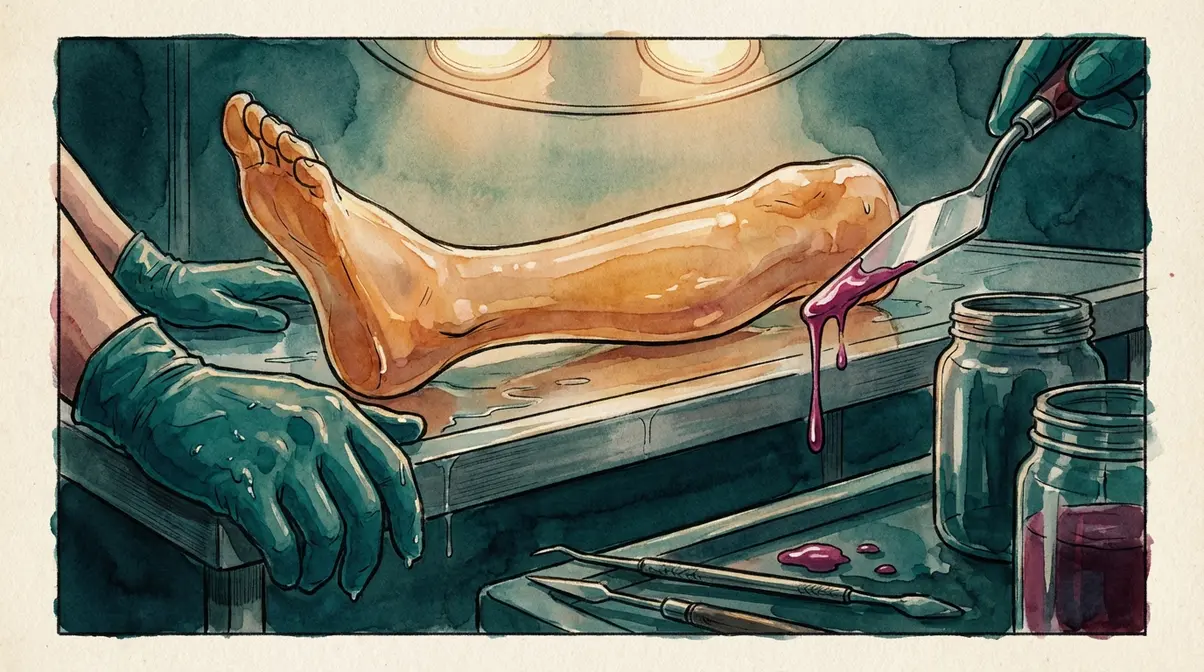

There’s a particular smell to a practical effects workshop. Latex, silicone, fake blood that’s mostly corn syrup. It hits you the moment you walk through the door. For Christien Tinsley and his team, that smell means another day at the office, another chance to push boundaries that most people would rather not think about.
Tinsley’s workshop has become the beating heart of modern practical effects horror. His team’s work on Terrifier 3 represents something beautiful and grotesque: proof that handmade horror still matters. When Damien Leone needed to elevate his franchise from micro-budget madness to theatrical phenomenon, he turned to the man who made Mel Gibson bleed for our sins in The Passion of the Christ.
The Tools of Transformation
Walk through any effects shop and you’ll see the same basic arsenal. Sculpting tools worn smooth from use. Airbrushes that have painted a thousand wounds. Molds that capture every pore, every wrinkle, every imperfection that makes a face human. But in Tinsley’s hands, these tools become instruments of calculated chaos.
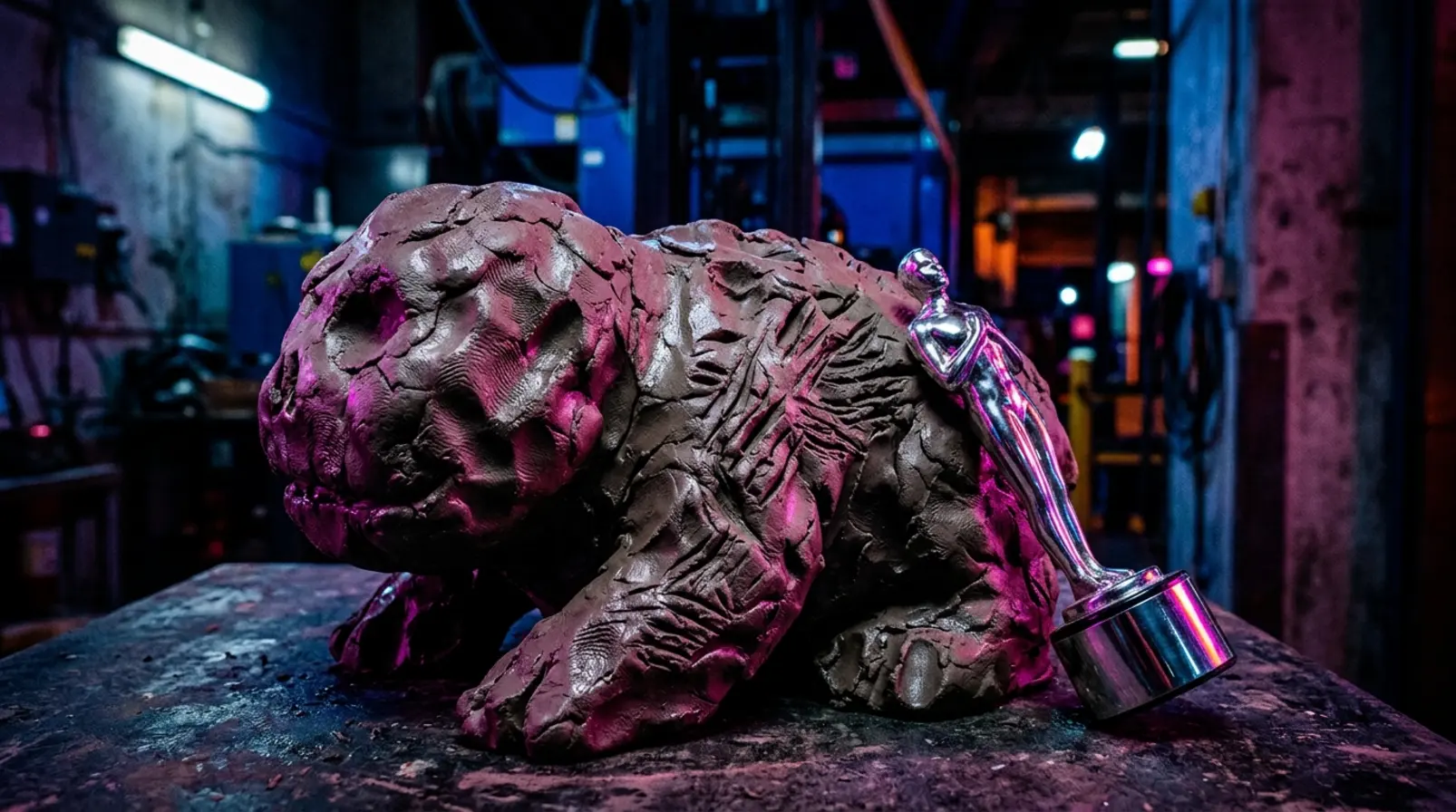
The team builds in layers. First comes the lifecast, that eerie negative space where a person’s features become a hollow void. Then the sculpting begins. Clay builds up where flesh will later tear away. Each prosthetic piece gets its own mold, its own careful attention. The silicone pours like honey, curing into something that will fool your eyes even as your brain screams that it can’t be real.
“But I had an incredible team now — Christien Tinsley’s special makeup effects team. They took that huge burden off of my shoulders,” Leone explained about working on Terrifier 3. The director, who handled effects himself on the first two films, could finally focus on storytelling while masters of the craft handled the carnage.
The Prosthetic Symphony
Modern prosthetics aren’t your grandfather’s rubber masks. Tinsley’s workshop uses platinum silicone that moves like skin, breathes like skin, bleeds like skin when you need it to. The material costs more than most people’s rent, but the results speak for themselves. When Art the Clown does his worst in Terrifier 3, audiences don’t just see violence. They feel it.
Each appliance gets painted by hand. Veins traced with the finest brushes. Capillaries stippled until they look ready to burst. The coloring happens in stages, building from undertones to surface details. It’s the kind of work that takes hours for seconds of screen time, but those seconds make people walk out of theaters in France and the UK.
The team keeps racks of backup pieces for every effect. When you’re shooting a kill scene, you get one take before the prosthetic is destroyed. Miss your mark? Hope you’ve got spares. Tinsley’s crew typically makes five times what they think they’ll need. On Terrifier 3, they still ran short.
Beyond the Blood
What separates great practical effects from mere gore comes down to understanding physics. Real wounds don’t just appear. They have weight, momentum, consequence. When Gabriel Regentin talks about the “smashing performance” in modern horror being “practical, done with several prosthetics in varying degrees of distress,” he’s describing an art form that demands both technical precision and raw creativity.
Tinsley’s workshop builds rigs that sell the impossible. Pneumatic systems that make chest cavities breathe their last breath. Tubing networks that pump blood at arterial pressure. Mechanical understructures that let faces peel away in ways that would make Tom Savini proud. It’s engineering married to artistry, all in service of making you believe the unbelievable.
The best effects combine multiple techniques. A prosthetic piece augmented with careful puppeteering. Blood tubes hidden in hair. Magnets that let pieces detach at precisely the right moment. Leone chose Panavision anamorphic lenses for Terrifier 3 specifically to capture these details in that “vintage John Carpenter movie” style. Every effect had to work from multiple angles, under harsh lighting, in extended takes.
The Weight of Legacy
Tinsley carries forward a tradition that stretches back through KNB EFX Group, through Savini, through Dick Smith. These aren’t just techniques passed down. They’re philosophies about making the impossible tangible. About respecting the audience enough to give them something real to react to.
When online communities debate practical versus digital effects, they’re really talking about presence. Bad practical effects might look fake, but they exist. They have mass. Actors react to them differently than tennis balls on sticks. Directors frame them differently. Audiences process them differently. That physical reality changes everything.
The math tells its own story. Terrifier 2 cost $250,000 and earned $15 million. Terrifier 3 jumped to a $2 million budget, with much of that going to Tinsley’s team. The investment paid off when the film demolished Joker: Folie à Deux at the box office. Turns out audiences still hunger for handmade horror.
Tomorrow’s Nightmares
Greg Nicotero’s new Shudder series Guts & Glory promises to pull back the curtain on this world. “If you know horror, you know the innovation and creativity that Greg Nicotero brings to the genre,” according to Rob Fox at AMC Networks. But the real revelation might be showing audiences just how much craft goes into every severed limb, every impossible transformation.
The tools evolve but the mission remains constant. Make it real. Make it hurt. Make it matter. Whether it’s Tinsley’s team building bodies for Art the Clown to destroy or the next generation learning to mix their own blood recipes, practical effects endure because they offer something digital can’t: proof that someone cared enough to build your nightmares by hand.
In workshops around the world, artists heat up their sculpting tools and prepare for another day of making the impossible real. The smell of latex fills the air. Somewhere, a new monster takes shape. And in theaters, audiences still flinch at horrors they can almost touch.
'%3e%3cg id='Final-Copy-2_2_' transform='translate(1275.000000, 200.000000)'%3e%3cpath class='st0' d='M7.4,12.8h6.8l3.1-11.6H7.4C4.2,1.2,1.6,3.8,1.6,7S4.2,12.8,7.4,12.8z'/%3e%3c/g%3e%3c/g%3e%3c/g%3e%3cg id='final---dec.11-2020'%3e%3cg id='_x30_208-our-toggle' transform='translate(-1275.000000, -200.000000)'%3e%3cg id='Final-Copy-2' transform='translate(1275.000000, 200.000000)'%3e%3cpath class='st1' d='M22.6,0H7.4c-3.9,0-7,3.1-7,7s3.1,7,7,7h15.2c3.9,0,7-3.1,7-7S26.4,0,22.6,0z M1.6,7c0-3.2,2.6-5.8,5.8-5.8 h9.9l-3.1,11.6H7.4C4.2,12.8,1.6,10.2,1.6,7z'/%3e%3cpath id='x' class='st2' d='M24.6,4c0.2,0.2,0.2,0.6,0,0.8l0,0L22.5,7l2.2,2.2c0.2,0.2,0.2,0.6,0,0.8c-0.2,0.2-0.6,0.2-0.8,0 l0,0l-2.2-2.2L19.5,10c-0.2,0.2-0.6,0.2-0.8,0c-0.2-0.2-0.2-0.6,0-0.8l0,0L20.8,7l-2.2-2.2c-0.2-0.2-0.2-0.6,0-0.8 c0.2-0.2,0.6-0.2,0.8,0l0,0l2.2,2.2L23.8,4C24,3.8,24.4,3.8,24.6,4z'/%3e%3cpath id='y' class='st3' d='M12.7,4.1c0.2,0.2,0.3,0.6,0.1,0.8l0,0L8.6,9.8C8.5,9.9,8.4,10,8.3,10c-0.2,0.1-0.5,0.1-0.7-0.1l0,0 L5.4,7.7c-0.2-0.2-0.2-0.6,0-0.8c0.2-0.2,0.6-0.2,0.8,0l0,0L8,8.6l3.8-4.5C12,3.9,12.4,3.9,12.7,4.1z'/%3e%3c/g%3e%3c/g%3e%3c/g%3e%3c/g%3e%3c/svg%3e) Your Privacy Choices
Your Privacy Choices