


Side A: The Maquette in the Palm of His Hand
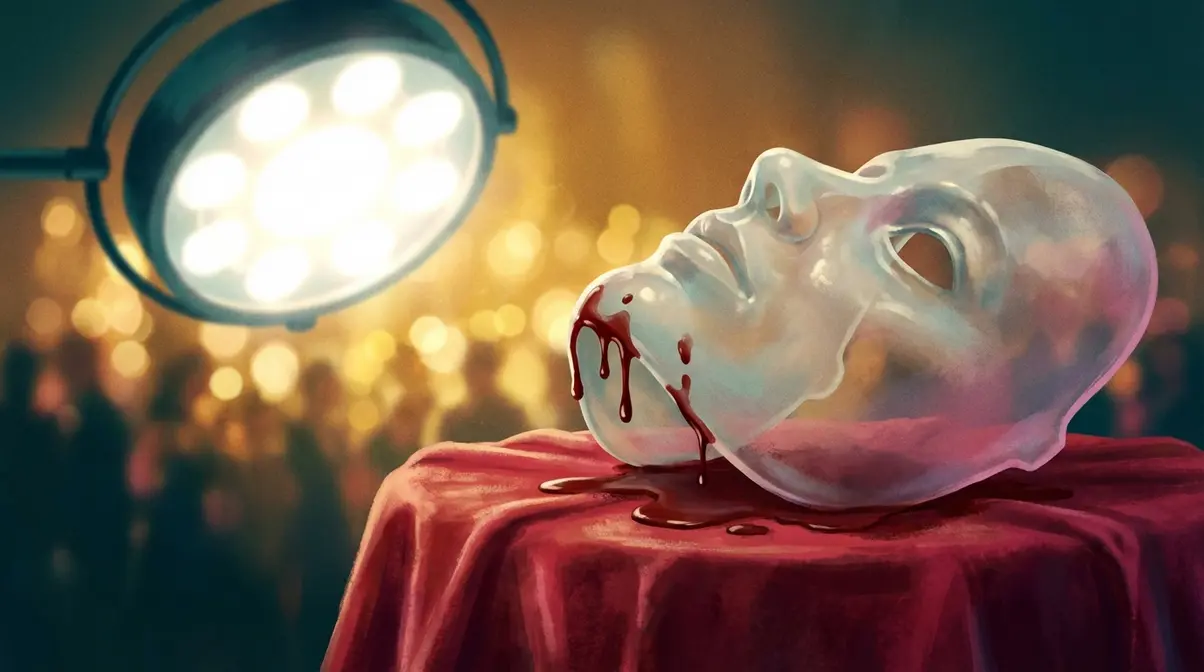
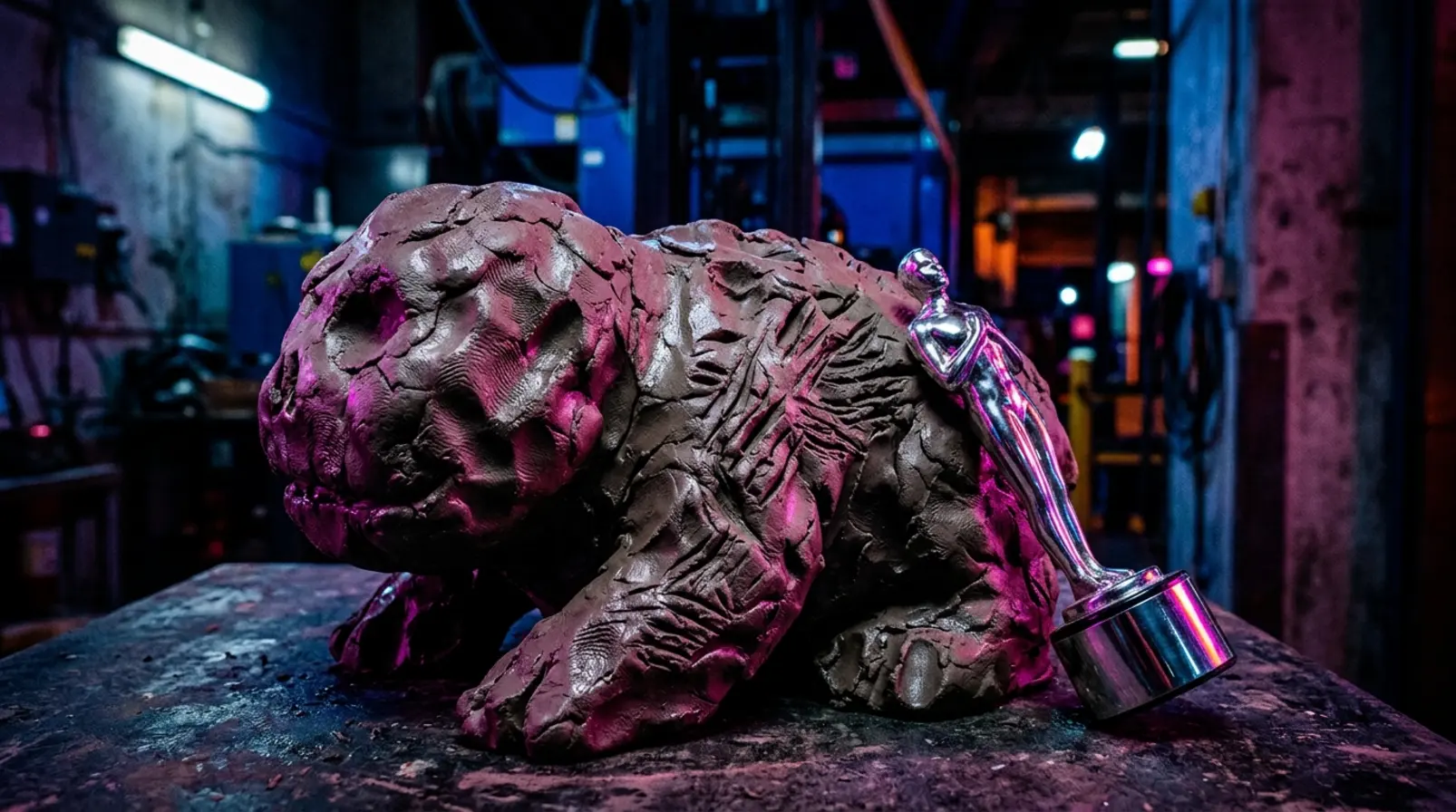
Before any of it went before cameras, before Cannes gasped and the Academy voted, Monstro Elisasue existed as a small plasticine figure. Before charming audiences around the world, Monstro Elisasue sat in the palm of Pierre-Olivier Persin’s hand. Working nights amidst a busy shoot, he had sculpted an old-school plasticine maquette to show writer-director Coralie Fargeat. That little sculpture, lopsided and grotesque and strangely tender, was the audition tape. It was also a thesis statement for what body horror could still become if you trusted the hand over the render farm.
Fargeat saw something in his pitch that was missing from other SFX companies. Where they had created a more “masculine” monster, Persin had found a tragic beauty in the gruesome Demi Moore/Margaret Qualley hybrid. That distinction matters. It’s the hinge on which the entire debate swings. Is Persin a revolutionary, or a master restorer? Did he redefine body horror, or did he simply remind a forgetful industry what the genre always demanded?
The Man from Aulnay-sous-Bois
The biography reads like liner notes from a beloved horror compilation. As a kid, growing up in the Parisian suburb of Aulnay-sous-Bois, he was given carte blanche when it came to movies: Gremlins (1984), The Fly (1986), Raiders of the Lost Ark (1981), Nightmare on Elm Street (1984). He spent all his weekends, nights, and holidays sculpting monsters in his bedroom and shooting Super 8 shorts of them in the forest with his friends. At fourteen, he received latex and plasticine for Christmas. Some kids get a drum kit. Persin got the tools to build nightmares.
He started in 1994, meaning he’s been at this for over thirty years. Barring projects like World War Z and Game of Thrones, Persin has worked primarily on French dramas, which demand realism above all else. That’s the quiet part. Three decades of invisible work. Aging faces, period wounds, the textures nobody applauds. Then The Substance arrived and let him off the leash.
Side B: The Numbers That Scream
Here’s where the argument gets loud. Fargeat enlisted prosthetics makeup designer Pierre Olivier Persin to craft the shocking transformations. The Oscar nominee and his team largely eschewed CGI, instead relying on silicone and old-school analog tricks of the trade to conjure freakish incarnations of the film’s two stars. On a budget that would barely cover a superhero film’s catering, Persin’s crew built something that made seasoned Cannes attendees flee their seats and then stand for over eleven minutes when the credits rolled.
From designing the concept art to the final effects, Persin worked on The Substance for nearly a year. At worst, he had a routine of 3 am start times and up to 22-hour days, driving between Workshop 1 (at his studio), Workshop 2 (at a unit he had to rent due to the scale of the job), and the set. Over the 11 months, the artist was only off for two weeks because he caught COVID. This is not the profile of an innovator sitting at a terminal. This is a craftsman’s marathon, run in silicone and sweat.
The most challenging element was creating “Monstro Elisasue.” Coralie wanted a “feminine” monster; like an elephant but wearing ballet shoes. Something tragic and monstrous, yet graceful. So it took at least three or four months to find the right balance. When people talk about Persin redefining the genre, this is the evidence they cite: not just the spectacle of the creature, but its emotional register. Monstro is pitiable. You feel for her even as your stomach turns.
The Counterargument: Restoration, Not Revolution
Not everyone buys the “redefined” narrative. In horror circles and film forums, a vocal contingent insists Persin’s achievement is better understood as a homecoming. Fargeat knew from the very beginning that she wanted effects to be practical. First, because it’s a film about women’s bodies, literal flesh and bones, so why would you use CGI? Most importantly, she wanted to be able to shoot elements as she liked, play with framings, and put her hands into real things. The argument goes: this isn’t new. Rob Bottin did it in 1982. Chris Walas did it in 1986. Persin is the heir, not the inventor.
There’s something to that. Fargeat’s practical effects-first approach on The Substance has reignited the physical vs. digital debate among SFX obsessives. But for the VFX supervisor, the film is a testament to how on-set and computer designs can seamlessly collaborate. The film isn’t even purely practical. Digital work enhanced the final sequences. The purity narrative is partly myth.
And then there’s the sharpest dissent about the film itself. At the Cannes 2024 premiere, one critic called it “the most misogynistic, self-hating and cynical garbage one could ever conjure.” Others questioned whether the gore served the satire or buried it. If the body horror doesn’t land thematically, does the craftsmanship matter?
My Take: Both Sides Are Right, and Neither Goes Far Enough
I’ve listened to this record from both sides. Here’s what I hear. Persin didn’t invent practical body horror. He didn’t need to. What he did was prove, to an industry that had largely abandoned analog creature work for pixels, that silicone and latex and puppet rigs could still command the biggest stage in world cinema. Pierre-Olivier Persin, Stéphanie Guillon, and Marilyne Scarselli won the Oscar for best makeup and hairstyling for The Substance. This was the first nomination and win for the trio. An Oscar, a BAFTA, a Critics’ Choice. For prosthetics. For glue and foam and paint applied by hand.
The word “redefined” gets thrown around too loosely. What Persin actually did was more specific and, I’d argue, more important. He proved the economic viability of practical effects at a moment when the industry assumed they were obsolete. Practical effects, prosthetics, and makeup accounted for 70-80% of the final film. On a modest budget, with a fifteen-person crew, working out of a rented workshop in Montreuil. That’s not a revolution. That’s a proof of concept so convincing it changed what gets greenlit next.
What Comes Next
The proof is already bearing fruit. If you’re making a body horror movie right now, bringing a makeup effects artist from The Substance on board your team is probably the best possible decision. Marion Le Corroller is directing the upcoming Species. In the film, “a young medical student working at an ER witnesses a new virus spreading among young patients, a mysterious mutation among the new generation that starts affecting her.” Persin is handling the makeup effects. The sales agents are already invoking Fargeat and Julia Ducournau in the same breath.
The 79th annual Cannes Film Festival will take place from 12 to 23 May 2026, with Park Chan-wook serving as jury president. The official selection lineup is expected to be released on 9 April 2026. Whether Species or any other Persin project lands on the Croisette this year remains unknown. But the pipeline of French body horror that The Substance uncorked is real and flowing. The producers are “very excited to start talking about this pulsating body horror project in Cannes” and “totally see Marion Le Corroller walking in the footsteps of Coralie Fargeat and Julia Ducournau.”
So did Pierre-Olivier Persin redefine body horror? No. He did something harder. He made the rest of the industry remember what body horror always was, and then he handed them no excuse not to do it that way again. The maquette is still in his hands. The genre just finally looked down and noticed.
Further reading: Phantasmag’s in-depth interview with Persin, The Credits’ technical breakdown, and Bloody Disgusting on the Species announcement.
'%3e%3cg id='Final-Copy-2_2_' transform='translate(1275.000000, 200.000000)'%3e%3cpath class='st0' d='M7.4,12.8h6.8l3.1-11.6H7.4C4.2,1.2,1.6,3.8,1.6,7S4.2,12.8,7.4,12.8z'/%3e%3c/g%3e%3c/g%3e%3c/g%3e%3cg id='final---dec.11-2020'%3e%3cg id='_x30_208-our-toggle' transform='translate(-1275.000000, -200.000000)'%3e%3cg id='Final-Copy-2' transform='translate(1275.000000, 200.000000)'%3e%3cpath class='st1' d='M22.6,0H7.4c-3.9,0-7,3.1-7,7s3.1,7,7,7h15.2c3.9,0,7-3.1,7-7S26.4,0,22.6,0z M1.6,7c0-3.2,2.6-5.8,5.8-5.8 h9.9l-3.1,11.6H7.4C4.2,12.8,1.6,10.2,1.6,7z'/%3e%3cpath id='x' class='st2' d='M24.6,4c0.2,0.2,0.2,0.6,0,0.8l0,0L22.5,7l2.2,2.2c0.2,0.2,0.2,0.6,0,0.8c-0.2,0.2-0.6,0.2-0.8,0 l0,0l-2.2-2.2L19.5,10c-0.2,0.2-0.6,0.2-0.8,0c-0.2-0.2-0.2-0.6,0-0.8l0,0L20.8,7l-2.2-2.2c-0.2-0.2-0.2-0.6,0-0.8 c0.2-0.2,0.6-0.2,0.8,0l0,0l2.2,2.2L23.8,4C24,3.8,24.4,3.8,24.6,4z'/%3e%3cpath id='y' class='st3' d='M12.7,4.1c0.2,0.2,0.3,0.6,0.1,0.8l0,0L8.6,9.8C8.5,9.9,8.4,10,8.3,10c-0.2,0.1-0.5,0.1-0.7-0.1l0,0 L5.4,7.7c-0.2-0.2-0.2-0.6,0-0.8c0.2-0.2,0.6-0.2,0.8,0l0,0L8,8.6l3.8-4.5C12,3.9,12.4,3.9,12.7,4.1z'/%3e%3c/g%3e%3c/g%3e%3c/g%3e%3c/g%3e%3c/svg%3e) Your Privacy Choices
Your Privacy Choices