

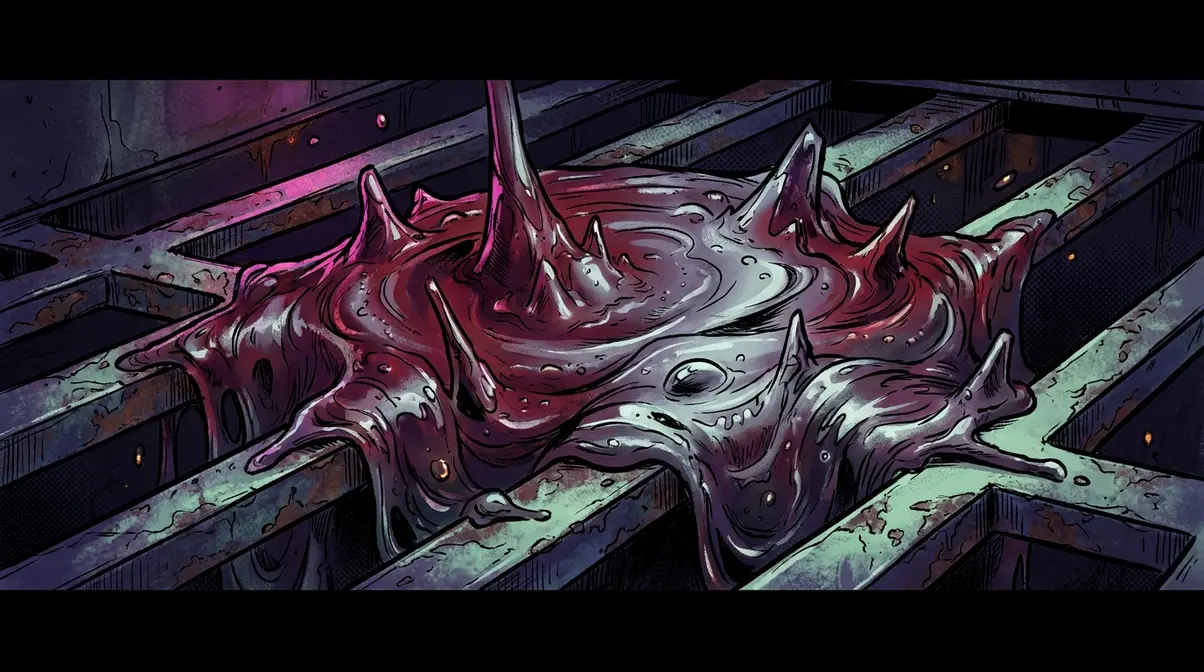
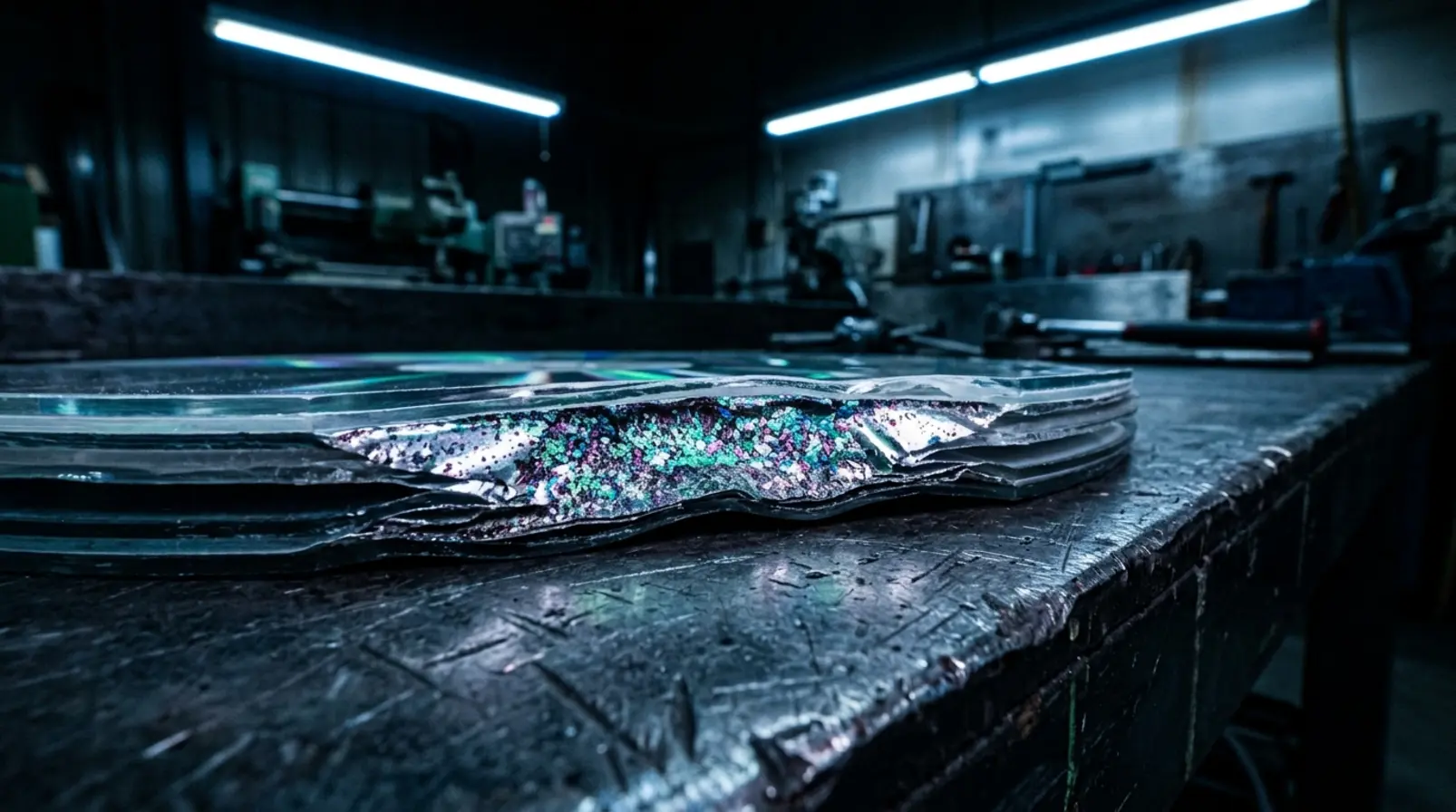
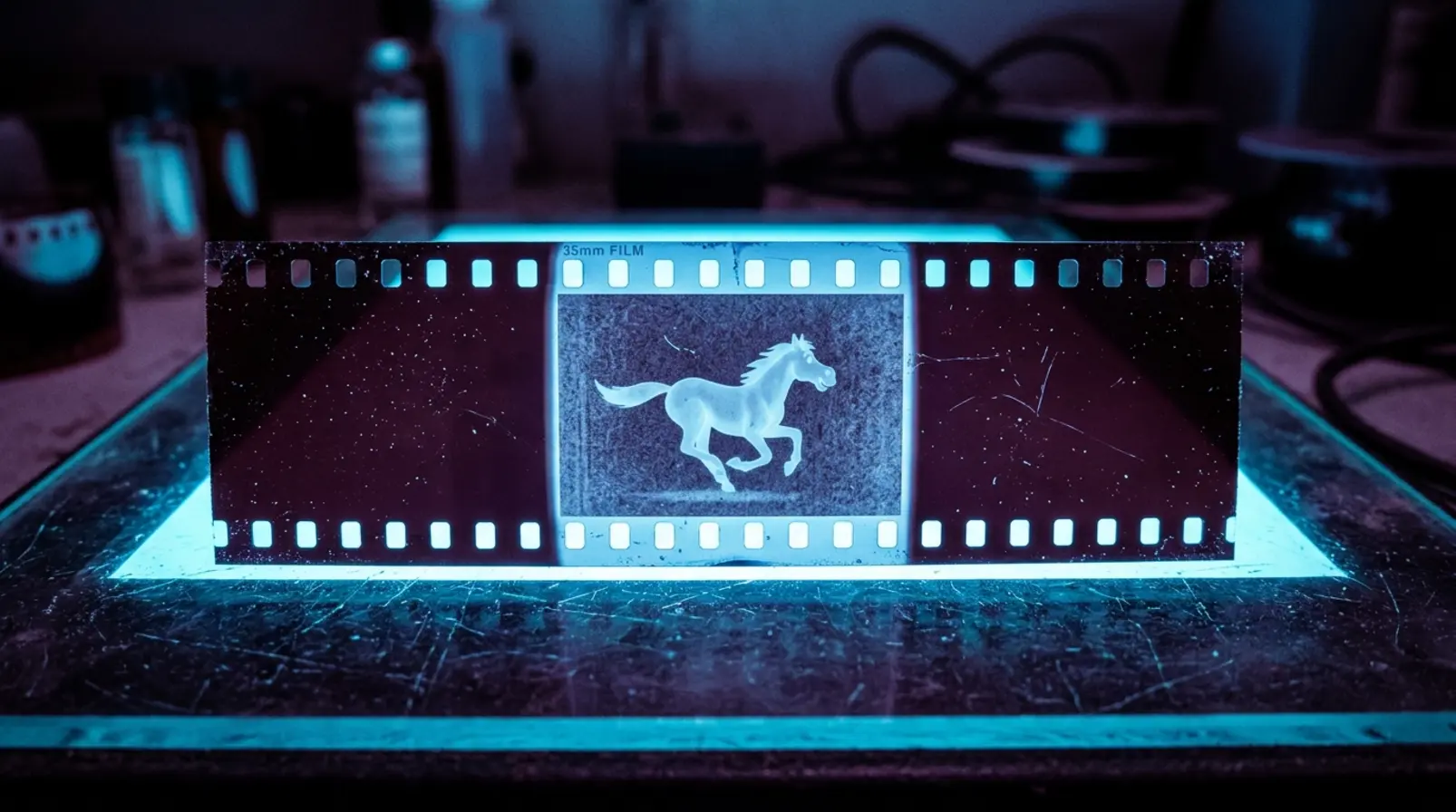
Here is a term nobody asked for but everyone who has watched Mandy at 2 a.m. already understands: non-Newtonian gore. I’m coining it now. It describes practical blood and viscera that refuses to obey physics. Blood too thick, too luminous, too slow. Viscera that moves like hot wax or cooling lava. Flesh that tears like wet canvas. It’s the opposite of the clean, pixel-precise digital splatter that dominates modern horror. It is gore as oil painting. And the two names most responsible for keeping it alive are Panos Cosmatos and the artisans at Spectral Motion.
The Kid in the Video Store
As a child growing up in Victoria, British Columbia, Cosmatos frequented a video store called Video Attic, where he would browse the horror section looking at box covers of films he wasn’t allowed to watch, imagining his own versions of what those movies might be. That’s a fact. And it explains everything about his filmmaking. One of his stated goals was “to create a film that is a sort of imagining of an old film that doesn’t exist.” I’d argue that single sentence is the skeleton key to his entire body of work. His movies don’t recreate the ’80s. They recreate a hallucination of the ’80s, filtered through grief and sensory overload and the lurid promise of a VHS sleeve you were never allowed to flip over.
His debut feature, Beyond the Black Rainbow (2010), was financed by DVD residuals from Tombstone (1993), directed by his father, George P. Cosmatos. The elder Cosmatos’s credits included Rambo: First Blood Part II and Cobra , and after both parents died, Panos started therapy and decided to make a film as part of the healing process. As he told Film4, he has described Beyond the Black Rainbow as expressing “a very abstract and metaphorical grief,” while Mandy became its antidote, a more volcanic eruption of those emotions after holding them in for so long.
In my view, this biographical thread is exactly why Cosmatos’s nostalgia feels earned rather than decorative. His films aren’t mood boards. They’re exorcisms.
How Gore Becomes Sculpture
Let’s talk about the blood. In Mandy (2018), Cosmatos confirmed to Starburst Magazine that the film relied on “mostly practical effects, absolutely,” describing one standout scene as “an armature with cables attached to it inside of a sleeping bag that was puppeted.” There’s no attempt at photorealism here. The violence in Mandy operates on dream logic. Heads don’t just split open; they bloom. To me, the gore in Cosmatos’s work functions more like the saturated color fields of a Rothko than like a forensics photograph.
The film’s cinematography, by Benjamin Loeb, employed ARRI Alexa cameras paired with Panavision Primo anamorphic lenses, and color grading by Peter Bernaers amplified a psychedelic palette dominated by neon reds, blues, and purples. Scholars have situated Cosmatos within the evolution of giallo aesthetics, noting how he draws from Mario Bava and Dario Argento, employing saturated colors and low-key lighting to create unreal environments. When blood hits the screen in a Cosmatos film, it is already part of this chromatic system. It doesn’t just spill. It belongs.
This is what I mean by non-Newtonian gore. In physics, a non-Newtonian fluid changes its viscosity under stress. Cornstarch and water. Ketchup. Oobleck. The gore in these films does something analogous: it changes its behavior depending on the emotional pressure of the scene. It thickens when grief demands weight. It glows when the frame calls for ritual. It refuses to act like blood because it was never trying to be blood. It was always trying to be feeling.
The Glendale Workshop Where Monsters Breathe
Right outside of Los Angeles in Glendale, California, Spectral Motion has brought to life vampires, demons, and alien criminals for films including the first two Men in Black films, Blade II, and Hellboy. Founded in 1994 by Mike Elizalde and his wife Mary , the studio grew out of Elizalde’s years apprenticing at the industry’s most storied workshops. He worked at Rick Baker’s Cinovation Studios and Stan Winston Studio, learning to become an animatronics designer, puppeteer, and prosthetic makeup artist.
Elizalde’s philosophy is blunt and specific. As he told CBR: “We are always looking for ways to simulate the interruption and even the defiance of the laws of nature with our effects.” Read that again. The defiance of the laws of nature. That’s not a man chasing realism. That’s a man chasing awe. And it’s a philosophy that maps perfectly onto the Cosmatos aesthetic, where the physical world bends under the weight of emotion and hallucination.
Spectral Motion’s work on James Wan’s Malignant (2021) demonstrated this hybrid approach beautifully, combining practical creature effects with ILM’s digital augmentation for what befores & afters called “some of the most seamless mixing of in-camera practical effects and digital augmentation.” Their Demogorgon for Stranger Things is another landmark. The throughline across Elizalde’s career is consistent: physical presence first, digital polish second.
Your Field Guide to Non-Newtonian Gore
If this aesthetic speaks to you, here’s where to go deeper:
- Start with Mandy (2018). It premiered at Sundance on January 19, 2018, and received a limited theatrical release on September 14, 2018, via RLJE Films. Produced by SpectreVision, XYZ Films, Umedia, and Legion M on a $6 million budget. The second half is a masterclass in expressive violence. Seek out the Blu-ray for the color fidelity alone.
- Then go backward to Beyond the Black Rainbow (2010). Slower, stranger, more hermetic. Cosmatos cited Michael Mann’s Manhunter and The Keep as color influences, with the blue-hue “night mode” inspired by the freezer room scene in Carpenter’s Dark Star. It reads like a memory dissolving in acid.
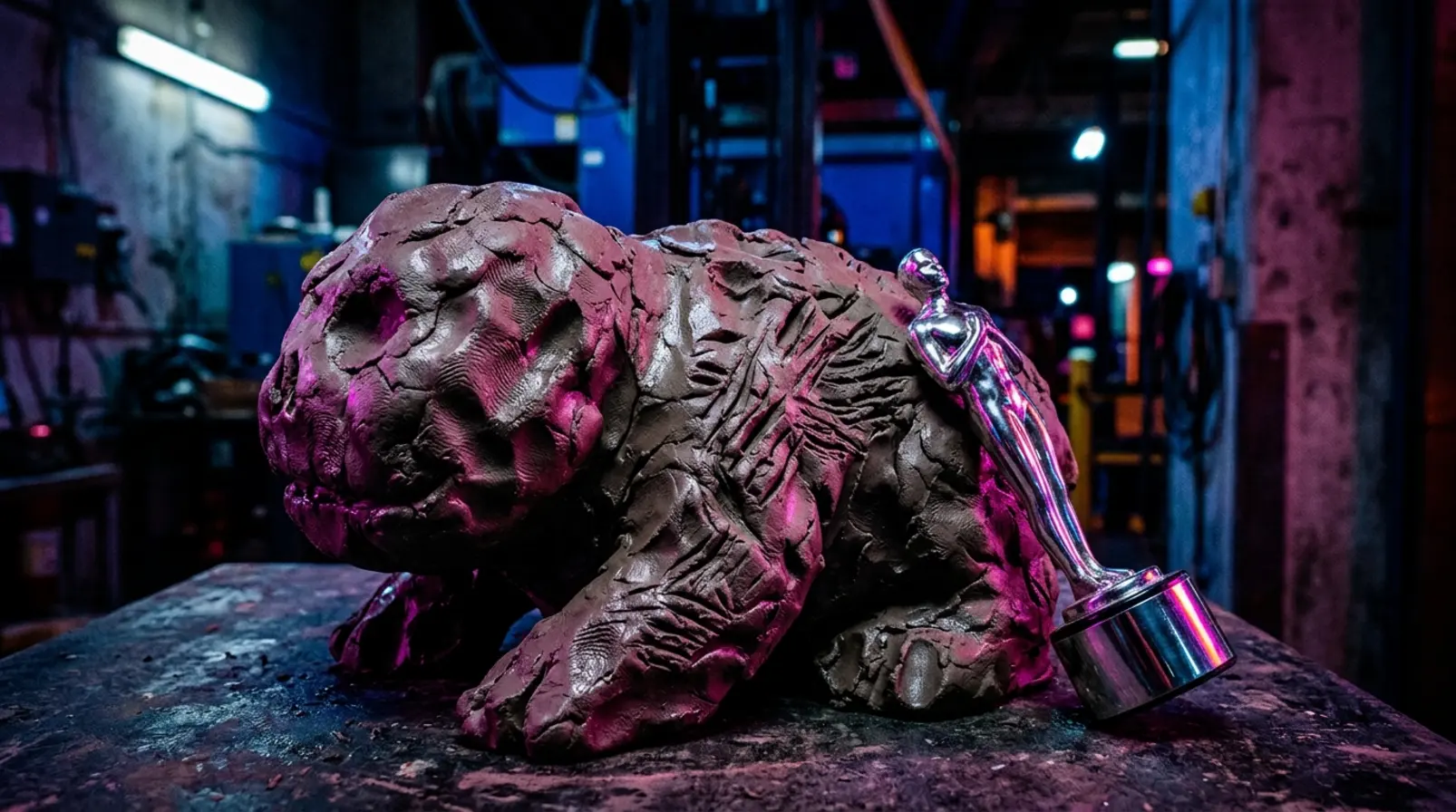
- Study Spectral Motion’s Hellboy work. Elizalde won a Saturn Award for Best Makeup for Hellboy at the 31st Saturn Awards and the studio’s creature designs for del Toro remain some of the most expressive practical work of the century so far.
- Watch The Viewing (2022), Cosmatos’s episode of Guillermo del Toro’s Cabinet of Curiosities on Netflix. It’s compact and vicious and arguably the best single episode of that anthology.
- Avoid mistaking this for mere retro pastiche. Cosmatos draws from Argento and Bava, yes. But the grief underneath is entirely his own. Style without biography is cosplay.
What’s Coming Next
The pipeline is loaded. Flesh of the Gods, Cosmatos’s ’80s-set vampire thriller, now has Wagner Moura starring opposite Kristen Stewart, with A24 distributing in the U.S. Moura takes over the lead from Oscar Isaac, who exited due to a scheduling conflict. The film follows a married couple in glittering ’80s Los Angeles who descend into “a glamorous, surrealistic world of hedonism, thrills and violence.” The script comes from Andrew Kevin Walker, the writer behind Se7en.
My take: Walker’s cold, procedural darkness combined with Cosmatos’s molten expressionism could be genuinely dangerous. As The Playlist noted, Cosmatos has built “a reputation for turning genre into something tactile and hypnotic,” and a vampire film set in the neon rot of Reagan-era L.A. is, arguably, the perfect vehicle for non-Newtonian gore to go mainstream.
Then there’s Nekrokosm, another A24 project still in development years after its announcement. I’d argue that’s fine. Cosmatos has released exactly two features and one anthology episode since 2010. The glacial pace is the point. These aren’t movies assembled from market research. They’re secreted, slowly, like resin.
Why This Matters
There’s a reason practical gore keeps resurfacing in the work of directors who actually care about texture. CGI blood is information. Practical blood is material. It catches light wrong. It pools at uneven rates. It stains the actor’s hands in ways that change their performance. As Elizalde has noted, Spectral Motion’s effects “present a physical presence with all of the tactile qualities which that entails,” building on techniques established by Rick Baker and others.
But Cosmatos takes it further. In his hands, practical effects aren’t deployed for realism. They’re deployed for unrealism. For that uncanny middle zone where something is too physical to be a dream and too strange to be waking life. That’s the non-Newtonian zone. That’s where his films live. And if Flesh of the Gods delivers on its promise, it’s where a lot more filmmakers are going to want to move in.
'%3e%3cg id='Final-Copy-2_2_' transform='translate(1275.000000, 200.000000)'%3e%3cpath class='st0' d='M7.4,12.8h6.8l3.1-11.6H7.4C4.2,1.2,1.6,3.8,1.6,7S4.2,12.8,7.4,12.8z'/%3e%3c/g%3e%3c/g%3e%3c/g%3e%3cg id='final---dec.11-2020'%3e%3cg id='_x30_208-our-toggle' transform='translate(-1275.000000, -200.000000)'%3e%3cg id='Final-Copy-2' transform='translate(1275.000000, 200.000000)'%3e%3cpath class='st1' d='M22.6,0H7.4c-3.9,0-7,3.1-7,7s3.1,7,7,7h15.2c3.9,0,7-3.1,7-7S26.4,0,22.6,0z M1.6,7c0-3.2,2.6-5.8,5.8-5.8 h9.9l-3.1,11.6H7.4C4.2,12.8,1.6,10.2,1.6,7z'/%3e%3cpath id='x' class='st2' d='M24.6,4c0.2,0.2,0.2,0.6,0,0.8l0,0L22.5,7l2.2,2.2c0.2,0.2,0.2,0.6,0,0.8c-0.2,0.2-0.6,0.2-0.8,0 l0,0l-2.2-2.2L19.5,10c-0.2,0.2-0.6,0.2-0.8,0c-0.2-0.2-0.2-0.6,0-0.8l0,0L20.8,7l-2.2-2.2c-0.2-0.2-0.2-0.6,0-0.8 c0.2-0.2,0.6-0.2,0.8,0l0,0l2.2,2.2L23.8,4C24,3.8,24.4,3.8,24.6,4z'/%3e%3cpath id='y' class='st3' d='M12.7,4.1c0.2,0.2,0.3,0.6,0.1,0.8l0,0L8.6,9.8C8.5,9.9,8.4,10,8.3,10c-0.2,0.1-0.5,0.1-0.7-0.1l0,0 L5.4,7.7c-0.2-0.2-0.2-0.6,0-0.8c0.2-0.2,0.6-0.2,0.8,0l0,0L8,8.6l3.8-4.5C12,3.9,12.4,3.9,12.7,4.1z'/%3e%3c/g%3e%3c/g%3e%3c/g%3e%3c/g%3e%3c/svg%3e) Your Privacy Choices
Your Privacy Choices