

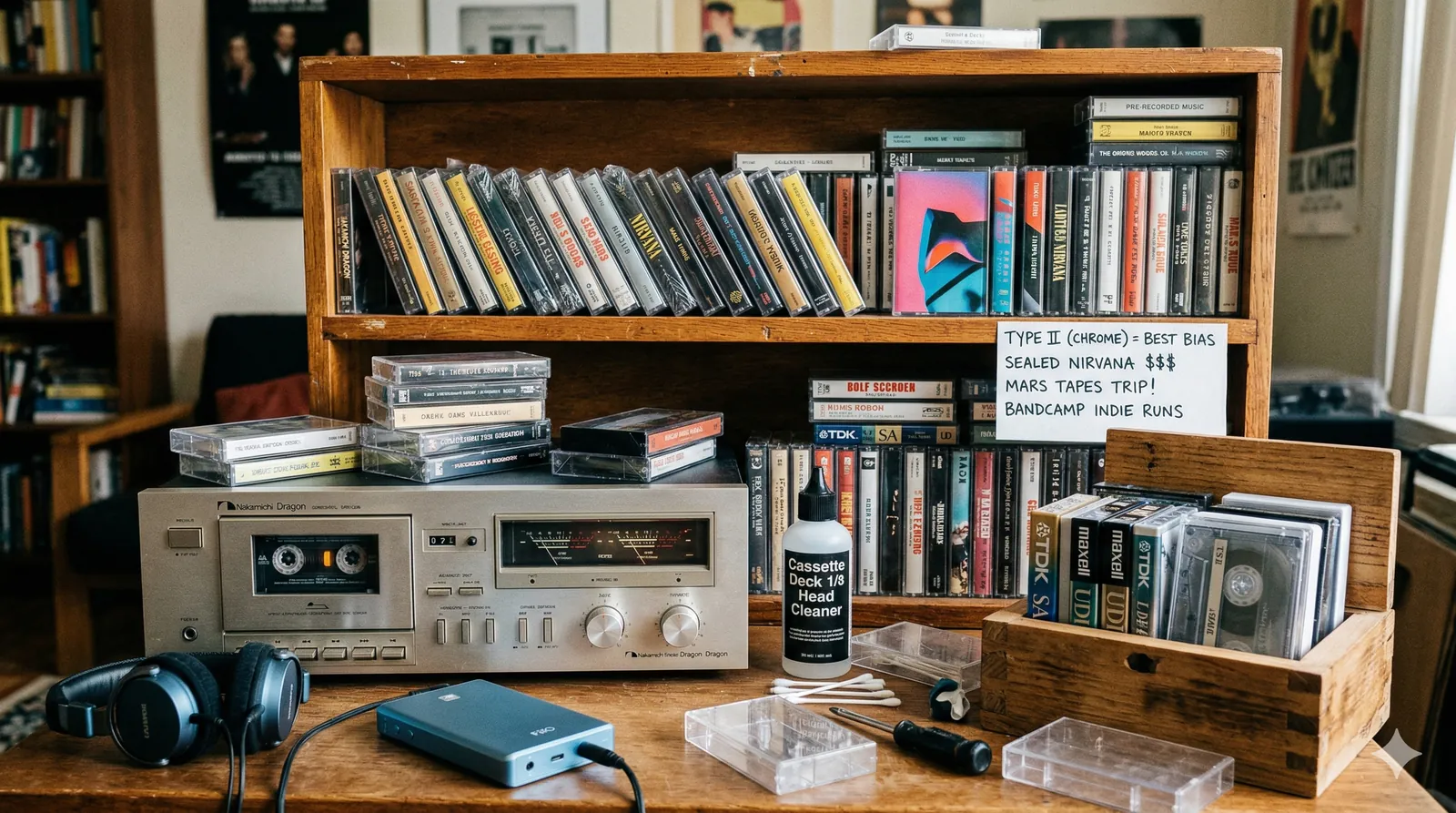

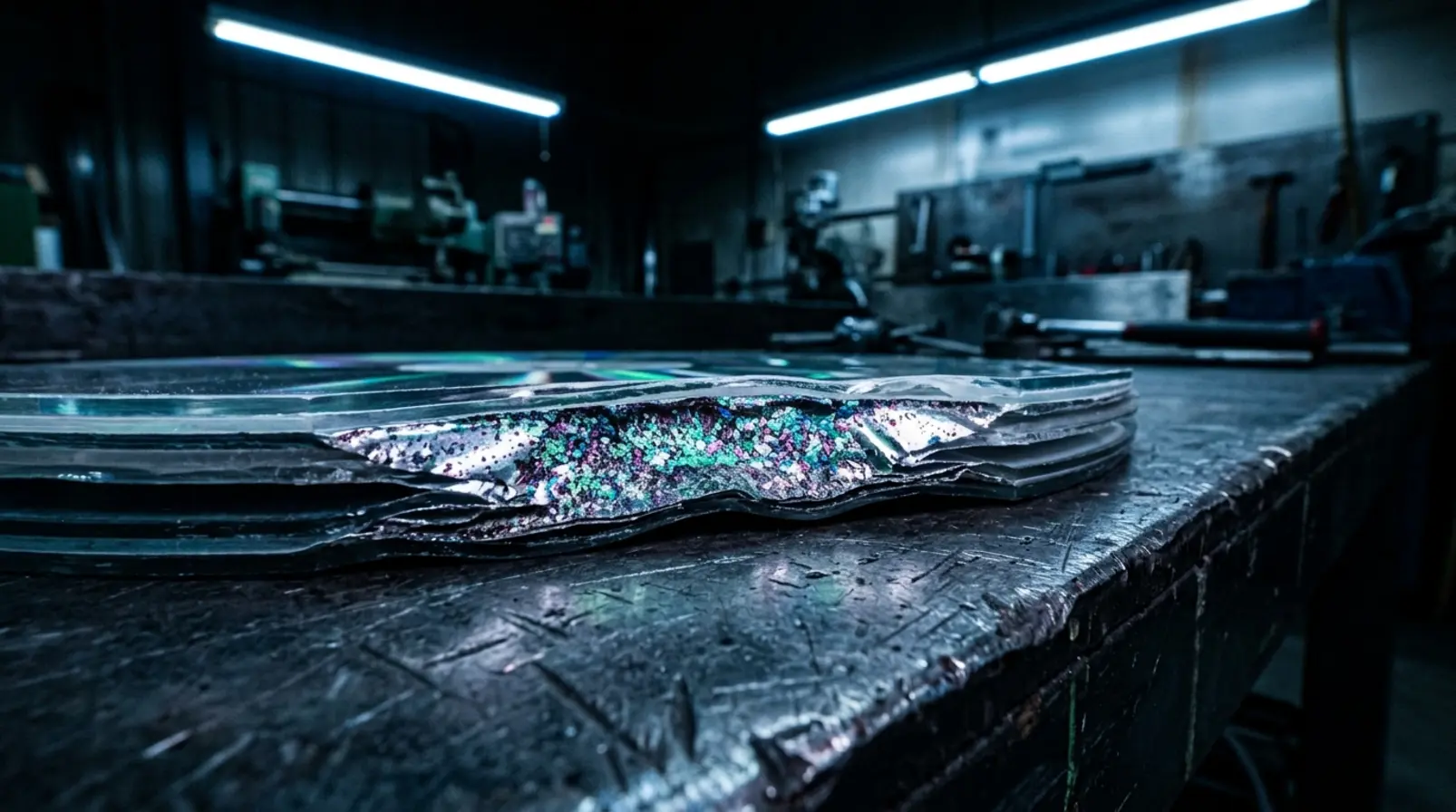
Cassette collecting is the practice of buying, preserving, and curating music on compact cassette tapes, the analog magnetic format first introduced by Philips in 1963. In 2026, the hobby spans sealed vintage pressings, limited-edition new releases, blank tape hoarding, and the gear required to play it all back. It is cheap to enter, deeply tactile, and growing fast.
Cassette Collecting by the Numbers in 2026
U.S. cassette sales more than doubled in the first quarter of 2025 and are projected to exceed 600,000 copies by the end of the year. The U.S. market crossed 430,000 cassette sales in 2023, compared to just 50,000 in 2014. The global cassette tapes market was valued at $302 million in 2024, and by 2033, the market is expected to grow to $422 million, at a CAGR of 3.7%. This is a small format with real momentum behind it.
Tape Types Every Collector Should Know
Not all cassettes are created equal. The IEC standard split tapes into four types, and knowing the difference matters when you’re buying blanks or evaluating a thrift-store haul.
- Type I (Normal/Ferric): Iron oxide formulation. The most common tape ever made. Warm sound, more hiss, maximum compatibility with any deck.
- Type II (High Bias/Chrome): Chromium dioxide or cobalt-doped ferric. Better high-end response and lower noise floor. Most “pseudochrome” Type IIs from TDK, Maxell, and Sony were actually ferricobalt blends.
- Type III (Ferrichrome): A dual-layer oddity produced from the mid-1970s to the early 1980s. Obsolete and collectible.
- Type IV (Metal): Pure metal particle tape with the widest dynamic range. Demands a deck with metal bias. Sealed Japanese-made Type IV blanks from the late 1990s now sell for £60 or more.
What Cassettes Are Actually Worth
The collector market has real teeth. A Xero demo tape (the pre-Linkin Park band) sold for $4,500, and Deftones’ first self-titled cassette fetched $5,000 in May 2024. Nirvana’s Nevermind sealed can bring up to $1,500, Pearl Jam’s Ten could net $4,000, and even unsealed classics like Beastie Boys’ Licensed to Ill potentially sell for $1,500. Private releases from the early days of hip-hop regularly sell for £2,000 to £3,000 for a single tape.
Condition is everything. Sealed tapes command the highest prices, followed by mint copies with intact J-cards. First pressings beat reissues every time.
Gear That Works in 2026
The hardest part of cassette collecting isn’t finding tapes. It’s finding something decent to play them on. The knowledge of designing portable cassette players has largely been lost over the last 30 years; original engineers have left the workforce, production lines have disappeared, and companies like FiiO had to start from scratch.
For new portable players, the $99.99 FiiO CP13 features an upgraded version of the only available tape mechanism on the market paired with a superior modern amplifier. By removing recording and autoreverse, FiiO enhanced audio fidelity and stability, anchored by an oversized pure copper flywheel measuring 1.2 inches in diameter. French brand We Are Rewind has also introduced the WE-001, which combines retro appeal with Bluetooth connectivity.
For home decks, Tascam’s 202MKVII dual-cassette deck allows recording on two cassettes with USB output, while TEAC’s W-1200 and Marantz’s PMD-300CP also offer USB connectivity alongside traditional playback. Vintage Nakamichi Dragons and Technics RS-series decks remain the gold standard, but expect to pay a premium for refurbished units, and budget for replacement belts and rollers.
Where to Buy Tapes
Thrift stores, estate sales, and flea markets remain the cheapest hunting grounds, and half the fun is the dig itself. Online, Discogs offers the most detailed listings for serious collectors, eBay is essential for rare finds (check seller ratings carefully), and Bandcamp remains a strong channel for independent artists selling limited runs directly.
Manchester’s cult cassette destination Mars Tapes just expanded into one of the largest units inside legendary Afflecks, marking its third expansion since opening in 2019, and now includes a listening café where visitors can grab a coffee and spin a tape. Co-owner Alex Tadros has noted that most of their customers are under 30 and that “grassroots and young talent basically realise they can’t do vinyl because it’s too expensive or a long wait time,” making cassettes “an easy and cheap format to jump into.”
Why Tapes Cost So Little to Make
Cassettes cost about $1.50 to produce compared to $25 for vinyl, allowing musicians to sell physical media directly to fans at sustainable margins. For buyers, a new cassette runs about $10 versus $25+ for vinyl. That price gap is why independent labels and underground artists have embraced the format so aggressively. As music journalist Marc Masters, author of High Bias: The Distorted History of the Cassette Tape (UNC Press, 2023), has observed, many younger listeners feel disillusioned by how streaming underpays artists and dictates listening through algorithms. Tapes offer a direct alternative.
Frequently Asked Questions
Do cassette tapes actually sound good?
It depends on the tape, the deck, and what you mean by “good.” A well-recorded Type II or Type IV tape on a calibrated deck can sound rich and musical. It won’t match the technical accuracy of a CD, but many collectors prize the warmth and slight saturation that tape introduces. Cheap tapes on cheap players will sound terrible.
What is a J-card?
The J-card is the folded paper insert inside a cassette case, named for its J-shaped profile when unfolded. It typically holds track listings, artwork, and credits. For collectors, a clean, intact J-card can significantly affect a tape’s resale value.
Are modern cassette players worth buying?
There is currently only one tape mechanism widely available for new production, consisting mainly of plastic parts and low-quality toneheads. The FiiO CP13 represents the best current effort to build something serious around that limitation. A well-maintained vintage Sony Walkman from the 1990s will generally outperform any new player, but serviced units are getting expensive and harder to find.
What tapes should a beginner collect first?
Start with music you actually want to listen to. Thrift stores are full of common titles for under a dollar. Build taste before chasing value. If you want investment-grade tapes, look for sealed first pressings of major albums, cassette-only releases, and small-batch indie runs of 50 to 100 copies.
Where can I learn more about cassette culture?
Marc Masters’ High Bias is the definitive history. Online, Cassette Week (run by Tapehead City) hosts annual events and releases. Discogs forums and dedicated tape-collecting communities are active and welcoming to newcomers.
How should I store my cassette collection?
Keep tapes upright in their cases, away from heat, moisture, and magnetic fields. Rewind them fully to one side before long-term storage to maintain even tension on the tape pack. Avoid leaving tapes in cars or direct sunlight. A cool, dry shelf is all you need.
'%3e%3cg id='Final-Copy-2_2_' transform='translate(1275.000000, 200.000000)'%3e%3cpath class='st0' d='M7.4,12.8h6.8l3.1-11.6H7.4C4.2,1.2,1.6,3.8,1.6,7S4.2,12.8,7.4,12.8z'/%3e%3c/g%3e%3c/g%3e%3c/g%3e%3cg id='final---dec.11-2020'%3e%3cg id='_x30_208-our-toggle' transform='translate(-1275.000000, -200.000000)'%3e%3cg id='Final-Copy-2' transform='translate(1275.000000, 200.000000)'%3e%3cpath class='st1' d='M22.6,0H7.4c-3.9,0-7,3.1-7,7s3.1,7,7,7h15.2c3.9,0,7-3.1,7-7S26.4,0,22.6,0z M1.6,7c0-3.2,2.6-5.8,5.8-5.8 h9.9l-3.1,11.6H7.4C4.2,12.8,1.6,10.2,1.6,7z'/%3e%3cpath id='x' class='st2' d='M24.6,4c0.2,0.2,0.2,0.6,0,0.8l0,0L22.5,7l2.2,2.2c0.2,0.2,0.2,0.6,0,0.8c-0.2,0.2-0.6,0.2-0.8,0 l0,0l-2.2-2.2L19.5,10c-0.2,0.2-0.6,0.2-0.8,0c-0.2-0.2-0.2-0.6,0-0.8l0,0L20.8,7l-2.2-2.2c-0.2-0.2-0.2-0.6,0-0.8 c0.2-0.2,0.6-0.2,0.8,0l0,0l2.2,2.2L23.8,4C24,3.8,24.4,3.8,24.6,4z'/%3e%3cpath id='y' class='st3' d='M12.7,4.1c0.2,0.2,0.3,0.6,0.1,0.8l0,0L8.6,9.8C8.5,9.9,8.4,10,8.3,10c-0.2,0.1-0.5,0.1-0.7-0.1l0,0 L5.4,7.7c-0.2-0.2-0.2-0.6,0-0.8c0.2-0.2,0.6-0.2,0.8,0l0,0L8,8.6l3.8-4.5C12,3.9,12.4,3.9,12.7,4.1z'/%3e%3c/g%3e%3c/g%3e%3c/g%3e%3c/g%3e%3c/svg%3e) Your Privacy Choices
Your Privacy Choices