



Two Alchemists Walk Into Shibuya
Here is a fact that nobody asked you to reconcile: Singapore-born specialty coffee brand Alchemist opened its very first store in Japan on June 24, 2025, in Aoyama, nestled in Tokyo’s Shibuya ward. The location sits between Shibuya and Omotesando, in an accessible and stylish neighborhood that mirrors the vibe of the brand’s Orchard Road flagship in Singapore. Meanwhile, on the other side of the Pacific, a private label called ALC Records, based in Santa Monica, California, has been serving limited edition vinyl, apparel, and more to a devoted underground hip-hop congregation for years. Both operations are named Alchemist. Both deal in scarcity. Both require you to be somewhere, physically, to fully participate.
These two enterprises have nothing to do with each other. That’s exactly what makes them interesting together.
The Sandwich, the Ziploc, the Salami
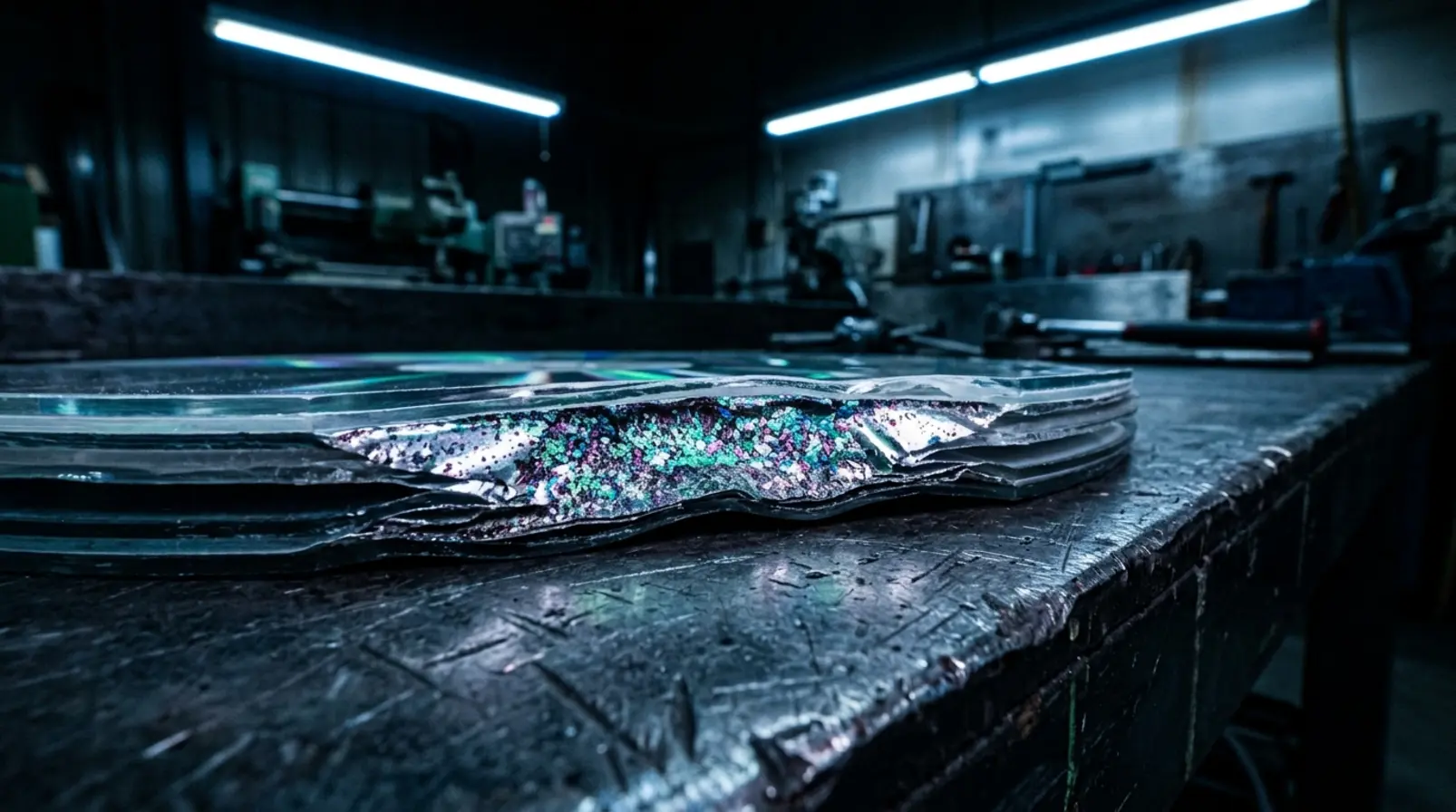
In 2023, the hip-hop producer known as The Alchemist released a vinyl compilation called The Alchemist Sandwich. It compiled his two 2018 EPs, Bread and Lunch Meat. The arithmetic was blunt and satisfying: Lunchmeat + Bread = Sandwich. But the packaging was something else entirely. The record was designed to resemble and assemble an actual sandwich: the vinyl looked like a slice of Milano salami, the album cover resembled bread, an extra insert mimicked lettuce, and the inner sleeve holding the disc looked like a slice of Swiss cheese.
Collectors on Discogs immediately started doing what collectors do: panicking. They debated what to do with the giant Ziploc bag packaging, calling it “one of a kind.” Some were surprised that over 300 people had already claimed ownership, estimating 1,000 to 2,000 units were pressed, though it wouldn’t have surprised them if there were more. One variant, a “salami” picture disc, was limited to just 200 copies.
You could not stream this object. You could stream the music, sure. But the sandwich itself, the thing that made people lose their minds, existed only if you bought it, held it, and then figured out where to shelve a vinyl record shaped like deli meat.
The Coffee Stand That Doesn’t Need Your Hashtag
Alchemist the coffee brand was founded in 2016 by Will Leow as a humble 4-square-meter coffee stand in the heart of Singapore’s business district, and has since grown into one of the country’s leading specialty coffee brands with 11 locations. When they arrived in Tokyo, they did something quietly radical. There are no machines placed on the bar counter, a thoughtful design that allows baristas and customers to connect more naturally. The upstairs of the Aoyama shop, filled with lush greenery, creates a calm and beautiful space you’d never expect in the heart of the city, with seating arranged around the plants.
This is not a place optimized for your phone. It is a place optimized for the fact that you walked there. The address is Shibuya 2-chome, about seven minutes on foot from Omotesando Station, about ten from Shibuya Station. There is no drive-through. They plan to open 10 stores across Japan by the end of 2028. Their ambition is physical, geographic, built into specific neighborhoods at specific addresses. You either go or you don’t.
The Gatekeep Is the Product
There’s a word people throw around now, “gatekeeping,” and it mostly gets used as an accusation. Someone is hoarding access. Someone is being elitist. But the more interesting version of gatekeeping is the kind where the gate itself is the offering. The Alchemist’s sandwich board vinyl doesn’t exclude you because someone decided you’re unworthy. It excludes you because only so many physical objects can exist in the world at once, and you either got one or you didn’t.
ALC Records runs on this principle with mechanical precision. Fans are encouraged to subscribe to the newsletter for merch drops and upcoming releases. That’s the whole system. No algorithm. No tiered subscription. Just an email list and a credit card and the willingness to click fast. Their 2025 release The Genuine Articulate was limited to 700 black “ghostly” copies, hand-numbered, with an OBI strip, and the limited edition came with a tote bag and two stickers. On Discogs, copies last sold between $50 and $60, with an average rating of 4.92 out of 5.
This model has a name in the hip-hop underground, though nobody agrees on what to call it. Physical-first. Limited-run. Newsletter-gated. Whatever you call it, R&B and hip-hop physical sales were up 26% on a unit basis at midyear 2025 compared to the previous year , even as overall physical sales were down 3.2%. Something is pulling people back to the object. Not everyone. But enough.
Showing Up as Ideology
I think the connection between these two Alchemists, the coffee roaster in Shibuya and the beatmaker in Santa Monica, is that they’ve both figured out something the rest of the culture hasn’t fully absorbed yet. The physical constraint isn’t the obstacle. It’s the entire point. When Will Leow says, as quoted in an interview, that “the name Alchemist is a tribute to the craft,” he’s talking about transformation. Green beans into roasted beans. Roasted beans into a cup you hold in your hands in a room full of plants in a building in Shibuya. You can’t skip a step.
The Alchemist the producer understands this too. A particular kind of consumer fetishism has taken hold, as The Vinyl Factory once noted, when a bootleg record carrying MP3 files in its grooves is more highly valued than the MP3s themselves. But that’s not quite right, either. It’s not fetishism. It’s a preference for things that can’t be duplicated infinitely. A salami-shaped picture disc limited to 200 copies is not better than the MP3. It is simply rarer, and rarity produces a different kind of attention.
The sandwich board outside a coffee shop says: we are here. Come in or don’t. The sandwich-shaped vinyl says the same thing, just louder and weirder. Both are invitations that double as boundaries. Both reward the person who showed up.
The Quiet Monopoly of Presence
Independent stores are by far the largest segment of physical music sales, having scanned 11.9 million copies by midyear 2025, or 34.7% of the total. The growing direct-to-consumer channel accounted for 10.1%. These numbers tell a story about where people are choosing to spend money on things they could get more conveniently elsewhere. They are choosing the record shop. They are choosing the ALC Records webstore with its drops that sell out in minutes. They are choosing the seven-minute walk from Omotesando Station.
There is nothing democratic about any of this, and I think that’s fine. Not everything needs to be available to everyone at all times. Some experiences are better when they require a small act of commitment: walking somewhere, refreshing a page at the right moment, storing a giant Ziploc bag on your shelf and explaining it to guests. The gate isn’t there to keep you out. It’s there to make the walking-through mean something.
Two Alchemists, no relation, both in the business of transformation. One turns green coffee into something you can only taste in a specific room. The other turns beats into objects you can only hold if you were paying attention. Neither of them owes you convenience. That’s the whole sermon, really. Show up or don’t.
'%3e%3cg id='Final-Copy-2_2_' transform='translate(1275.000000, 200.000000)'%3e%3cpath class='st0' d='M7.4,12.8h6.8l3.1-11.6H7.4C4.2,1.2,1.6,3.8,1.6,7S4.2,12.8,7.4,12.8z'/%3e%3c/g%3e%3c/g%3e%3c/g%3e%3cg id='final---dec.11-2020'%3e%3cg id='_x30_208-our-toggle' transform='translate(-1275.000000, -200.000000)'%3e%3cg id='Final-Copy-2' transform='translate(1275.000000, 200.000000)'%3e%3cpath class='st1' d='M22.6,0H7.4c-3.9,0-7,3.1-7,7s3.1,7,7,7h15.2c3.9,0,7-3.1,7-7S26.4,0,22.6,0z M1.6,7c0-3.2,2.6-5.8,5.8-5.8 h9.9l-3.1,11.6H7.4C4.2,12.8,1.6,10.2,1.6,7z'/%3e%3cpath id='x' class='st2' d='M24.6,4c0.2,0.2,0.2,0.6,0,0.8l0,0L22.5,7l2.2,2.2c0.2,0.2,0.2,0.6,0,0.8c-0.2,0.2-0.6,0.2-0.8,0 l0,0l-2.2-2.2L19.5,10c-0.2,0.2-0.6,0.2-0.8,0c-0.2-0.2-0.2-0.6,0-0.8l0,0L20.8,7l-2.2-2.2c-0.2-0.2-0.2-0.6,0-0.8 c0.2-0.2,0.6-0.2,0.8,0l0,0l2.2,2.2L23.8,4C24,3.8,24.4,3.8,24.6,4z'/%3e%3cpath id='y' class='st3' d='M12.7,4.1c0.2,0.2,0.3,0.6,0.1,0.8l0,0L8.6,9.8C8.5,9.9,8.4,10,8.3,10c-0.2,0.1-0.5,0.1-0.7-0.1l0,0 L5.4,7.7c-0.2-0.2-0.2-0.6,0-0.8c0.2-0.2,0.6-0.2,0.8,0l0,0L8,8.6l3.8-4.5C12,3.9,12.4,3.9,12.7,4.1z'/%3e%3c/g%3e%3c/g%3e%3c/g%3e%3c/g%3e%3c/svg%3e) Your Privacy Choices
Your Privacy Choices