


The Rotoscoping Pioneer: Jordan Mechner’s Breakthrough
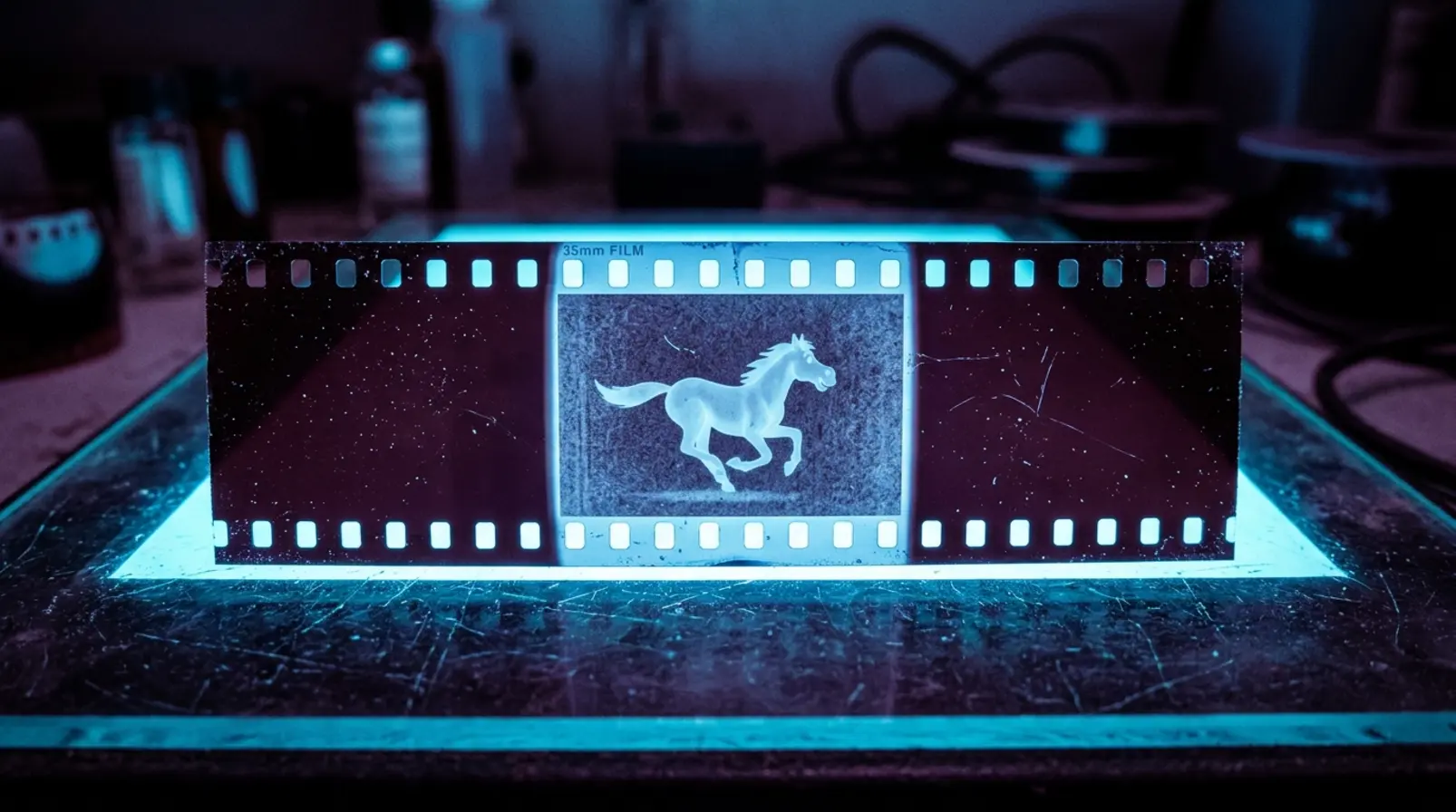
In 1980, developer Jordan Mechner began working on what would become a revolutionary technique for his martial arts game Karateka (released in 1984). Unable to create realistic animation through traditional pixel art alone, Mechner filmed his father performing moves, then painstakingly traced over the footage frame by frame to translate real movement onto his Apple II computer. This technique, called rotoscoping, had been used in film and animation for decades, but Mechner was the first to apply it to video games.
Mechner later admitted his approach was born from necessity rather than innovation: “When we made that decision with Prince of Persia, I wasn’t thinking about being cutting edge. We did it essentially because I’m not that good at drawing or animation, and it was the only way I could think of to get lifelike movement.”
Prince of Persia: The Game That Started It All
Mechner perfected his technique for Prince of Persia in 1989, filming his younger brother David, then 15 years old, performing acrobatic stunts while wearing white clothes for better contrast. He also drew inspiration from classic swashbuckler films like The Adventures of Robin Hood. The result was unprecedented: a character that moved with genuine human fluidity in a way no other video game had achieved.
In enthusiast communities, there’s ongoing debate about whether rotoscoping truly counts as motion capture. Some purists argue that real mocap requires digital tracking systems, while others recognize Mechner’s work as the conceptual foundation for everything that followed.
The Jump to True Digital Motion Capture
While Mechner was manually tracing footage, other developers were exploring early digital capture. As early as 1988, Martech’s Vixen used primitive motion capture to animate its 2D player character, performed by model Corinne Russell. However, these early attempts were barely more sophisticated than rotoscoping.
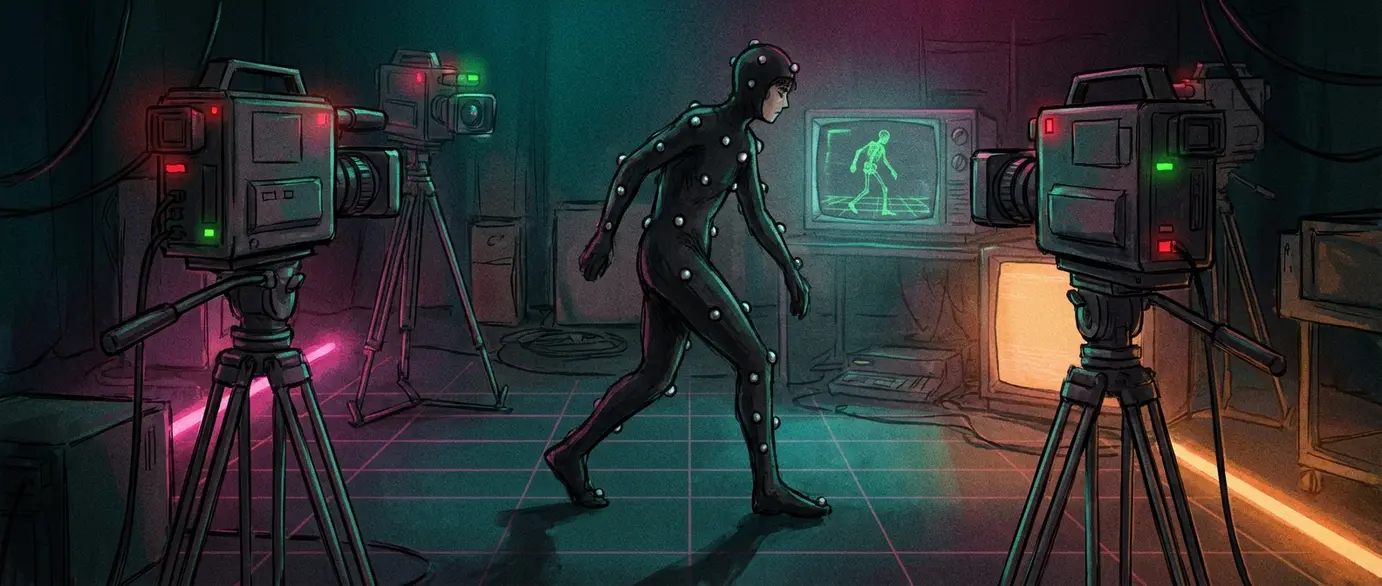
The real breakthrough came in 1994 with Sega’s Virtua Fighter 2. Director Yu Suzuki took an audacious approach: he contacted U.S. Army simulation vendors, who were among the only organizations outside healthcare with access to motion capture technology. Virtua Fighter 2 (1994) became the first game to use true 3D motion capture, employing magnetic motion capture technology that had previously been used in healthcare.
The $2 Million Gamble
Suzuki’s ambition didn’t stop there. To achieve the game’s filtered, texture-mapped graphics, he approached Lockheed Martin to use their flight simulation equipment. The aerospace giant charged $2 million just to access a chip from their $32 million system. Remarkably, Suzuki convinced Sega to make the investment, then worked with his AM2 team to reverse-engineer the technology into a chip that could be mass-produced for $50 each.
From Military Secret to Gaming Standard
Today’s motion capture market is projected to exceed $210 million by 2033, with over 85% of Hollywood blockbusters now using the technology. What began as a college student filming his brother has evolved into an essential tool that bridges reality and digital art. Online gaming communities often marvel at how accessible the technology has become, with AI-powered markerless systems now available to indie developers who could never afford the $150,000+ optical systems that studios once required.
The next time you watch a character run, jump, or fight with lifelike movement in your favorite game, remember: it all started with creativity, determination, and a willingness to think outside the industry’s existing toolbox.
'%3e%3cg id='Final-Copy-2_2_' transform='translate(1275.000000, 200.000000)'%3e%3cpath class='st0' d='M7.4,12.8h6.8l3.1-11.6H7.4C4.2,1.2,1.6,3.8,1.6,7S4.2,12.8,7.4,12.8z'/%3e%3c/g%3e%3c/g%3e%3c/g%3e%3cg id='final---dec.11-2020'%3e%3cg id='_x30_208-our-toggle' transform='translate(-1275.000000, -200.000000)'%3e%3cg id='Final-Copy-2' transform='translate(1275.000000, 200.000000)'%3e%3cpath class='st1' d='M22.6,0H7.4c-3.9,0-7,3.1-7,7s3.1,7,7,7h15.2c3.9,0,7-3.1,7-7S26.4,0,22.6,0z M1.6,7c0-3.2,2.6-5.8,5.8-5.8 h9.9l-3.1,11.6H7.4C4.2,12.8,1.6,10.2,1.6,7z'/%3e%3cpath id='x' class='st2' d='M24.6,4c0.2,0.2,0.2,0.6,0,0.8l0,0L22.5,7l2.2,2.2c0.2,0.2,0.2,0.6,0,0.8c-0.2,0.2-0.6,0.2-0.8,0 l0,0l-2.2-2.2L19.5,10c-0.2,0.2-0.6,0.2-0.8,0c-0.2-0.2-0.2-0.6,0-0.8l0,0L20.8,7l-2.2-2.2c-0.2-0.2-0.2-0.6,0-0.8 c0.2-0.2,0.6-0.2,0.8,0l0,0l2.2,2.2L23.8,4C24,3.8,24.4,3.8,24.6,4z'/%3e%3cpath id='y' class='st3' d='M12.7,4.1c0.2,0.2,0.3,0.6,0.1,0.8l0,0L8.6,9.8C8.5,9.9,8.4,10,8.3,10c-0.2,0.1-0.5,0.1-0.7-0.1l0,0 L5.4,7.7c-0.2-0.2-0.2-0.6,0-0.8c0.2-0.2,0.6-0.2,0.8,0l0,0L8,8.6l3.8-4.5C12,3.9,12.4,3.9,12.7,4.1z'/%3e%3c/g%3e%3c/g%3e%3c/g%3e%3c/g%3e%3c/svg%3e) Your Privacy Choices
Your Privacy Choices