

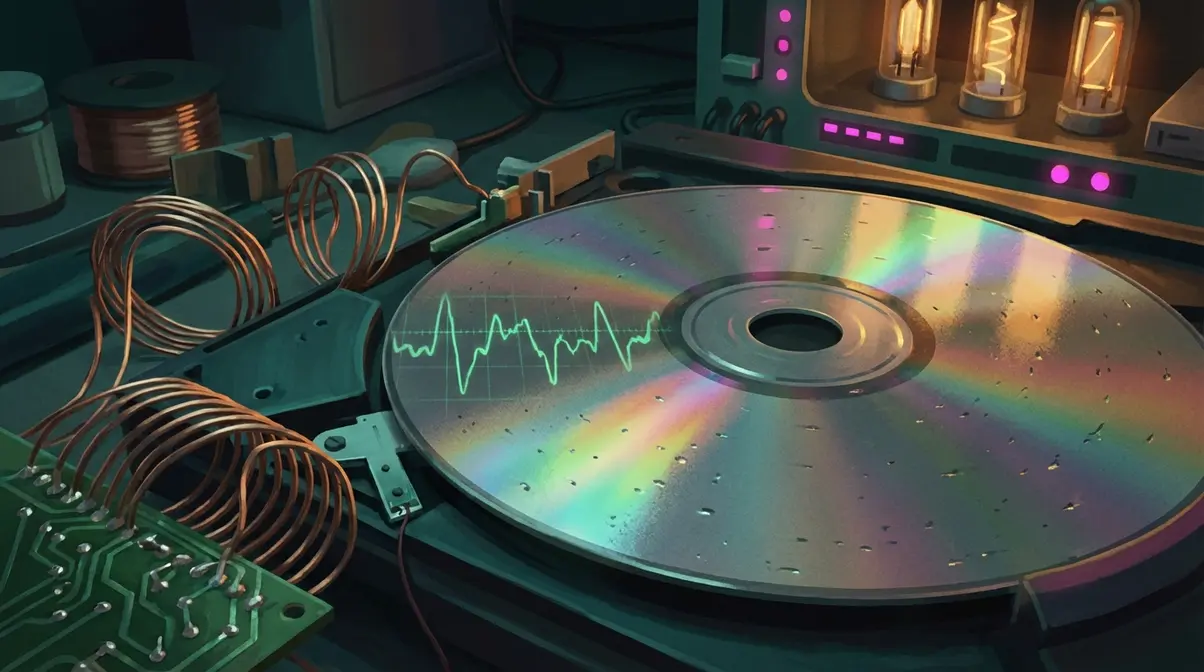

The Domesday Duplicator is a USB 3.0 data acquisition device capable of capturing raw RF signals from LaserDisc players at 40 million samples per second and 10-bit resolution. Created by Simon Inns in 2016, it bypasses decades-old player electronics to archive the analog information on discs before chemical deterioration renders them unreadable forever.
The BBC Domesday Project and Digital Obsolescence
In 1986, the BBC launched the Domesday Project to mark the 900th anniversary of William the Conqueror’s original survey. Over a million people participated, including around 9,000 schools, creating what became the first community-driven multimedia project. The result: two LaserDiscs containing 108,000 still images per disc and 648 megabytes of data per disc, stored in the proprietary LaserVision Read Only Memory format.
The irony arrived sixteen years later. The project designed to last a millennium became unreadable faster than the parchment it commemorated. The Philips VP415 players required to access the discs had failed. The software ran only on BBC Master computers that cost £5,000 in 1980s money. Only 1,000 systems were ever sold.
This became the textbook case for digital obsolescence, the kind archivists invoke when explaining why preservation matters more than format wars.
How the Duplicator Works
The Domesday Duplicator doesn’t decode anything. That’s the point. Instead of capturing processed video output, it taps the raw RF signal directly from a LaserDisc player’s optical head. The player becomes a glorified scanner, providing mechanical tracking and focus while the Duplicator records everything the laser sees.
The hardware sandwiches a custom ADC board built around the Texas Instruments ADS825 converter between two development boards. Users must physically modify their players, connecting to internal RF test points. It’s invasive, technical, and necessary.
Once captured, the raw PCM data gets processed by ld-decode, software created by Chad Page that functions as a software-defined LaserDisc player. The approach captures everything on the disc, even information current decoders can’t interpret yet. Future software improvements can extract better video, recover corrupted sections, or decode formats nobody understands today.
The Disc Rot Problem
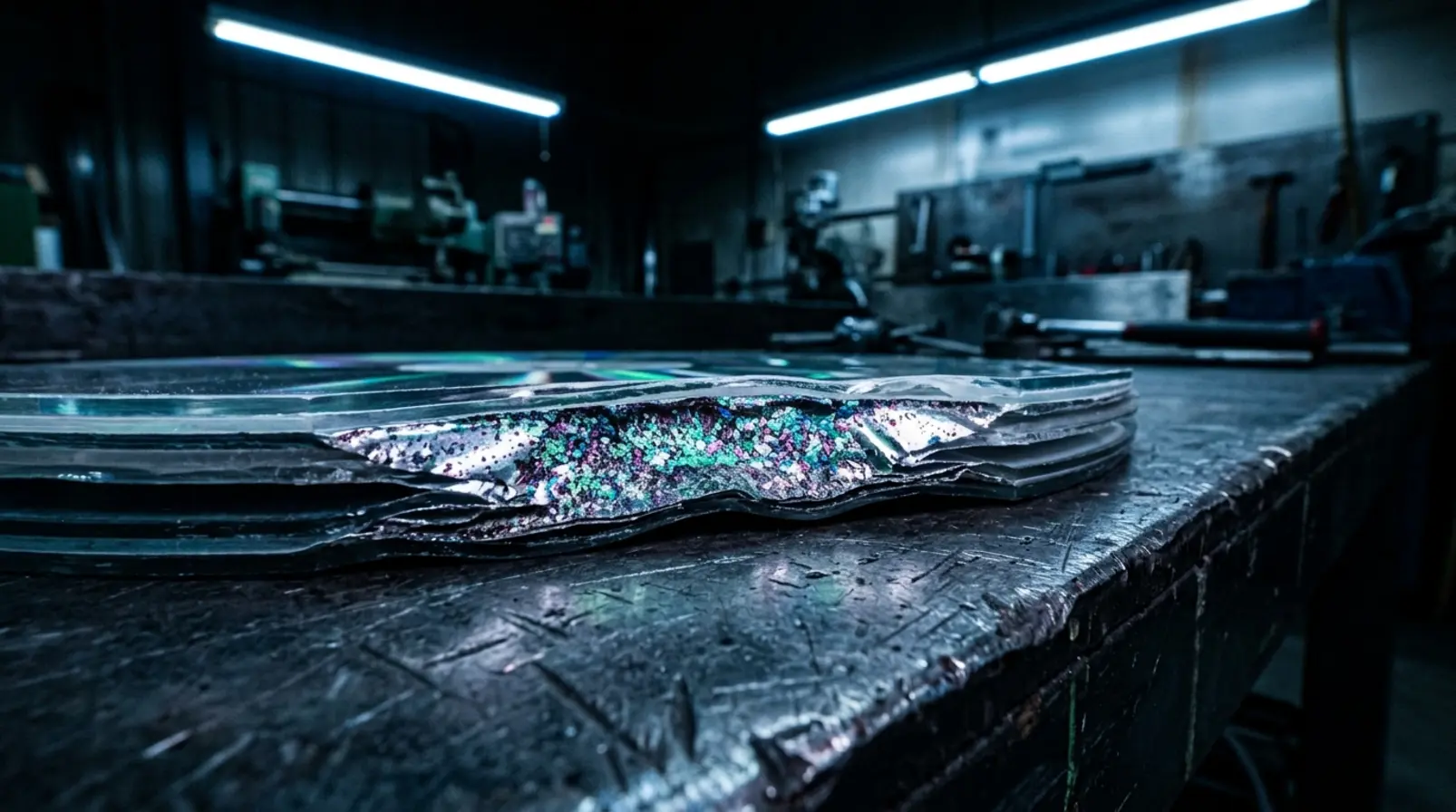
LaserDiscs die in specific ways. Oxidation attacks the aluminum reflective layer, creating the rainbow speckles collectors call laser rot. Early MCA DiscoVision pressings degraded catastrophically. Sony’s DADC plant in Terre Haute, Indiana produced an entire generation of discs in the 1990s that are now systematically failing.
The degradation is chemical and irreversible. Once the aluminum loses reflectivity, the data disappears. Standard players struggle with weak signals at disc edges where RF amplitude drops. Scratches and age compound the problem.
Enthusiast forums discuss creating multiple captures of the same disc, then using error correction to replace rotted sections from one rip with clean data from another. It’s forensic work, comparing evidence from multiple crime scenes to reconstruct what happened.
Storage Requirements and Practical Realities
A single side of a CAV LaserDisc requires approximately 150GB of raw uncompressed samples. FLAC compression reduces that to 50GB. The preservation community recommends five rips per side for error correction, pushing storage needs to 300GB per title, ideally a full terabyte to properly archive one disc.
These numbers make sense when you consider what’s being saved. Disney special features that never migrated to DVD. Audio commentaries lost between formats. AC3 5.1 soundtracks with dynamic range modern remasters compressed away. LaserDisc game titles like Dragon’s Lair that exist nowhere else in playable form.
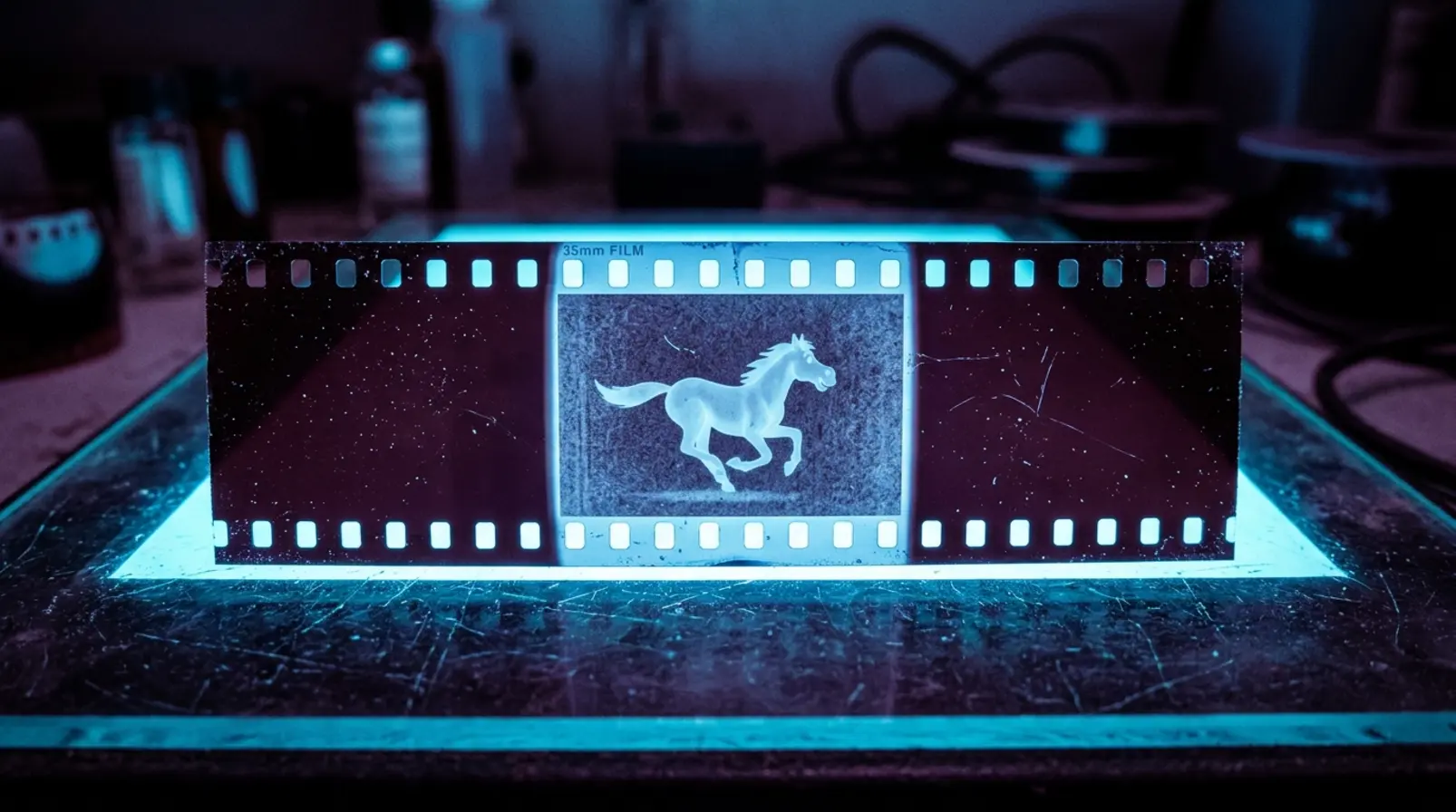
There’s debate about whether LaserDisc video quality justifies the effort. Consensus leans toward no for picture, sometimes yes for audio and content. Star Wars preservationists argue that 35mm film scans produce superior results to LaserDisc transfers. But that misses the point. The Duplicator isn’t competing with film preservation. It’s racing against chemistry.
Open Source Philosophy and Community Growth
The Domesday86 Project released everything as open source from the beginning. Hardware schematics, software code, documentation. Anyone can build a Duplicator from plans or purchase assembled units for $400 to $600. Compare that to proprietary archival solutions that cost thousands and lock users into vendor ecosystems.
Øyvind Larsen Nygård extended ld-decode into VHS-decode, applying the same RF capture principles to VHS, S-VHS, U-Matic, Betamax, Video8, and Hi8 formats. The methodology scales. Capture raw signals, compress losslessly, decode in software that improves over time.
Some in the preservation community resist calling it the “Domesday method,” arguing the term conflates hardware with technique and limits accessibility. They prefer “FM RF Archival Method.” The debate reflects tension between brand recognition and open principles. Both sides want the same thing: more people preserving more media before it’s gone.
The Archival Mindset
One preservationist writing on Adafruit framed it clearly: if nobody else will save the films, shows, comedy specials, and home movies you care about, then you have to do it yourself. Institutions can’t archive everything. Budgets prioritize canonical works over ephemera. Commercial entities preserve what generates profit.
That leaves volunteers capturing LaserDiscs in spare bedrooms, comparing captures across forums, documenting laser rot patterns, and maintaining compatibility databases for decades-old players. It’s unglamorous work with massive storage overhead and no financial return.
But it’s also the only reason future researchers will access certain primary sources. The only path to hearing original audio mixes. The only way to study how home video evolved between theatrical release and streaming.
The Domesday Duplicator represents a specific philosophy: capture first, understand later. Save the signal before the chemistry fails. Trust that future software will decode what current tools can’t. Bet on open source and community knowledge over proprietary solutions.
It’s the same logic that drives vinyl archivists, cassette preservationists, and floppy disk imagers. Physical media degrades. Digital copies multiply perfectly. The window to capture analog signals closes permanently once oxidation wins.
LaserDisc production stopped in 2009. Players are aging out. Discs are rotting in climate-controlled storage and humid basements alike. The Duplicator offers a way to pull ghosts off plastic before they fade completely. Whether that matters depends on how much you value access to media history that exists nowhere else.
Frequently Asked Questions
What makes the Domesday Duplicator different from normal LaserDisc capture?
Standard capture methods record processed video output from a player’s electronics. The Duplicator taps the raw RF signal directly from the optical head before any decoding occurs, preserving all information on the disc including data that current players can’t properly decode.
How much does a Domesday Duplicator cost?
Assembled units sell for approximately $400 to $600. The project is fully open source, so technically skilled users can build their own from published schematics and component lists.
Can the Domesday Duplicator work with other formats besides LaserDisc?
Yes. The underlying RF capture methodology has been extended through projects like VHS-decode to work with VHS, S-VHS, U-Matic, Betamax, Video8, and Hi8 formats. Different formats require different hardware modifications and decoder software.
What is laser rot and how common is it?
Laser rot is oxidation of the aluminum reflective layer in LaserDiscs, causing rainbow speckles and signal degradation. Early MCA DiscoVision pressings and 1990s Sony DADC pressings are particularly susceptible. The degradation is chemical, irreversible, and affects significant portions of the LaserDisc library.
How much storage do LaserDisc captures require?
A single side requires approximately 150GB raw or 50GB with FLAC compression. Proper archival practice recommends five captures per side for error correction, meaning 300GB minimum per title, ideally approaching 1TB for complete preservation.
Who created the Domesday Duplicator?
Simon Inns created the hardware in 2016 as part of the Domesday86 project. The ld-decode software was created by Chad Page. Both projects are open source with contributions from international preservation communities.
'%3e%3cg id='Final-Copy-2_2_' transform='translate(1275.000000, 200.000000)'%3e%3cpath class='st0' d='M7.4,12.8h6.8l3.1-11.6H7.4C4.2,1.2,1.6,3.8,1.6,7S4.2,12.8,7.4,12.8z'/%3e%3c/g%3e%3c/g%3e%3c/g%3e%3cg id='final---dec.11-2020'%3e%3cg id='_x30_208-our-toggle' transform='translate(-1275.000000, -200.000000)'%3e%3cg id='Final-Copy-2' transform='translate(1275.000000, 200.000000)'%3e%3cpath class='st1' d='M22.6,0H7.4c-3.9,0-7,3.1-7,7s3.1,7,7,7h15.2c3.9,0,7-3.1,7-7S26.4,0,22.6,0z M1.6,7c0-3.2,2.6-5.8,5.8-5.8 h9.9l-3.1,11.6H7.4C4.2,12.8,1.6,10.2,1.6,7z'/%3e%3cpath id='x' class='st2' d='M24.6,4c0.2,0.2,0.2,0.6,0,0.8l0,0L22.5,7l2.2,2.2c0.2,0.2,0.2,0.6,0,0.8c-0.2,0.2-0.6,0.2-0.8,0 l0,0l-2.2-2.2L19.5,10c-0.2,0.2-0.6,0.2-0.8,0c-0.2-0.2-0.2-0.6,0-0.8l0,0L20.8,7l-2.2-2.2c-0.2-0.2-0.2-0.6,0-0.8 c0.2-0.2,0.6-0.2,0.8,0l0,0l2.2,2.2L23.8,4C24,3.8,24.4,3.8,24.6,4z'/%3e%3cpath id='y' class='st3' d='M12.7,4.1c0.2,0.2,0.3,0.6,0.1,0.8l0,0L8.6,9.8C8.5,9.9,8.4,10,8.3,10c-0.2,0.1-0.5,0.1-0.7-0.1l0,0 L5.4,7.7c-0.2-0.2-0.2-0.6,0-0.8c0.2-0.2,0.6-0.2,0.8,0l0,0L8,8.6l3.8-4.5C12,3.9,12.4,3.9,12.7,4.1z'/%3e%3c/g%3e%3c/g%3e%3c/g%3e%3c/g%3e%3c/svg%3e) Your Privacy Choices
Your Privacy Choices