

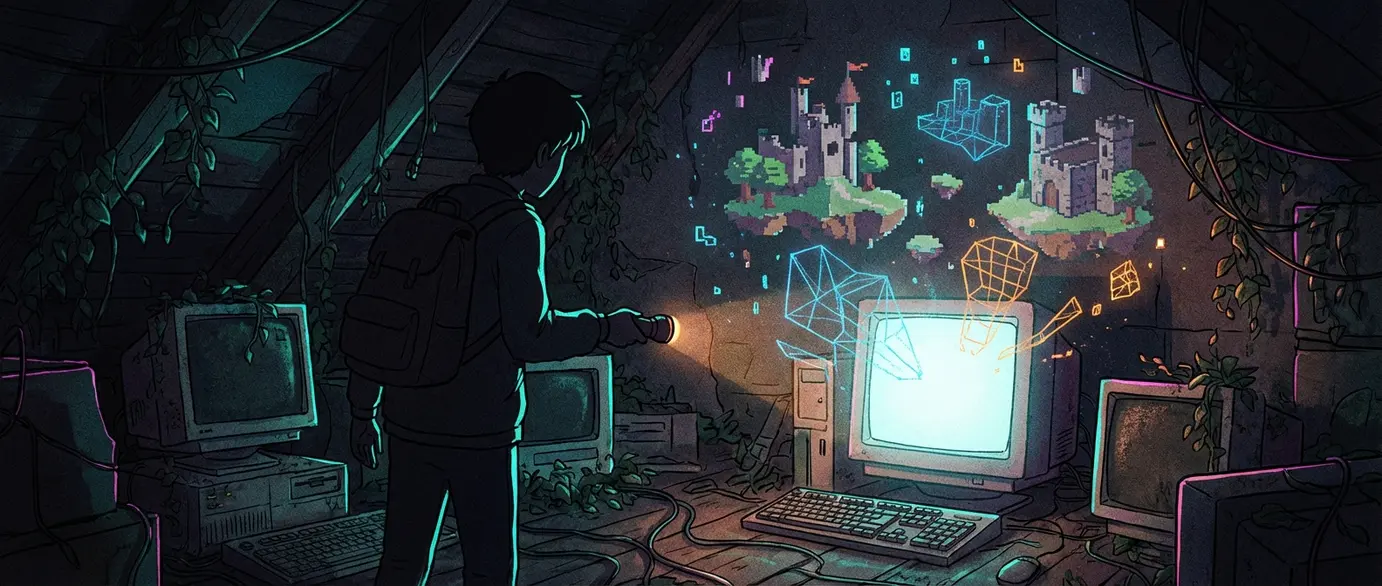


Remember that feeling when you’d stumble across a secret level in your favorite game? The rush of discovering something hidden, something special that most players would never see? Now imagine entire worlds, characters, and storylines that were almost in those childhood classics but got cut at the last minute. They’ve been sitting dormant in code for decades, waiting for someone to dig them up.
Welcome to the world of digital archaeology, where dedicated fans are doing exactly that.
The Games That Time Is Forgetting
Here’s a sobering fact: 87% of video games released before 2010 are now critically endangered or completely inaccessible. That’s right. More American silent films have been preserved than vintage video games. Unlike a painting you can hang in a museum or a book you can shelve in a library, games are interactive experiences tied to specific hardware, software, and sometimes even online servers that no longer exist.
The media itself is fragile too. Those old floppy discs and CD-ROMs? They’re literally rotting away, succumbing to something preservationists call “disc rot.” Add in obsolete operating systems and discontinued online services, and you’ve got what one Library of Congress expert called “a preservationist’s worst nightmare.”
The Treasure Hunters
But here’s where it gets exciting. Across online communities and fan forums, a passionate movement has emerged. These digital archaeologists aren’t just preserving games as they were released. They’re uncovering what games could have been, restoring content that developers had to cut due to time constraints, storage limitations, or technical challenges.
Take the recent discovery of a Fallout: New Vegas beta build, a whole two gigabytes larger than the final release. Hidden inside were entire locations, character models, and even NPCs that never made it to players’ screens. Modders immediately got to work, bringing back cut areas like expanded versions of Goodsprings and the Nipton Train Station.
Enthusiast groups have been buzzing about similar projects for years. Secret of Mana fans can now explore two previously unreleased areas that were cut over 30 years ago, painstakingly reconstructed using prerelease screenshots and leftover code fragments. Super Mario World devotees have cataloged an insane amount of unused content, including levels featuring enemies that appear nowhere else in the final game (anyone remember the golden Cheep-Cheep fish?).
The Great Gigaleak and Other Discoveries
Sometimes preservation happens through less official channels. In 2020, a massive leak dubbed the “Gigaleak” exposed prototypes and development data for Super Nintendo and Nintendo 64 games, including early versions of Star Fox. More recently, the Video Game History Foundation recovered over 100 Sega Channel ROMs, including exclusive games and prototypes from the 1990s streaming service that were never sold in stores.
A common sentiment in collector circles is that these discoveries fuel both nostalgia and excitement. Pokemon Gold’s beta remains particularly infamous, with fans still amazed that an entire additional region was scrapped. “Imagine THREE regions!” is a refrain you’ll hear in any discussion about cut content.
The Challenges Ahead
Despite the passion, serious obstacles remain. Copyright laws actively prevent libraries and archives from preserving and sharing game history, even when companies have abandoned titles completely. The Entertainment Software Association has consistently opposed expanding preservation efforts, arguing that “there’s no such thing as an obsolete game” since companies can always repurpose their intellectual property.
Meanwhile, the clock is ticking. When Nintendo shut down WiiU and 3DS servers in 2023, roughly 1,000 digital-only games vanished overnight.
Why This Matters
These aren’t just games. They’re cultural artifacts, pieces of our shared history that shaped how millions of people around the world experienced storytelling, problem-solving, and pure joy. Every lost game is a piece of that history we can never get back.
The good news? Organizations like the Video Game History Foundation are fighting the good fight, building digital libraries and advocating for better preservation laws. GOG launched its Preservation Program in 2025, reworking over 100 classic games with updated, quality-tested builds for modern systems.
But they need support. Whether it’s advocating for better copyright laws, supporting preservation organizations, or simply spreading awareness about the crisis, we all have a role to play in saving gaming history. After all, today’s “obsolete” games are tomorrow’s archaeological treasures. Let’s make sure they’re still around to be discovered.

'%3e%3cg id='Final-Copy-2_2_' transform='translate(1275.000000, 200.000000)'%3e%3cpath class='st0' d='M7.4,12.8h6.8l3.1-11.6H7.4C4.2,1.2,1.6,3.8,1.6,7S4.2,12.8,7.4,12.8z'/%3e%3c/g%3e%3c/g%3e%3c/g%3e%3cg id='final---dec.11-2020'%3e%3cg id='_x30_208-our-toggle' transform='translate(-1275.000000, -200.000000)'%3e%3cg id='Final-Copy-2' transform='translate(1275.000000, 200.000000)'%3e%3cpath class='st1' d='M22.6,0H7.4c-3.9,0-7,3.1-7,7s3.1,7,7,7h15.2c3.9,0,7-3.1,7-7S26.4,0,22.6,0z M1.6,7c0-3.2,2.6-5.8,5.8-5.8 h9.9l-3.1,11.6H7.4C4.2,12.8,1.6,10.2,1.6,7z'/%3e%3cpath id='x' class='st2' d='M24.6,4c0.2,0.2,0.2,0.6,0,0.8l0,0L22.5,7l2.2,2.2c0.2,0.2,0.2,0.6,0,0.8c-0.2,0.2-0.6,0.2-0.8,0 l0,0l-2.2-2.2L19.5,10c-0.2,0.2-0.6,0.2-0.8,0c-0.2-0.2-0.2-0.6,0-0.8l0,0L20.8,7l-2.2-2.2c-0.2-0.2-0.2-0.6,0-0.8 c0.2-0.2,0.6-0.2,0.8,0l0,0l2.2,2.2L23.8,4C24,3.8,24.4,3.8,24.6,4z'/%3e%3cpath id='y' class='st3' d='M12.7,4.1c0.2,0.2,0.3,0.6,0.1,0.8l0,0L8.6,9.8C8.5,9.9,8.4,10,8.3,10c-0.2,0.1-0.5,0.1-0.7-0.1l0,0 L5.4,7.7c-0.2-0.2-0.2-0.6,0-0.8c0.2-0.2,0.6-0.2,0.8,0l0,0L8,8.6l3.8-4.5C12,3.9,12.4,3.9,12.7,4.1z'/%3e%3c/g%3e%3c/g%3e%3c/g%3e%3c/g%3e%3c/svg%3e) Your Privacy Choices
Your Privacy Choices